
Description
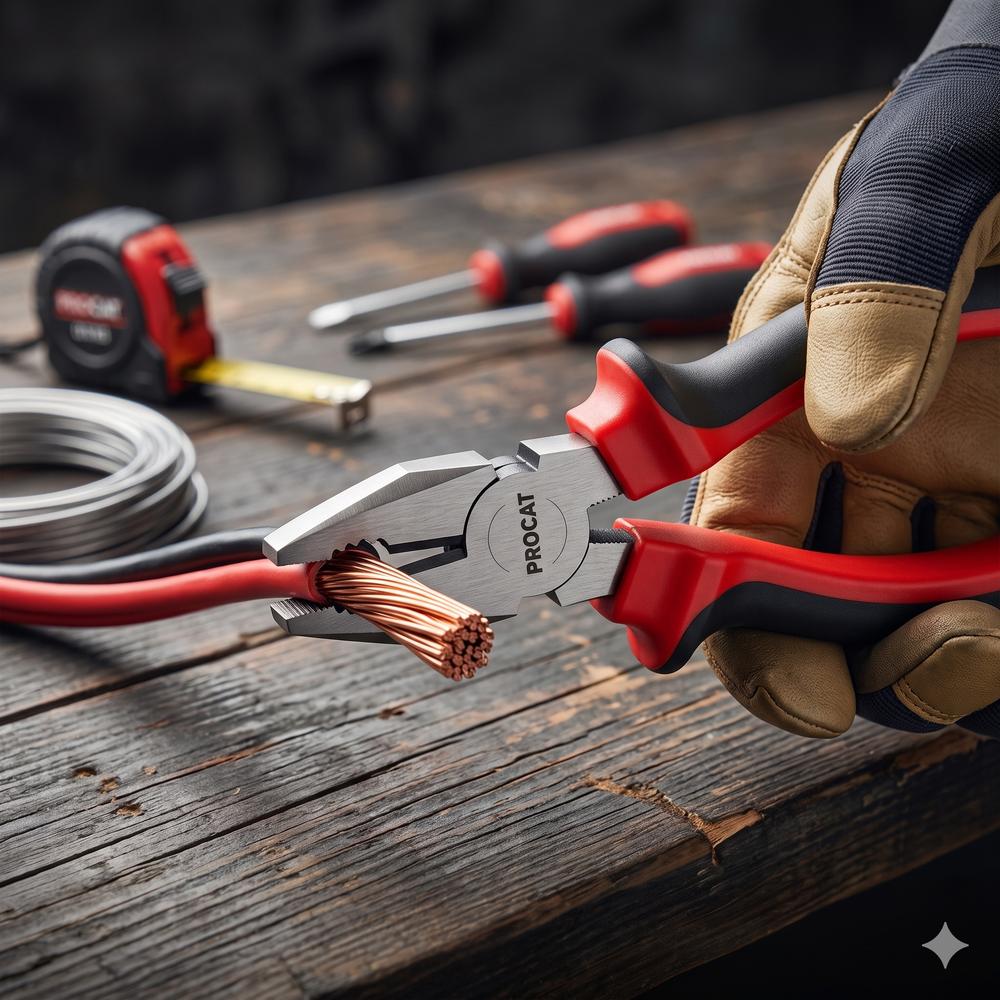
This tool combines mechanical gripping and cutting in one 150 mm (6-inch) long body. The jaw of the tool is divided into a transverse gripping surface and a wedge-shaped cutting section, which lets you handle different materials with one instrument. The design is based on a mechanical lever arm that multiplies the squeezing force applied to the handles at the contact surface of the jaws.
The cutting blades are hardened to withstand repeated cutting of metal wire, cables and plastic components without distortion. The force is transferred from the handles to the jaws with a symmetrical leverage ratio, which minimises the mechanical strain on the user’s joints during long work stages. The serrated jaws ensure static friction on the surface being gripped.
The material composition and ergonomic design of the handles guarantee secure mechanical contact when working with work gloves or bare hands. The steel alloy of the body is industrially surface-treated against oxidation and corrosion. This extends the life of the tool on construction sites and in harsh climatic conditions.
The dual-function combination design reduces the need for several separate tools, making better use of space in tool kits and speeding up work stages. The tool’s standard length of 150 mm ensures compatibility with the most common tool pockets, belt holsters and modular storage systems.
Intended use and suitability:
The tool is designed for mechanical power transmission and shaping materials in manual work stages. It is suitable for placing components and adjusting the length of wires.
- Mechanical assembly: Holding, bending and placing parts. The tip profile of the tool allows precise gripping of small components even in tight installation spaces.
- Cable and wire work: Cutting soft and medium-hard metal wire. The optimised rake angle of the cutting blades ensures a precise cut and prevents unnecessary deformation of the material.
Package contents:
The package contains the following:
- 1 pcs Procat pliers and side cutter 6″ in the selected size
Features:
The features of the tool are based on mechanical durability and optimised tolerances.
- Hardened blades: The cutting parts are heat-treated to withstand abrasion and keep their edge angle under repeated stress.
- Coated handles: The surface material of the handles keeps a high coefficient of friction and spreads the squeezing force evenly over the palm.
Technical specifications:
- Length: 6 inches (150 mm)
- Function type: Combination pliers / side cutter
- Body material: Tool steel
Instructions for use:
Use the tool according to the following steps to ensure optimal performance.
- Make sure the material to be cut or gripped is fully inside the jaws or between the cutting blades before applying squeezing force.
- Apply the squeezing force evenly to both handles by hand. Do not use extension arms to multiply the force.
- Clean loose dirt and metal filings off the jaws and joint mechanism regularly.
- Lubricate the pivot lightly with lubricating oil to keep the movement smooth and protect against corrosion.
Warnings:
Note the following safety factors to prevent accidents at work and damage to the tool.
- Limitation for electrical work: The tool is not insulated or rated for electrical work (no VDE approval). Make sure the circuit is dead before handling components.
- Risk of flying pieces: When cutting wire, the cut-off ends can fly off with high kinetic energy. Wearing safety glasses is mandatory.
- Mechanical overload: Do not cut materials harder than the tool steel. This can break the cutting blade.
Frequently asked questions (FAQ):
Information on the performance values and limits of the tool.
What is the maximum thickness of material for the 6″ (150 mm) side cutter?
The cutting capacity is directly related to the hardness of the wire. In general, the 150 mm lever arm is suitable for cutting soft copper wire (about 2.5 mm) and medium-hard steel wire (about 1.6 mm).
Can the tools be used for live electrical installations?
No, they cannot. The handle coating gives mechanical friction and grip, but it is not certified to act as a dielectric insulator against electric current.
Recycling instructions:
Correct sorting of the product’s materials at the end of its life.
- Metal and body: The tool itself is sorted into metal collection. If possible, separate the plastic coatings of the handles into mixed waste or energy waste.
- Packaging materials: Sort any cardboard parts into cardboard collection and plastic retail packaging into plastic collection.