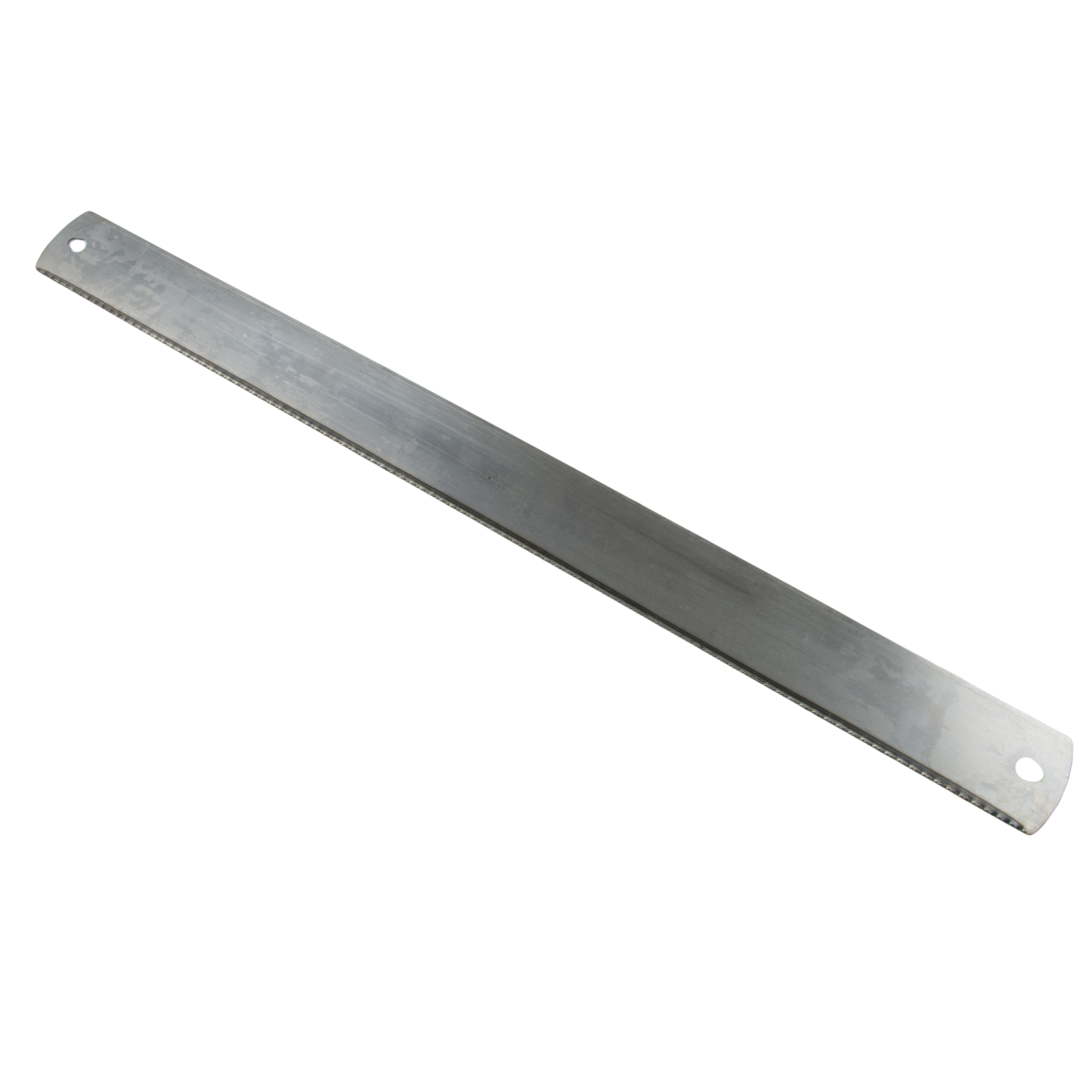
Description
Procat reciprocating saw blade for wood is a replacement blade for reciprocating saws for cutting wood and demolition sawing. The blades come in packs of three, and the models are 150 mm 6 TPI, 225 mm 3 TPI and 250 mm 6 TPI.
The choice of blade is based on two values: length and tooth pitch. Length determines the maximum thickness that can be sawn, as the blade must extend beyond the workpiece over the whole stroke length. TPI (teeth per inch) determines the tooth size: a low TPI number means a large tooth, a large gullet and fast progress, a high TPI number a smaller tooth and a neater cut.
6 TPI is the general-purpose tooth pitch for wood: it advances fast in construction timber and leaves the cut surface neat enough for framing work. 3 TPI is coarse toothing whose large tooth spacing clears chips from wet and resinous wood without clogging. Coarse teeth combined with a 225 mm length suit thick timber, cutting branches and demolition jobs.
The fixing shank of the blade is universal and fits the most common reciprocating saws, such as AEG, Bosch, DeWalt, Hitachi, Black&Decker, Makita, Metabo, Flex, Atlas Copco, Skil, Milwaukee and Sabre machines. The blade intended for cutting metal is the Procat reciprocating saw blade for metal, and for aerated concrete and brick blocks the Procat reciprocating saw blade for blocks.
Intended use and suitability:
A reciprocating saw cuts with a back-and-forth stroke in places a circular saw or handsaw cannot reach. The blade is chosen according to the thickness of the workpiece and the moisture of the wood.
- Framing work: 150 mm 6 TPI cuts battens, mouldings and furring in narrow gaps where a short blade stays under control.
- Thick timber: 250 mm 6 TPI extends beyond a beam or log when the cut is made in one pass.
- Wet and resinous wood: 225 mm 3 TPI clears wet chips from the tooth spacing and does not clog.
- Demolition work: a long blade reaches through the structure and cuts furring or boarding in place.
- Garden and cutting branches: coarse teeth advance quickly in fresh wood.
Package contents:
- 3 x reciprocating saw blade of the selected model (150 mm 6 TPI, 225 mm 3 TPI or 250 mm 6 TPI)
Features:
- Three models: 150 mm 6 TPI, 225 mm 3 TPI and 250 mm 6 TPI cover thin timber, thick beams and wet wood.
- Universal fixing shank: fits the most common reciprocating saws, so the blade works whatever the brand of machine.
- Pack of three: replacement blades in the same pack, so work carries on when a blade wears out.
- 3 TPI coarse teeth: the large gullet prevents clogging in wet and resinous wood.
- 6 TPI general-purpose teeth: fast progress and a controlled cut surface in construction timber.
Technical specifications:
- Models: 150 mm 6 TPI, 225 mm 3 TPI, 250 mm 6 TPI.
- Tooth pitch: 3 or 6 TPI (teeth per inch) depending on the model.
- Blade length: 150 mm, 225 mm or 250 mm depending on the model.
- Fixing shank: universal reciprocating saw shank.
- Material worked: wood; 3 TPI also wet and resinous wood.
- Pack size: 3 blades.
Procat reciprocating saw blade for wood instructions for use:
Choosing the blade: Choose a length that extends beyond the thickness of the workpiece over the whole stroke length; a blade that is too short comes out of the cut at the end of the stroke. Choose 6 TPI for dry construction timber and 3 TPI for wet, resinous or thick wood.
Fitting: Stop the machine and remove the battery or plug. Open the blade holder, push the blade shank all the way in and check the lock by pulling on the blade. Check that the teeth point in the right direction for the way you are using the saw.
Sawing: Rest the shoe of the machine against the workpiece before starting; the shoe takes the reaction force of the stroke and prevents vibration. Start at a low stroke speed and increase the speed once the cut has started. Let the blade do the work without pressing: too much feed bends the blade and breaks it. In demolition work, use the full stroke length so that the teeth cool and the chips are cleared.
Maintenance: Let the blade cool before changing it. Remove resin with a solvent or cleaning agent; a resin-coated blade heats up and goes blunt quickly. Store the blades dry in their original packaging or a case so that the teeth do not get damaged.
Warnings:
- Stop the machine and remove the battery or plug before changing the blade.
- The blade is hot straight after sawing; wear protective gloves when changing it.
- Wear safety glasses and ear defenders. A breaking blade is thrown and chips fly.
- Keep the shoe of the machine against the workpiece throughout the cut; a machine held free kicks.
- Clamp the workpiece. A loose piece vibrates and catches on the blade.
- Before sawing, check that there are no nails, screws, electrical cables or pipes at the cutting point. The wood blade is not intended for cutting metal.
- Do not use a bent or cracked blade or one with chipped teeth.
- Keep the blades out of the reach of children; the teeth are sharp.
Frequently asked questions (FAQ):
What models does the Procat reciprocating saw blade for wood include? Three models in packs of three: 150 mm 6 TPI, 225 mm 3 TPI and 250 mm 6 TPI.
What does TPI mean? The number of teeth per inch. A low number means a large tooth and fast progress, a high number a smaller tooth and a neater cut surface.
Which toothing for wet wood, 3 or 6 TPI? 3 TPI. The large tooth spacing clears wet and resinous chips and does not clog.
Does the blade fit the blade holder of my reciprocating saw? The fixing shank is universal and fits the most common reciprocating saws, such as AEG, Bosch, DeWalt, Hitachi, Black&Decker, Makita, Metabo, Flex, Atlas Copco, Skil, Milwaukee and Sabre.
What length of blade for a thick beam? The blade must extend beyond the thickness of the workpiece over the whole stroke length, so a 250 mm or 225 mm blade is chosen for thick timber.
Can the wood blade saw demolition timber with nails in it? No. Wood teeth chip on nails; nail-embedded wood needs a blade suitable for cutting metal.
Why does the blade break while sawing? The most common reasons are too much feed pressure, lifting the shoe of the machine off the workpiece and the blade twisting in the cut.
Recycling instructions:
Sort cardboard and plastic packaging into their own collections. A worn or broken reciprocating saw blade is metal and goes to metal collection or a recycling centre. The blade must not be put in mixed waste; wrap the sharp blade in cardboard before putting it in the bin. Sawdust and demolition waste from sawing are sorted as wood waste if the wood is untreated.