

Description
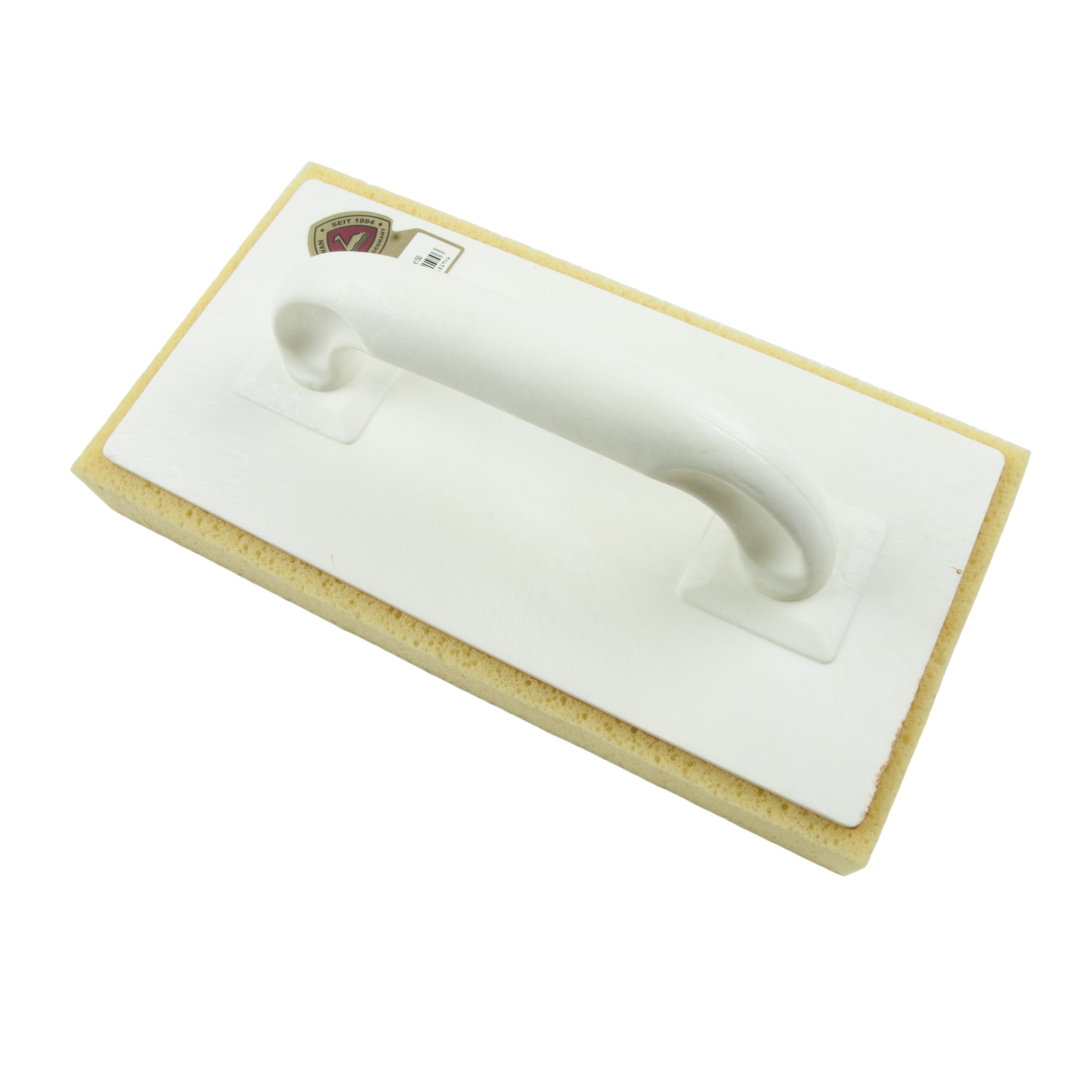
The Schwan sponge float 140 x 280 mm is designed especially for washing ceramic tiles and tiled surfaces after grouting. The most important feature of the product is its grid-cut sponge, whose surface is cut in a grid pattern (grooved). This surface structure increases the absorbency and surface area of the sponge considerably compared with traditional smooth sponges. Thanks to the grooves, the sponge collects grout residue and dirt from the tile surface more effectively, which speeds up the work and reduces the number of washes needed.
The float has an ergonomic handle fixed to a sturdy base plate. The sponge is 30 mm thick, which gives enough capacity to hold water and cement-based dirt without the sponge clogging immediately. The product is made in Germany (Made in Germany), which guarantees that its manufacturing process and materials meet European standards. The sponge float is an essential tool for cleaning both large floor areas and wall tiling.
The advantage of the grid-cut surface is particularly clear when washing off fine grout or when working with heavily profiled tiles. The cuts in the sponge let the material adapt better to the surface being washed, so dirt also comes off the texture of the tiles and not just their highest points. The product is designed to withstand mechanical strain and repeated squeezing during washing.
Intended use:
The Schwan sponge float is a versatile tool designed primarily for finishing work in wet rooms and on tiled surfaces.
- Washing tiles after grouting: The main use of the product is washing excess grout off the tile surface in the “emulsifying stage” of grouting. The grid-cut surface effectively removes the grout haze.
- General surface cleaning: Suitable for washing various stone surfaces and ceramic surfaces in renovation projects where high water absorbency is needed.
- Cleaning textured tiles: The grooved (grid-cut) sponge gets into the recesses of uneven or rough tiles better than a flat sponge.
Package contents:
- 1 pcs Schwan sponge float (body + bonded grid-cut sponge).
Features:
The features of the product are optimised to make the washing stage of tiling more efficient and improve the neatness of the result.
- Grid-cut (grooved) surface: The surface of the sponge is cut open in a grid pattern. This significantly improves the removal of dirt and grout residue from the tile surface and increases the sponge’s ability to hold solids.
- High absorbency: The porous material combined with the grid cut absorbs liquid more efficiently than an ordinary sponge, reducing the need to change the water and speeding up drying.
- Optimal size: The 140 x 280 mm size is a standard dimension that offers a good balance between handling and coverage.
- Country of manufacture Germany: The product is made with German production technology, which ensures consistent sponge material and a durable bond to the handle.
- 30 mm thickness: The 30 mm thickness of the sponge ensures that there is enough room in it for absorbed water and dirt, extending the interval between rinses.
Technical specifications:
- Dimensions (L x W): 280 mm x 140 mm.
- Sponge thickness: 30 mm.
- Material: Synthetic, highly absorbent sponge.
- Surface structure: Grid-cut / cut.
- Country of origin: Germany.
Schwan sponge float instructions for use:
To get the best result in tiling work, follow these instructions when using the sponge float:
Preparation:
Make sure the grout has set sufficiently in the joints (so-called finger-dry) so that washing does not rinse the grout out of the joint. Fill the washing bucket with clean water. It is advisable to use a washing bucket with wringer rollers.
Washing process:
Wet the sponge float in the water and squeeze it out (not too dry, but not dripping wet). Move the float over the tiled surface with circular movements or diagonally across the joints. Never pull the sponge straight along the joint, so that you do not dig out the fresh grout. The grid-cut surface collects the grout residue.
Rinsing:
Rinse the sponge regularly and often in the washing bucket. Squeeze the sponge out carefully after each rinse. Change the washing water often enough to avoid leaving grout haze on the tile surface.
Maintenance:
After use, wash the sponge float carefully under running water until no more colour or grout comes out of it. Store in a dry place, protected from direct sunlight, which can make the sponge material brittle.
Warnings:
- Chemicals: Avoid using very strong acids or solvents with the sponge, as they can melt or damage the cell structure of the sponge.
- Drying: Do not leave grout to dry on the tile surface for too long before washing; the sponge float is intended for washing fresh grout, not for removing hardened grout.
- Storage: Do not store a wet sponge in an airtight bag, because of the risk of mould.
Frequently asked questions (FAQ):
What is the benefit of a grid-cut sponge compared with an ordinary one?
The grid-cut, or grooved, surface significantly increases the surface area of the sponge. The grooves act as channels that collect solid dirt and grout more effectively than a flat surface. It also absorbs water faster.
Can this sponge be used to wash epoxy grout?
This sponge is intended primarily for cement-based grouts. For epoxy grouting, harder sponges designed especially for epoxy (so-called scrub pads or cellulose sponges) are generally recommended, but the product can work for the first wash. Check the grout manufacturer’s instructions.
How long does the sponge float last in use?
The service life depends on the roughness of the surface being washed and the amount of use. Rough tiles with sharp edges wear the sponge faster. Maintained and washed correctly, the sponge lasts for several uses.
Recycling instructions:
At the end of its life, the product is mixed waste or energy waste. The sponge part and the plastic handle are often bonded, so separating them can be difficult. If the parts can be separated, the plastic handle can go to plastic collection and the sponge to energy waste. Recycle the packaging materials by material (cardboard/plastic).