
Description
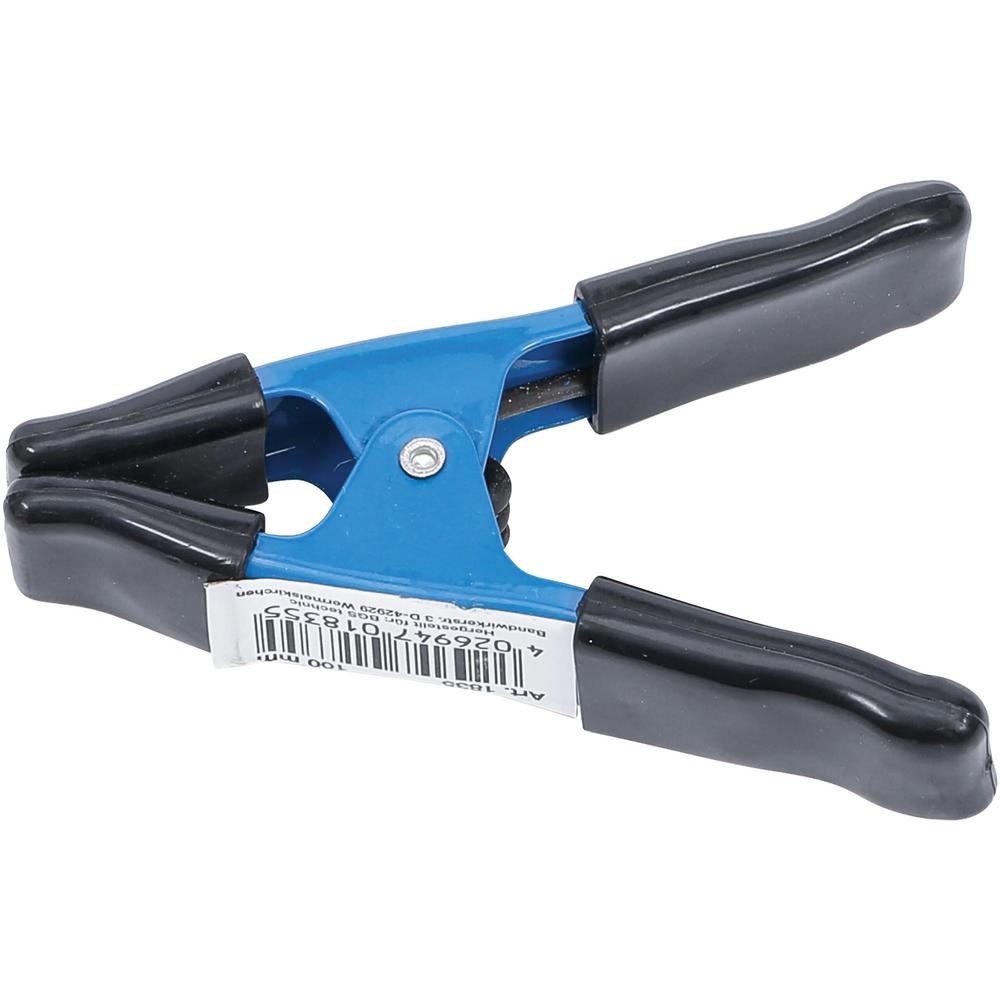
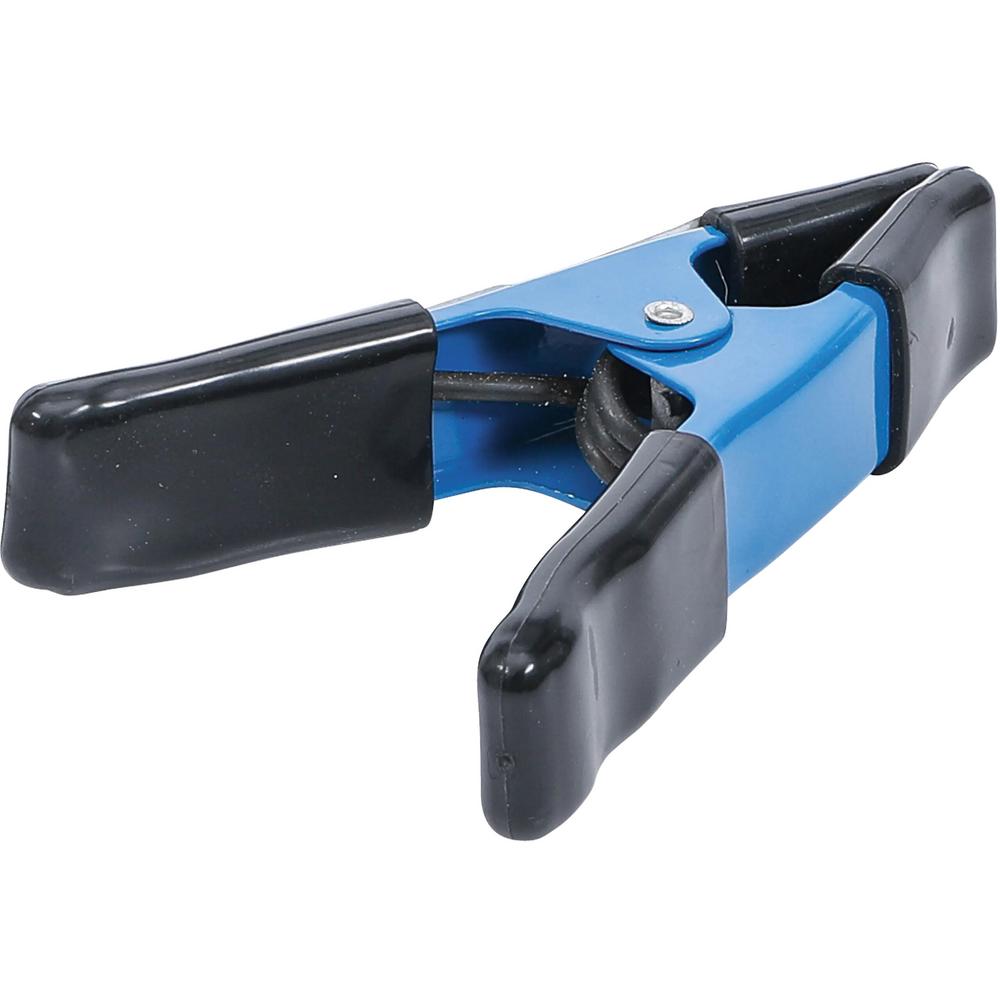
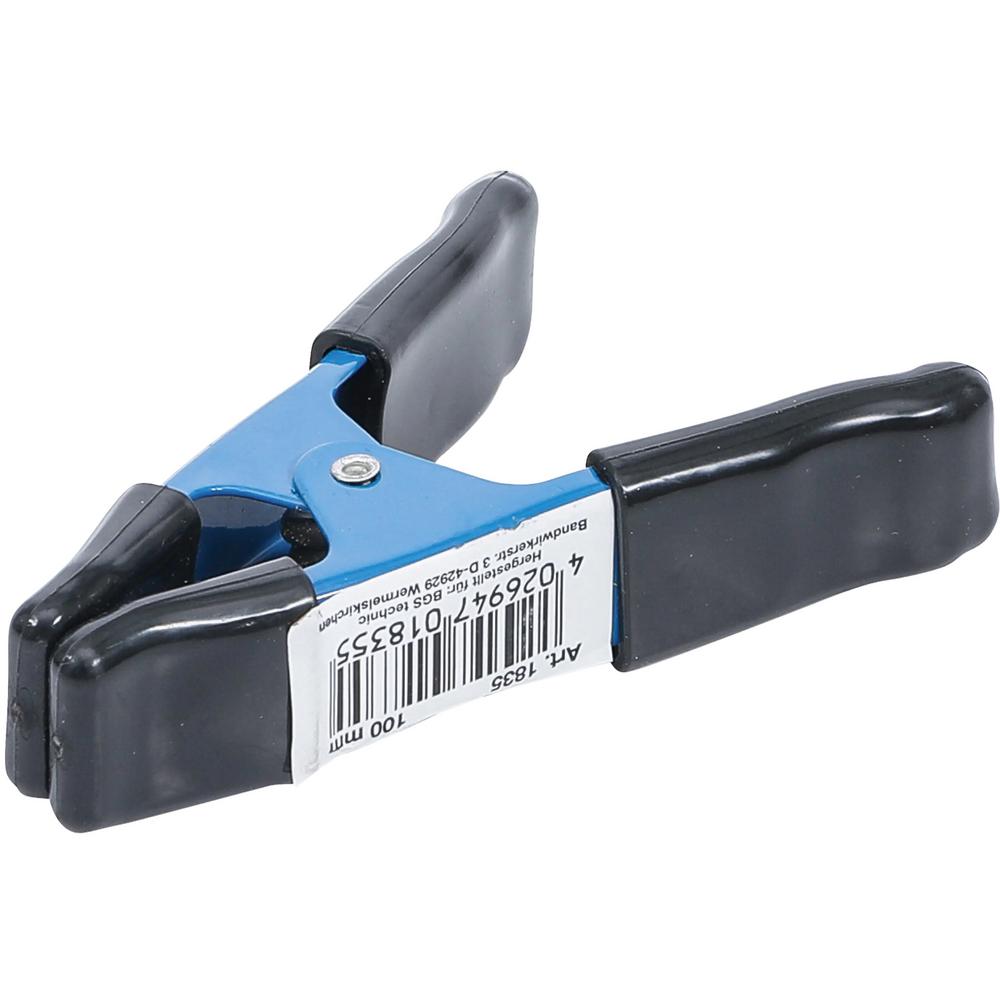
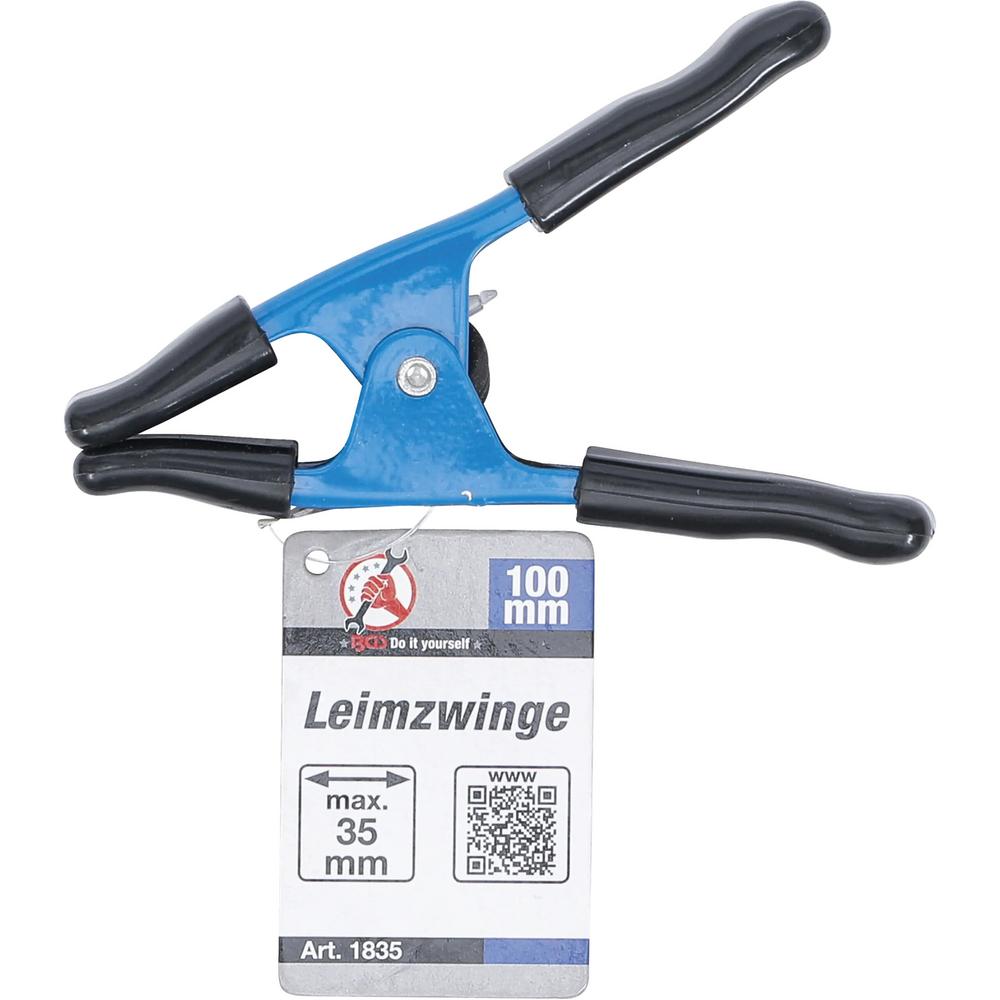
BGS glue clamp 100 mm, metal frame is a spring-loaded quick clamp whose lacquered metal frame keeps its shape under clamping. The overall length is 100 mm and the maximum jaw opening is 35 mm, so the clamp grips thin mouldings, boards and small pieces.
The clamping force comes from a strong spring fitted in the frame. In a spring clamp, the force is constant and is not adjusted: opening the jaws takes force on the handles, and when released the spring presses the jaws against the workpiece. You clamp with one hand and release with the same movement, which makes a spring clamp faster than a screw clamp for short-term clamping.
Both jaws are covered with rubber protectors that prevent dents, scratches and rub marks on the surface of the workpiece. The rubber surface also adds friction, so the clamp does not slide on a polished or painted surface. The handles are dip-coated with rubber, which gives a secure grip when the jaws are opened against the spring.
The metal frame does not give under static clamping, so the clamped parts stay in the set position while the glue dries or during mechanical fixing. The clamp is suitable for gluing, assembly and finishing work and for holding pieces temporarily in place. Smaller clamps of the same type are available as BGS mini clamp set 50 mm mini 4 pcs, metal, and for work that needs adjustable clamping force, use screw clamps or quick-action bar clamps.
Intended use and suitability:
A spring clamp holds two or more pieces together with constant force without tightening. It is suitable for clamping where the clamping force does not need adjusting and the opening is at most 35 mm.
- Gluing: clamping workpieces together while the glue dries; the constant spring force keeps the joint faces together for the whole drying time.
- Assembly work: holding components temporarily in place during screwing, drilling or another work step.
- Painting and finishing: fixing a piece to a worktop or stand so that it stays still during treatment.
- Mouldings and edge banding: pressing thin mouldings and edge banding against the base without dents, thanks to the rubber protectors.
- Scale models and repair work: clamping small parts when a screw clamp is too heavy or slow.
Package contents:
- 1 pc BGS glue clamp 100 mm, metal frame
Features:
- Metal frame: does not give under static clamping and keeps the direction of force steady.
- Strong spring: gives an even, constant clamping force for the whole clamping time.
- Rubber-protected jaws: prevent dents, scratches and rub marks on the workpiece surface and add friction.
- Dip-coated handles: a secure grip when the jaws are opened against the spring.
- Lacquered surface: protects the metal frame from corrosion in normal conditions of use.
- One-handed use: clamping and release with a single squeeze.
Technical specifications:
- Overall length: 100 mm.
- Jaw opening (max.): 35 mm.
- Clamping mechanism: spring, constant force.
- Frame material: metal.
- Frame finish: lacquered.
- Jaw protector material: rubber.
- Handle coating: dip-coated rubber.
BGS glue clamp 100 mm, metal frame instructions for use:
1. Opening: Squeeze the handles together until the jaws open to the thickness of the workpiece. The maximum opening is 35 mm; do not force the jaws wider than this.
2. Positioning: Place the clamp around the workpieces so that the rubber-protected jaws sit square against the surface over their whole area. A jaw that sits at an angle clamps only with its edge and can slip.
3. Clamping: Release the handles slowly so that the spring presses the jaws shut. Check by testing that the piece cannot slide. When clamping at several points, space the clamps evenly along the length of the joint.
4. Release: Squeeze the handles again and pull the clamp off the workpiece. Do not jerk the clamp off while the spring is under tension.
5. Cleaning and storage: Clean off glue residue, dust and dirt after use; dried glue on the rubber protectors weakens the grip. Store in a dry place to prevent rust and keep the spring working.
Warnings:
- Pinching hazard: the strong spring can trap fingers between the jaws or handles. Keep your fingers out from between the jaws.
- Risk of flying off: a clamp under tension can slip off if the workpiece breaks or the surface is slippery. Wear safety glasses.
- Heat sensitivity: the rubber protectors and the dip coating of the handles do not withstand direct heat. Do not use the clamp for welding or near an open flame.
- Overloading: do not force the jaws beyond a 35 mm opening; the spring or frame can be damaged.
- Condition check: do not use a clamp whose spring has weakened, frame is bent or rubber protector has come off.
- Keep out of the reach of children.
Frequently asked questions (FAQ):
What is the maximum jaw opening of the BGS glue clamp? The maximum jaw opening is 35 mm, so the clamp suits pieces up to this thickness.
Can the clamping force be adjusted? No. In a spring clamp, the force is constant and set by the spring. For adjustable force you need a screw clamp or a quick-action bar clamp.
Can the rubber protectors of the clamp be removed? The rubber protectors can be pulled off, for example for cleaning, but it is best to keep them in place to avoid surface damage.
Can the clamp be used for welding? The metal frame withstands heat, but the dip-coated handles and rubber jaw protectors can melt or be damaged by sparks. The product is not recommended for welding.
Does the clamp scratch a painted surface? The rubber-protected jaws prevent dents and scratches. Clean dried glue off the protectors, as hard glue residue leaves a mark on the surface.
How many clamps does a joint need? The joint face should be clamped along its whole length. On thin mouldings, place the clamps evenly about 10–15 cm apart so that the joint does not open between the clamps.
Recycling instructions:
The metal frame and spring of the clamp are recycled through metal collection. The handle coating and rubber jaw protectors are removed and sorted as mixed waste. If the parts cannot be removed, the tool can usually go to metal collection because of its high metal content; check the local waste management instructions. The cardboard packaging belongs in cardboard collection.