
Description
The Procat G-clamp 100 mm is a screw-tightened G-clamp with a maximum opening of 100 mm and a throat depth of 65 mm. The frame is made of forged steel, and the clamp is tightened by turning the sliding T-handle at the end of the threaded spindle clockwise. The clamp is intended for temporarily holding workpieces during gluing, drilling and assembly, and in woodworking and metalworking.
A G-clamp works by screw tightening. One end of the frame has a fixed jaw and the other a threaded bush that the threaded spindle runs through. When the spindle is turned clockwise, the swivel pressure pad at its end moves towards the fixed jaw and clamps the workpiece between them. Turning it anticlockwise opens the clamp.
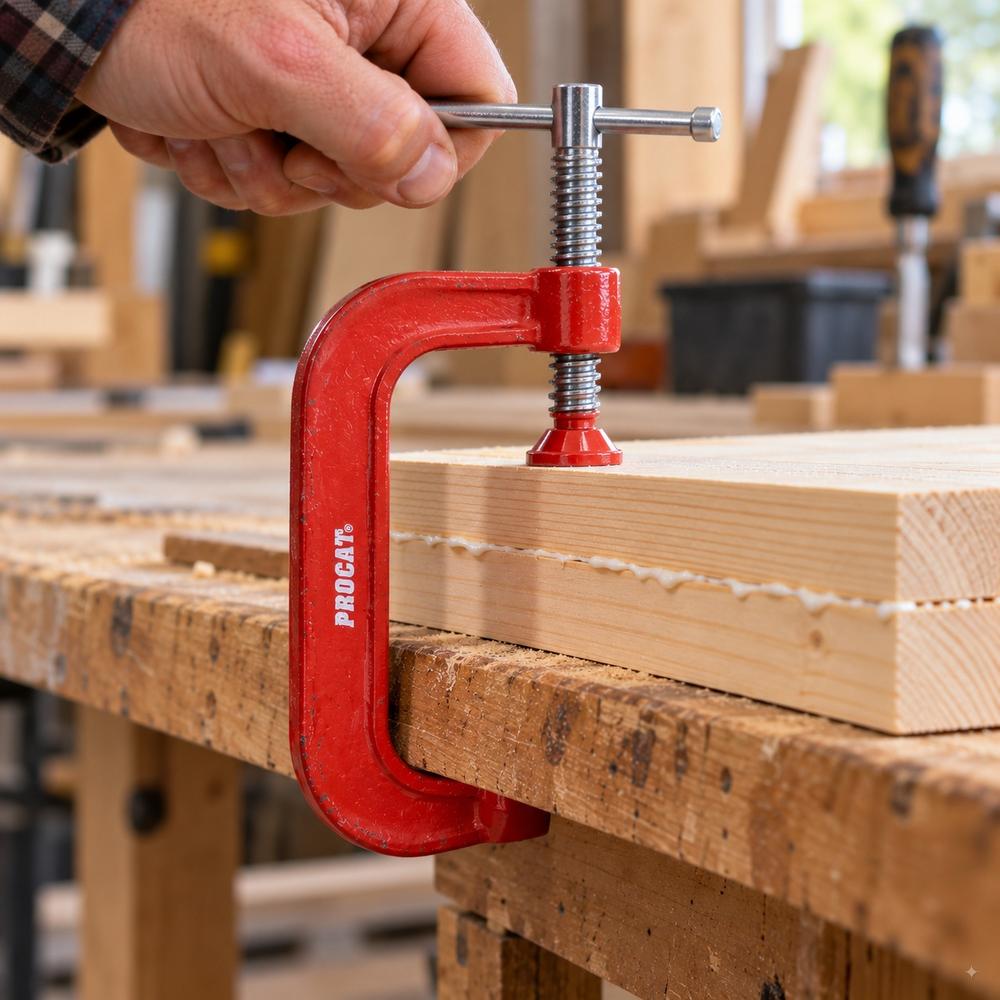
The opening determines how thick a workpiece or stack of workpieces fits between the jaws: up to 100 mm, protective blocks included. The throat depth of 65 mm is the distance from the centre line of the spindle to the inner edge of the frame, and it tells you how far in from the edge of the workpiece or workbench the clamp reaches. With these dimensions the clamp can, for example, hold two glued boards to the edge of a workbench.
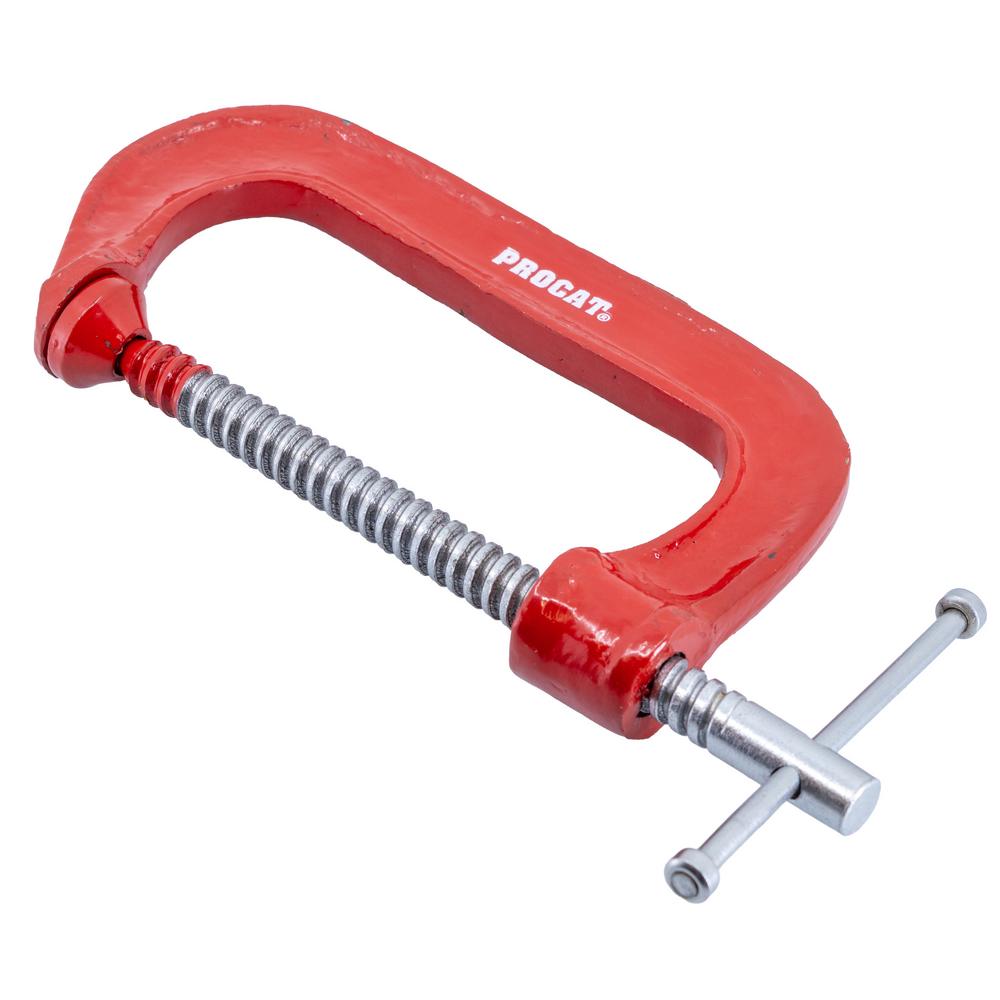
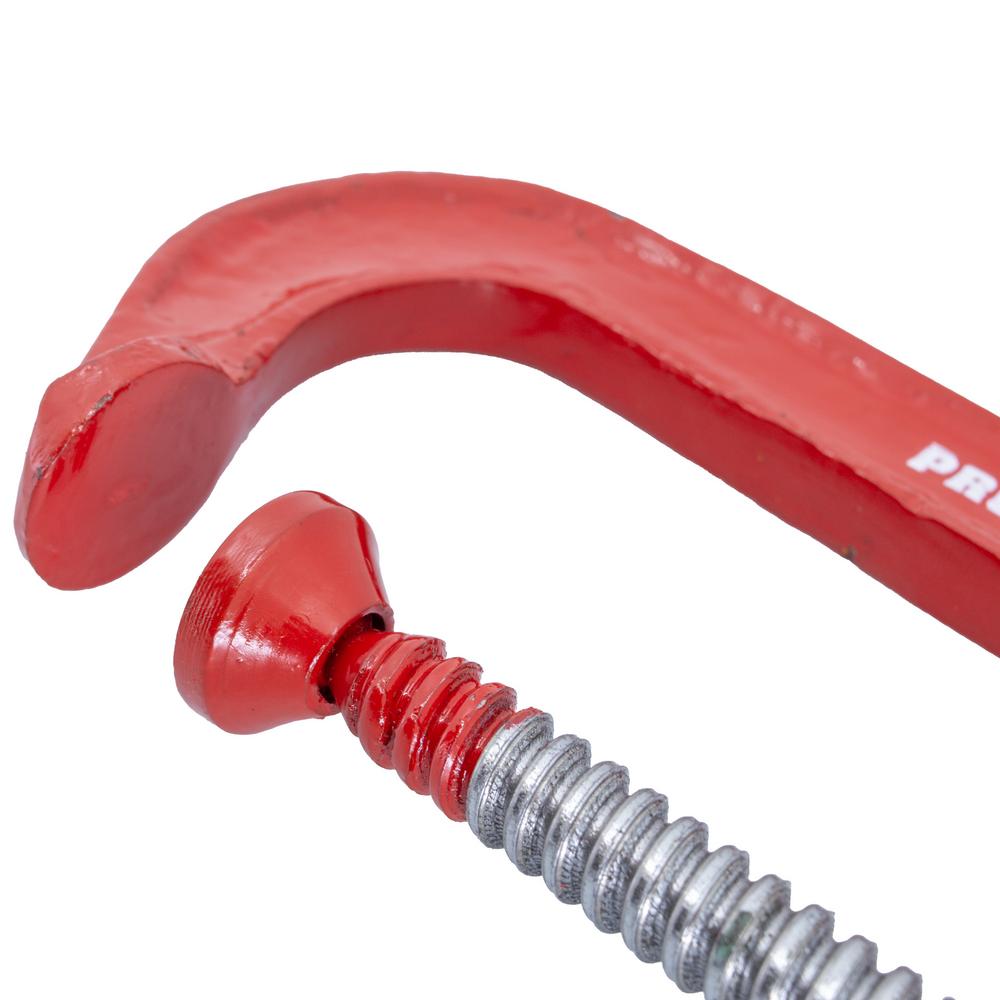
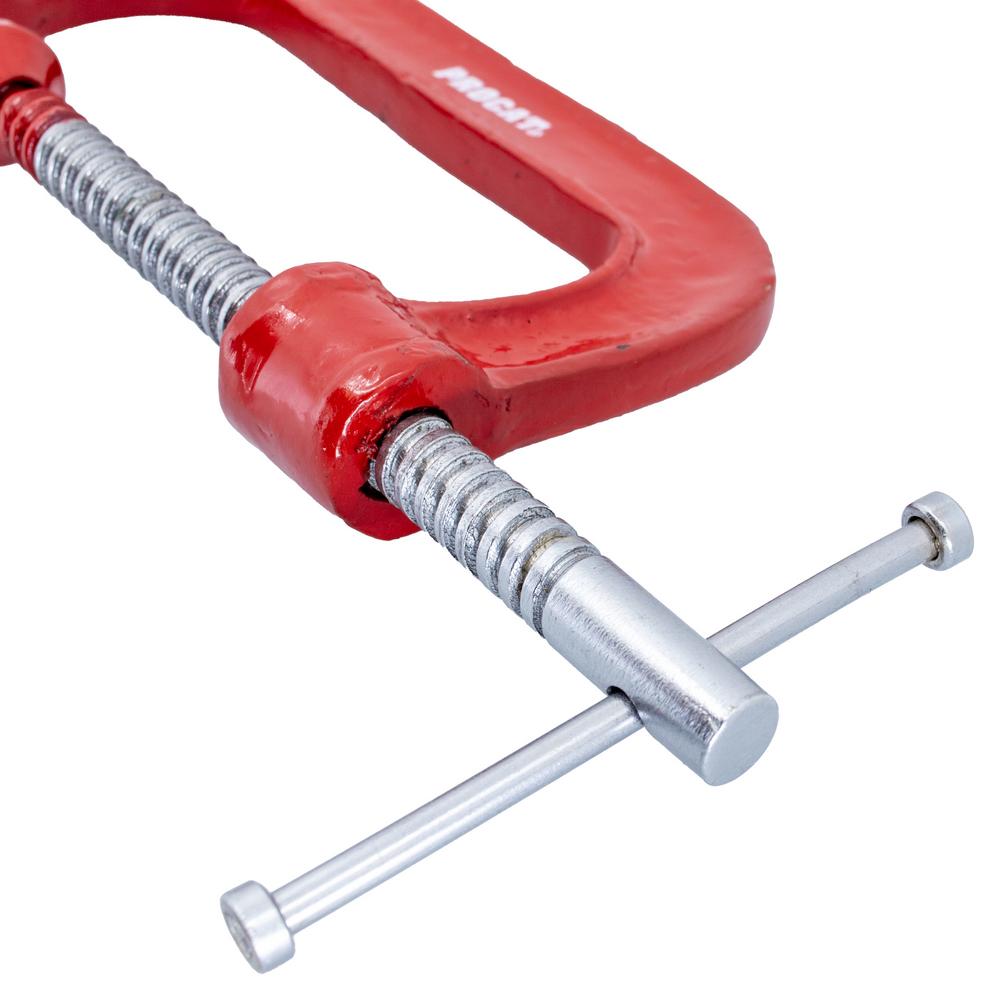
The forged frame is a rounded C-shaped arch, painted red and carrying a white PROCAT® print. On the workpiece end of the silver threaded spindle is an articulated, conical pressure pad that swivels to follow the surface of the workpiece. At the other end of the spindle, the cross pin of the T-handle slides in the sleeve, so the handle can be turned with a short or a long lever arm.
With its fixed opening and screw tightening, the clamp holds the workpiece in place while the glue hardens or during machining, with no need to keep checking the tightness. When the workpiece is thick or the clamping point is far in from the edge, the 100 mm G-clamp complements smaller clamps and spring clamps.
Intended use and suitability of the Procat G-clamp 100 mm:
The clamp is suitable for temporarily holding workpieces during machining, gluing and assembly.
- Gluing: Glued boards, mouldings and frame parts stay in place while the glue dries. To protect soft wood or a finished surface, place a protective block under the jaw and the pressure pad. For thin workpieces and quick one-handed clamping, a suitable choice is the BGS glue clamp 100 mm, metal frame.
- Clamping to the workbench: The workpiece is clamped to the edge of the workbench so that it stays in place during sawing, planing, filing and drilling. The throat depth of 65 mm determines how far from the edge of the bench the workpiece can be clamped.
- Metalwork: Metal profiles, sheets and fixings stay in place during drilling, filing, grinding and assembly. For quick clamping with a lever mechanism, there is the Urko steel clamp, lever model 8000N.
- Jigs and guides: Stop battens, guides and templates are clamped to the workbench for sawing, milling and drilling. The swivel pressure pad keeps its grip even when the surface of the workpiece is not fully parallel to the jaw.
- Repairs and assembly: The glue joints of cracked parts and parts being assembled stay together while the glue dries or the parts are fixed. For workpieces that need more than a 100 mm opening, a suitable choice is the Urko 4021-HA screw clamp 150 x 50 mm with swivel handle.
Package contents:
- G-clamp 100 mm: 1 pc, throat depth 65 mm, sliding T-handle and swivel pressure pad.
Features:
- Forged steel frame: The frame is forged from steel, and the fixed jaw and the threaded bush of the spindle are part of the same frame.
- Opening 100 mm: A workpiece or stack of workpieces up to 100 mm thick, protective blocks included, fits between the jaws.
- Throat depth 65 mm: The clamp reaches 65 mm in from the edge of the workpiece or workbench.
- Swivel pressure pad: The conical pressure pad, articulated at the end of the spindle, swivels to follow the surface of the workpiece and presses it against the fixed jaw.
- Sliding T-handle: The cross pin slides in the sleeve at the end of the spindle, and round knobs at the ends of the pin keep it in place. The length of the lever arm is chosen to suit the space and the force needed.
- Screw tightening: The clamp tightens when the spindle is turned clockwise and opens when it is turned anticlockwise. The threaded spindle adjusts the clamping pressure steplessly, and the thread holds the pressure in place.
- Painted frame: The red paint and white PROCAT® print make the clamp easy to pick out at the workstation.
Technical specifications:
- Product type: G-clamp (C-clamp), screw tightening
- Maximum opening: 100 mm
- Throat depth: 65 mm
- Frame material: forged steel
- Frame finish: red paint, white PROCAT® print
- Handle: sliding T-handle, round end knobs
- Pressure pad: swivel (articulated), conical, at the end of the spindle
- Tightening direction: clockwise to tighten, anticlockwise to open
Procat G-clamp 100 mm instructions for use:
Clamping takes six steps. Always tighten the clamp by hand.
- Inspection: Make sure that the thread is clean and undamaged, the spindle is straight and the frame is free of damage.
- Opening: Turn the spindle anticlockwise with the T-handle until the gap between the pressure pad and the fixed jaw is larger than the combined thickness of the workpiece and the protective blocks.
- Positioning: Place the workpiece between the fixed jaw and the pressure pad so that the clamping point is no more than 65 mm from the edge. With soft wood and finished surfaces, use a protective block on both sides so that the surface is not marked.
- Tightening: Tighten by turning the T-handle clockwise until the workpiece stays in place, and let the swivel pressure pad settle against the surface of the workpiece. Slide the cross pin to one side when you need a longer lever arm. Do not extend the handle with a pipe or strike it with a hammer.
- Checking: Check the position of the workpieces after tightening, and wipe off any glue that squeezes out before it hardens on the thread or the pressure pad.
- Release: Support the workpiece and turn the T-handle anticlockwise until the clamp opens.
Maintenance: Clean glue, chips and dust off the thread. Add a drop of light oil to the thread and store the clamp in a dry place.
Warnings:
- Risk of pinching: Keep your fingers out from between the pressure pad and the fixed jaw while tightening.
- Not for lifting: Do not use the clamp for lifting or suspending loads, or as an attachment point for lifting gear.
- No extensions or hammers: Do not extend the T-handle with a pipe or strike it with a hammer. Excessive force can bend the spindle or damage the thread and the frame.
- Inspection: Check the thread, spindle and frame before use. A damaged thread, bent spindle or cracked frame is a reason to take the clamp out of service.
- Supporting the workpiece: Support a heavy workpiece before opening the clamp so that it does not fall.
- Workpiece: Without a protective block, the pressure pad and jaw can leave a mark on soft wood and finished surfaces.
- Children: Not a toy. Keep out of the reach of children.
Frequently asked questions (FAQ):
Which way do you tighten a G-clamp? The clamp tightens when the T-handle is turned clockwise and opens when it is turned anticlockwise. The thread is a standard right-hand thread.
How thick a workpiece can the Procat G-clamp 100 mm hold? A workpiece or stack of workpieces up to 100 mm thick fits between the fixed jaw and the pressure pad. The thickness of the protective blocks counts towards this.
What does a throat depth of 65 mm mean? Throat depth is the distance from the centre line of the spindle to the inner edge of the frame. The clamp therefore reaches 65 mm in from the edge of the workpiece or workbench.
What is the difference between a G-clamp and a C-clamp? They are the same type of product: the frame is shaped like the letter G or C, and the clamp is tightened with a threaded spindle. Both are screw clamps.
Why does the pressure pad swivel? The articulated pressure pad settles against the surface of the workpiece when that surface is not fully parallel to the jaw. The clamping pressure is spread more evenly, and the workpiece cannot twist during tightening.
How does the sliding T-handle work? The cross pin of the handle slides in the sleeve at the end of the spindle. Moving the pin to one end lengthens the lever arm, and in the centre position the handle can be spun quickly.
When is a bar clamp a better choice than a G-clamp? When the workpiece is thicker than 100 mm or the opening has to be adjusted quickly for different workpieces. The opening of a bar clamp is adjusted along the bar, whereas the opening of a G-clamp is fixed.
Recycling instructions:
The Procat G-clamp 100 mm is made of steel, and a clamp that is no longer used is taken to metal recycling.
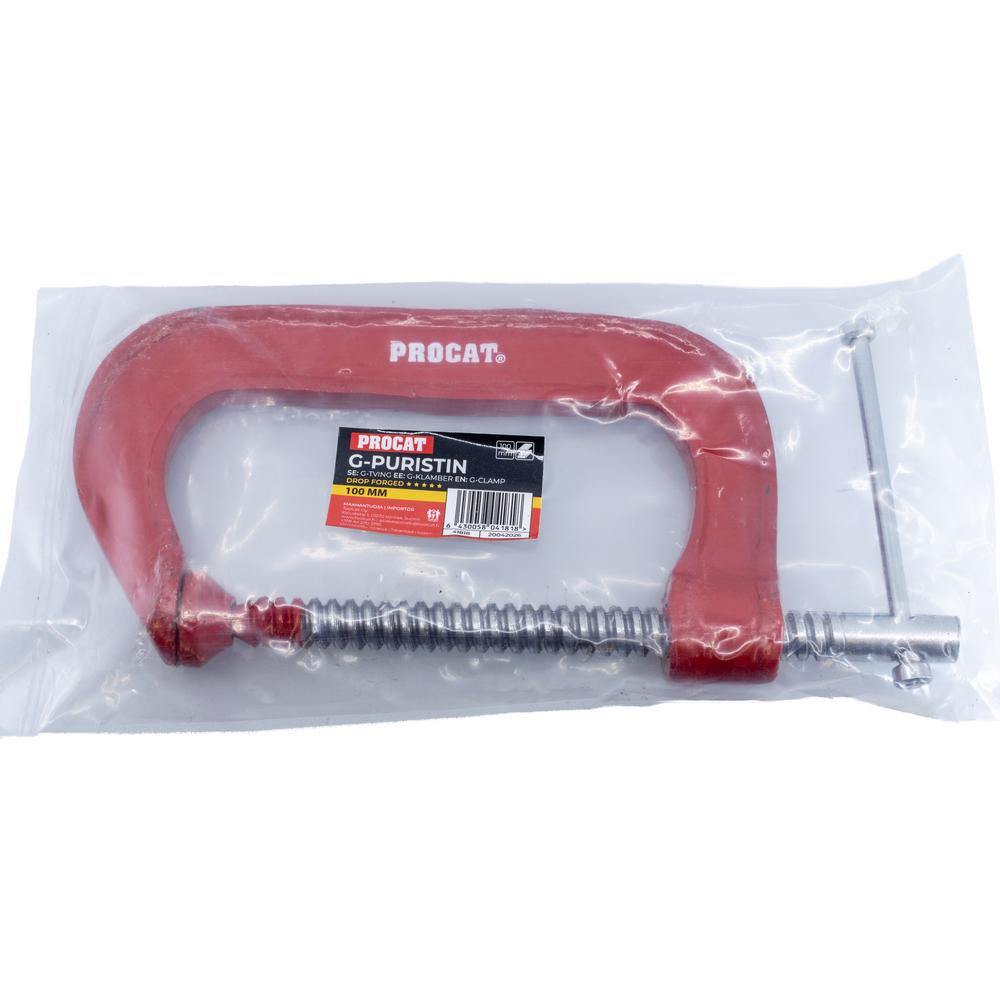
Sort the plastic bag of the retail packaging into plastic recycling, and the colour label according to local sorting instructions.