
Description
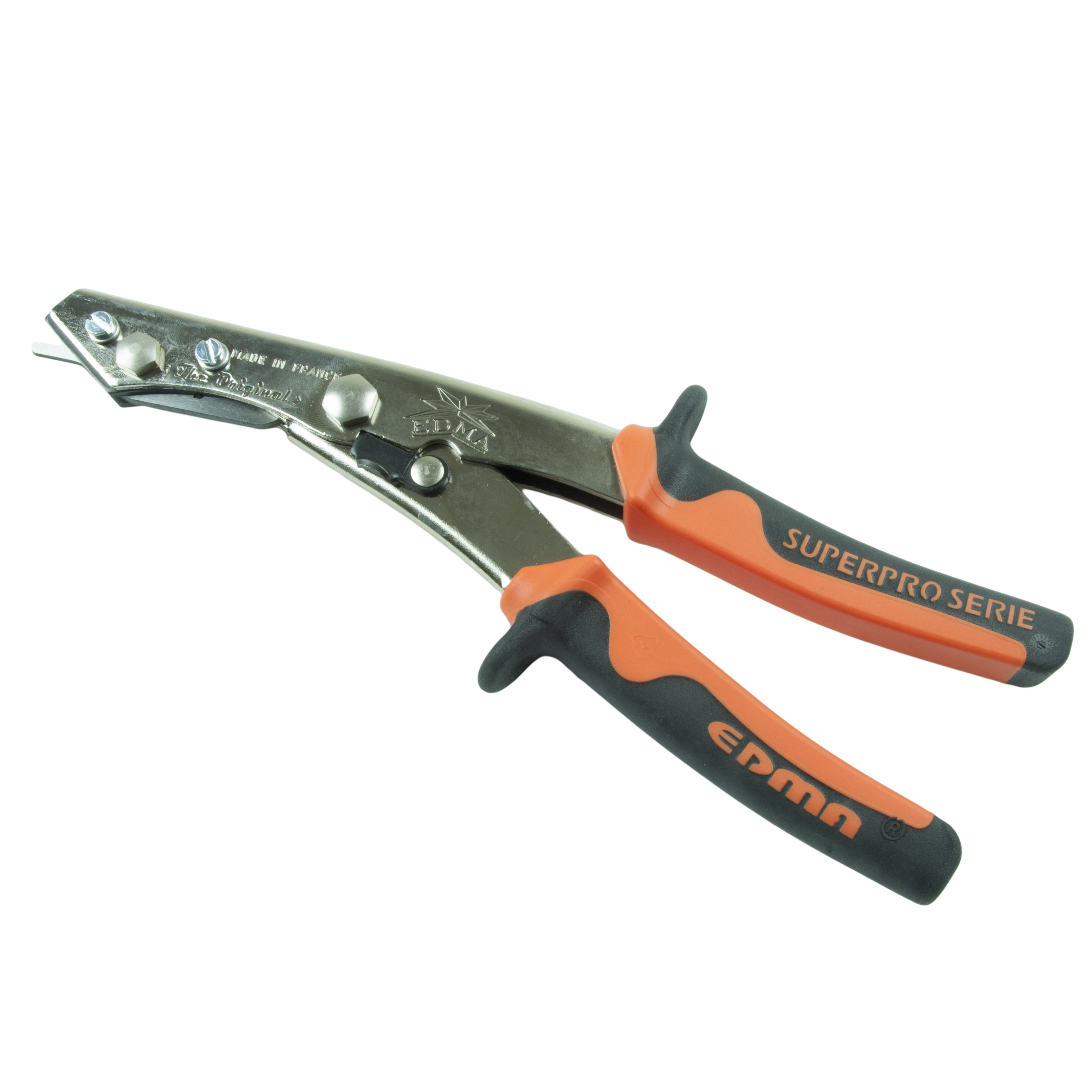
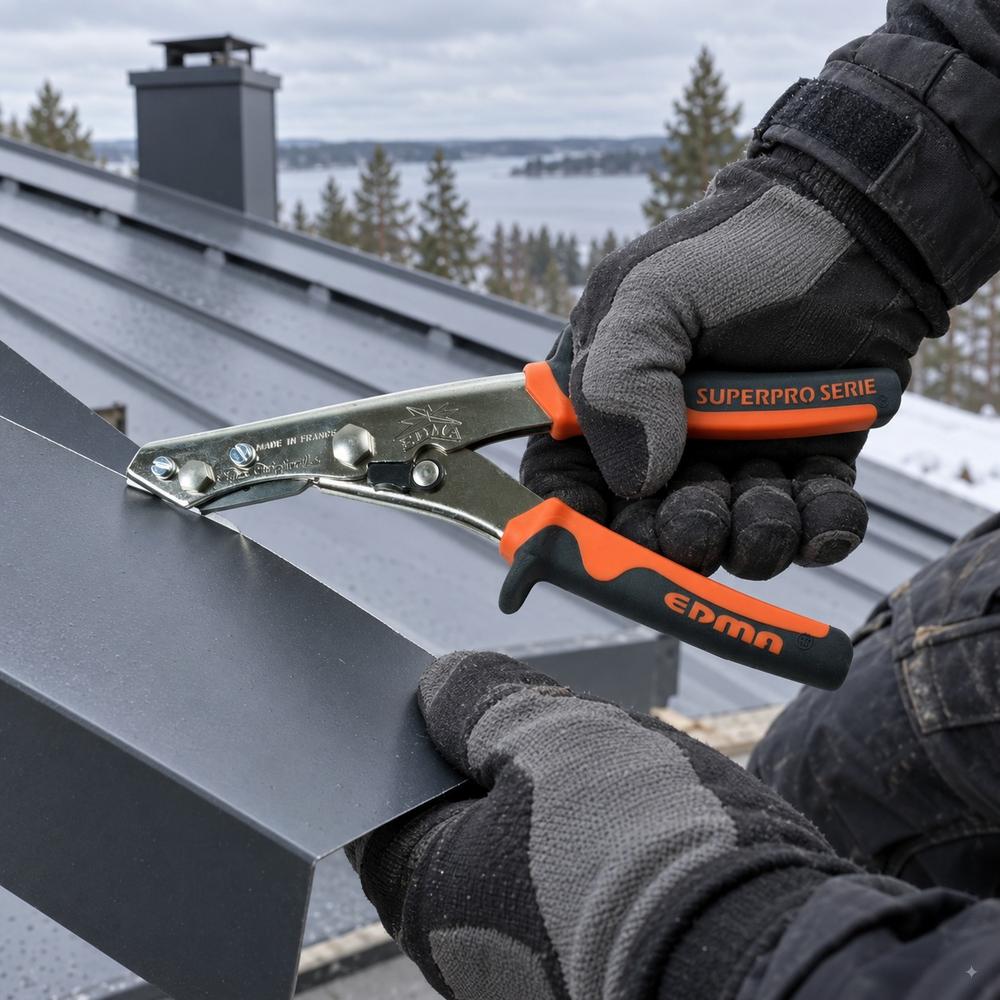
The Edma NR1 tin snips are 275 mm long manual nibbler snips for thin sheet. The cutting head removes a 2.7 mm wide strip from the sheet, so the cut does not bend or twist the sheet on either side, unlike ordinary tin snips, where the sheet rises along the cutting groove.
The cutting capacity depends on the material: stainless steel 0.6 mm, mild steel sheet, galvanised sheet and zinc 1.2 mm, copper and brass 1.5 mm, PVC, vinyl tile and aluminium 2.0 mm and polycarbonate 2.5 mm. The tool is intended especially for cutting steel studs, tracks and battens in interior construction.
The centre blade is replaceable: when the blade goes blunt, the cutting head is restored to working order by replacing the blade instead of the whole tool. Round openings and curves can be cut down to a minimum diameter of 50 mm, so the snips are also suitable for opening penetrations in sheet.
The handles are rubber-coated and two-component, which keeps the grip steady even with wet hands and dampens the cutting resistance against the hand. The Edma NR1 tin snips are supplied ready to use, with no assembly. For curved and continuous cuts in building sheet metal work, traditional hinged snips are suitable, while the nibbler design serves straight cuts and openings.
Intended use and suitability:
Nibbler snips cut thin sheet so that a narrow strip is removed from the material and the cut edge does not distort. This is essential when the cut part remains visible or is fitted tightly against another structure.
- Steel studs and tracks: cutting C and U studs and battens for plasterboard structures to length; the cutting head does not bend the stud flanges, so the stud sits straight in the track.
- Thin sheet work: cutting galvanised and mild steel sheet up to 1.2 mm thick and stainless sheet up to 0.6 mm thick.
- Plastics and aluminium: PVC sheets, vinyl tiles and aluminium sheets up to 2.0 mm, polycarbonate sheets up to 2.5 mm.
- Openings and penetrations: round cuts from a diameter of 50 mm upwards, for example pipe and cable penetrations in sheet.
- Copper and brass: flashing and trim work up to 1.5 mm thick.
Package contents:
- Edma NR1 tin snips, length 275 mm
Features:
- Nibbling cutting head: removes a 2.7 mm strip, so the sheet does not bend or curl along the cutting line.
- Replaceable centre blade: the blade is renewed separately; there is no need to replace the tool when the blade wears.
- Cuts many materials: stainless steel, galvanised sheet, zinc, copper, brass, aluminium, PVC and polycarbonate.
- Curved cuts from 50 mm diameter: openings and roundings without a separate tool.
- Rubber-coated handles: secure grip and dampened cutting resistance.
- Ready to use: no assembly or adjustment before use.
Technical specifications:
- Length: 275 mm.
- Cutting groove width: 2.7 mm.
- Cutting capacity, stainless steel: 0.6 mm.
- Cutting capacity, mild steel sheet, galvanised sheet and zinc: 1.2 mm.
- Cutting capacity, copper and brass: 1.5 mm.
- Cutting capacity, PVC, vinyl tile and aluminium: 2.0 mm.
- Cutting capacity, polycarbonate: 2.5 mm.
- Smallest circle diameter: 50 mm.
- Blade: replaceable centre blade.
- Handle: rubber-coated.
Edma NR1 tin snips instructions for use:
Preparation: Mark the cutting line on the sheet. Note that the cutting head removes a 2.7 mm wide strip from the material, so place the line on the correct side of the cutting head according to your measurement.
Cutting: Place the cutting head on the edge of the sheet, perpendicular to the surface, and squeeze the handles with even strokes. Push the tool forward between squeezes; the strip being removed curls out of the cutting head. Start openings by drilling a hole of at least 50 mm or by cutting from the edge.
Curves: Turn the tool gradually between squeezes. Do not twist the cutting head sideways while squeezing.
Maintenance: Clean chips out of the cutting head and lightly oil the joint after use. Replace the centre blade when the cut starts to tear the sheet or the cutting resistance increases clearly.
Warnings:
- The metal strip being removed is sharp and curls out of the cutting head: wear protective gloves and safety glasses.
- Do not exceed the stated cutting thicknesses; overloading damages the blade and the joint.
- Do not use the tool as a lever or a hammer.
- Support the sheet while cutting; a sheet that moves about twists the cutting head sideways.
- Keep out of reach of children.
Frequently asked questions (FAQ):
How thick a sheet do the Edma NR1 tin snips cut? Stainless steel 0.6 mm, mild and galvanised steel sheet and zinc 1.2 mm, copper and brass 1.5 mm, PVC, vinyl tile and aluminium 2.0 mm and polycarbonate 2.5 mm.
What is the difference between a nibbler and ordinary tin snips? A nibbler removes a 2.7 mm strip from the sheet, so neither cut edge bends. Ordinary snips wedge the sheet open and leave the edge curved.
Can the blade be replaced? Yes. The centre blade is replaceable and is renewed when the blade goes blunt.
How small round openings can be cut with the tool? The smallest circle diameter that can be cut is 50 mm.
Is the tool suitable for cutting steel studs? Yes, it is designed especially for cutting studs, tracks and battens in plasterboard structures.
Recycling instructions:
Take tin snips that are no longer used and replaced blades to metal collection; the rubber-coated handles can be left on the tool. The cardboard packaging goes to carton collection. Cover sharp parts before disposal. Sort metal strips produced during cutting by material for metal collection.