Description
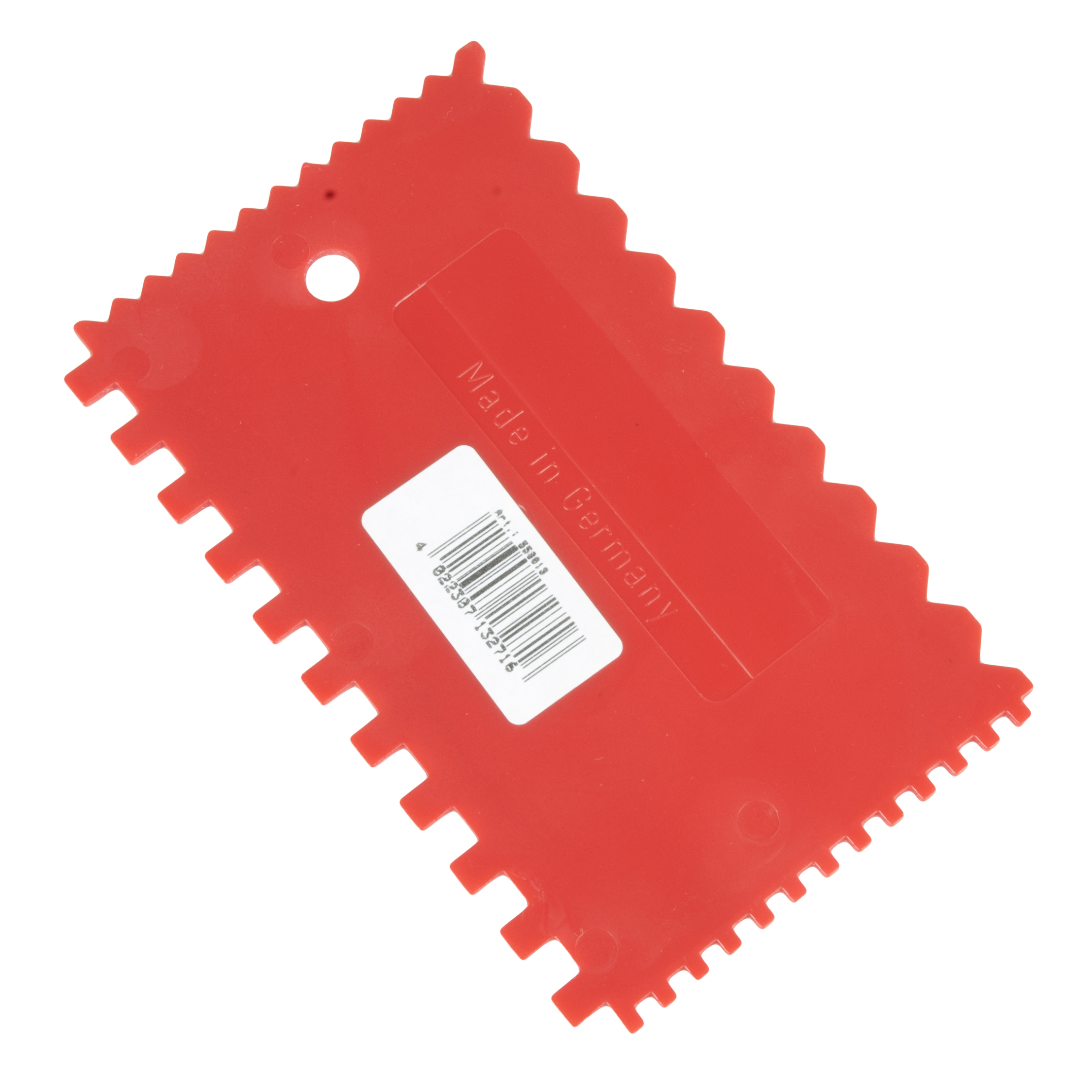
The Schwan 14 x 28 cm PVC float is a plastic float designed for professional use, whose key feature is the thinness and flexibility of its material. The float’s 2 mm thick PVC (polyvinyl chloride) plate makes the tool flexible, which sets it apart from traditional rigid polystyrene or wooden floats. This flexibility is decisive when working surfaces that need an adaptable touch or when you want a particular surface texture without tearing the material too much.
The tool is especially popular for exterior rendering, such as finishing plinths and working textured coatings. PVC is wear-resistant and does not absorb water or swell in use, unlike wooden equivalents. The smooth, dense plastic surface ensures that the coating spreads evenly and that the float glides over the surface with less friction. The tool size, 140 x 280 mm, is a standard size that gives a good working area but is still nimble enough for floating details.
The float’s handle is shaped to sit ergonomically in the hand, which reduces strain during long floating work. The plastic construction also makes the product easy to clean; mortars and coatings do not stick firmly to the slippery PVC surface, which speeds up site clean-up and extends the tool’s service life. The product is very well suited to jobs that call for a “floated” surface.
Intended use:
The Schwan PVC float is a special tool optimised especially for creating and finishing textured surfaces.
- Textured coatings: Ideal for applying and floating textured coatings, achieving an even surface pattern of the kind you want.
- Plinth rendering: Thanks to its flexibility, the tool is very well suited to levelling and coating plinths, following small unevenness in the surface where needed.
- Levelling: Used to apply various mortars and fillers and to close the surface before final drying.
Package contents:
- 1 pc Schwan PVC float 14 x 28 cm.
Features:
The product’s technical solutions are designed especially to serve the requirements of coating work.
- Flexible construction: The PVC plate, only 2 mm thick, flexes under pressure, which makes work easier and reduces the risk of “combing”.
- PVC material: The wear-resistant plastic does not rust, absorb water or rot, guaranteeing a long service life even in demanding conditions.
- Optimal size: The 140 x 280 mm size is a manageable, efficient all-round size for most rendering and coating work.
- Easy to clean: The smooth plastic surface is quick to wash clean after work.
- Light weight: The light material reduces wrist strain when floating large surfaces.
Technical specifications:
- Dimensions (W x L): 140 mm x 280 mm.
- Plate thickness: 2 mm.
- Material: PVC (polyvinyl chloride).
Schwan PVC float instructions for use:
For the best result with textured coatings and renders, follow these work steps:
Preparation and application:
Make sure the substrate has been properly prepared. Apply the coating or mortar to the surface with a steel trowel or a sprayer according to the manufacturer’s instructions.
Floating:
Take the PVC float and start floating the surface while the material is still workable but not too wet. Use a circular movement to get an even texture. The flexibility of the float lets you vary the pressure: lighter pressure levels gently, firmer pressure compacts the surface more. Work systematically one area at a time.
Cleaning:
Clean the float regularly during work if too much compound builds up on it. When work is finished, wash the tool in water immediately. Dried textured coating is difficult to remove without damaging the plastic surface.
Warnings:
- Solvents: Avoid using strong solvents (such as acetone) for cleaning, as they can make PVC brittle or dissolve it.
- Frost resistance: The plastic can harden and become brittle in very cold conditions; avoid heavy knocks with a frozen tool.
- Sharp edges: The edges of a new float can be sharp; take care not to scratch finished surfaces or your skin.
Frequently asked questions (FAQ):
How does this differ from a polystyrene float?
The PVC float is considerably thinner (2mm) and more flexible, and its surface is not porous like polystyrene. It is better suited to finishing and textured coatings, while polystyrene is often used for coarser levelling.
Is this product suitable for floating a concrete floor?
The product is designed mainly for wall surfaces and renders. Steel or wooden floats are generally recommended for concrete floors, but the PVC float can be used for small patches.
Can the handle be replaced?
On this model the handle is typically fixed or moulded to the base plate, so it cannot be replaced without breaking the tool’s construction.
Recycling instructions:
The product is made mainly of PVC plastic. At the end of its life, the product can be disposed of as energy waste or mixed waste according to local recycling regulations.