
Description
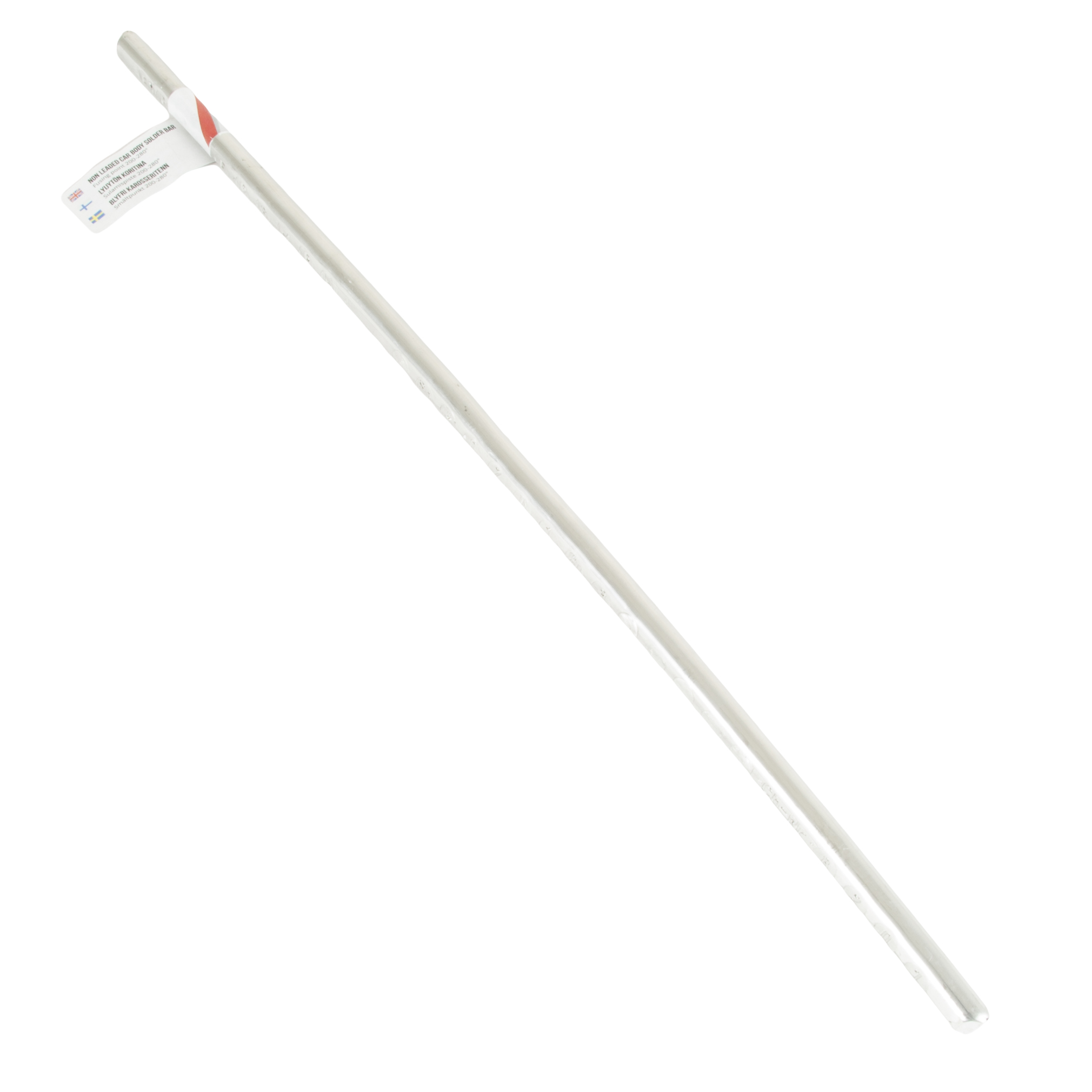
Schwan lead-free body solder has been developed for demanding professional use in car body repairs and restoration projects. This product offers a more modern and safer alternative to traditional leaded solder, while keeping the superior properties of tinning compared with plastic-based fillers. The bar measures 10 x 6 x 400 mm, which makes it easy to handle on jobs of different sizes.
Body solder is used mainly to replace putty and filler in places that require absolute durability, weather resistance and the ability to withstand vibration without cracking. Because the solder forms a metallic bond with the base material, it does not come loose or shrink over time in the same way as synthetic fillers. This makes it an ideal solution for repairing wheel arch edges, door bottoms and other areas prone to corrosion, for example.
A significant advantage of the product is its workability. Heated to the right temperature, the solder becomes paste-like, so it can easily be spread and shaped, for example with beech wood paddles. This allows even complex body shapes to be restored precisely and weld seams to be finished seamlessly, so the result is completely tight and metallic before painting.
Intended use:
- Car body restoration and damage repair: Used to fill deep dents and restore the original shapes of the body when you want to avoid using filler. Particularly popular in restoring classic cars to ensure a durable result
- Finishing weld seams: Excellent for skimming panel joints and weld seams. The solder fills the pores and unevenness created by welding, making the seam watertight and invisible after painting. This prevents moisture getting into the seam and prevents later corrosion
- Alternative to filler: On areas exposed to impacts, vibration or temperature changes, body solder offers far better adhesion and durability than polyester fillers. It does not shrink as it dries and does not absorb moisture
Package contents:
- 1 pcs Schwan body solder bar, lead-free (dimensions: 10 mm x 6 mm x 400 mm)
Features:
- Lead-free composition: A more user-friendly alternative to traditional lead solders that meets modern requirements and places less burden on the environment.
- Excellent mouldability: Molten solder is easy to spread and shape into the required form with wooden paddles before it sets.
- Strong adhesion: When correctly primed (with soldering paste), it forms a metallurgical bond with the steel surface, which guarantees a very durable repair.
- Non-shrinking: Unlike many fillers, body solder does not shrink as it cools, which reduces the need for finishing work.
Technical specifications:
- Material: Lead-free tin alloy
- Shape: Flat bar
- Width: 10 mm
- Thickness: 6 mm
- Length: 400 mm
Instructions for use:
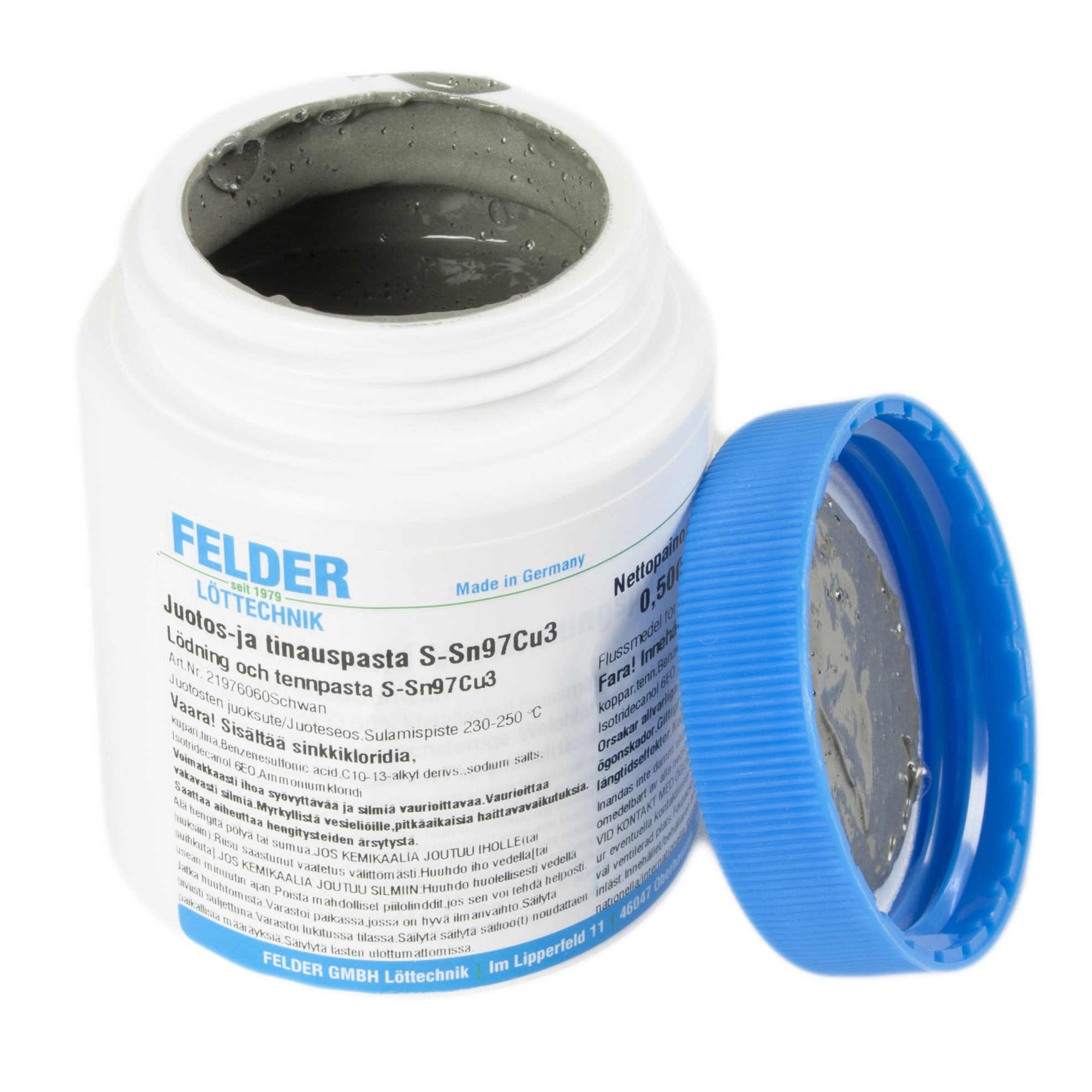
To get a successful result, using body solder requires careful preparation. Clean the area to be repaired back to completely clean metal; remove all paint, rust, grease and dirt. The surface must be bright metal. Apply a suitable tinning primer, i.e. soldering paste, to the cleaned area. Heat the area carefully with a gas torch or hot air gun until the soldering paste turns silvery and bubbles lightly. Wipe off the excess paste with a clean cloth, leaving a tinned bonding surface.
Then heat both the body solder bar and the tinned surface. Melt solder onto the surface and keep it paste-like by controlling the heat. Use a wooden paddle (treated, for example, with beeswax or tallow) to spread and shape the solder. Avoid overheating so that the solder does not run off. When the required shape is reached, let the solder cool naturally. The cooled surface can be sanded or filed to its final shape.
Warnings:
This product is intended for professional use. The work involves high temperatures and the use of open flame or hot air, which creates a fire hazard and a risk of burns. Make sure the work area is fire-safe. Always wear suitable personal protective equipment, such as heat-resistant gloves and safety glasses. Although the product is lead-free, fumes from soldering pastes and fluxes can be harmful if inhaled; ensure adequate ventilation or wear a respirator.
Frequently asked questions (FAQ):
Why choose lead-free body solder?
Lead-free body solder has been developed to meet current health and environmental requirements. It removes the risk of lead exposure during working but still offers the benefits of traditional tinning, such as durability and mouldability.
Can body solder be used without primer?
Not recommended. Tinning primer (soldering paste) is essential for the solder to bond chemically to the base metal. Without primer, the bond remains weak and the solder can come loose.
What tool is used to shape the solder?
The best result comes from using suitable hardwood (e.g. beech) paddles. It is worth treating the paddles with a release agent such as beeswax or tallow so that molten solder does not stick to the tool.
Recycling instructions:
Leftover or used body solder can be recycled in metal recycling. Take waste to a collection point in line with local waste management regulations.