
Description
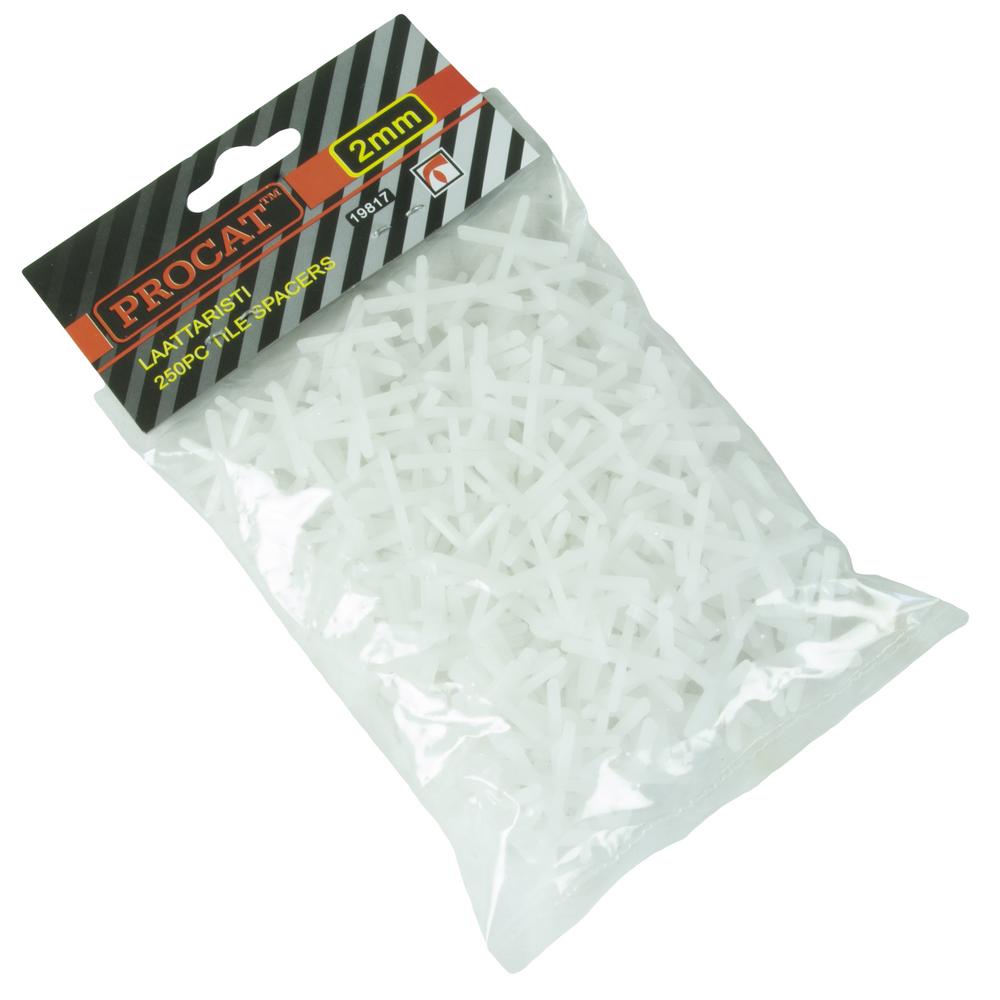
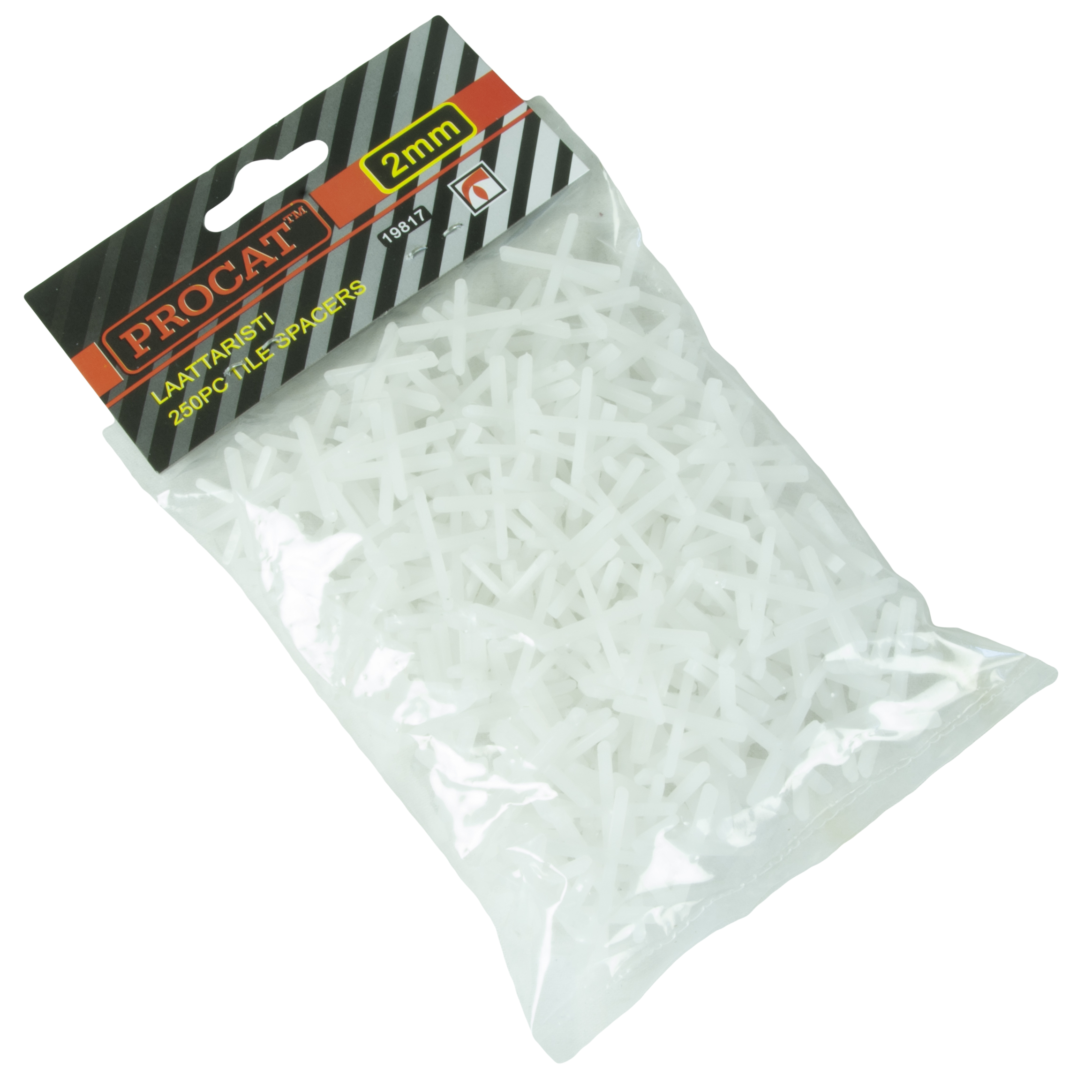
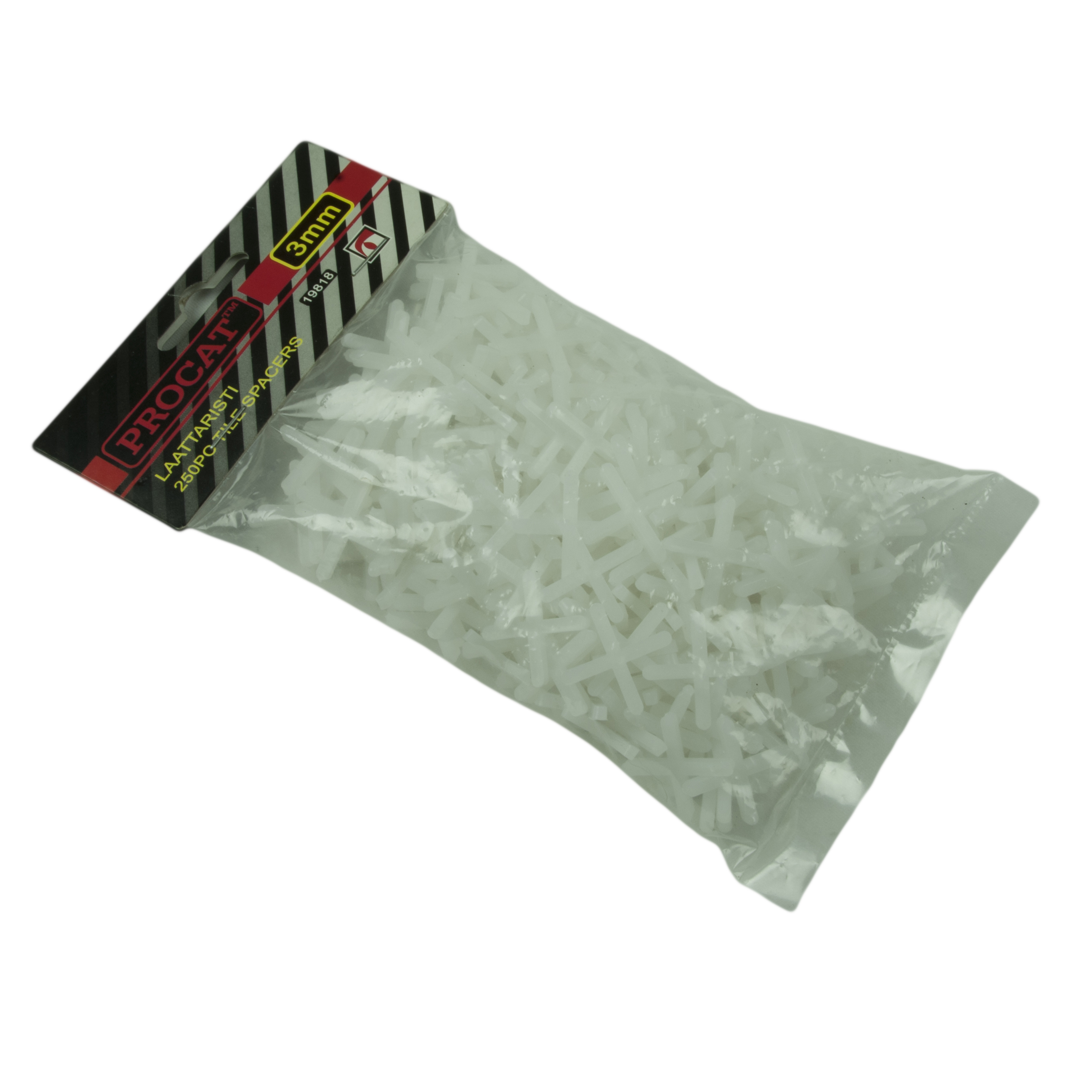
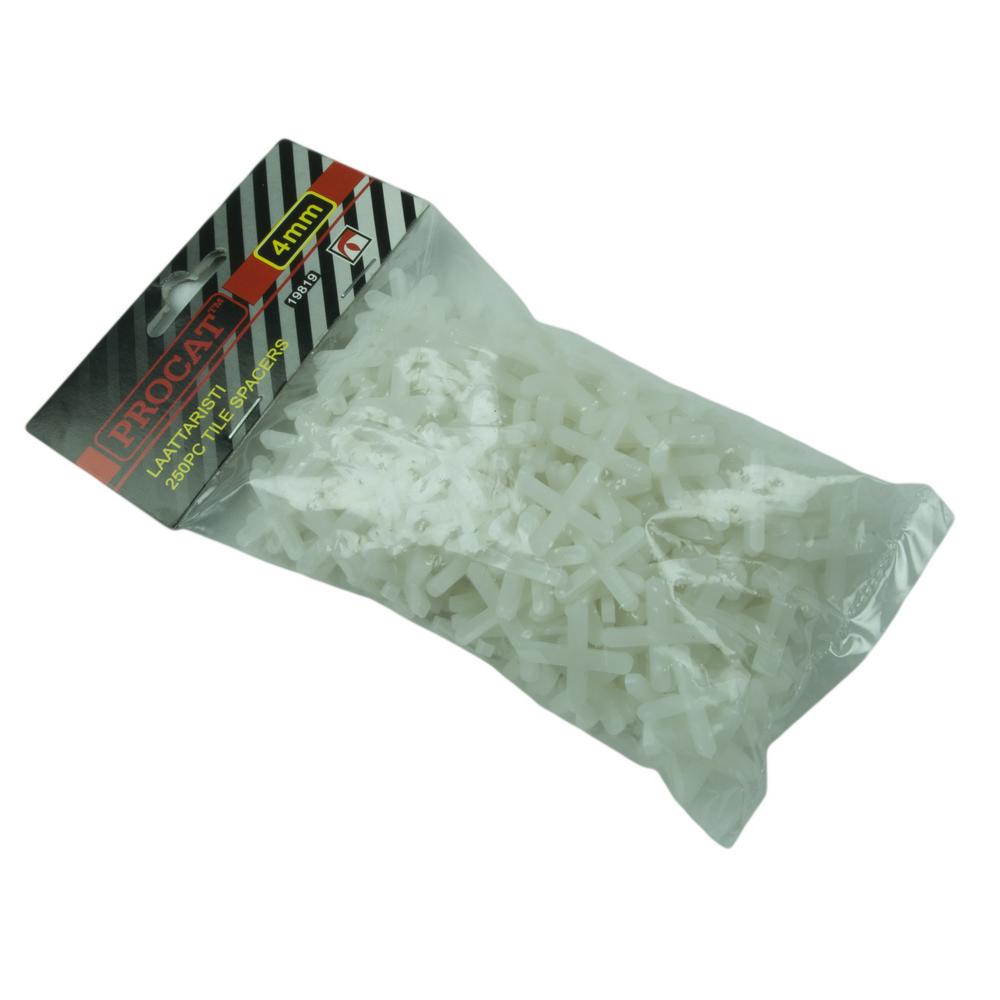
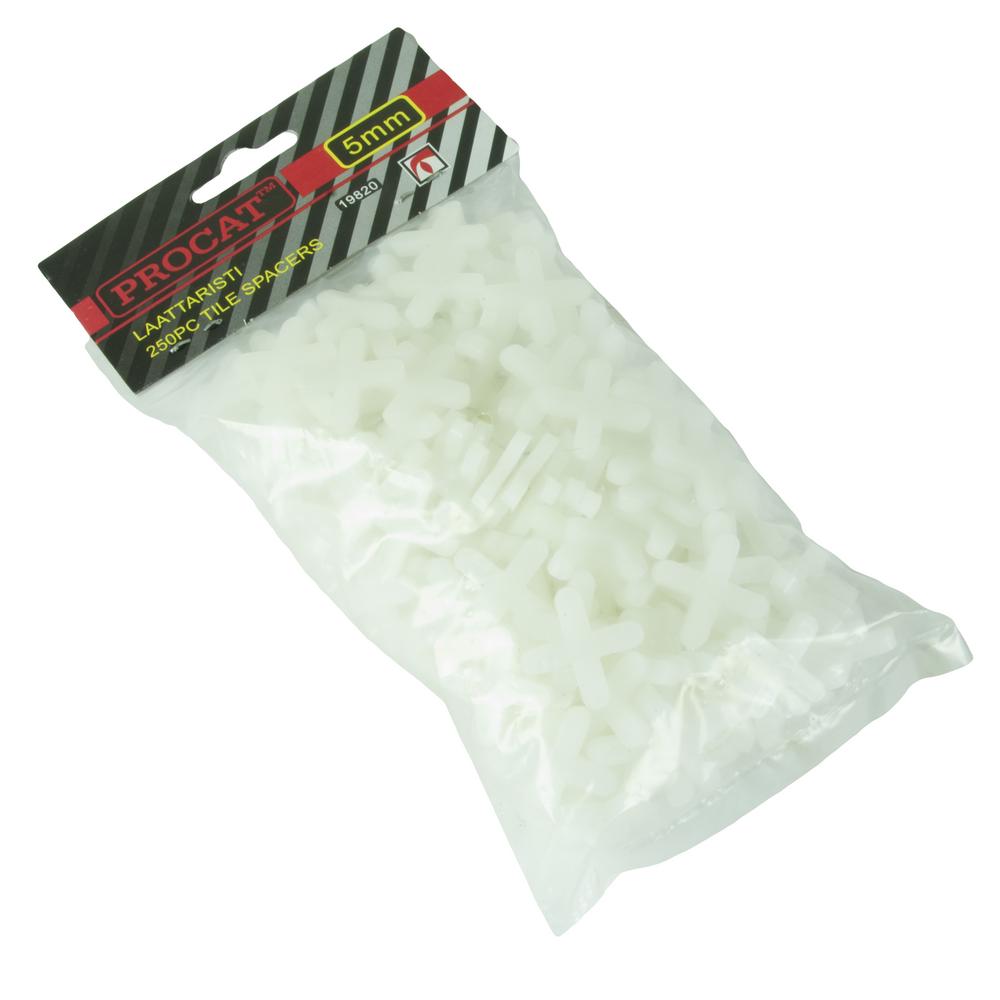
Procat tile spacers are an essential tool in tiling work, as they ensure even, uniform joints between tiles. Made of high-quality plastic, these tile spacers are durable and easy to use, which makes them ideal for professionals and DIYers alike. The pack contains 250 tile spacers, enough to cover large tiling projects.
With tile spacers, the vertical and horizontal gaps between all the tiles always stay exactly as wide as the spacer. This guarantees that the rows of tiles stay straight even over long distances, which is especially important in large rooms or long corridors. The thickness of the spacer determines the joint size, so by choosing spacers of the right size you can control the joint width and achieve the look you want.
Procat tile spacers are available in different sizes, such as 2 mm, 3 mm, 4 mm and 5 mm, so you can choose the size that best suits the requirements of your project. For example, 4 mm spacers create a slightly wider joint, which may be wanted with certain types of tiles or designs.
Using these tile spacers improves the look of the tiling and also makes grouting easier. Even joints ensure that the grout spreads evenly and bonds properly, which increases the durability and longevity of the tiling. Tile spacers also reduce the chance of mistakes during installation, which saves time and effort.
Procat tile spacers can be laid flat in the traditional way, ensuring an even distance in all directions. Alternatively, they can also be set upright, with only one leg placed between the tiles. This makes the spacers easier to remove and lets you fine-tune the joint width.
Intended use
- Floor tiling: Ensures straight joints and stops the tiles from moving during installation.
- Wall tiling: Holds the tiles in place and helps keep the joints symmetrical.
- Mosaic tiling: Well suited to installing small tiles that need an accurate, uniform joint width.
- Irregular tile patterns: Allows even tile spacing even in complex layouts.
- Outdoor areas: Suitable for installing tiles on terraces, balconies and other outdoor areas.
Package contents
- 250 Procat tile spacers of the selected size (e.g. 4 mm).
Features
- Material: Durable plastic, with a long-lasting construction that does not warp.
- Sizes: 2 mm, 3 mm, 4 mm and 5 mm; choose the joint width to suit the requirements of the project.
- Installation methods: Can be laid flat in the traditional way or set upright, with only one leg placed between the tiles.
- Removal options: Can be removed before grouting or left in place in certain situations.
- Pack size: 250 pcs, enough for even large tiling projects.
Remove the tile spacers or leave them in place?
There are two schools of thought on removing tile spacers:
1. Removing the tile spacers before grouting
- Guarantees an even joint and a more attractive result.
- Reduces the risk of cracks and stresses in the tiling.
- Ensures that the grout fills the joint to its full depth.
2. Leaving the tile spacers in place
- Speeds up the work, because you do not need to remove the spacers before grouting.
- Supports the tiles, especially on walls and when installing large-format tiles.
- Can improve the stability of the joint, but it is important that the spacers do not remain visible on the surface.
Both methods can work well, but removing the tile spacers before grouting usually gives a better result.
Procat tile spacer instructions for use
- Preparation: Make sure the substrate is level and clean before you start tiling.
- Placing the tile spacers: Place the tile spacers either flat in the traditional way or upright, with only one leg left between the tiles.
- Installing the tiles: Place the next tile next to the spacer, making sure it is level with the other tiles.
- Removing the tile spacers (optional): Remove the spacers once the adhesive has dried sufficiently (usually 24 hours), or leave them in place if that suits your project.
- Grouting: Spread grout into the joints and wipe off the excess with a damp sponge.
- Drying and finishing: Let the grout dry as instructed and clean the tiling.
Choosing the right tile spacer size for the tile size
The size of the tile spacer directly affects the tiling result, as it determines the joint width. The right size depends on several factors, such as the tile size, material, intended use and the look you want. Below are general guidelines to help you choose a suitable spacer size for different tile sizes and applications. Check the recommended joint size with the tile manufacturer or on the tile packaging.
1. Small tiles (under 10×10 cm)
- Recommended spacer size: 1 mm – 2 mm
- Applications: Mosaic tiles, small decorative and wall tiles.
- Points to note: Small joints create a uniform, unobtrusive result.
2. Medium-sized tiles (10×10 cm – 30×30 cm)
- Recommended spacer size: 2 mm – 3 mm
- Applications: The most common indoor floor and wall tiles, kitchens, bathrooms.
- Points to note: A 2 mm joint gives a modern, unobtrusive look, while a 3 mm joint gives a slightly more traditional look.
3. Large tiles (30×30 cm – 60×60 cm)
- Recommended spacer size: 3 mm – 4 mm
- Applications: Living rooms, larger bathrooms, commercial premises.
- Points to note: With large tiles, a slightly wider joint helps compensate for possible dimensional tolerances between tiles.
4. Very large tiles (over 60×60 cm or tile slabs)
- Recommended spacer size: 4 mm – 5 mm
- Applications: Large-format tiles, outdoor areas, open floor areas, restaurants and public spaces.
- Points to note: Wider joints give the tiling more flexibility for thermal expansion and structural movement.
5. Rustic or uneven tiles (natural stone, terracotta, handmade tiles)
- Recommended spacer size: 4 mm – 6 mm
- Applications: Outdoor areas, traditional and rustic interiors.
- Points to note: Irregularly shaped tiles often need wider joints so that the tiling looks even.
Summary table for choosing the right tile spacer size
| Tile size | Recommended spacer size | Applications |
|---|---|---|
| Under 10×10 cm | 1 mm – 2 mm | Mosaics, decorative and small wall tiles |
| 10×10 cm – 30×30 cm | 2 mm – 3 mm | Kitchens, bathrooms, general interiors |
| 30×30 cm – 60×60 cm | 3 mm – 4 mm | Larger floor areas, commercial premises |
| Over 60×60 cm | 4 mm – 5 mm | Large-format tiles, public spaces, outdoor areas |
| Natural stone, terracotta, rustic tiles | 4 mm – 6 mm | Outdoor areas, traditional floors |
Other factors to consider when choosing the tile spacer size
- Dimensional accuracy of the tiles
- If the tiles are perfectly uniform, a smaller joint gap can be used (e.g. 2 mm).
- Uneven or handmade tiles need a wider joint for a neat result.
- Effect of the joint on appearance
- Narrow joints (1–2 mm) give a modern, minimalist look.
- Wider joints (4–6 mm) emphasise tile patterns and give a more traditional look.
- Application and conditions
- In wet rooms (e.g. bathrooms), a joint of at least 3 mm is recommended, so that the grout can penetrate properly and protect the joint from water.
- Outdoors, joints should be wider (4 mm or more) so that they withstand temperature changes better.
By choosing tile spacers of the right size, you ensure that the tiling looks good, stays firmly in place and works as designed!
Warnings
- Do not leave tile spacers visible on the surface if you decide to leave them in place.
- Remove the tile spacers carefully so that the tiles do not move.
- Always use tile spacers of the right size: a spacer that is too small or too large can affect the quality of the tiling.
- Avoid walking on the tiling before the adhesive has hardened.
Frequently asked questions (FAQ)
1. Should tile spacers be removed before grouting?
It is recommended, but some people leave them in place. Removing them ensures an even joint and a better result.
2. Why use tile spacers upright?
Setting them upright makes the spacer easier to remove and allows fine adjustment of the joint width.
3. What tile spacer size is suitable for a bathroom?
Most commonly, 3 mm or 4 mm spacers are used, depending on the tile size and design.
4. Can tile spacers be reused?
They are usually single-use, but some thicker models can be reused.
5. What is the best tile spacer size for large tiles?
4 mm or 5 mm is recommended for large-format tiles, as it improves the balance of the tiles.