
Description
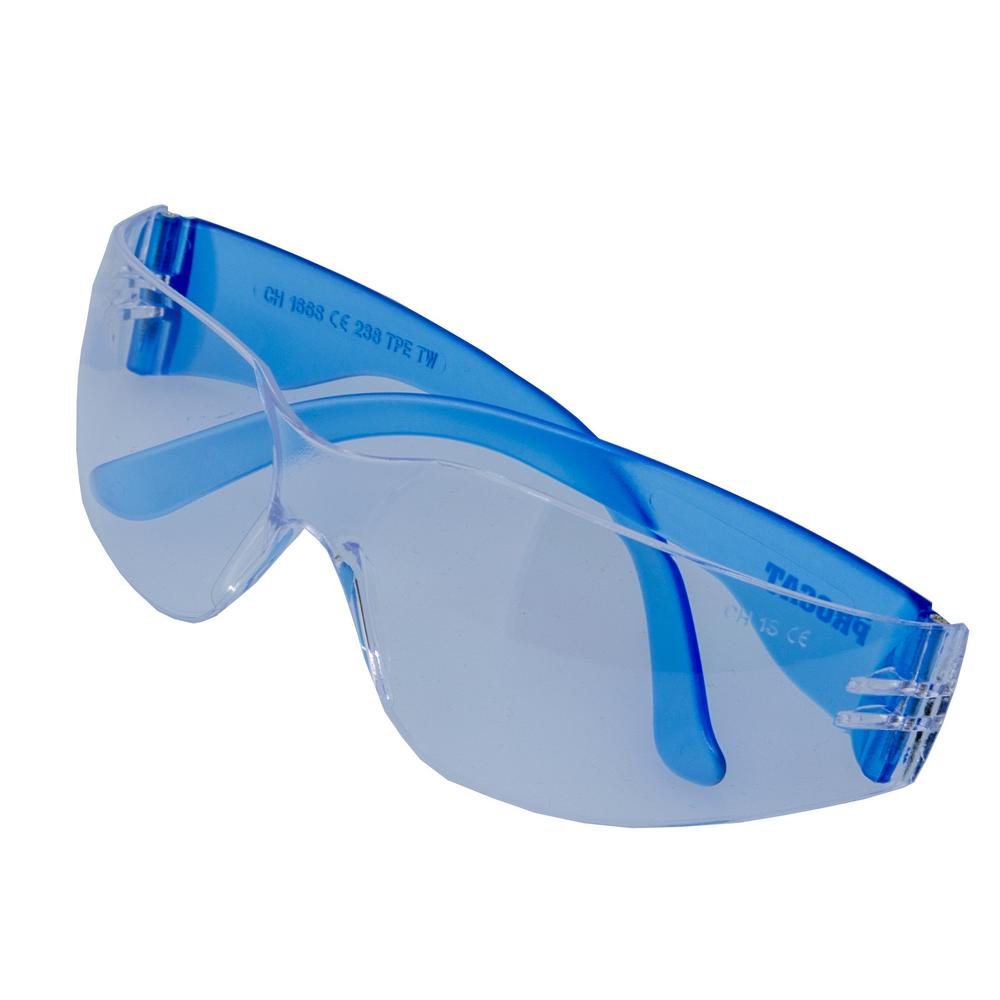
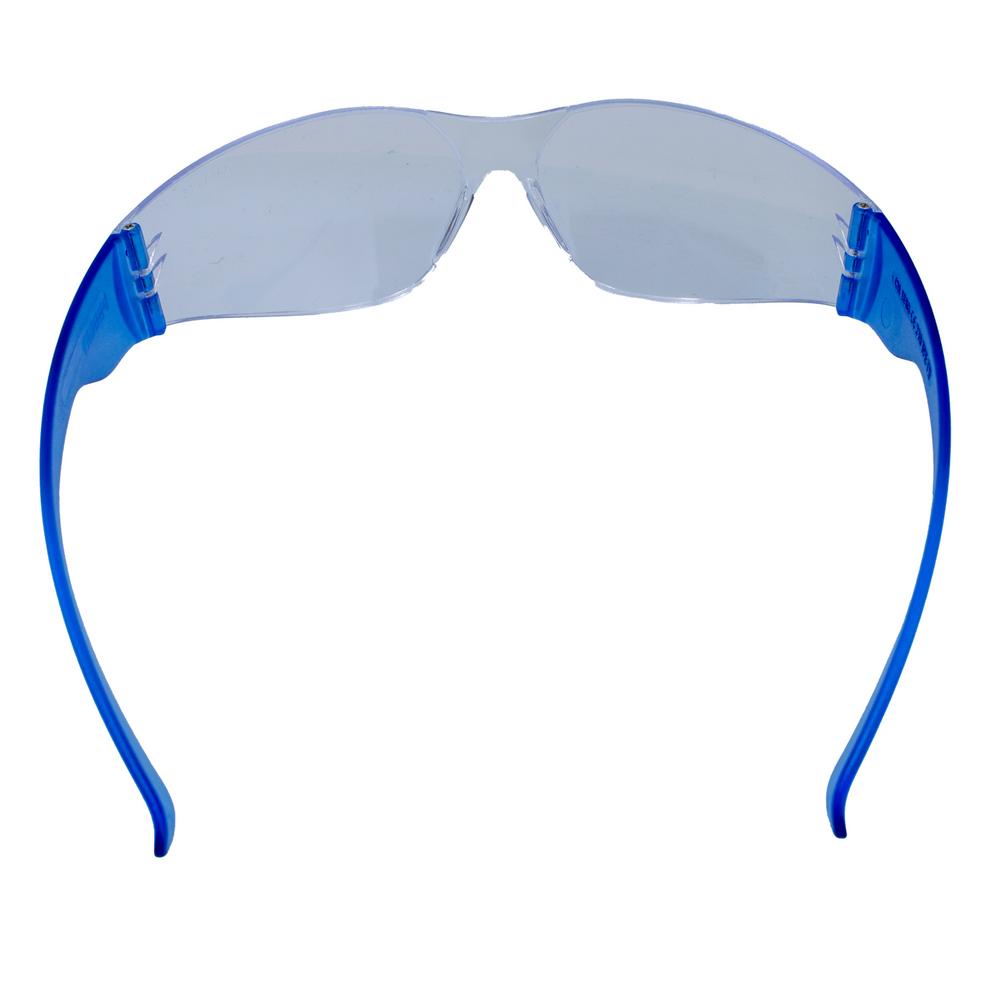
Procat children’s safety glasses 802S are eye protectors sized for 3–6-year-old children and meet the requirements of the EN 166:2001 standard. The glasses are approved as personal protective equipment under the PPE Regulation (EU) 2016/425. The EU type examination was carried out by BSI Group The Netherlands B.V. (notified body 2797).
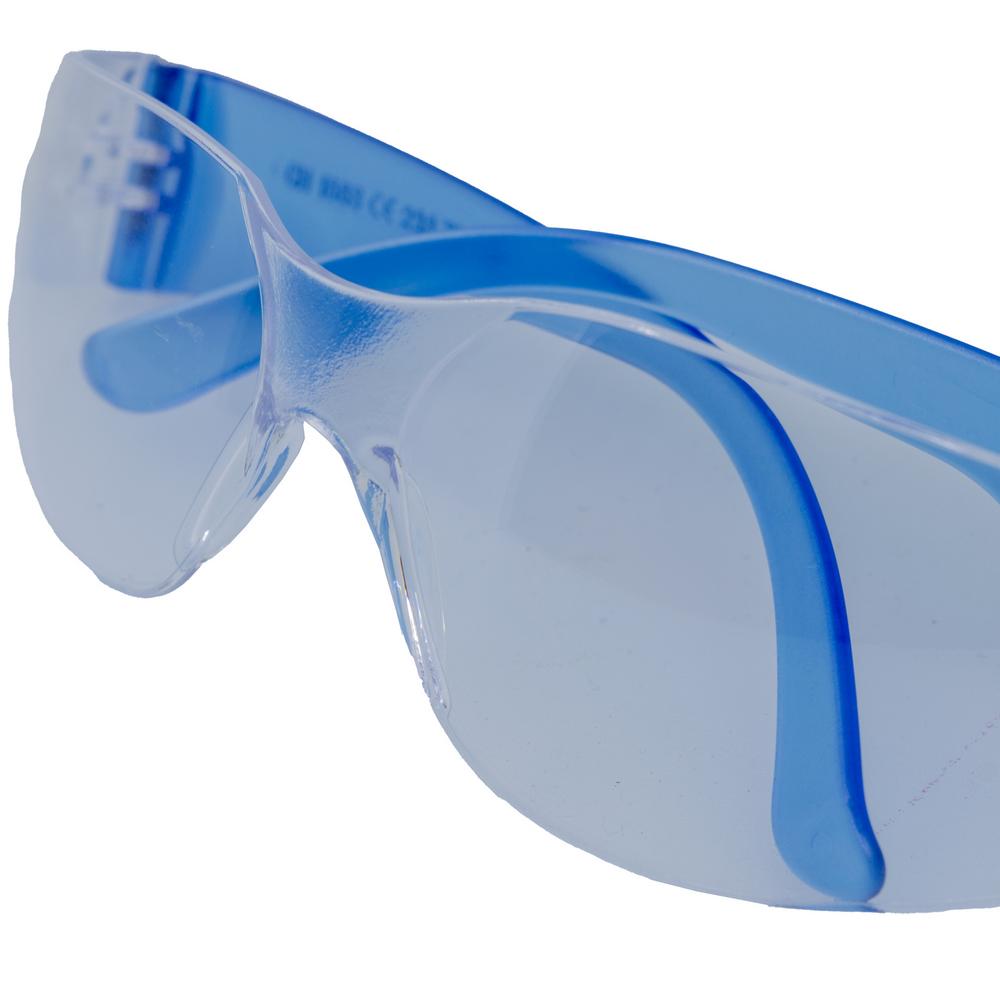
A one-piece wraparound polycarbonate (PC) lens protects the eyes from the front and sides. The nose bridge and side shields are moulded into the same lens piece, so no separate side shields are needed. The clear lens does not darken the view.
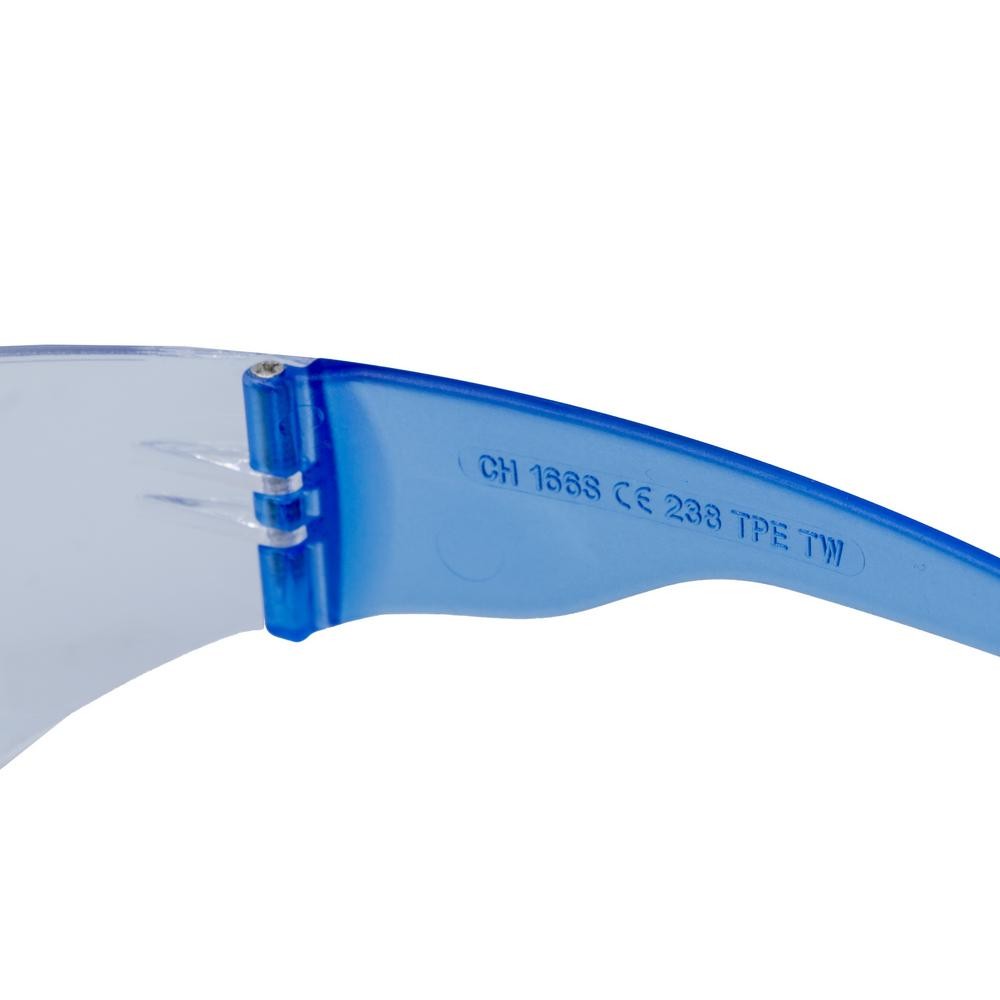
The lens marking CH 1 S and the arm marking CH 166 S give the protector’s rating: CH is the manufacturer’s identification, 1 stands for optical class 1 and S for increased robustness. Optical class 1 is the highest optical class in the standard and is intended for long-term use. The protector has no impact marking for high-speed particles (F, B or A).
The lens surface is treated against scratching and fogging. The non-adjustable blue arms are attached to the lens with small hinge screws.
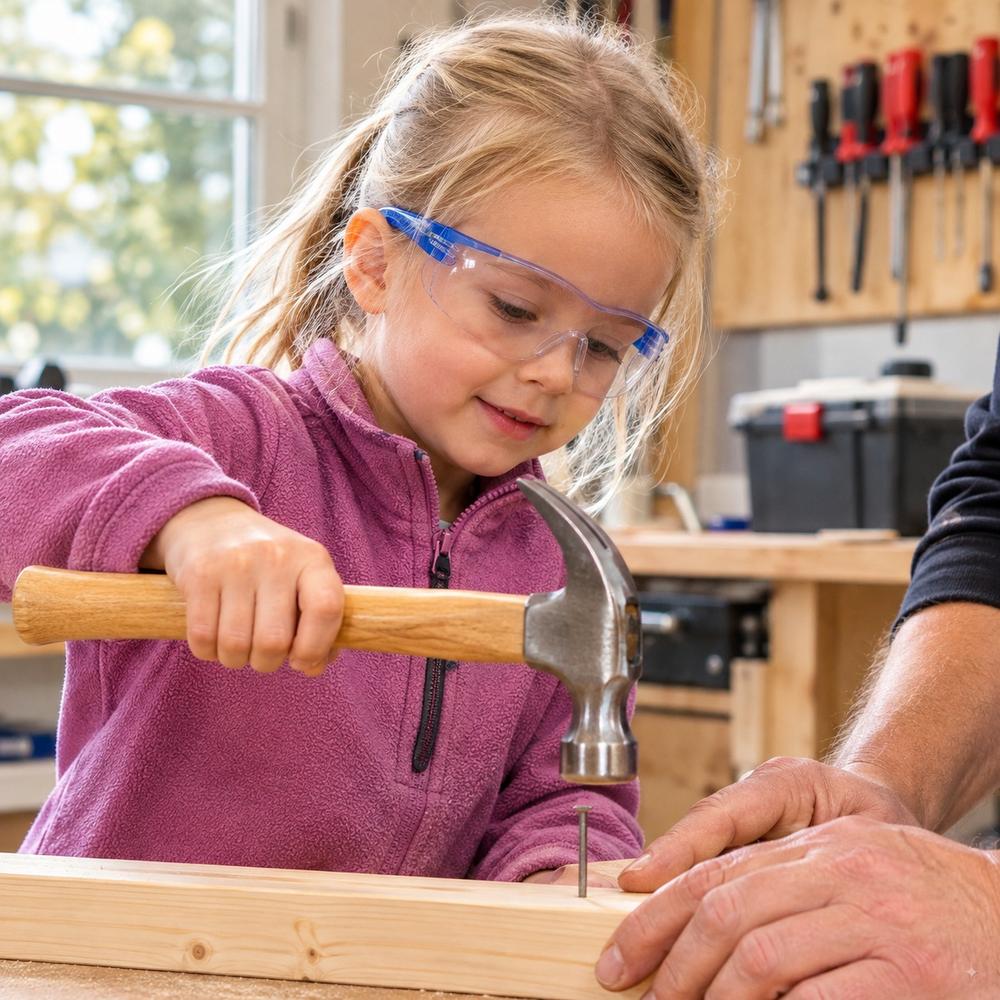
The glasses are intended to be used always under adult supervision, in situations where small particles, chips or twig ends can fly into the eyes. They do not replace adult supervision or sunglasses.
Intended use and suitability:
The glasses are suitable for 3–6-year-old children for light tasks where the hazard is small, slow-moving particles. They do not protect against high-speed particles, welding, laser light or chemical splashes.
- Woodwork and crafts with an adult: Hand sawing, sanding and whittling release sawdust and small chips, and the wraparound lens protects the eyes from them at the front and sides.
- Nailing and hammering: When nailing with children’s tools, a nail head or wood splinter can bounce towards the face. Thanks to increased robustness S, the glasses withstand light impacts like these.
- Kindergarten and preschool workshops: In technical work and building, the safety glasses get children used to wearing eye protection from an early age.
- Science experiments with household substances: In experiments with bicarbonate of soda, vinegar or water, the glasses protect the eyes from droplets coming straight from the front, but they have no field-of-use marking for liquid splashes.
- Garden and yard work: When pruning branches, gathering twigs and moving between bushes, the lens protects the eyes from twig ends and debris.
Package contents:
- Safety glasses: 1 pc Procat 802S children’s safety glasses, clear polycarbonate lens and blue arms.
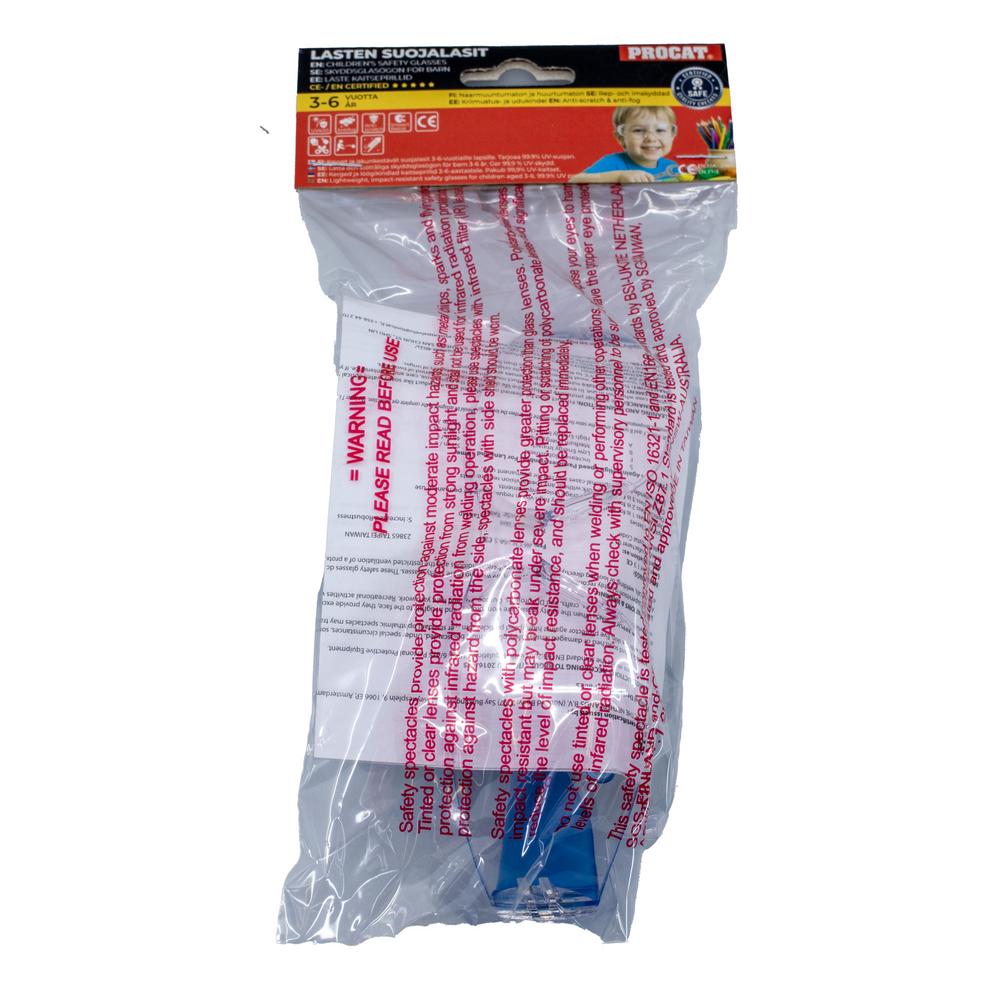
- User instructions: User instruction leaflet in line with the PPE Regulation, with explanations of the markings.
- Packaging: Plastic bag and cardboard header card for hanging.
Features:
- Frame sized for a child’s face: The lens size is designed for the faces of 3–6-year-olds.
- One-piece wraparound lens: The lens covers the eyes at the front and sides. The nose bridge is part of the same piece.
- Optical class 1: The optical quality of the lens meets the requirements of the strictest class of EN 166, so the glasses are also suitable for long periods of wear.
- Increased robustness S: The lens and frame pass the EN 166 robustness test, in which a 22 mm steel ball is dropped onto the lens from a height of 1.3 metres.
- Surface that reduces scratching and fogging: The surface treatment keeps the view clearer in use, but humid air and poor ventilation can still fog the lens.
- Non-adjustable blue arms: The hinged arms fold for storage and have no adjustable parts.
Technical specifications:
- Standard: EN 166:2001
- Legislation: PPE Regulation (EU) 2016/425
- EU type examination: BSI Group The Netherlands B.V., notified body 2797
- Lens marking: CH 1 S
- Arm marking: CH 166 S
- Optical class: 1
- Mechanical strength: S (increased robustness)
- Lens material: Polycarbonate (PC)
- Arm material: Polycarbonate (PC)
- Lens colour: Clear
- Lens surface: Treatment that reduces scratching and fogging
- Arm colour: Blue
- Recommended age: 3–6 years
- Chemical safety: EN 71-3:2019 + A2:2024 (migration of certain elements), lens and arms tested at SGS Taiwan, report HKC26500166, result: pass
- Operating temperature: Normal ambient temperature
- Storage conditions: 5–40 °C, relative humidity below 90%
- Recommended service life: Up to 2 years
Procat children’s safety glasses 802S user instructions:
Read the instructions together with an adult before first use. An adult fits the glasses on the child and supervises throughout use.
- Check before use: Make sure the lens has no scratches, pits or cracks and that the arms and hinge screws are intact.
- Fit the glasses: Place the glasses on the child’s face so that the nose bridge rests on the nose and the arms sit over the ears. The lens must also cover the eyes at the sides.
- Start work only with the glasses on: Keep the glasses on for the whole task, including while cleaning up sawdust and chips.
- Clear fogging: If the lens fogs up, take a break and wipe the lens with a clean, soft cloth.
- Clean after use: Wash the lens with soapy water, optical lens cleaner or a very mild alcohol solution. Dry with a soft cloth without pressing.
- Store protected: Store the glasses in a case or in the original packaging at 5–40 °C and below 90% relative humidity. Transport the glasses in the original packaging.
- Replace in time: Replace the whole glasses with new ones if the lens or frame is damaged. In any case, replace them after two years at the latest.
Warnings:
Procat children’s safety glasses 802S protect the eyes only against light mechanical hazards. Read the warnings before use.
- Adult supervision: The safety glasses do not replace adult supervision. The child uses them only when an adult is present.
- Not for high-speed particles: The protector carries only the increased robustness marking S and no impact marking F. The glasses are not suitable for use near power tools or grinders.
- Not for welding, laser or infrared: The lens has no welding, laser or IR filter.
- Damaged lens: Scratched, pitted or otherwise damaged glasses must be taken out of use immediately.
- Service life: Replace the safety glasses after two years at the latest, even if they look intact.
- Fogging: Humid air and poor ventilation can fog the lens, which reduces visibility.
- Allergy: In a child with very sensitive skin, materials that touch the skin can cause an allergic reaction. Stop use if the skin becomes irritated.
- Over prescription glasses: A protector worn over prescription glasses can transmit an impact to the glasses.
- Not a toy: The safety glasses are personal protective equipment. The small hinge screws can come loose from a damaged frame.
Frequently asked questions (FAQ):
What age are Procat children’s safety glasses 802S for, and to which standard are they approved?
Procat 802S children’s safety glasses are sized for 3–6-year-old children. They meet the requirements of EN 166:2001. The EU type examination was carried out by BSI Group The Netherlands B.V. (notified body 2797). The polycarbonate lens has optical class 1 and robustness class S.
Can Procat 802S children’s safety glasses withstand a nail or chip bouncing off during hammering?
Thanks to increased robustness S, Procat 802S children’s safety glasses withstand light impacts, such as small chips released when nailing with hand tools and in woodwork. They do not carry the impact marking F for high-speed particles. EN 166-approved glasses for 3–6-year-olds are not used near power tools.
What do the markings CH 1 S and CH 166 S mean on Procat 802S children’s safety glasses?
The lens marking CH 1 S on Procat 802S children’s safety glasses gives the manufacturer’s identification (CH), optical class 1 and increased robustness (S). The arm marking CH 166 S refers to EN 166 and the same robustness class S. The polycarbonate lens is sized for 3–6-year-olds.
How are Procat 802S children’s safety glasses cleaned, and how often should they be replaced?
The polycarbonate lens of Procat 802S children’s safety glasses is washed with soapy water, optical lens cleaner or a very mild alcohol solution. Scratched or damaged glasses are replaced with new ones immediately. EN 166-approved glasses are replaced after two years at the latest in any case.
Recycling instructions:
- Safety glasses: Sort the polycarbonate lens and plastic arms into plastic collection according to local waste guidelines. Sort dirty glasses, or glasses whose parts cannot be separated, into mixed waste.
- Plastic bag: Sort the clean packaging bag into plastic packaging collection.
- Header card: Sort the cardboard hanging card into cardboard collection.
- User instructions: Sort the paper instruction leaflet into paper collection when the glasses are taken out of use.


