
Description
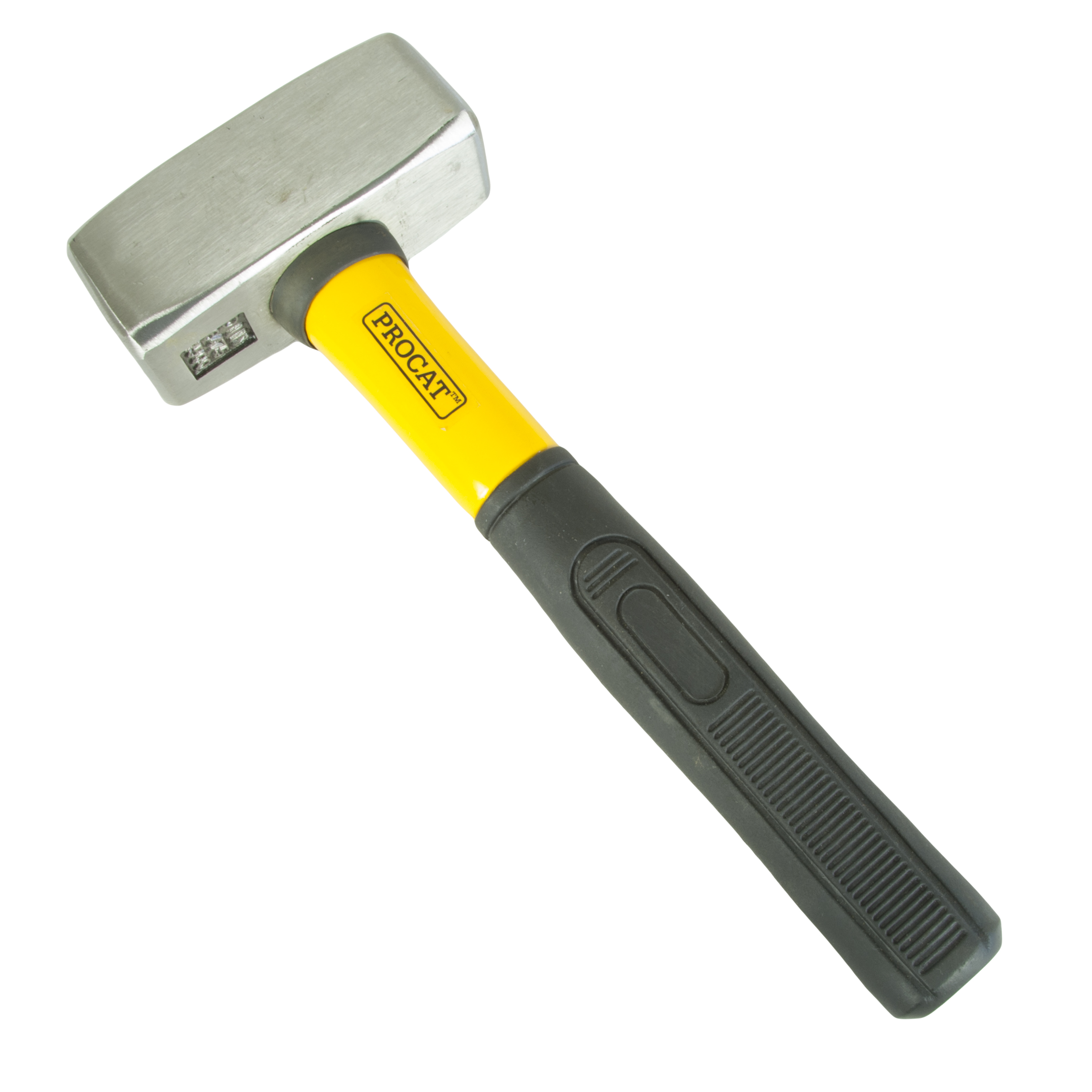
Procat blacksmith’s hammer with fibreglass handle is a hammer for metalwork with a forged steel head, fibreglass handle and rubber-coated grip. The hammer is available with two head weights: 1500 g and 2000 g.
One end of the head has a flat striking face and the other a cross pein. The flat face transfers the blow over its full area to a chisel, punch or plate; the cross pein concentrates the same energy on a narrow edge, so the blow stretches and shapes the metal locally. The same pairing is used in forging, riveting and straightening plate.
The fibreglass handle does not dry out, split or swell like a wooden handle, and it dampens the rebound of the blow within the structure of the handle. The handle is permanently fixed in the eye of the head, so it does not loosen with the seasons. The rubber-coated grip is patterned for grip and stays in the hand even with oily hands.
The 1500 g head is suitable for striking work that needs precision, where the hammer is used in long series and the blow must be aimed accurately. The 2000 g head transfers more energy per blow, which speeds up shaping thick material and freeing stuck parts. When clearly more impact energy is needed for demolition and wedging work, the equivalent tool with a fibreglass handle is the Procat sledgehammer 3.6 kg / 8 lb fibreglass handle.
Intended use and suitability:
The blacksmith’s hammer is intended for shaping metal and driving striking tools in engineering workshops, repair shops and installation work.
- Forging and shaping: the cross pein stretches and thins metal in a controlled way; the flat face smooths the marks.
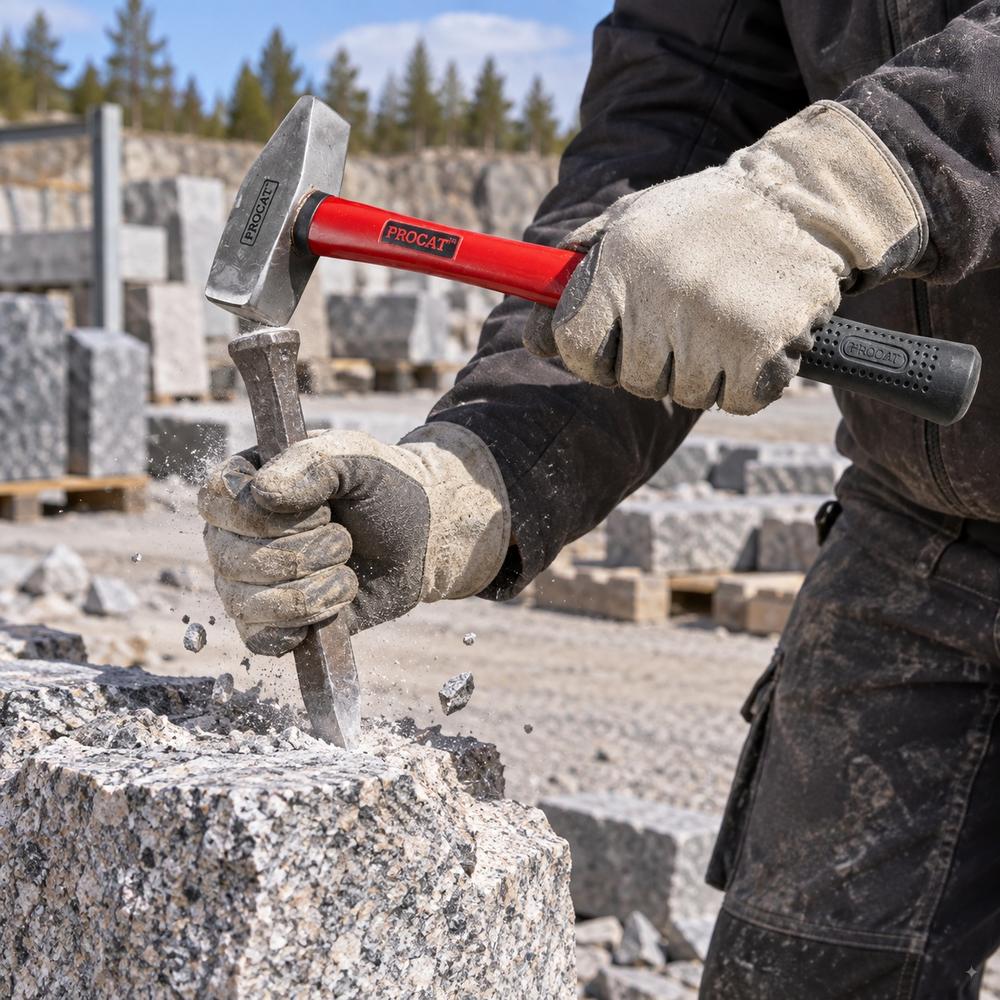
- Chiselling and punching: striking a cold chisel, punch and centre punch with the flat striking face.
- Straightening and freeing: straightening bent parts and freeing rusted joints by striking.
- Riveting: shaping the rivet head with the cross pein and closing it with the flat face.
- Installation work: driving pins and bushes into place when there is no room for a press.
Package contents:
- 1 x Procat blacksmith’s hammer with fibreglass handle in the selected head weight (1500 g or 2000 g)
Features:
- Dual-purpose head: flat striking face and cross pein on the same tool.
- Forged steel head: the dense structure withstands repeated metal-on-metal blows.
- Fibreglass handle: does not dry out or split, dampens rebound and stays dimensionally stable as humidity changes.
- Rubber-coated grip: the patterned surface keeps its grip even with oily hands.
- Two weight options: 1500 g for precise striking work, 2000 g for greater impact energy.
Technical specifications:
- Head weights: 1500 g and 2000 g.
- Head shape: flat striking face and cross pein.
- Head material: forged steel.
- Handle: fibreglass.
- Grip: rubber-coated, patterned.
- Application: metalwork, forging, chiselling and straightening.
Procat blacksmith’s hammer with fibreglass handle instructions for use:
Before use: Check that the head has no cracks or burrs and that the handle has no cuts or fractures. Make sure the head is firmly fixed to the handle. File off any burr raised on the edges of the striking face before it chips.
Grip and blow: Hold the handle at the back end of the grip: the long lever arm produces the impact energy, not arm strength. Hit the workpiece with the centre of the striking face and squarely; an angled blow throws the workpiece and breaks the edge of the face. Let the weight of the hammer do the work and keep your wrist straight.
Choosing the weight: Use the 1500 g head when the blow must be aimed precisely and there are many blows. Use the 2000 g head when the material is thick or the joint is stiff.
Maintenance: Wipe the head and handle after use and keep the head dry to prevent rust. Store the hammer hanging up or in a rack. Take a hammer out of use if its handle is broken or its head has loosened.
Warnings:
- Always wear safety glasses: metal-on-metal blows throw off chips.
- Do not strike the striking face with another hammer or a hardened tool, as both can chip.
- Do not use the hammer as a lever or wedge; the handle breaks under sideways load.
- Take out of use a hammer whose striking face has burrs, cracks or pits.
- Check the fixing of the head before every use; a loose head flies off in the direction of the blow.
- Protect your hands: a blow that misses hits your hand or the support instead of the workpiece.
Frequently asked questions (FAQ):
What weights is the blacksmith’s hammer available in? Two head weights: 1500 g and 2000 g.
What is the cross pein used for? The cross pein concentrates the blow on a narrow edge and stretches the metal locally: for forging, shaping rivet heads and opening grooves.
Why is the handle fibreglass and not wood? Fibreglass does not dry out, split or swell with humidity, so the head does not loosen as the seasons change.
Can a blacksmith’s hammer be used to strike a cold chisel? Yes, with the flat striking face. Check both the head of the chisel and the striking face of the hammer for burrs before use.
Which weight should I choose? 1500 g for long, precise series of blows, 2000 g for shaping thick material and freeing stiff joints.
Recycling instructions:
Take a discarded hammer to metal collection. Separate the fibreglass handle and rubber grip from the head if possible; sort fibreglass and rubber into mixed waste or energy waste as instructed by the local waste advice service. Sort the cardboard hanging card into cardboard collection.