
Description
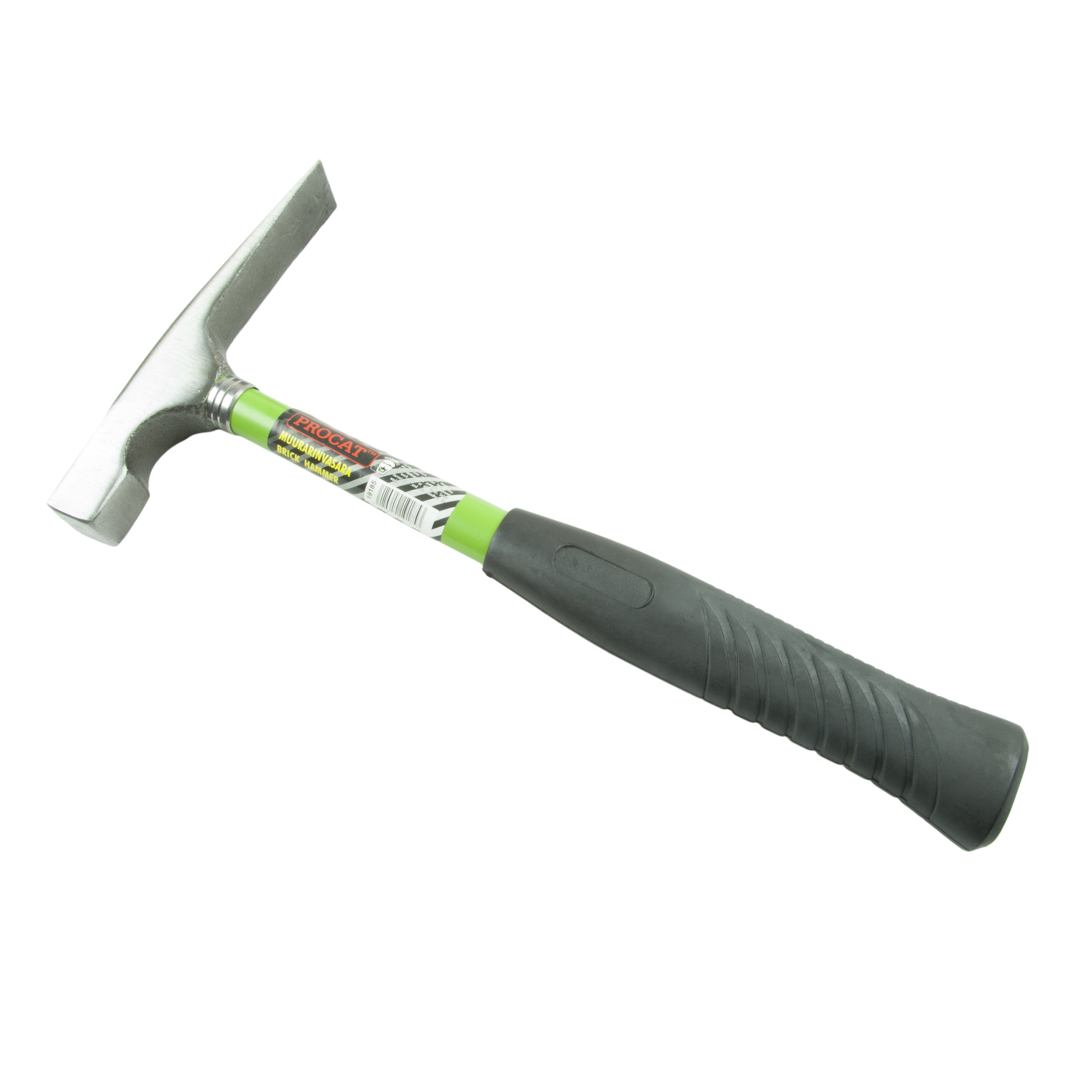
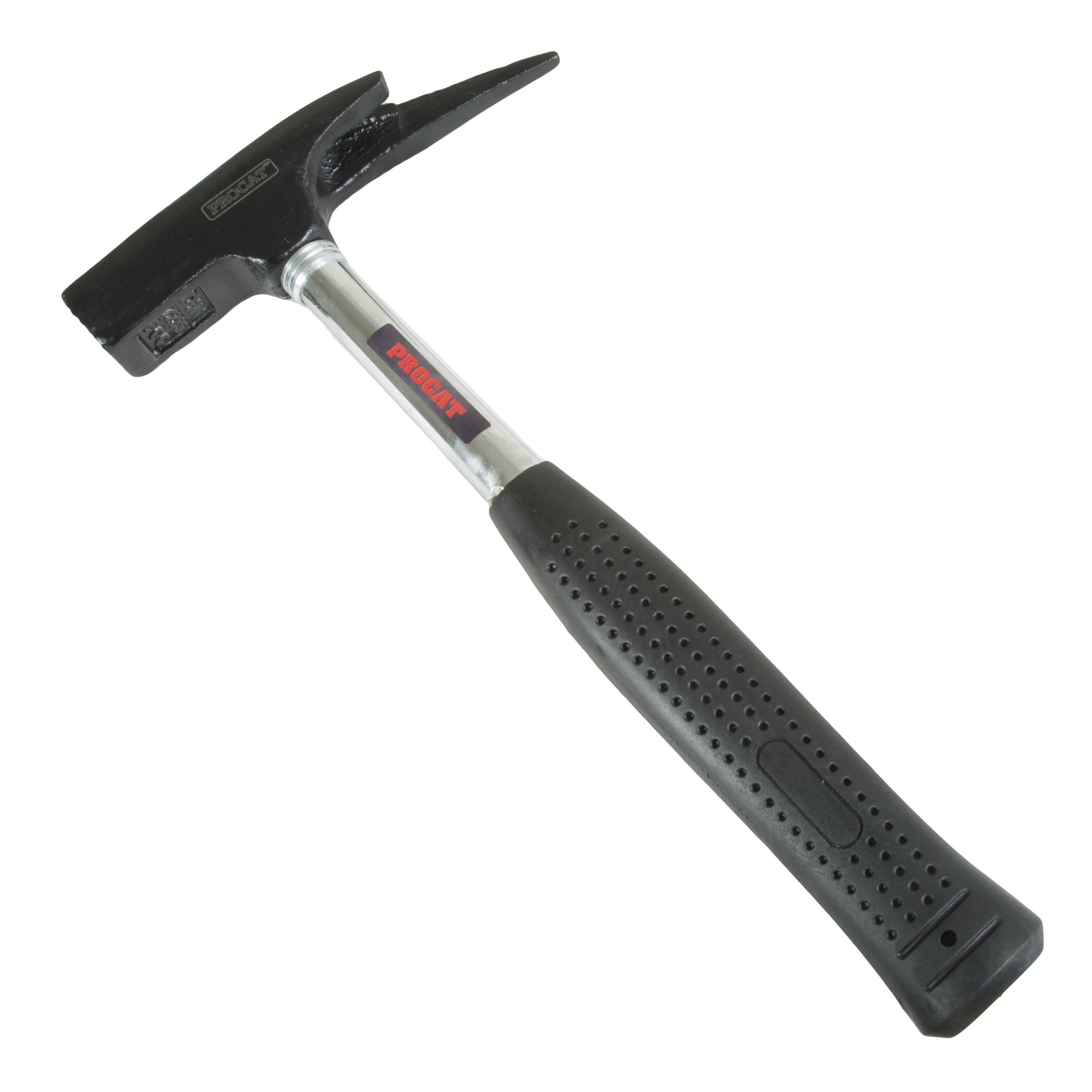
The Procat roofer’s and scaffolder’s hammer is a hammer for scaffolding work, with a striking face at one end and a tapered spike at the other. The spike fits the fixing holes and openings of scaffold parts, so the hammer can be used as a lever to turn the scaffold into the right position.
The rubber grip of the hammer is bonded to the shaft, not riveted. A bonded grip does not compress over time or split, as can happen with a riveted fixing when the rubber works around the nail or rivet. The rubber surface gives a secure grip even with gloves and in damp conditions.
The spike is the most important part of the hammer in scaffolding work: it is used to align scaffold frames and diagonals with each other, open blocked fixing holes and lever a part into place when the holes do not line up. The striking face is used to drive wedges, pins and joints home and to knock them loose during dismantling.
The hammer is used for erecting and dismantling scaffolding and in roofing work, where striking and levering are needed at the same time. In scaffold installation, the hammer is commonly used alongside podger ratchet ring spanners and 22 mm sockets for the scaffold joint bolts.
Intended use and suitability:
The hammer is intended for assembling and dismantling scaffolding and for roofing work where a joint must first be aligned and then struck home.
- Erecting scaffolding: the spike is pushed into the fixing hole of the frame and the hammer is used as a lever until the holes line up and the pin or bolt goes through.
- Dismantling scaffolding: the striking face is used to knock out seized wedges and joint pins.
- Roofing work: striking and aligning fixings and sheet metal parts when working one-handed on a sloping surface.
- Aligning holes: the spike centres overlapping holes on each other even when the structure is under load.
- Formwork and steel structures: aligning holes and guiding bolts into place in joints.
Package contents:
- 1 pcs roofer’s and scaffolder’s hammer
Features:
- Tapered spike: fits scaffold fixing holes and openings and works as a lever when aligning parts.
- Striking face: for driving wedges, pins and joints home and knocking them loose.
- Bonded rubber grip: does not compress or split, unlike a riveted grip.
- Rubber-surfaced grip: a secure grip even with work gloves and in damp conditions.
- One-handed tool: aligning and striking with the same tool, without changing tools on the scaffold.
Technical specifications:
- Type: scaffolding hammer with striking face and tapered spike.
- Spike: tapering, for scaffold fixing holes and levering.
- Grip: rubber, bonded to the shaft (not riveted).
- Application: assembling and dismantling scaffolding, roofing work.
Procat roofer’s and scaffolder’s hammer instructions for use:
Aligning with the spike: Push the spike through the overlapping holes and turn the shaft until the holes line up. Hold the shaft in the middle while levering and support the scaffold part with your other hand. Pull the spike out only once the pin or bolt is in place.
Striking: Strike with the centre of the striking face, with the face parallel to the surface of the target. Drive wedges and pins home with short, controlled blows; when dismantling, knock the joint open from the opposite direction.
Working at height: Use a tool lanyard on the hammer and attach it to your harness or the scaffold. Do not put the hammer down loose on the scaffold platform.
Maintenance: Wipe the hammer after use and store it in a dry place. Check the grip fixing and the condition of the striking face and spike before every use. Remove burrs from the edges of the striking face with a fine file.
Warnings:
- Wear safety glasses: metal chips can come off the striking face and wedges.
- Do not strike another hammer, hardened steel or stone with the hammer; hardened surfaces splinter.
- Do not overload the spike as a lever: with a long lever arm or an extension pipe, the spike can bend or break.
- Do not use a hammer with a chipped striking face or a loose or damaged grip.
- Attach the hammer with a tool lanyard when working on scaffolding: a falling tool is a serious hazard to anyone below.
- Make sure the grip is dry and free of grease before striking.
- Keep out of the reach of children; the spike is sharp.
Frequently asked questions (FAQ):
What is the spike of the Procat roofer’s and scaffolder’s hammer used for? The spike is pushed into a scaffold fixing hole, so the hammer can be used as a lever to turn a scaffold part and align the holes.
Why is the grip bonded and not riveted? A bonded rubber grip does not compress over time or split, because the rubber has no rivet hole for the stress to concentrate around.
What other tools are needed for scaffold installation? Podger ratchet ring spanners and 22 mm sockets are commonly used for the scaffold joint bolts.
Can the hammer be used as an ordinary claw hammer? The striking face can drive nails, but the hammer has no nail-pulling claw, so you need a claw hammer or a crowbar to remove nails.
How is the hammer secured against falling? A tool lanyard is attached to the hammer and locked to a harness or the scaffold structure.
Recycling instructions:
Sort a discarded hammer into metal collection. The rubber grip is bonded to the shaft; if it cannot be removed, take the whole hammer to metal collection, where the rubber is separated in the process. A rubber grip that has been removed goes to mixed waste or energy waste. Sort the cardboard packaging into cardboard collection.