
Description
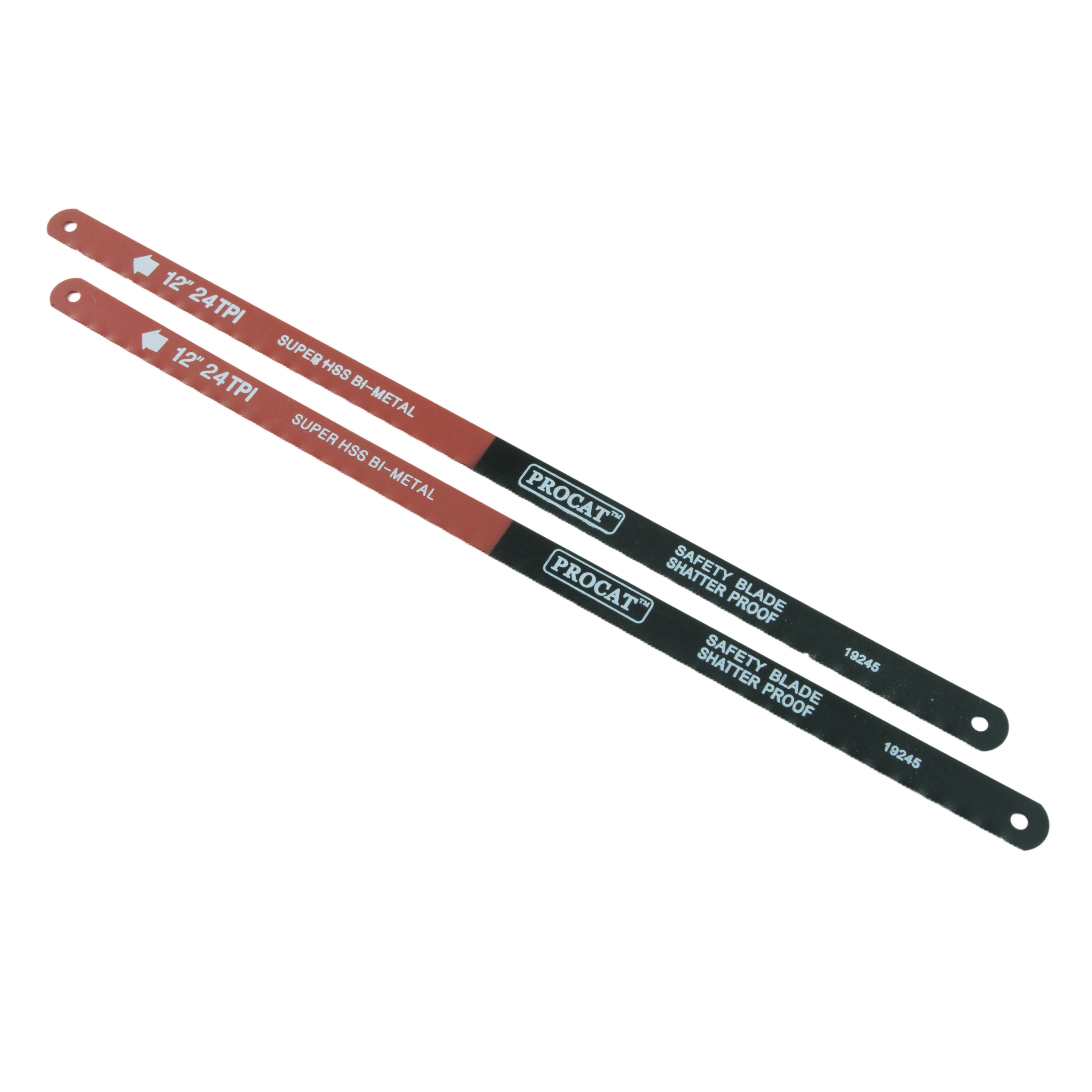
The Procat IP bi-metal hacksaw blade is a 300 mm (12″) long hacksaw blade with 24 TPI teeth, that is, 24 teeth per inch. The pack contains 2 blades. The blade fits a standard 300 mm hacksaw frame.
The blade has a bi-metal construction: a hard high-speed steel tooth strip is welded to a flexible spring steel back. The tooth section holds its edge when sawing hard material, and the flexible back lets the blade bend when the frame is tensioned and during the sawing stroke. A single-material hardened blade breaks when bent, whereas a bi-metal blade springs back straight.
The teeth are precision-ground. Even tooth height and pitch keep all the teeth cutting, so the load is spread over the whole tooth strip and no single tooth is overloaded and chipped. A pitch of 24 TPI means there are always at least three teeth in the kerf, even when sawing thin material; this stops a tooth catching on the edge of the material.
The blade is suitable for sawing material 2–5 mm thick: aluminium, bronze, copper, brass, hard plastics, cast iron, steel and stainless steel. A shorter alternative for confined spots is the Irwin hacksaw blade Junior 32TI 6″ 10 pcs, whose 150 mm blade and finer teeth are intended for a small junior hacksaw.
Intended use and suitability:
A hacksaw blade is used to cut metal profiles, pipes and bars by hand. The tooth pitch is chosen to suit the thickness of the material: the thinner the wall, the finer the teeth.
- Cutting pipes: cutting copper, brass and steel pipes in plumbing installations when a pipe cutter cannot be used.
- Profiles and bars: cutting threaded rod, rebar, angle iron and flat bar to length.
- Aluminium and soft metals: cutting aluminium profiles and brass parts without the teeth catching in the soft material.
- Stainless steel: with a slow, even stroke; stainless steel work-hardens if the teeth rub the surface without cutting.
- Hard plastics: cutting plastic pipe and profiles with fine teeth that leave a clean edge.
- Shortening screws and bolts: cutting off thread that protrudes past the nut when the bolt is clamped in a vice.
Package contents:
- 2 pcs hacksaw blades 300 mm, 24 TPI, bi-metal
Features:
- Bi-metal construction: high-speed steel tooth strip welded to a flexible back; the blade bends without breaking.
- 24 TPI teeth: at least three teeth in the kerf even with thin material, so the teeth do not catch on the edge.
- Precision-ground teeth: even tooth height spreads the load over the whole tooth strip.
- Length 300 mm: fits a standard hacksaw frame.
- 2 blades in the pack: a spare blade included without a separate purchase.
Technical specifications:
- Length: 300 mm (12″).
- Teeth: 24 TPI (teeth per inch).
- Construction: bi-metal, high-speed steel teeth with a flexible back.
- Tooth finish: precision-ground.
- Blades per pack: 2 pcs.
- Material thickness: 2–5 mm.
- Materials: aluminium, bronze, copper, brass, hard plastics, cast iron, steel, stainless steel.
Procat IP bi-metal hacksaw blade instructions for use:
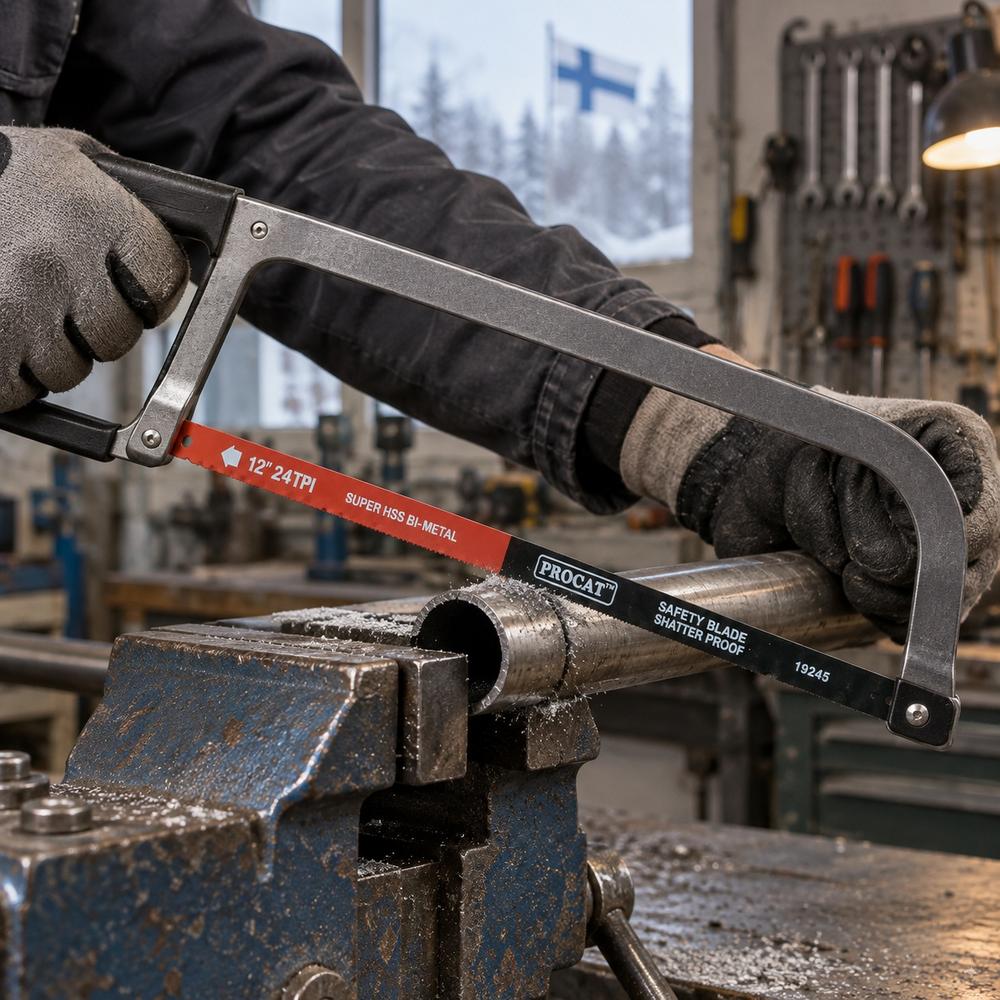
1. Fitting: Loosen the tensioner of the saw frame. Fit the blade so that the teeth point forwards, away from the handle. A hacksaw blade cuts on the push stroke. Fit the holes at the ends of the blade over the pins of the frame and tighten the wing nut so that the blade rings clearly when tapped. A loose blade twists and breaks; an over-tightened blade breaks at the hole.
2. Clamping the workpiece: Clamp the workpiece in a vice as close to the cutting point as possible. Support a pipe with soft jaws or a wooden wedge so that it is not crushed.
3. Sawing: Start from a notch made with a file or guided by your thumb. Saw with long strokes using the full length of the blade, about 40–60 strokes per minute. Apply pressure only on the push stroke and ease off on the return stroke; pressure on the return stroke wears the back edges of the teeth.
4. By material: Saw stainless steel and cast iron more slowly with even pressure and without breaks. When sawing aluminium and brass, brush the swarf from the bottom of the kerf so that it does not clog the tooth gullets.
5. Finishing: Ease the pressure when the cut is almost complete, and support the piece that will fall. Chamfer the cut edge with a file.
Maintenance: Wipe the swarf off the blade and oil it lightly for storage. Loosen the frame tension when the saw is not in use so that the blade is not left under tension. Replace the blade if teeth have chipped: a missing tooth tears the kerf and leaves a crooked cut.
Warnings:
- Wear safety glasses. A breaking blade and sawing swarf throw out sharp fragments.
- Wear protective gloves. Sawing swarf and the edge of cut metal can cut you.
- Fit the blade with the teeth pointing forwards and tension the frame correctly. An incorrectly tensioned blade breaks mid-stroke.
- Clamp the workpiece. A workpiece held by hand turns and the blade breaks in the kerf.
- The blade heats up when sawing. Do not touch the blade or the cut edge with bare hands straight after sawing.
- Do not use the blade as a lever or demolition tool.
- Keep out of reach of children. The teeth are sharp along the whole length.
Frequently asked questions (FAQ):
Which saw does the Procat IP bi-metal hacksaw blade fit? A standard 300 mm (12″) hacksaw frame in which the blade is fixed by the holes at its ends onto pins.
What does 24 TPI mean? The blade has 24 teeth per inch. The higher the number, the finer the teeth and the thinner the material the blade can saw without the teeth catching on the edge.
What is the advantage of a bi-metal blade over a hardened steel blade? In a bi-metal blade, a hard tooth strip is welded to a flexible back. The blade bends during tensioning and the sawing stroke and springs back straight, whereas a single-material hardened blade breaks when bent.
Which way should the teeth point? Forwards, away from the handle. A hacksaw cuts on the push stroke, not on the pull stroke.
Why does the blade keep breaking? The most common reasons are a loose or over-tightened frame, poor clamping of the workpiece, a crooked sawing stroke and too much pressure. Tension the blade so that it rings when tapped, and saw straight using the full length of the blade.
How thick a material can the blade saw? The blade is intended for materials 2–5 mm thick. In thinner sheet the teeth catch on the edge more easily; in a thicker workpiece the kerf clogs with swarf.
Recycling instructions:
Sort a hacksaw blade that is no longer used into metal collection. Cover the teeth with cardboard or tape before putting it in the collection container, because of the risk of cuts. Cardboard and carton packaging to carton collection and any plastic wrap to plastic collection. Metal swarf produced when sawing belongs in metal collection, not in mixed waste.