
Description
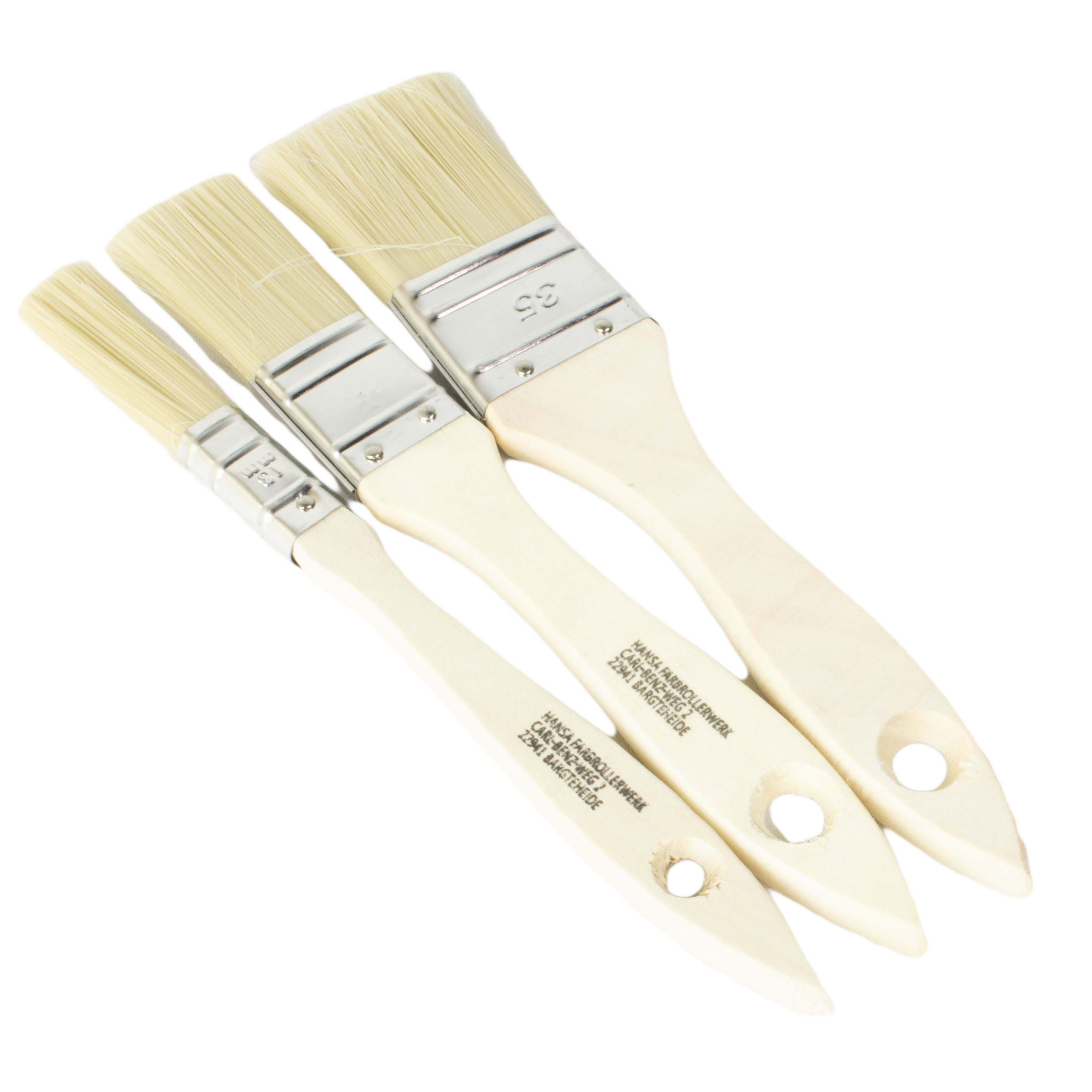
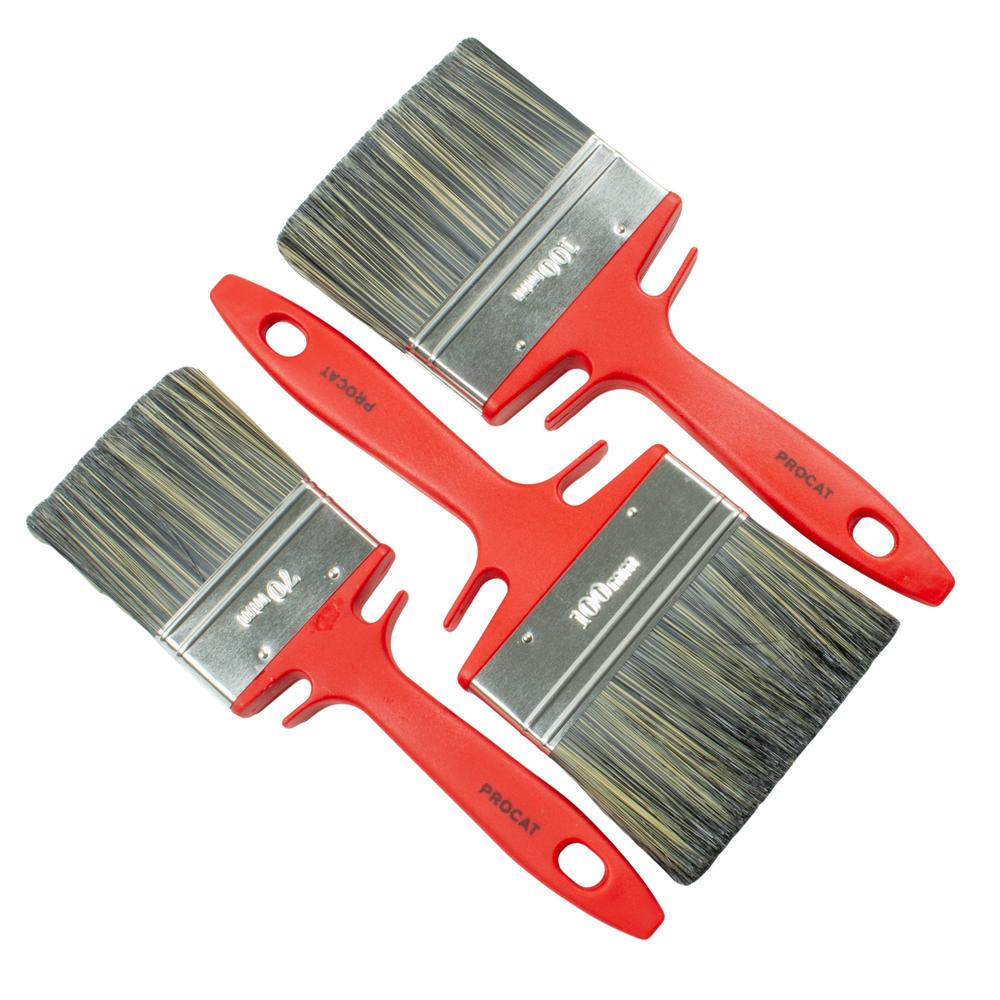
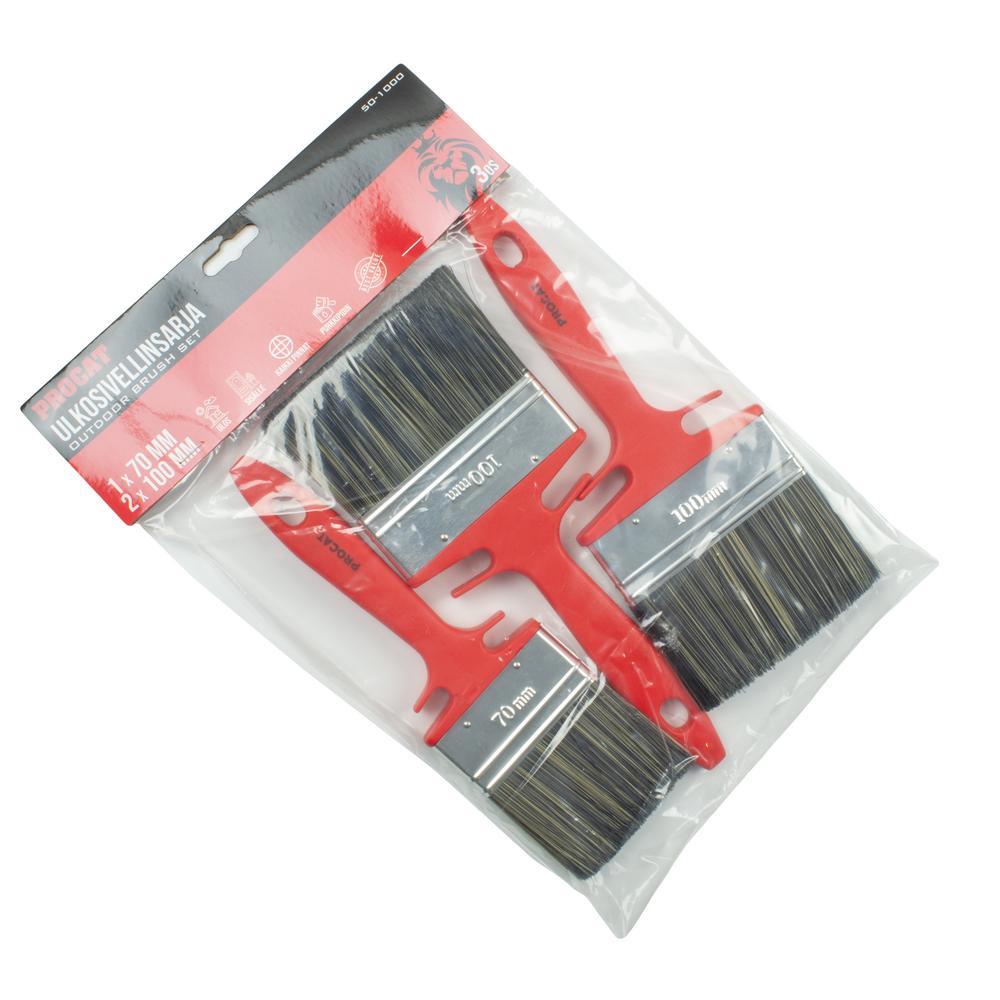
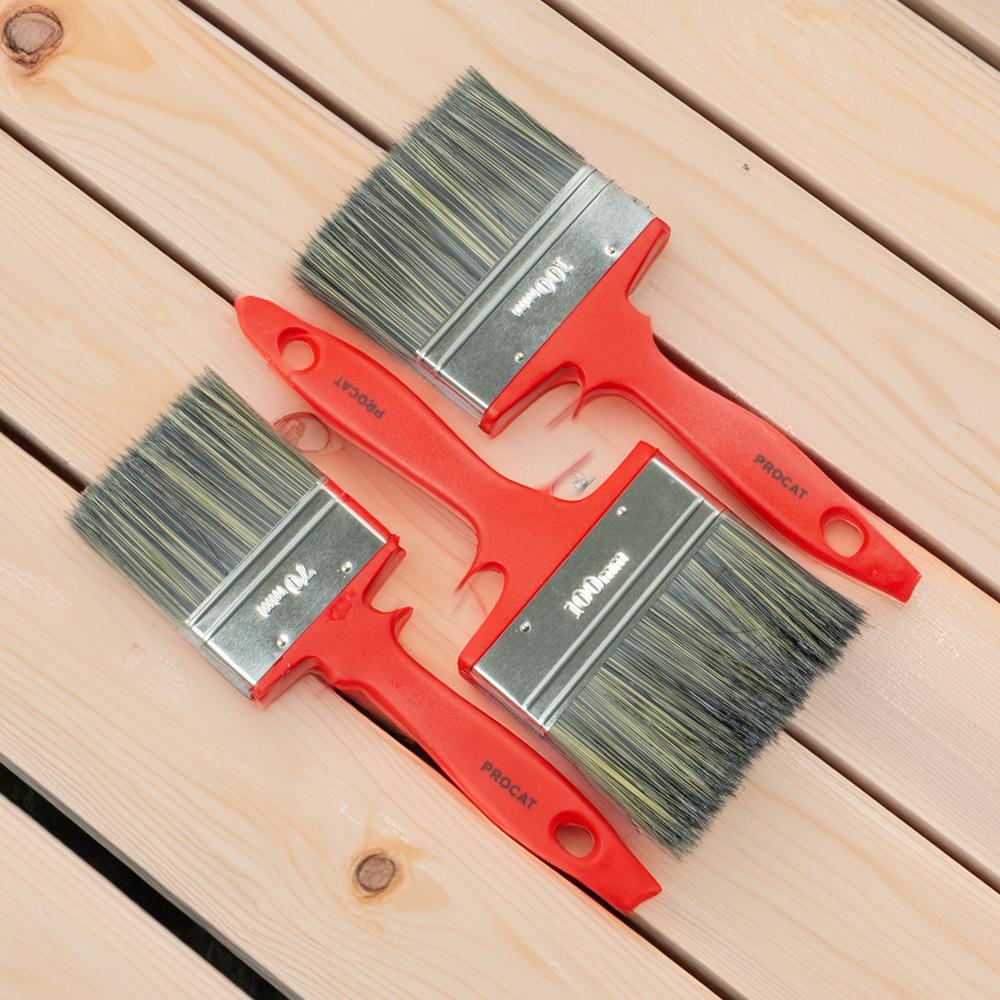
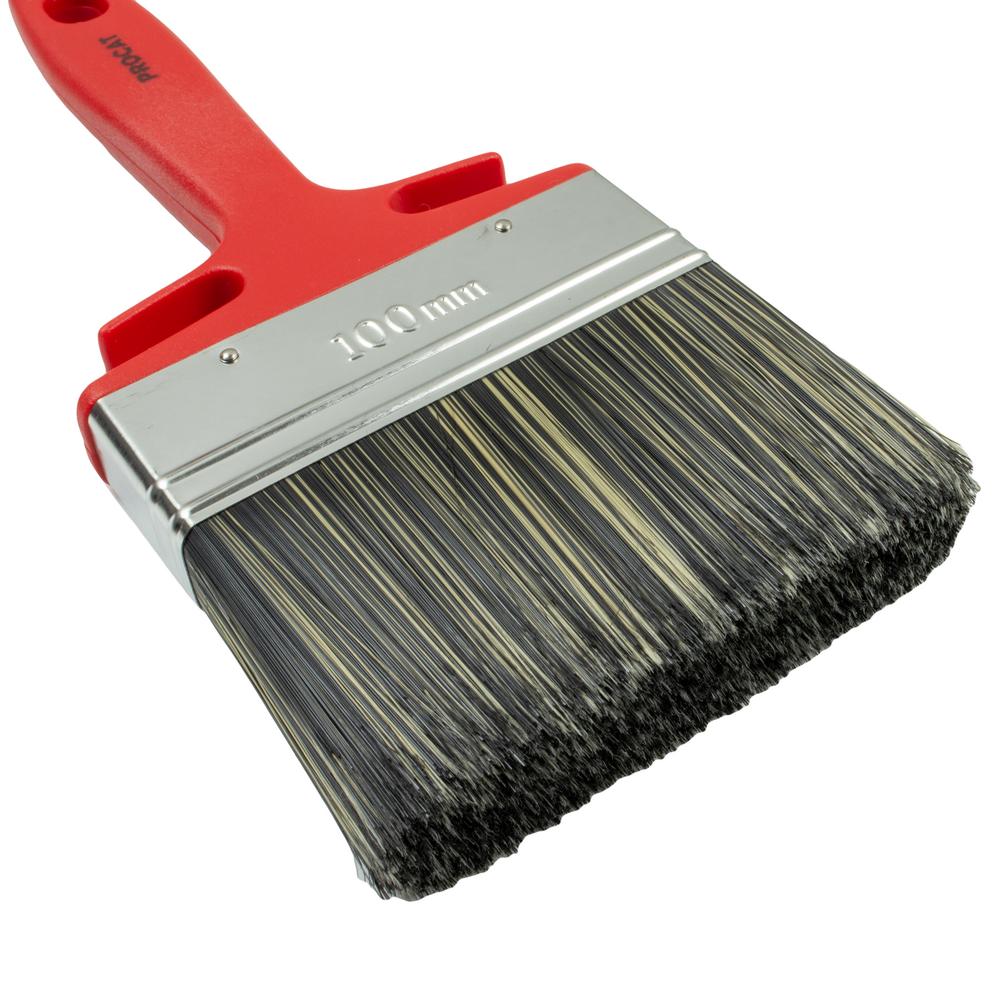
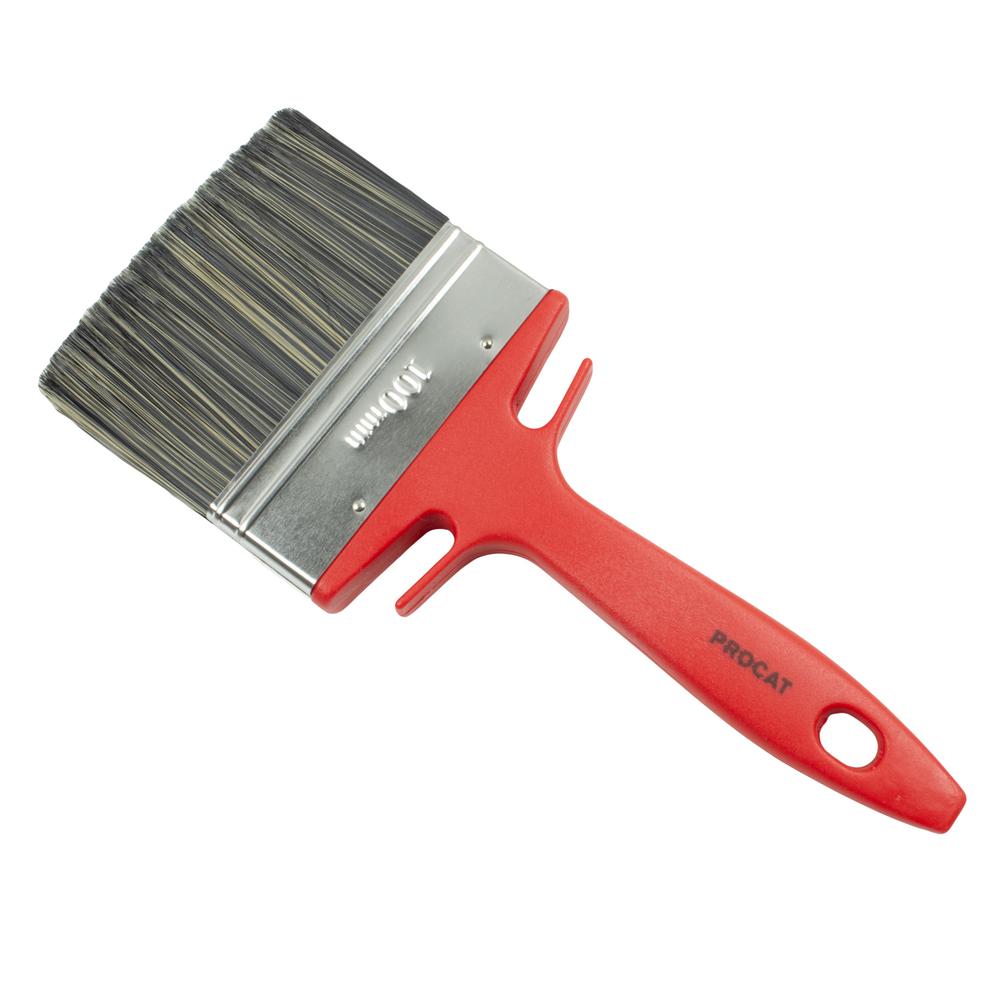
The Procat 3-piece exterior paintbrush set is an affordable, practical choice for DIY painters. The set contains two 100 mm wide brushes and one 70 mm wide brush, which are well suited to all kinds of exterior painting projects. The brushes have synthetic bristles that give good value for money and stand up to wear. The synthetic bristles spread the paint evenly enough, which makes them a good choice for the hobby painter.
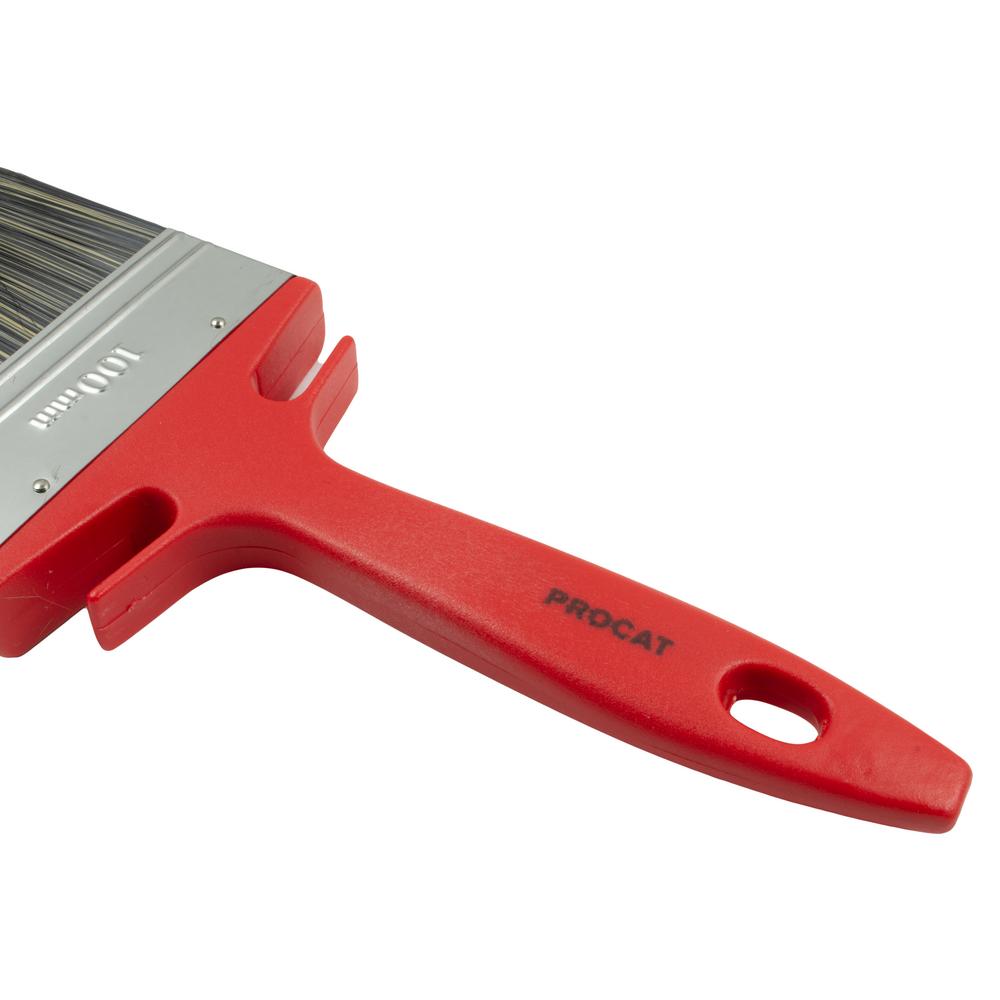
The Procat exterior paintbrush set is a cost-effective solution for exterior painting. The bristles spread the paint evenly enough, which makes the brushes a good choice for the hobby painter. The ergonomically shaped handles give a comfortable, secure grip, which makes painting easier. A hook built into the handles lets you hang the brush conveniently on the rim of the paint tin, which reduces mess and makes work easier.
The Procat exterior paintbrush set suits many kinds of exterior painting projects, such as painting houses, fences, decks and other outdoor structures. With its different widths, the set lets you paint both large surfaces and narrower areas that call for precision. Procat brushes work well with the most common paint types, such as water-based and oil-based paints. This brush set is also suitable for rough interior painting, which makes it a versatile choice for home painting projects.
Procat exterior paintbrush set features
- Set contents: 2 x 100 mm brushes, 1 x 70 mm brush
- Brush thickness: 20 mm
- Bristle material: Synthetic bristles (nylon or polyester)
- Handle design: Ergonomic, secure grip, built-in hook for hanging on the rim of the paint tin
- Uses: Suitable for painting houses, fences, decks and other outdoor structures, and for rough interior painting
- Paint types: Suitable for both water-based and oil-based paints
Instructions for use
- Choose a suitable brush for the surface you are painting.
- Clean the surface to be painted thoroughly before painting.
- Dip the brush in the paint and carefully remove excess paint on the rim.
- Apply the paint to the surface evenly in continuous strokes.
- During breaks, hang the brush conveniently on the rim of the paint tin with the built-in hook.
- Clean the brushes thoroughly after use so that they stay in good condition and are ready for next time.
How to choose the right brush for exterior painting
The right brush depends on the size and type of the surface to be painted and on the paint you use. For painting large surfaces such as walls, choose a wider brush, such as the 100 mm brush. For areas that need more precise work, such as corners and edges, the 70 mm brush is a better choice. The versatility and good value for money of Procat brushes make them an ideal choice for DIY projects.
Warnings
- Avoid leaving the brush in paint for a long time, as this can damage the bristles.
- Keep the brushes out of the reach of children.
Synthetic vs. natural bristle brushes: a comparison
When choosing the right brush for your painting project, it is important to understand the differences between synthetic and natural bristle brushes. Both types have their own advantages and suit different uses.
Synthetic bristles
Synthetic bristles are made of materials such as nylon, polyester or blends of these. They are common especially in more affordable brushes and offer several advantages:
- Durability: Synthetic bristles stand up well to wear and keep their shape for a long time, which makes them ideal for frequent use.
- Versatility: Synthetic brushes work well with both water-based and oil-based paints, which widens their range of uses.
- Easy to clean: Synthetic bristles do not soak up paint as readily as natural bristles, which makes them easier to clean.
- Affordability: Synthetic brushes are often more affordable than natural bristle brushes, which makes them a good choice for DIY painters.
Natural bristles
Natural bristles are often made from animal hair, such as hog bristle or pony hair. They are traditional painting tools and offer unique advantages for certain types of painting projects:
- Finish: Natural bristles can give a softer, more even finish, which is especially useful in precision work such as varnishing or oil painting.
- Absorbency: Natural bristles soak up more paint, which can be useful when painting large surfaces, as it means you need to reload the brush less often.
- Flexibility: Natural bristles are usually softer and more flexible than synthetic bristles, which allows the paint to be spread evenly.
Uses and tips for choosing
When choosing a brush, consider the specific requirements of your painting project:
- Water-based paints: Synthetic brushes are an excellent choice because they do not absorb water and keep their shape better.
- Oil-based paints and varnishes: Natural bristle brushes can give a better finish and efficiency because they soak up more paint.
- Cost-effectiveness: If your budget is limited, synthetic brushes give good value for money and versatility for most painting needs.
Choose the right brush for your painting project, taking into account the advantages and limitations of both synthetic and natural bristle brushes. This ensures that you get the best possible result.
Frequently asked questions (FAQ)
- Which paint types do Procat brushes support? Procat brushes are suitable for both water-based and oil-based paints.
- Can these brushes be used for interior painting projects? Yes. Although the brushes are designed especially for exterior painting, they are also suitable for rough interior painting projects.
- How are the brushes cleaned after use? Clean the brushes with soap and water or use a solvent suitable for the paint.