

Description
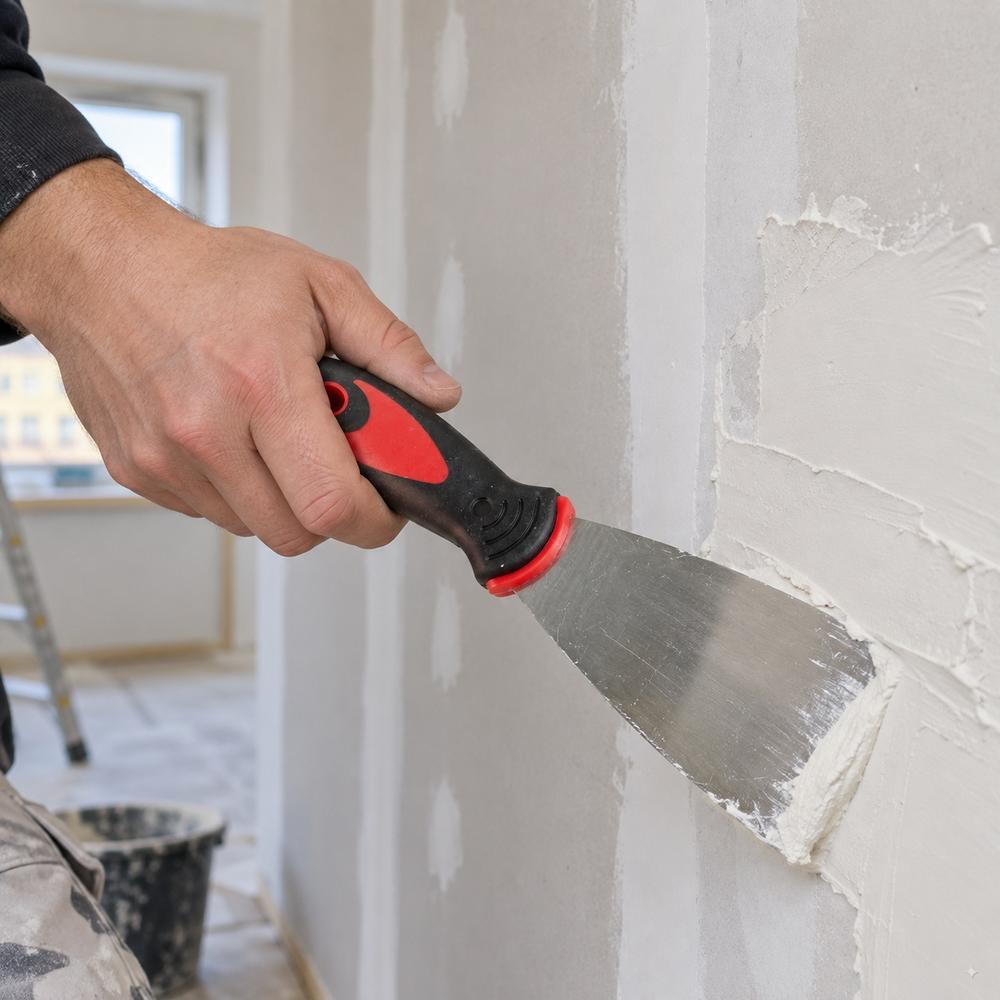
The Vorel stainless filling knife with rubber handle is a filling knife with a blade made of stainless steel and a polished surface. The stainless blade leaves no rust marks on light filler, even if the knife is left undried after wet work.
The knives come in six widths: 30, 40, 50, 60, 80 and 100 mm. Narrow blades are suitable for filling screw heads and narrow gaps, wide blades for pressing in joint tape and smoothing larger areas.
The handle is a two-component handle with a soft grip surface. The shape of the handle allows both a thumb rest behind the blade and a palm grip, so you can apply pressure to the knife without twisting your wrist.
The polished blade surface releases filler cleanly and does not collect compound. The Vorel filling knife is suitable for applying fillers and putty, pressing in joint tape, and removing old paint and wallpaper.
Uses and suitability:
A filling knife is used to apply and smooth small amounts of compound and to press joint tape in place.
- Screw heads and small holes: a 30–50 mm blade fills them precisely.
- Joint tapes: a 60–100 mm blade presses the tape evenly into the filler.
- Cracks and gaps along mouldings: a narrow blade reaches into a narrow groove.
- Removal work: removing old paint, wallpaper and dried compound.
- Not suitable: for skimming large wall surfaces, which needs a wide smoothing trowel.
Package contents:
- 1 filling knife in the selected width (30, 40, 50, 60, 80 or 100 mm)
Features:
- Stainless blade: no rust marks on light filler, even in damp work.
- Polished surface: compound releases cleanly from the blade.
- Six widths: 30–100 mm for different work stages.
- Two-component handle: soft grip surface on a rigid body.
- Thumb rest behind the blade: lets you direct pressure to the middle of the blade.
Technical specifications:
- Working widths: 30, 40, 50, 60, 80 and 100 mm.
- Blade material: stainless steel.
- Blade surface: polished.
- Handle material: PVC, two-component construction.
- Application: construction and painting.
Vorel filling knife instructions for use:
Applying: Take compound on the tip of the blade and draw the knife against the surface at an angle of about 30 degrees. A shallow angle leaves a thicker layer, a steep angle draws the compound thin.
Joint tape: Apply a thin layer of filler, position the tape and press it in place with the knife from the centre towards the edges. Remove excess compound in the same stroke.
Cleaning: Wash the blade with water immediately after work. Dried filler hardens on the edge of the blade and leaves drag marks in the next job.
Care: Check the edge of the blade: a dent or nick draws a line in the filler. The edge can be straightened with fine sandpaper.
Warnings:
- The edge of the blade is thin and can cut, so do not run your finger along it.
- Do not use the knife as a lever or chisel; the blade bends and does not return straight.
- Wear safety glasses and a respirator when scraping dry filler or old paint.
- Old paint can contain lead, so follow local guidance before scraping an old surface.
- Keep out of the reach of children.
Frequently asked questions (FAQ):
Which width should I choose? 30–50 mm for screw heads and small holes, 60–100 mm for joint tapes and larger fills. In practice, two widths are enough for most jobs.
What is the benefit of stainless steel? The blade does not rust with wet filler and leaves no rust marks on a light surface.
Can the knife be used for scraping paint? Yes, for light removal. A scraper made for hard scraping is stiffer and does not bend.
How is the knife cleaned? With water immediately after work, before the compound dries; dried compound is removed by soaking.
Can the blade be sharpened? The blade is not meant to be sharp. A dented edge is straightened with fine sandpaper.
Recycling instructions:
Sort a knife that is no longer used into its parts: the stainless steel part to metal collection, the plastic handle to mixed waste or plastic collection according to local instructions. Clean dried filler off the knife before sorting; filler waste belongs to construction waste. The cardboard packaging goes to cardboard collection.