


Description
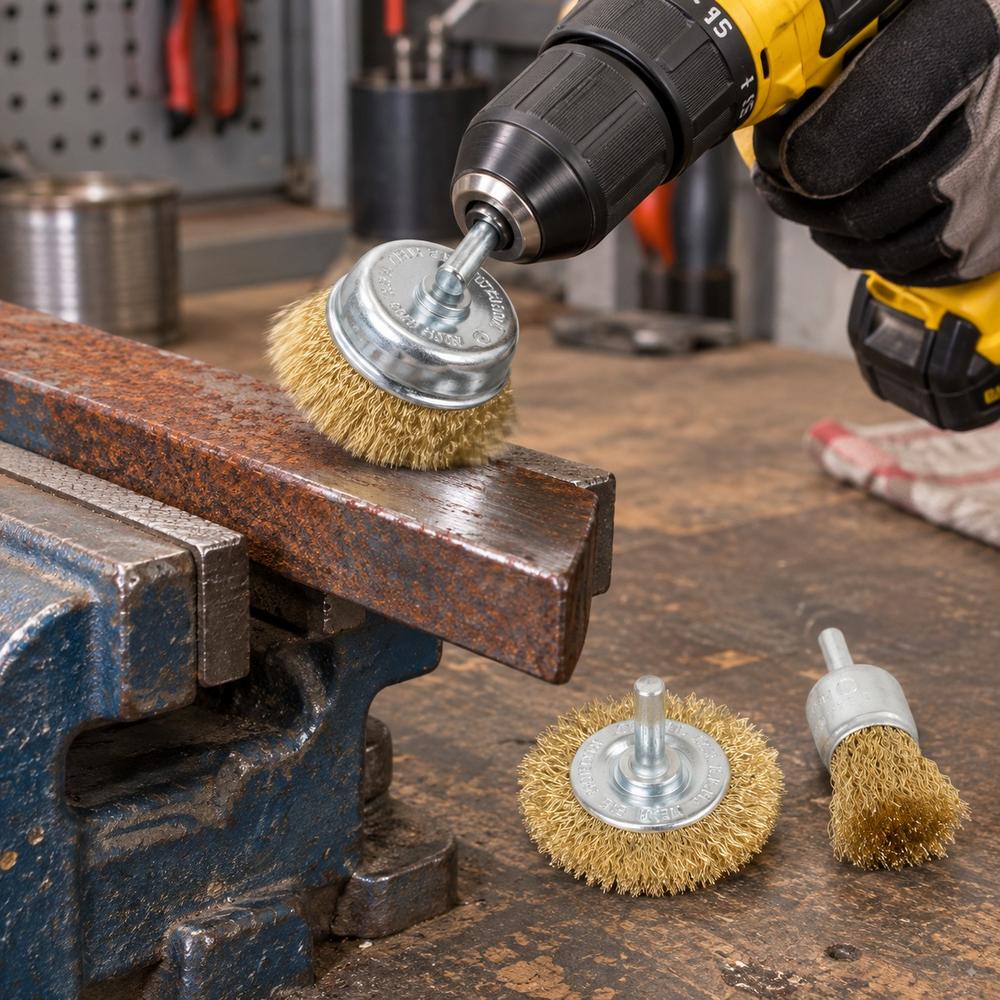
The Vorel wire brush set 3 pcs contains three shank-mounted wire brushes for drills. The bristles are brass-coated steel wire and the wire is wavy (crimped), so the bristles bend to follow the surface and clean without scratching as aggressively as twisted wire.
The set has three shapes: cup brush 50 mm for cleaning large surfaces, wheel brush 50 mm for narrow grooves and seams, and end brush 25 mm for holes, corners and small spots. The three shapes cover the removal of rust, paint, mill scale and welding slag from the most common places.
The brushes are fitted by the shank into the drill chuck. The maximum permitted speed is 4500 min⁻¹, so the brushes suit the speed range of ordinary hand drills; the speed of an angle grinder is too high.
The brass coating is a thin layer on top of the steel wire. It reduces sparking and protects the wire in storage, but the bristles are steel wire: they bite into rust and paint more efficiently than pure brass wire. Separate brass and nylon brushes are suitable for softer surfaces and finer polishing.
Uses and suitability:
A rotating wire brush removes material that is less firmly attached than the base material: rust, mill scale, old paint and slag.
- Rust removal: steel parts, tools, metal sheets and trailer frames.
- Paint and varnish removal: removing flaking paint before priming.
- Weld seams: brushing slag and oxide off the seam.
- Surface preparation: roughening and cleaning the surface before painting or protective treatment.
- Not suitable for: stainless steel (iron residue contaminates the surface), aluminium and other soft metals that scratch easily.
Package contents:
- Cup brush 50 mm, shank
- Wheel brush 50 mm, shank
- End brush 25 mm, shank
Features:
- Brass-coated steel wire: reduces sparking and protects the wire in storage.
- Crimped wire: flexible bristles adapt to the shape of the surface.
- Three shapes: cup, wheel and end brushes cover flat surfaces, grooves and holes.
- Shank fitting: the brushes fit the chuck of an ordinary drill.
- 4500 min⁻¹ maximum speed: marked on the brush body.
Technical specifications:
- Brushes: 3 pcs.
- Diameters: 25 mm, 50 mm and 50 mm.
- Shapes: cup brush, wheel brush, end brush.
- Bristle material: steel wire.
- Bristle coating: brass-coated.
- Wire type: crimped.
- Maximum speed: 4500 min⁻¹.
- Fitting: shank for the drill chuck.
Vorel wire brush set 3 pcs instructions for use:
Fitting: Push the brush shank all the way into the chuck and tighten the chuck properly. Before starting, check that the bristles are not bent and that the shank runs true.
Working: Let the tips of the bristles do the work: press lightly and move the brush evenly. Hard pressure bends the wires sideways, slows down cleaning and breaks wires. Keep the drill speed below the 4500 min⁻¹ marked on the brush.
Choosing the shape: Cup brush for flat surfaces, wheel brush for grooves and seams, end brush for holes and corners.
Care: Clean the bristles after use and store in a dry place. Discard the brush if many wires have broken or the body is bent.
Warnings:
- Always wear eye protection and preferably a face shield: broken wires fly off the rotating brush.
- Wear gloves and long-sleeved clothing; a loose wire penetrates the skin.
- Do not exceed the marked speed of 4500 min⁻¹, and do not fit the brush to an angle grinder.
- Support the workpiece and hold the drill with both hands; the brush can catch on an edge and jerk the drill.
- Do not use a brush that is bent or has lost a lot of wires.
- Keep out of the reach of children.
Frequently asked questions (FAQ):
Which brushes does the Vorel wire brush set 3 pcs contain? A cup brush 50 mm, a wheel brush 50 mm and an end brush 25 mm, all with shanks.
Do the brushes fit an angle grinder? No. The shank fitting and the 4500 min⁻¹ maximum speed limit their use to drills.
What does brass-coated mean? There is a thin brass coating on top of the steel wire. The bristles work like steel wire but spark less and keep better in storage.
Can the brush be used on stainless steel? It is not recommended: the steel wire leaves iron on the surface, which starts to rust. For stainless steel, use a separate brush made of stainless wire.
Why do wires come off the brush? Pressing too hard or too high a speed breaks wires. Lighter pressure extends the life of the brush.
Recycling instructions:
Worn-out brushes are metal: the bristles and body go to metal collection. Wrap broken wires in packaging before disposal. Paint and rust dust removed by brushing is collected and treated according to the removed coating; old paint can contain harmful substances, in which case the waste is taken to hazardous waste collection.


