
Description
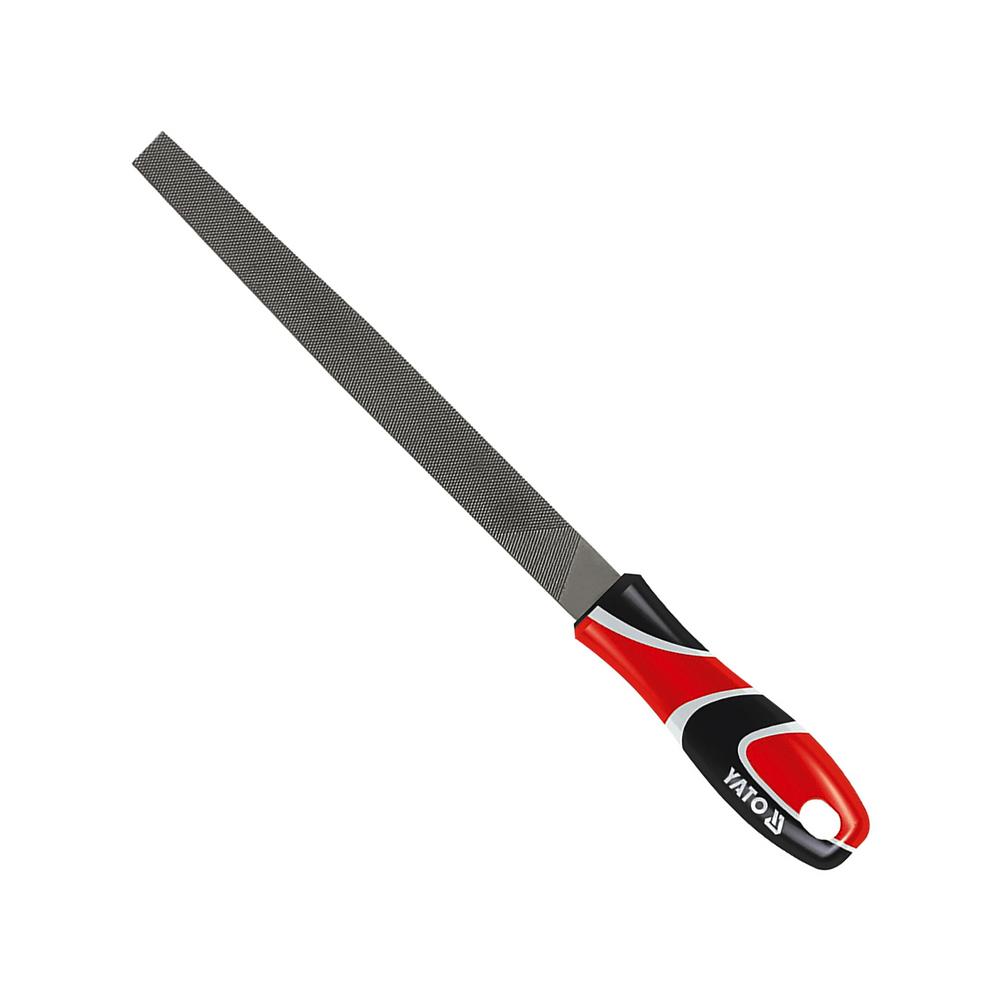
The Yato engineer’s file 200 mm is an essential tool for every metalworker, mechanic and demanding hobbyist. The 200 mm long, flat profile is designed for general use: removing material, smoothing and finishing surfaces of steel, aluminium and other metals.
The teeth of the file are of the “second cut” type (no. 2), which gives an optimal balance between efficient stock removal and a relatively smooth finish. It is excellent for cleaning the start of threads, smoothing weld seams or removing burrs from cut metal pieces, for example.
The quality typical of Yato tools shows in both the durability of the steel and comfort in use. The file is made of high-quality hardened alloy steel, which guarantees a long service life and keeps its cutting power for a long time. The ergonomic two-component handle (plastic and rubber) gives a secure, comfortable grip, reducing hand fatigue even in longer use.
Intended use:
- General metalworking in machine shops and car repair workshops.
- Filing and straightening flat surfaces.
- Deburring metal sheets and pipes.
- Smoothing weld seams and other unevenness.
- Rough working of softer materials such as plastic and wood.
Package contents:
- 1 pc Yato engineer’s file 200 mm, flat, second cut, with handle.
Features:
- Second cut teeth: A versatile balance between stock removal and surface quality.
- Ergonomic handle: The two-component material (PP+TPR) prevents slipping and feels comfortable in the hand.
- Durable material: Made of high-quality hardened T12 alloy steel.
- Flat shape: Suitable for flat surfaces and working outside corners.
- Hanging hole: The hole in the handle allows easy storage on a tool wall.
Technical specifications:
- Product number: YT-61701 (Yato)
- Type description: Engineer’s file, flat
- Teeth: Second cut (no. 2)
- Working length: 200 mm
- Material (file): Hardened alloy steel (T12)
- Material (handle): PP + TPR (two-component)
- Overall length (with handle): approx. 310 mm
- Weight: approx. 210 g
Instructions for use:
Always use the file with both hands: hold the handle with one hand and guide the tip of the file with the other. File with even, long push strokes. The file cuts only on the push stroke; ease the pressure on the return stroke so that the teeth do not wear needlessly. Clamp the workpiece firmly in a vice. Keep the file free of metal filings with a file card for the best performance. Always wear safety glasses when working metal.
Warnings:
- Do not use the file without a handle or if the handle is loose; a faulty handle can cause a serious hand injury.
- Do not use the file as a lever or hammer; file steel is hard and brittle and can break from impacts.
- Always wear suitable protective equipment, especially safety glasses.
- Store the tool in a dry place to prevent rust.
Frequently asked questions (FAQ):
What do “second cut” teeth mean?
The tooth density of engineer’s files is classified as bastard, second cut and smooth. As the name suggests, second cut is a medium-coarse file. It removes material more efficiently than a smooth file but leaves a neater surface than a bastard file. It is often the “one file” worth buying if you need only one.
Can this file be used on hardened steel?
It is not recommended. The file itself is hardened steel, and if you try to file a material that is harder or just as hard, the teeth of the file go dull or break immediately. Hardened steel needs grinding tools or diamond files.
How do I look after my file?
The most important thing is to keep it clean. Use a file card (a metal brush with short, dense bristles) to remove metal filings from between the teeth. Do not knock files against each other or drop them on a hard surface. Store files apart from each other, for example hung up or in a tool roll, so that the teeth are not dulled by rubbing against other tools.
Recycling instructions:
This product is mainly metal and plastic. When the tool reaches the end of its life, the metal part (file steel) goes to metal collection. The two-component handle (plastic/rubber) is sorted as energy waste or mixed waste according to local waste regulations.