Description
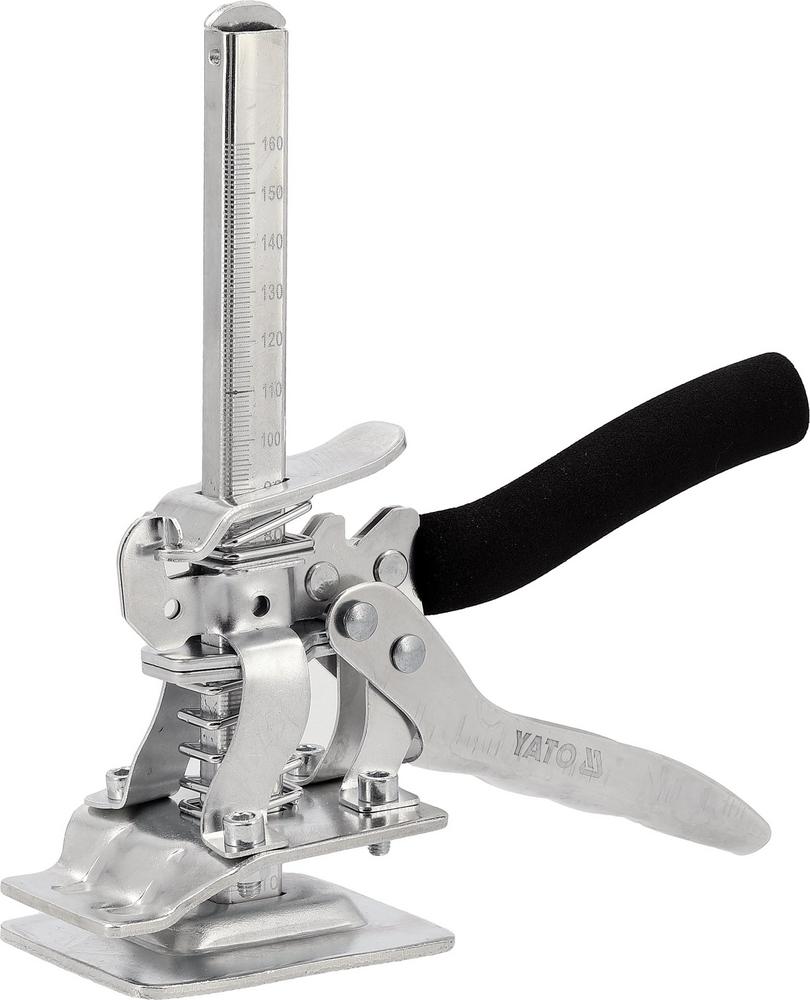
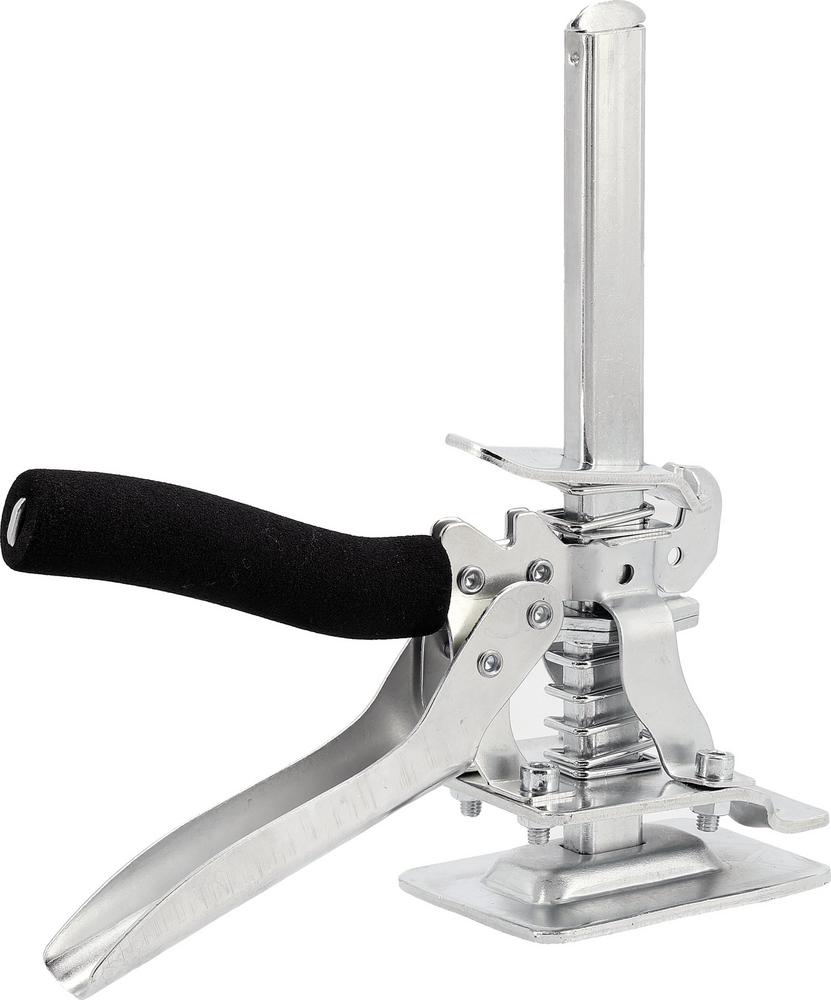
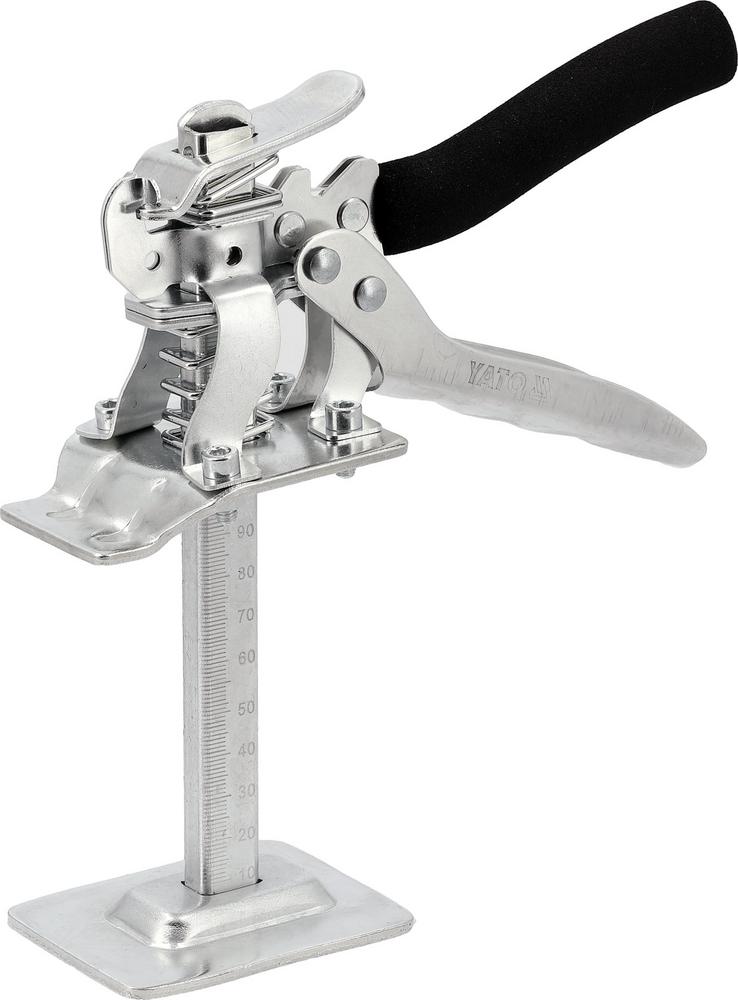
The mechanical Yato lifting and installation tool is designed for precise lifting, positioning and levelling of heavy items such as plasterboard, doors, windows and furniture in industrial environments. The device works with a lever and ratchet mechanism that turns the movement of the hand grip into controlled vertical lifting force. Its 10–160 mm working range allows components to be lifted from almost floor level to the required installation height without extra tools.
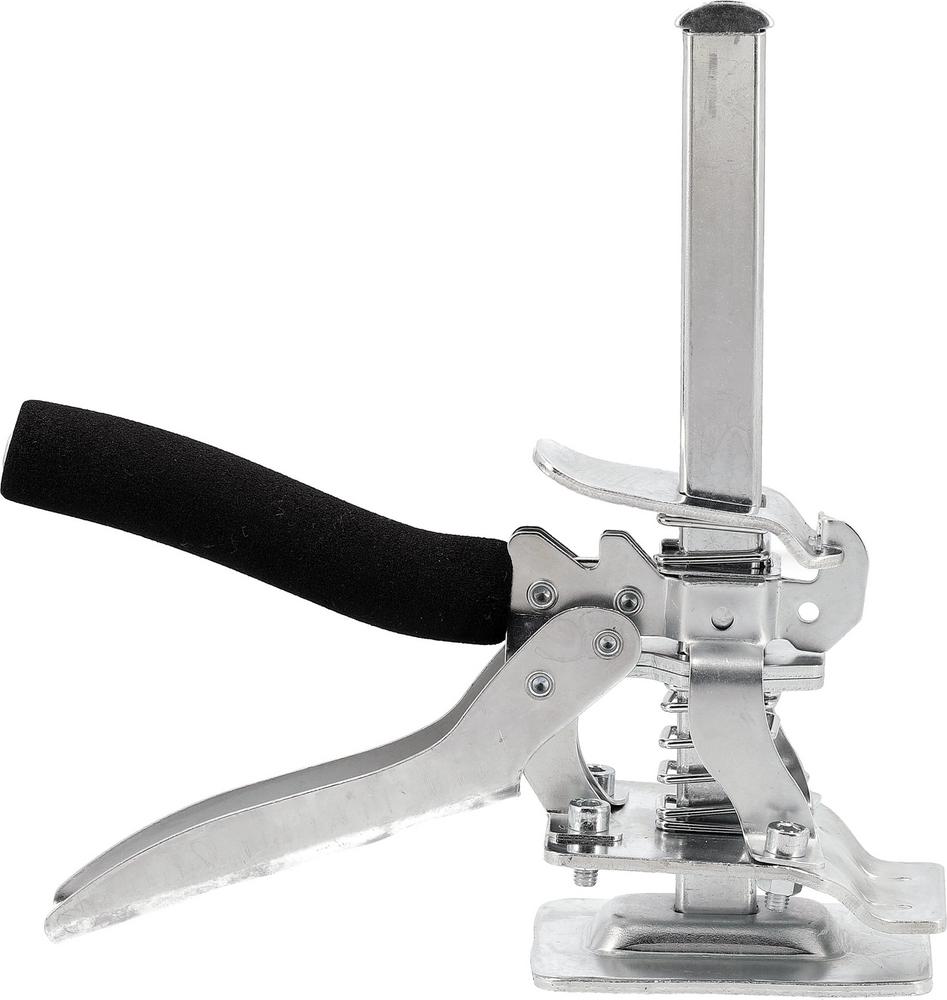
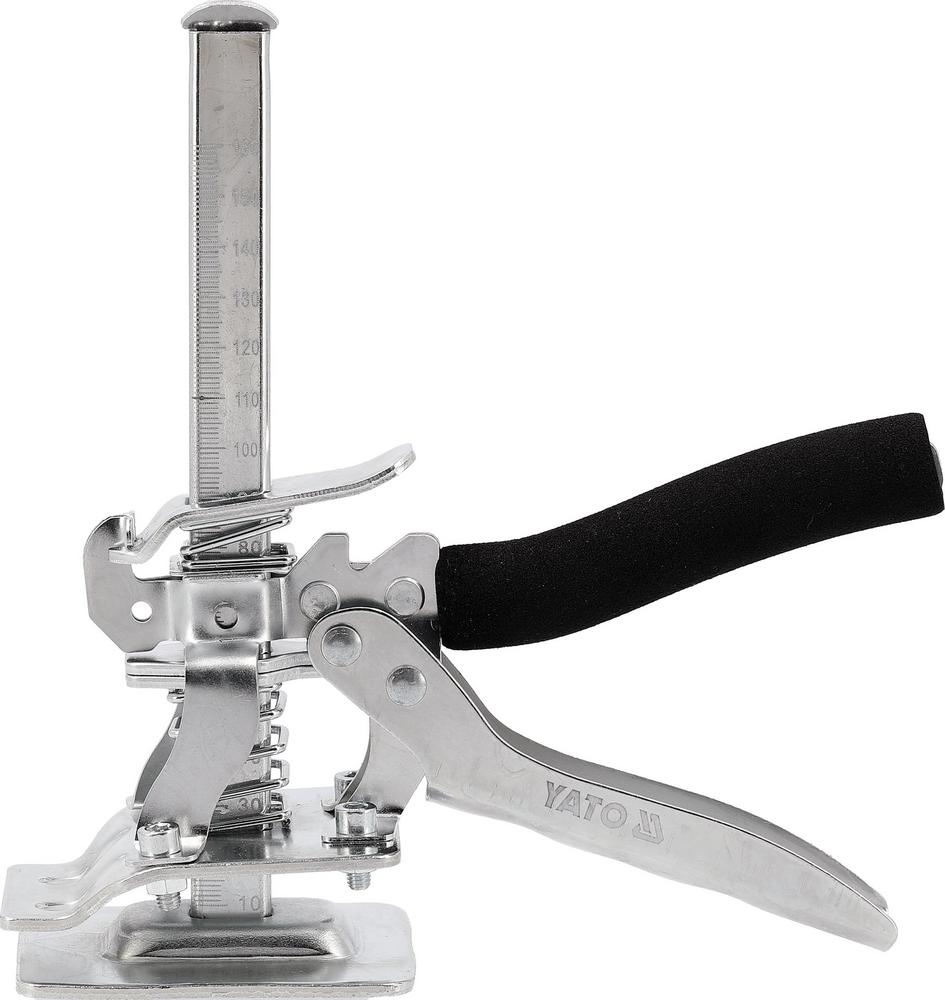
The body and lifting mechanism of the tool are made of hardened steel, which guarantees structural rigidity and a long life in demanding professional use. The steel lifting foot is thin so that it can be pushed into narrow gaps, but wide enough to ensure stable support. The handle is padded with thick cellular rubber and ergonomically shaped to reduce strain on the user’s hand during repeated lifts, and a mechanical release lever allows the load to be lowered in a controlled, safe way.
The device’s 45 kg static lifting capacity is optimised for one-handed installation work where the other hand must stay free to guide the item being installed. This feature makes the tool essential, for example, when installing kitchen cabinets and washing machines, when fitting door leaves onto hinges or when supporting the bottom edge of plasterboard walls. By using several devices at the same time, the lifting capacity and load stability can be increased significantly.
This mechanical hand jack is maintenance-free and works without electricity or hydraulics, which adds to its reliability on site. The tolerances of the steel construction are designed with low wear in mind, and the lifting mechanism is better protected from dust and dirt than hydraulic equivalents. Assessed objectively, the device offers a cost-effective, ergonomic solution for replacing heavy physical lifting in installation work.
Intended use and suitability:
The product is intended for the construction, installation and logistics sectors, where precise load control and ergonomic working methods are required.
- Construction and interior installation: Precise positioning and support of plasterboard, partition wall elements, doors and windows during installation. The thin lifting foot allows access under the board without clearance.
- Furniture installation: Lifting and levelling heavy cabinets, worktops and furniture at the installation site.
- Tiling work: Supporting and fine-adjusting the lowest row of tiles in wall tiling, ensuring a perfectly level line.
- Logistics and maintenance: Finely adjustable lifting of machines, equipment or heavy boxes for moving or servicing in tight spaces.
Package contents:
The delivery includes the following components:
- Yato lifting and installation tool: 1 pc mechanical hand jack.
Features:
Key performance and design features of the product:
- Mechanical ratchet mechanism: Controlled lifting and load holding by pressing the lever.
- Hardened steel construction: High fracture strength and resistance to deformation under a 45 kg load.
- Controlled lowering mechanism: A separate release lever for lowering the load safely.
- Wide lifting foot: Ensures even pressure distribution and prevents damage to materials.
Technical specifications:
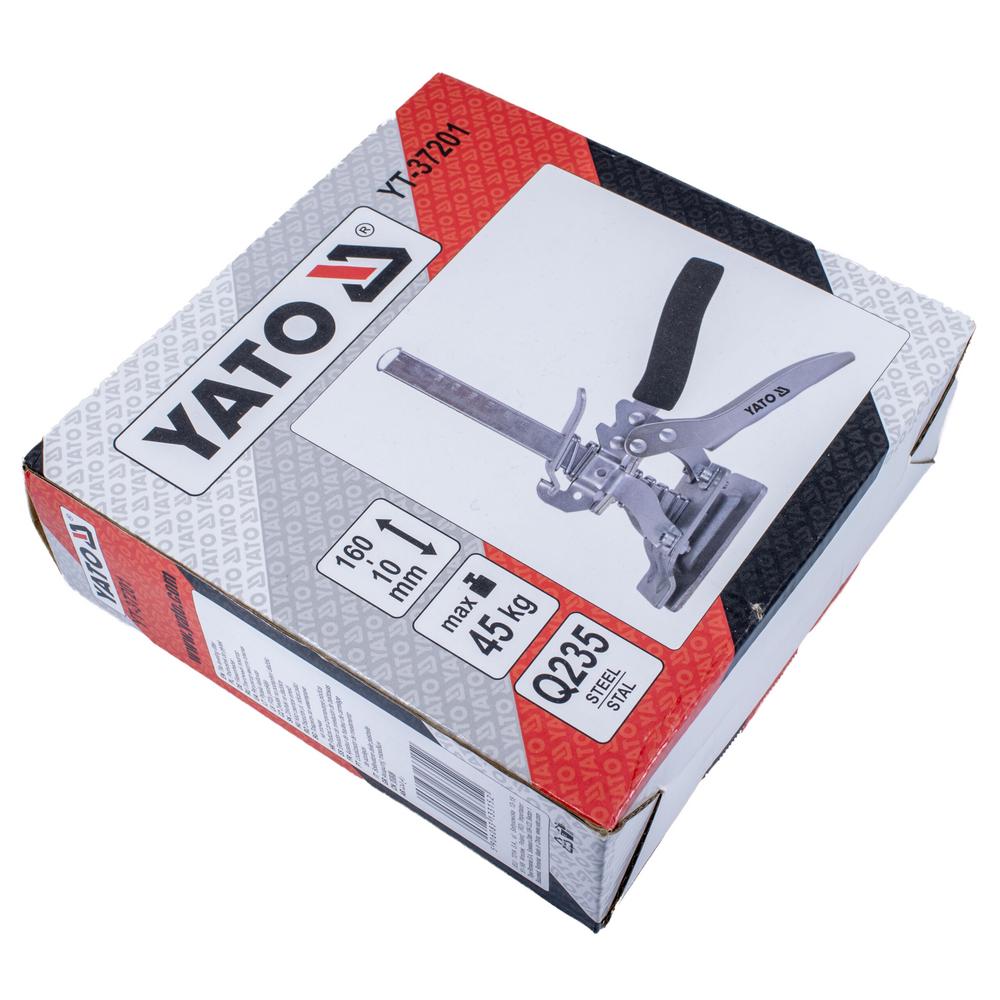
- Lifting capacity (max.): 45 kg.
- Lifting height (range): 10 – 160 mm.
- Operating principle: Mechanical lever/ratchet.
- Material: Steel (body/mechanism), composite (handle covering).
- Lifting foot thickness: < 5 mm (estimated, allows access to narrow gaps).
Yato lifting and installation tool instructions for use:
Follow these steps to ensure safe and efficient use of the device:
1. Preparation: Make sure there is enough clearance (at least 10 mm) between the item being installed and the floor to place the lifting foot. Check the tool for damage before use.
2. Positioning: Push the steel lifting foot of the tool fully under the item to be lifted. Make sure the device is vertical and on a stable base.
3. Lifting: Squeeze the handles of the tool together repeatedly. The ratchet mechanism lifts the item steplessly with each squeeze. Continue until the required height is reached. Watch the stability of the load during lifting.
4. Lowering: Support the load if necessary and press the mechanical release lever in a controlled way. The load lowers under its own weight. Release the foot from under the item after lifting.
Warnings:
Read and understand the following safety warnings:
- Do not exceed the maximum load: The maximum static load of the device is 45 kg. Overloading can lead to mechanical failure and the load falling.
- Use only on a level base: Make sure the device stands firmly on a stable, non-slip surface.
- Do not use for unstable loads: Make sure the item being lifted is balanced and cannot tip over during lifting. Use several tools if necessary.
- Keep your hands away from crushing and lowering areas: A falling load can cause serious injuries.
Frequently asked questions (FAQ):
Answers to professionals’ technical questions:
Question: Can this tool lift full-size plasterboard sheets during wall installation?
Answer: Yes, the device is excellent for lifting and supporting the bottom edge of plasterboard. When the sheet is supported by hand from the top edge, the 45 kg lifting capacity is typically enough to handle the weight of one plasterboard sheet during installation.
Question: How precisely can the lift be done?
Answer: Lifting is stepless with the ratchet mechanism. Each squeeze of the handle lifts the load a few millimetres at a time, which allows very precise positioning, such as levelling kitchen cabinets.
Question: Can several tools be used at the same time to lift a heavier load?
Answer: Yes, by using two tools, for example, the lifting capacity rises in theory to 90 kg. You must, however, make sure the load is distributed evenly across both devices.
Recycling instructions:
Dispose of the product and packaging materials in accordance with environmental regulations:
- Tool: The product is made mainly of steel. Take it to metal recycling at the end of its life. Remove plastic or composite parts and recycle them separately if possible.
- Packaging: Take the cardboard packaging to cardboard collection.