
Description
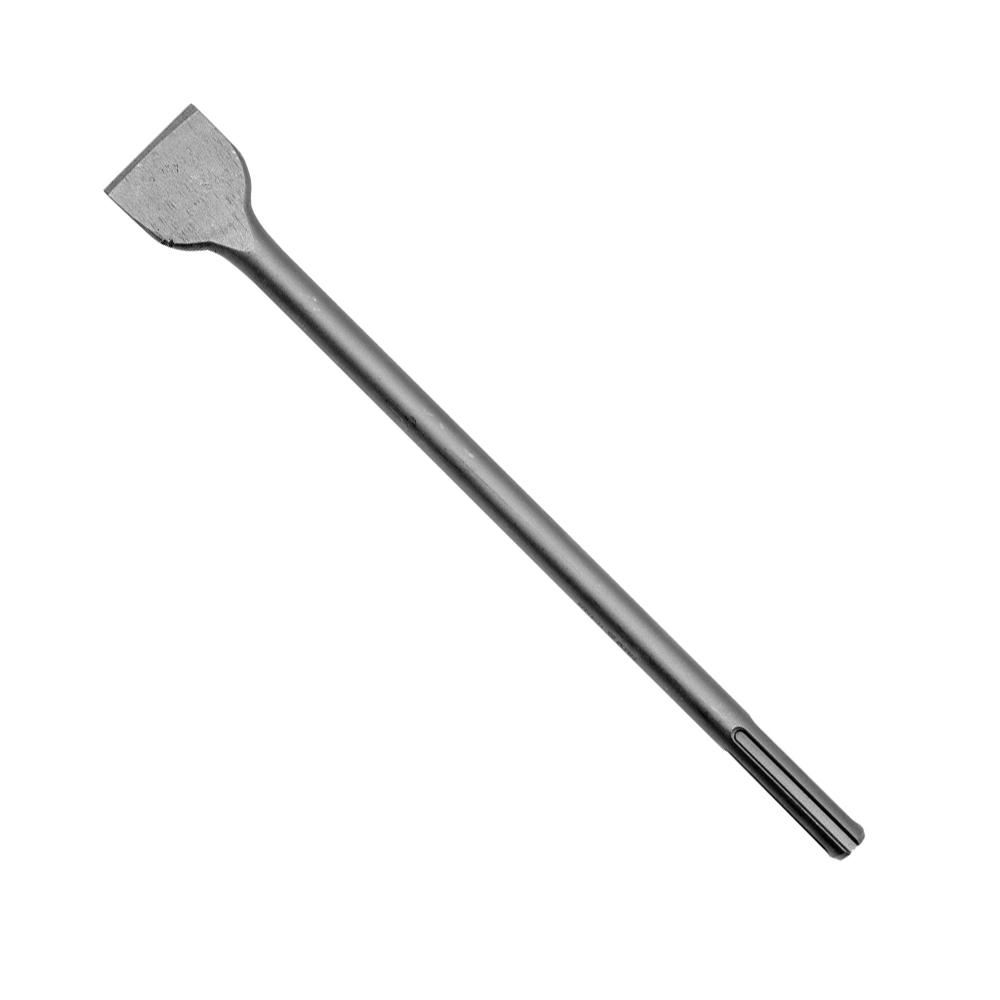
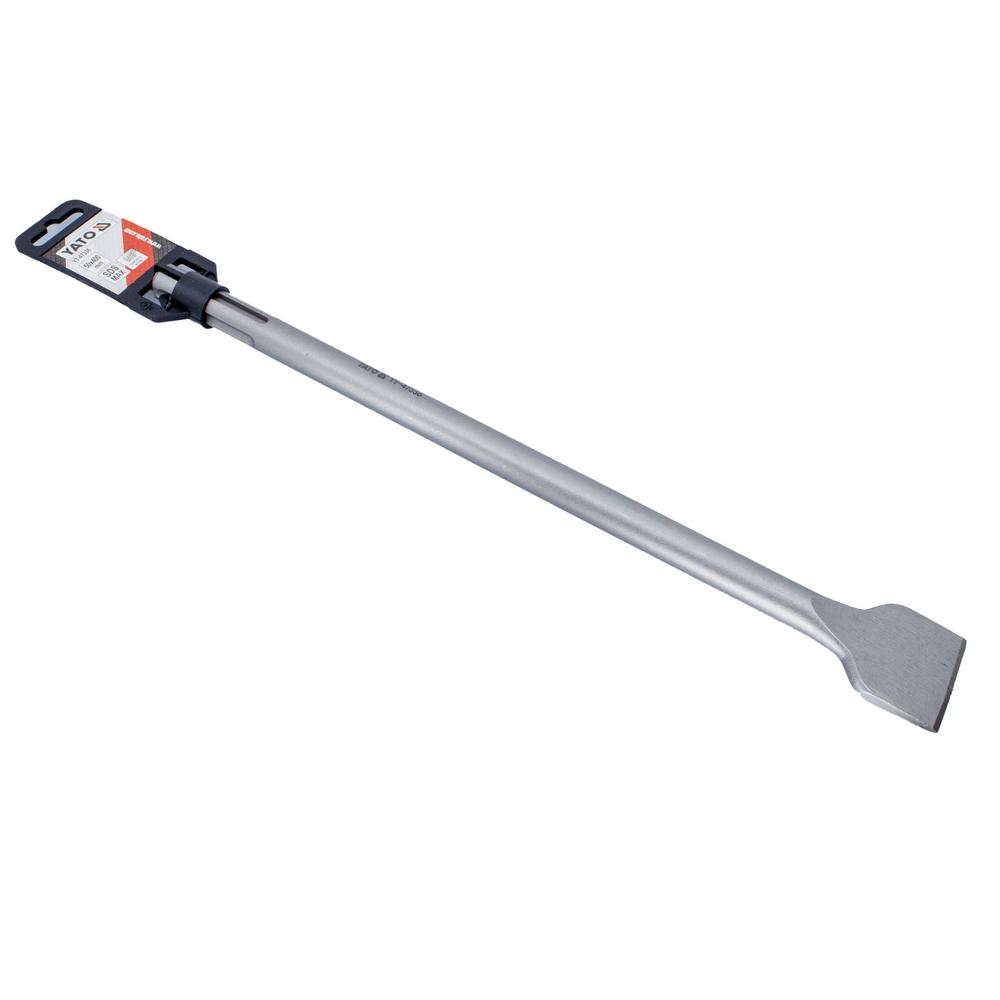
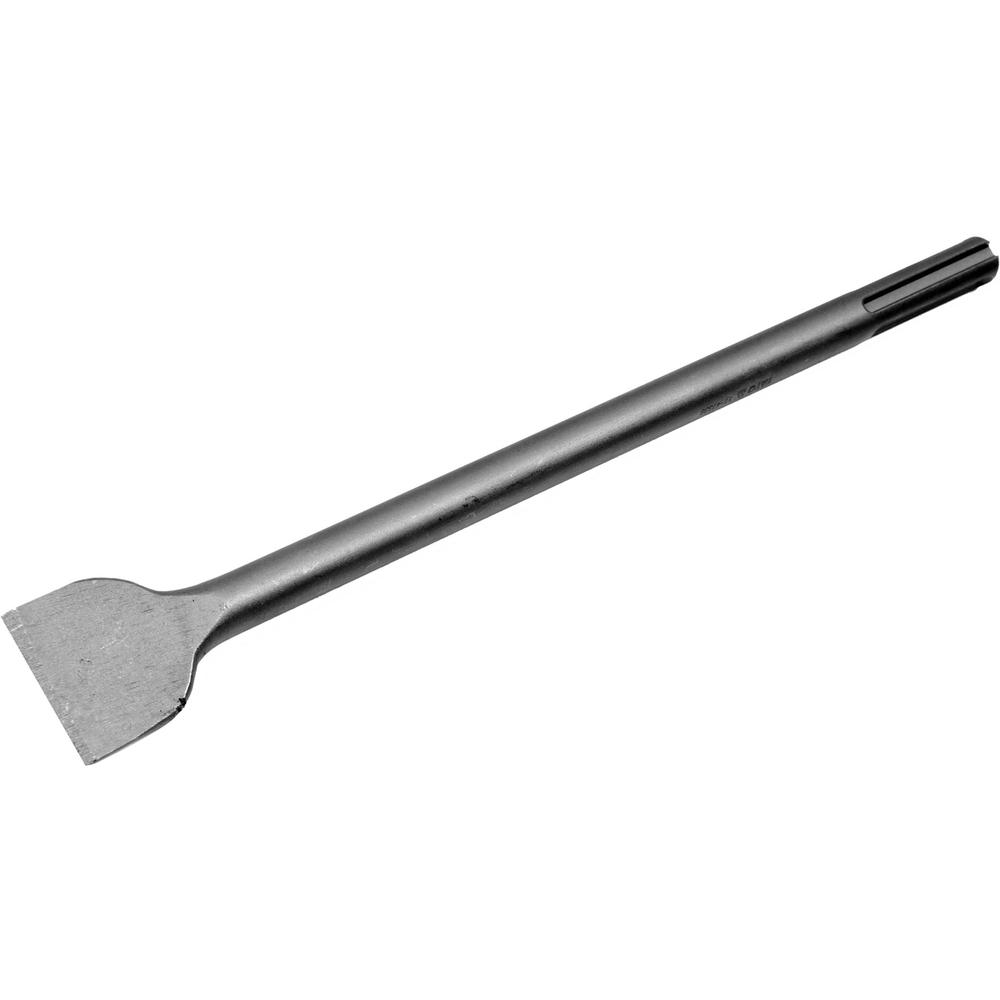
The Yato SDS-MAX wide flat chisel is a mechanical tool designed for heavy electric and cordless demolition hammers. The overall length of the tool is 400 mm and the blade width 50 mm, which makes it excellent for removing large areas of surface materials and stone. The fixing system is the industrial standard SDS-MAX, which allows safe, efficient transfer of impact energy from machines that typically produce more than 5 joules of energy.
The 50 mm wide flat geometry of the blade spreads the kinetic energy produced by the hammer mechanism of the rotary hammer over a larger area than standard-width flat chisels or point chisels. This feature significantly speeds up removing surface materials such as render, ceramic tiles and floor screeds. The wide profile stops the chisel sinking too deep into the base material, which protects load-bearing structures from unnecessary damage during removal work.
The shank of the tool has a diameter of 18 mm, which guarantees the torsional rigidity and fracture strength needed under heavy longitudinal impact stress. The hardened steel used as the material is optimised to withstand repeated mechanical compression and impact loads, thermal expansion and wear. The industrial hardening process prevents the blade chipping and keeps the shape of the cutting edge in long-term use.
The chisel is fitted to rotary and demolition hammers with rotation stop, i.e. the Roto Stop feature, without separate conversion adaptors. Linear power transmission from the 18 mm thick shank to the tip of the blade maximises material removal capacity in heavy mechanical work. Compatibility covers machines fitted with an industry-standard SDS-MAX chuck.
Intended use and suitability:
The spade-like flat chisel is a special tool for fast removal of surface materials and cutting ground, where it makes sense to spread the impact energy over a wider area instead of a narrow point load.
- Large-area removal of surface materials: 50 mm wide blade slides efficiently between the substrate and the surface material being removed. This suits demolishing floor screeds, thick ceramic tiles, adhesive layers and old render over large areas without deep damage to the concrete or brick substrate.
- Cutting asphalt and hard ground: The wide profile cuts asphalt and dense, frozen clay soil more efficiently than narrow chisels. The impact energy crumbles the material along a wide front, which makes the chisel optimal for trimming the edges of trenches and breaking hard ground in pipework.
- Cleaning mortar joints and splashes: The wide blade allows massive cast structures to be cleaned of excess mortar and concrete splashes after formwork is stripped. The tool removes impurities along the flat surface in one stroke.
Package contents:
The product is supplied individually packed and is ready to use straight away.
- 1 x Yato SDS-MAX flat chisel, 50 x 400 mm
Features:
The technical features of the chisel focus on fast removal of material over a large area and maximum durability with SDS-MAX machines.
- Fixing system: SDS-MAX (18 mm shank) ensures direct compatibility with heavy demolition hammers and safely transfers high impact energy of more than 5 joules.
- Blade geometry: 50 mm wide flat tip spreads the kinetic energy, which optimises fast, even removal of surface materials while stopping the blade sinking into the base structure.
- Reach: 400 mm overall length gives good working ergonomics in floor-level demolition work, reducing the need for the user to bend over during long use.
Technical specifications:
Technical and mechanical dimensions optimised for machine comparison.
- Blade width: 50 mm
- Overall length: 400 mm
- Shank diameter: 18 mm
- Fixing system: SDS-MAX
- Blade type: Wide flat chisel / spade chisel
- Product number: 10014870
- Manufacturer: Yato
Yato 50 x 400 mm SDS-MAX flat chisel instructions for use:
Before use, make sure the rotary function of the demolition hammer is mechanically switched off and the machine is in hammer-only mode. Carefully clean dust off the SDS-MAX shank of the chisel and lubricate its fitting grooves thinly with heat-resistant bit grease to minimise friction in the chuck. Push the chisel into the machine’s chuck, turn it lightly around its axis and check that it has locked mechanically by pulling the blade outwards. Place the 50 mm wide edge of the blade on the surface being worked at an angle of about 15–30 degrees, so that the material being removed peels off and the blade does not direct impact energy straight into the load-bearing structure at a 90-degree angle. Let the hammer mechanism of the power tool do the work under its own weight; avoid pressing the tool too hard, because it increases friction, causes the blade to overheat and puts unnecessary strain on the motor of the demolition hammer.
Warnings:
Incorrect use of the product with high impact energy can lead to personal injury or equipment breakage.
- Risk of eye and facial fractures: Stone material and tile fragments breaking off during heavy demolition work fly off at high kinetic speed; wearing an impact-resistant visor or safety-rated safety glasses is mandatory.
- Risk of hearing damage: SDS-MAX machine demolition work always produces a noise level above 85 dB(A), which requires industrial ear defenders.
- Risk of burns: The blade and shank heat up strongly from mechanical friction inside the surface being worked; let the chisel cool freely before removing it or wear heat-insulating protective gloves.
- Mechanical breakage: Never use the chisel as a pry bar for levering materials; sideways bending stress on the 400 mm long shank can break the hardened steel and cause a risk of flying metal fragments.
Frequently asked questions (FAQ):
Expert answers to the most common mechanical and suitability questions.
- Is a 50 mm wide flat chisel suitable for breaking reinforced concrete? Not recommended. The wide 50 mm blade spreads the impact energy of the SDS-MAX machine too much for efficient breaking of thick reinforced concrete. For the initial demolition of reinforced concrete and thick floor slabs, use a point chisel or a standard-width 25 mm flat chisel so that the breaking force is concentrated.
- Can this 400 mm chisel be fitted to an SDS-Plus rotary hammer with an adaptor? Not recommended. Although SDS-MAX to SDS-Plus adaptors are available, the impact energy of lighter SDS-Plus machines (usually less than 3 joules) is typically not enough to make efficient use of the wide 50 mm blade in heavy stone. In addition, the 400 mm heavy tool strains the chuck of a small machine beyond its design tolerances.
- How do I sharpen the tip of a blunt 50 mm spade chisel correctly? Always sharpen on a whetstone wheel with a slow peripheral speed and plenty of water cooling. Avoid using an angle grinder without liquid cooling, because high heat re-tempers the steel, weakening its original industrial durability and making the cutting edge too soft.
Recycling instructions:
Instructions for sorting the materials and packaging parts of the chisel correctly.
- Disposing of the product: A worn-out, broken or bent blade goes as it is to metal recycling (hardened steel).
- Recycling the packaging: Any plastic hangers and fasteners go to plastic collection, while paper barcode labels and cardboard parts go to cardboard collection.