Description
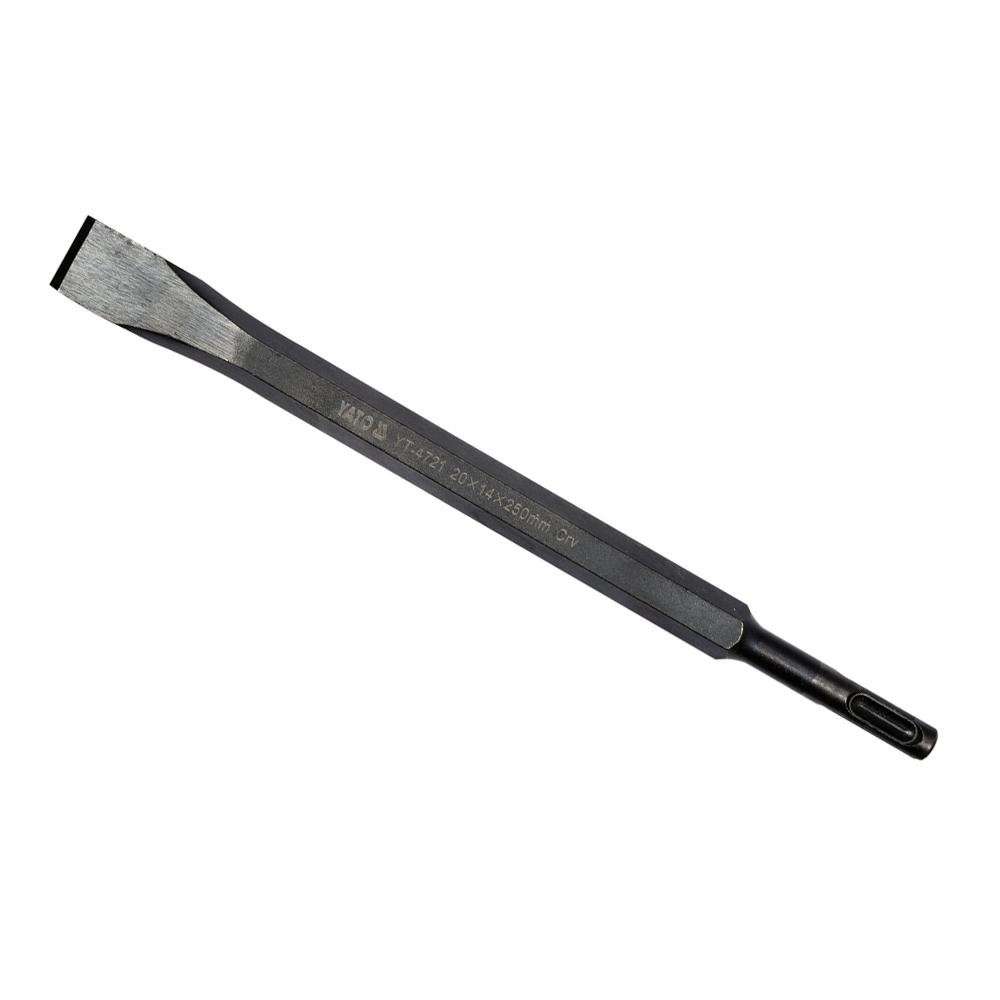
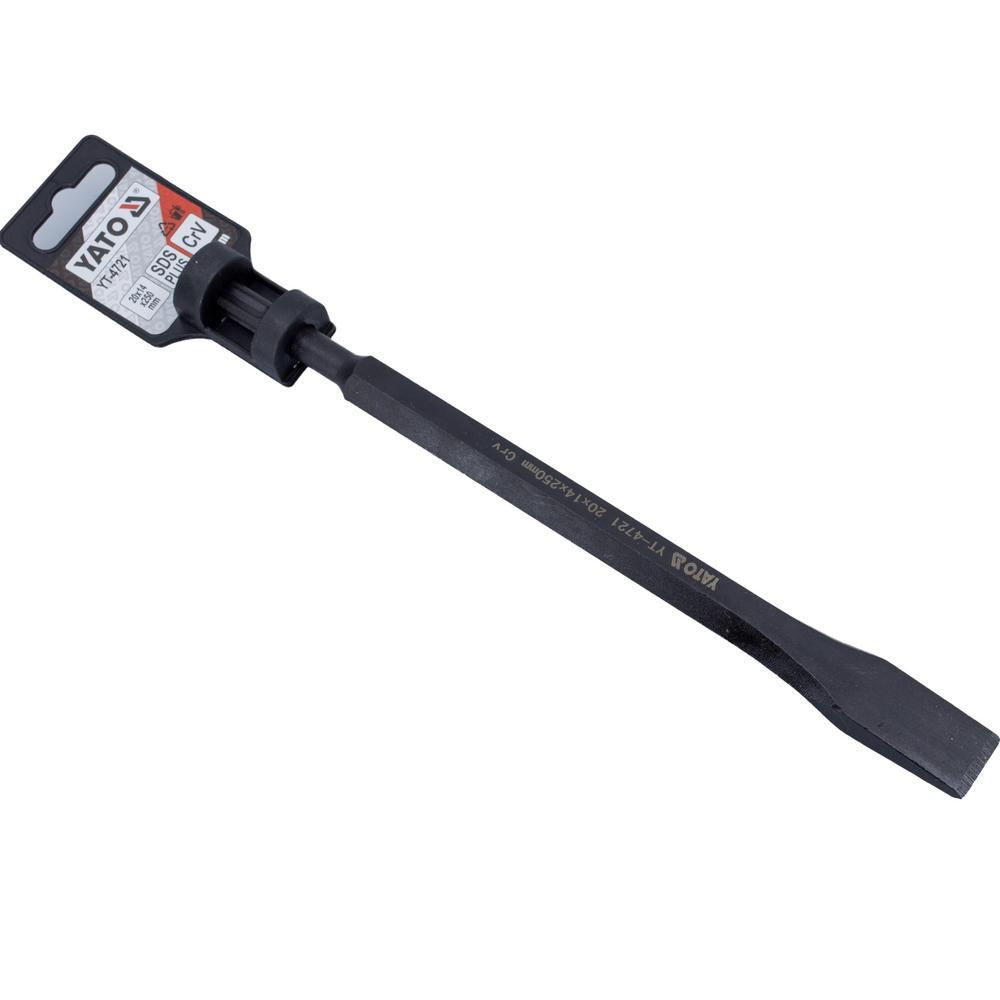
The Yato SDS+ flat chisel is a 20 mm wide tool designed for electric and cordless rotary hammers. The chisel is made of alloyed chrome vanadium steel (CrV), which optimises the mechanical wear resistance of the blade under impact stress. The fixing system is an SDS-Plus fitting.
The overall length of the tool is 250 mm and the shank diameter is 14 mm. The geometry allows linear power transmission from the hammer mechanism of the rotary hammer directly to the tip of the chisel. This reduces energy losses and improves material removal in hard stone.
Chrome vanadium steel gives the chisel a combination of high hardness and structural tensile strength. The industrial hardening process of the material prevents the blade chipping under repeated compression and impact stress. Thanks to these properties, the chisel keeps its shape in long-term mechanical demolition work.
The flat tip geometry of the tool spreads the impact energy over a 20 mm wide area, allowing controlled material removal. The chisel is fitted to machines with rotation stop, i.e. the Roto Stop feature, without separate adaptors. The tool does not fit SDS-Max chucks without a conversion adaptor.
Intended use and suitability:
The chisel is designed for heavy mechanical working of stone with a compatible rotary hammer. The tool achieves its highest efficiency in controlled breaking of hard materials.
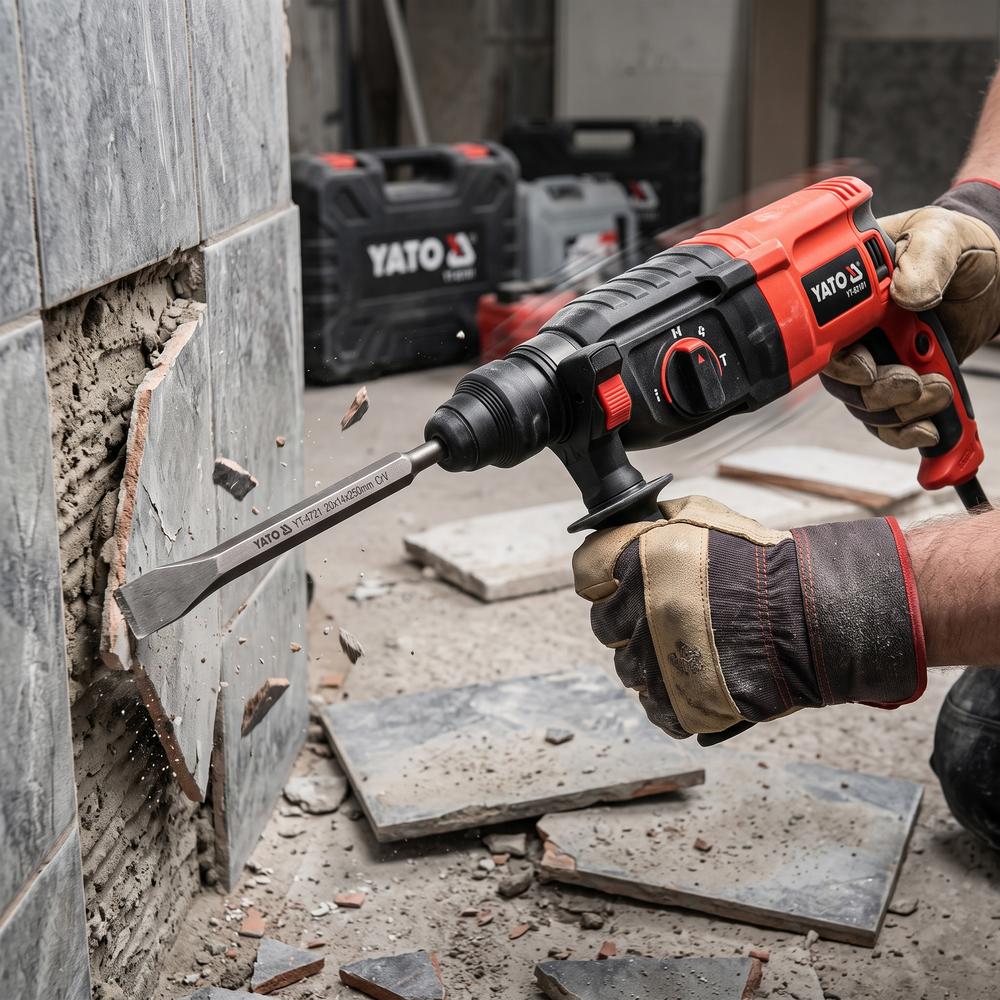
- Demolition of concrete and brick structures: The 20 mm wide blade sinks into the stone and breaks the structure mechanically using the linear impact force produced by the SDS-Plus machine. The impact energy crumbles the bonds of the hard material, which makes the chisel an effective tool in demolition work.
- Opening and levelling mortar joints: The flat profile allows mortar to be removed accurately from between bricks without damaging the joints. The width of the blade matches the geometry of most standard joints, which makes fast material removal easier before repointing.
- Removing surface materials: The tool is suitable for mechanical removal of ceramic tiles, thick render and floor screeds with an impact movement. The flat chisel slides between the surface material and the substrate, separating them without significant damage to the load-bearing substrate.
Package contents:
The product is supplied individually packed without separate accessories.
- 1 x Yato SDS+ flat chisel, 20 x 14 x 250 mm
Features:
- Fixing method: The SDS-Plus shank guarantees direct compatibility with all rotary hammers fitted with a corresponding chuck.
- Material alloy: Chrome vanadium steel (CrV) tolerates extreme conditions, thermal expansion and mechanical fatigue in long-term impact work.
- Blade geometry: The 20 mm flat tip directs the impact energy over a larger surface area, which speeds up demolishing flat surfaces compared with a point chisel.
Technical specifications:
- Blade width: 20 mm
- Overall length: 250 mm
- Shank diameter: 14 mm
- Fixing system: SDS-Plus
- Material: Chrome vanadium steel (CrV)
- Product number: 10006484
Yato SDS+ flat chisel instructions for use:
First make sure the rotary function of the rotary hammer is mechanically switched off and only the hammer function (Roto Stop) is activated. Clean dirt off the SDS-Plus shank of the chisel and lubricate its grooves thinly with heat-resistant hammer grease before inserting it in the chuck, to minimise friction. Press the chisel into the machine’s chuck and turn it lightly around its axis until the balls of the locking mechanism click into place in the grooves of the chisel. Place the tip of the chisel on the material being worked at an angle of about 15-30 degrees, so that the impact energy removes material by chipping it off and does not cause direct recoil into the mechanism. Let the hammer mechanism of the power tool do the work under its own weight; avoid applying excessive body weight, because it can lead to overheating of the blade or jamming of the fitting.
Warnings:
Incorrect use of the product can cause serious personal injury or equipment damage because of the high impact energy.
- Risk of eye injuries: A fragment breaking off the stone flies off with high kinetic energy, so wearing safety-rated safety glasses is absolutely mandatory.
- Risk of hearing damage: Chiselling work regularly exceeds the safe noise level of 85 dB(A), which requires approved ear defenders.
- Risk of burns: The blade heats up significantly as a result of continuous mechanical friction, so it must be allowed to cool freely in the air before changing, or heat-resistant protective gloves must be worn.
- Mechanical breakage: Never use the chisel as a pry bar, because hardened chrome vanadium steel breaks easily under sideways bending stress, producing dangerous metal fragments.
Frequently asked questions (FAQ):
Answers to the most common mechanical and technical compatibility questions.
- Can this chisel be used in an SDS-Max rotary hammer? Not directly. The SDS-Plus shank has a diameter of 14 mm, whereas an SDS-Max chuck requires an 18 mm shank, so using it requires a separate SDS-Max to SDS-Plus conversion adaptor.
- How do you sharpen a blunt CrV chisel correctly without losing its temper? Sharpen at a slow peripheral speed with plenty of water cooling, for example on a whetstone wheel. Avoid using an angle grinder without cooling, so that the hardness of the steel is not weakened by overheating.
- Is a 20 mm flat chisel suitable for removing asphalt surfacing? This 20 mm width is typically too narrow to spread the impact energy and tends to wedge deep in the asphalt; for asphalt work, a separate spade chisel at least 50 mm wide is always recommended.
Recycling instructions:
Instructions for sorting the materials of the chisel correctly at the end of its life.
- Disposing of the product: A worn-out, broken or end-of-life CrV steel tool must be taken clean to metal recycling (steel).
- Recycling the packaging: Any plastic hangers supplied with the product go to plastic collection, and paper barcode labels to cardboard collection.