
Description
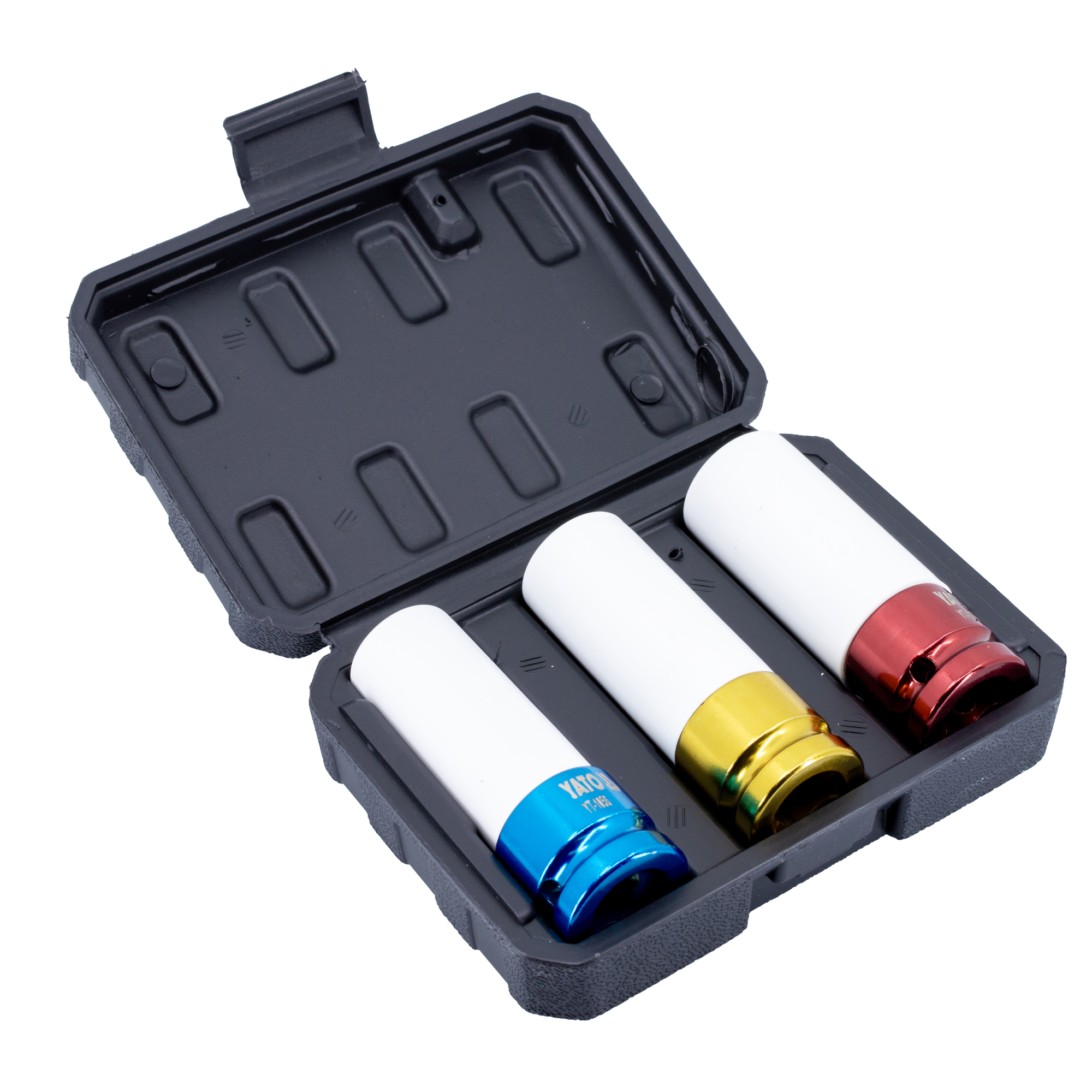
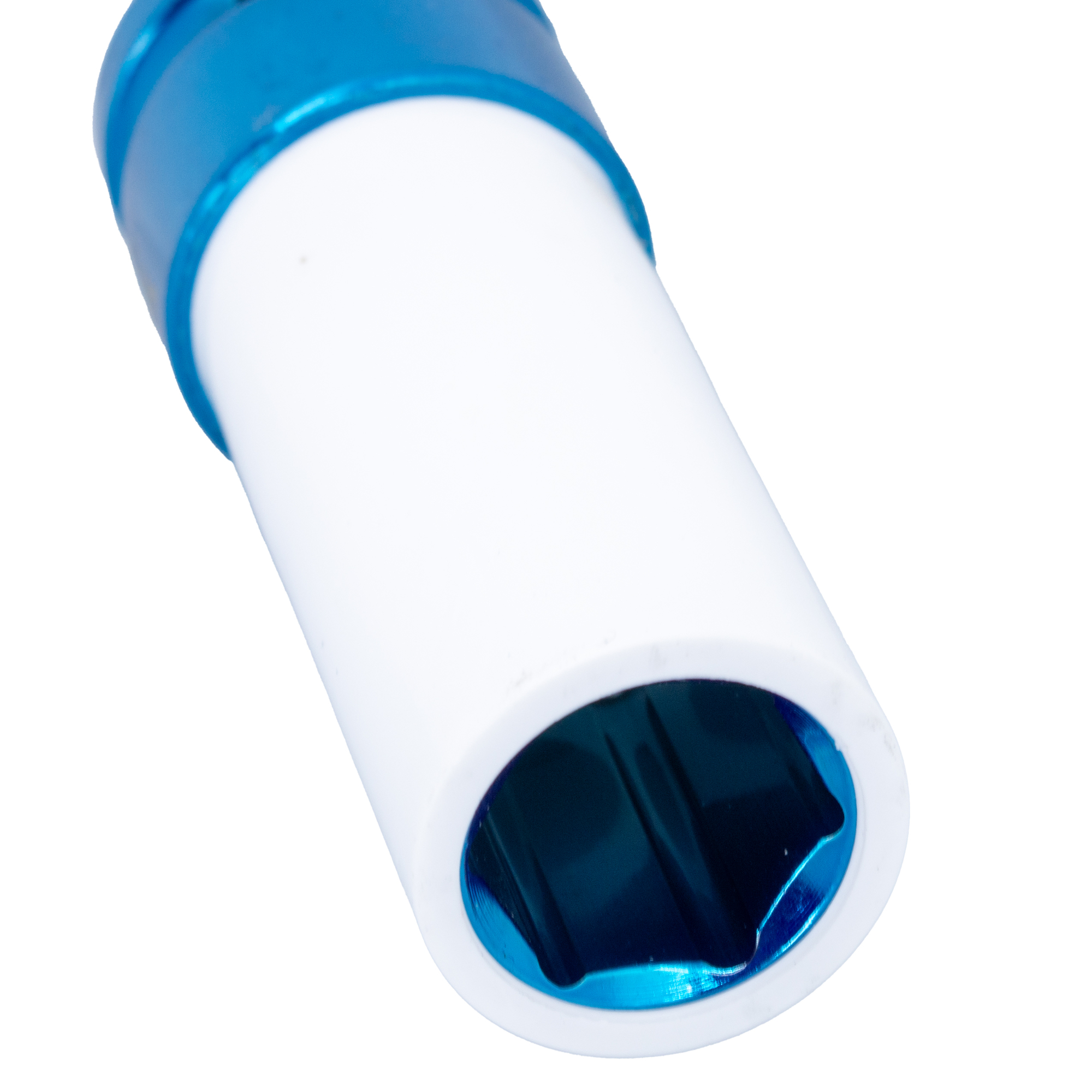
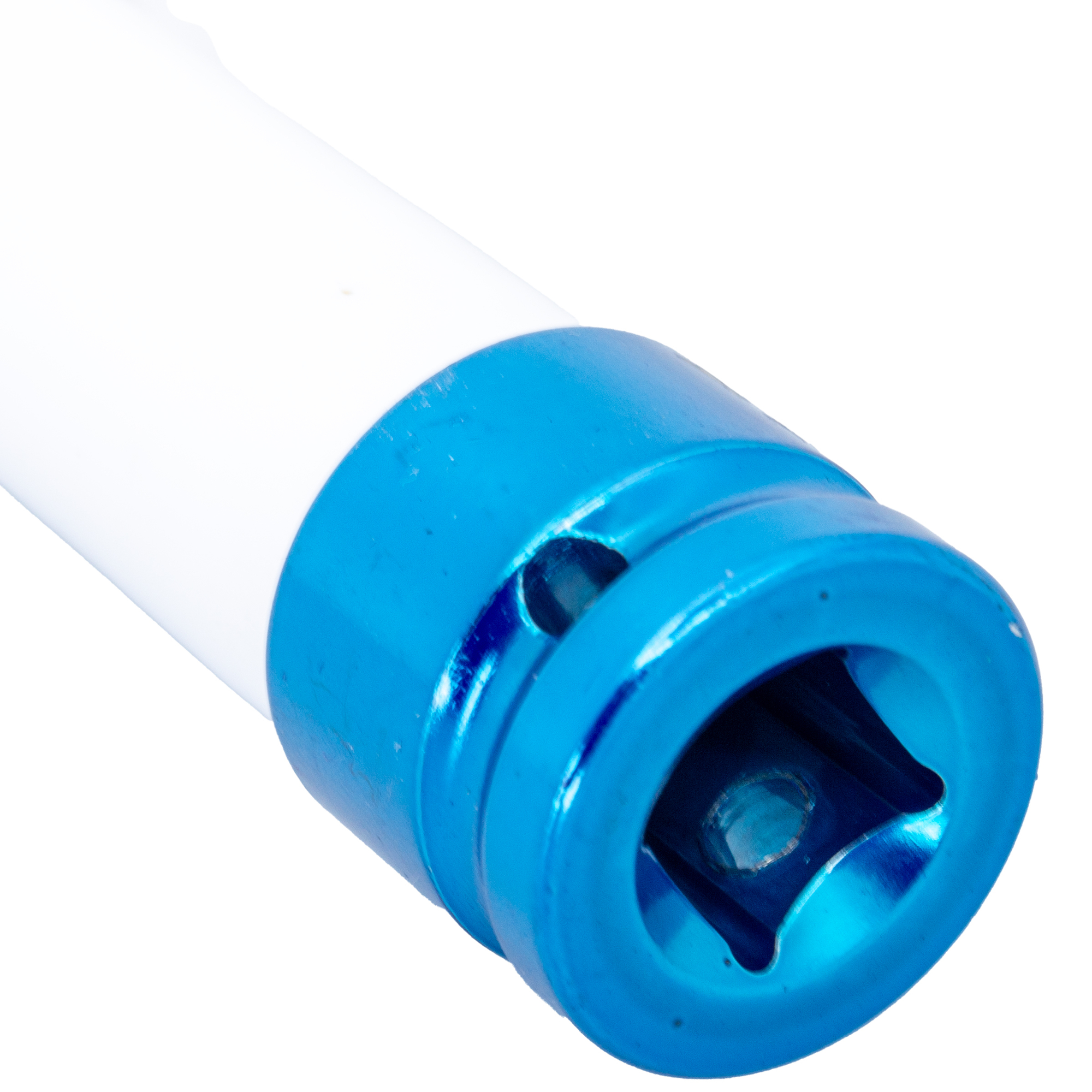
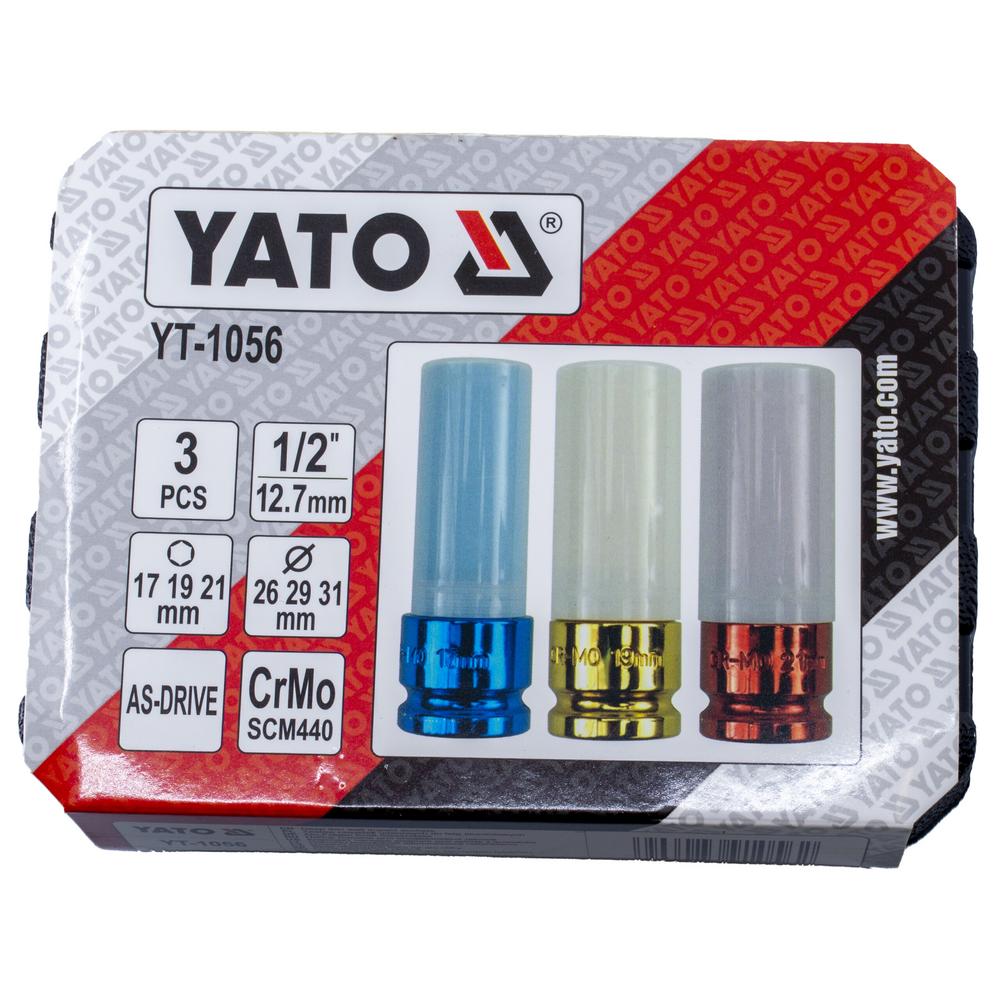
The Yato wheel socket set contains three deep, thin-walled impact sockets in sizes 17 mm, 19 mm and 21 mm. The sockets have a 1/2″ (12.7 mm) square drive, so they fit 1/2″ impact wrenches and nut runners. The set is intended for loosening and tightening wheel bolts and wheel nuts on alloy wheels.
The sockets are made of SCM-440 chrome molybdenum steel (CrMo), which is intended for high impact and pulsating loads. The thin walls fit into the narrow bolt holes of alloy wheels.
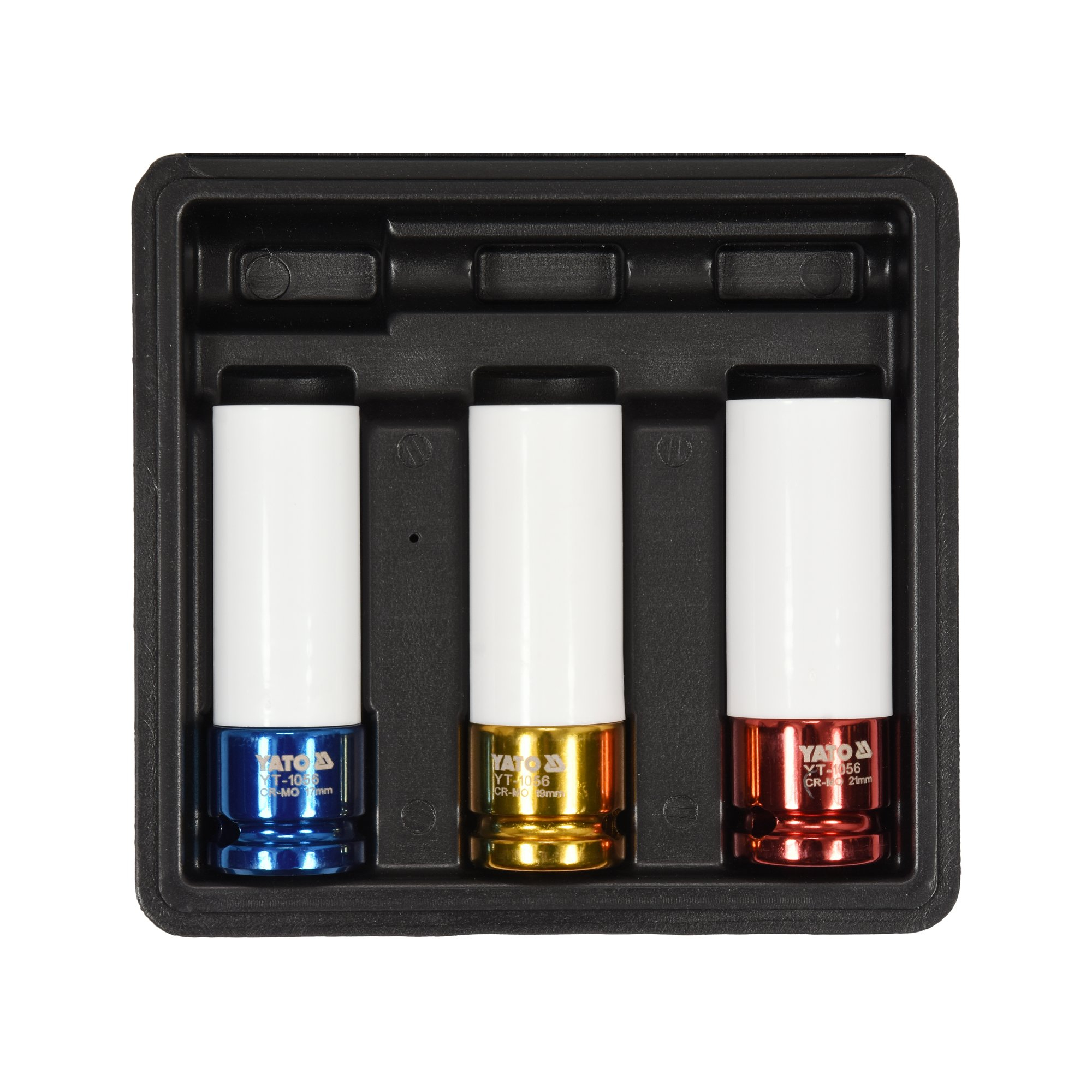
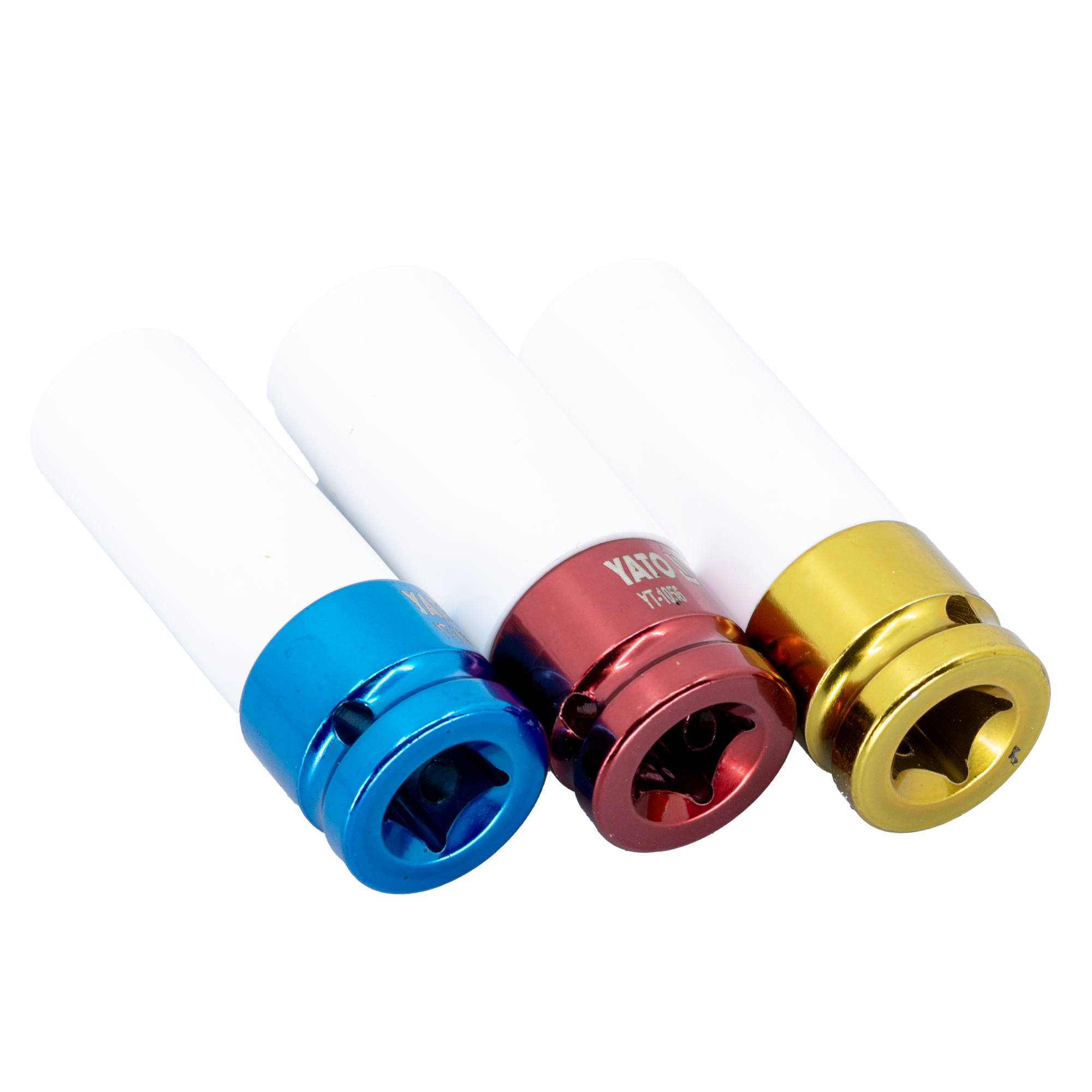
The outside of each socket is covered by a soft plastic protective sleeve that prevents the steel from touching the paintwork of the wheel. The chrome-plated drive end of the sockets is colour-coded: blue 17 mm, yellow 19 mm and red 21 mm.
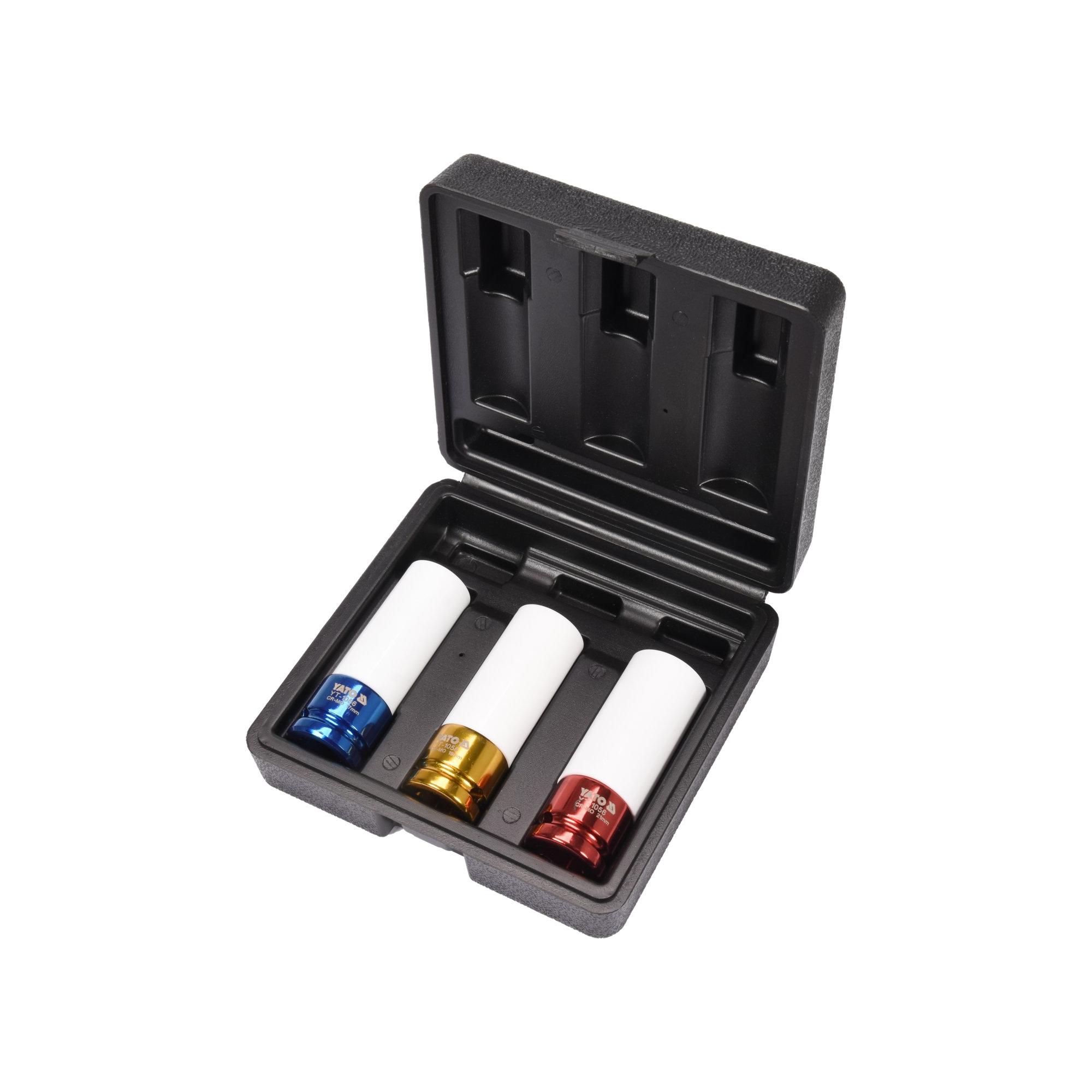
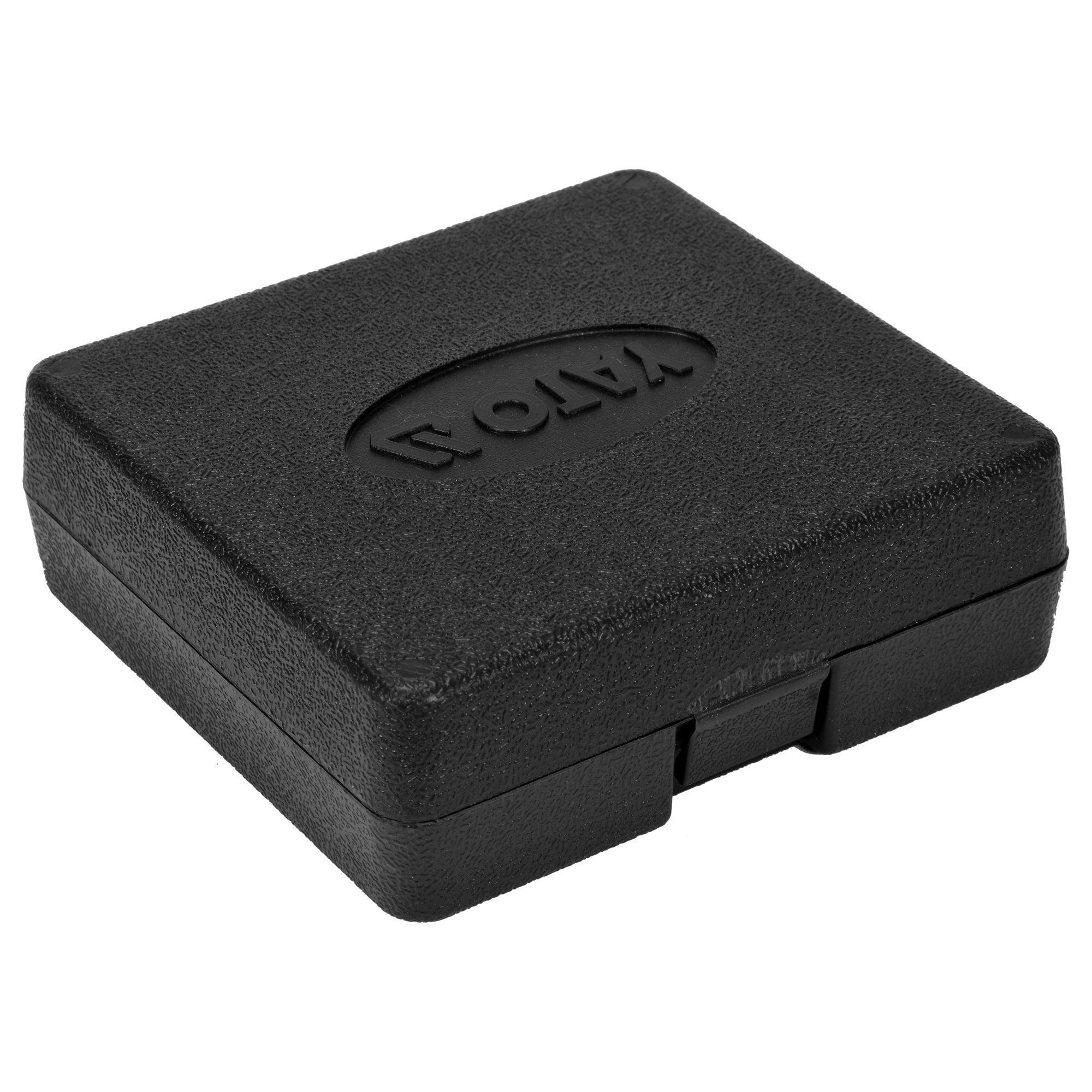
The sockets have an AS-DRIVE profile and a locking hole in the drive end. The locking feature makes it easier to release the removed socket and bolt. The set comes in a plastic storage case where each socket has its own place.
Uses and suitability:
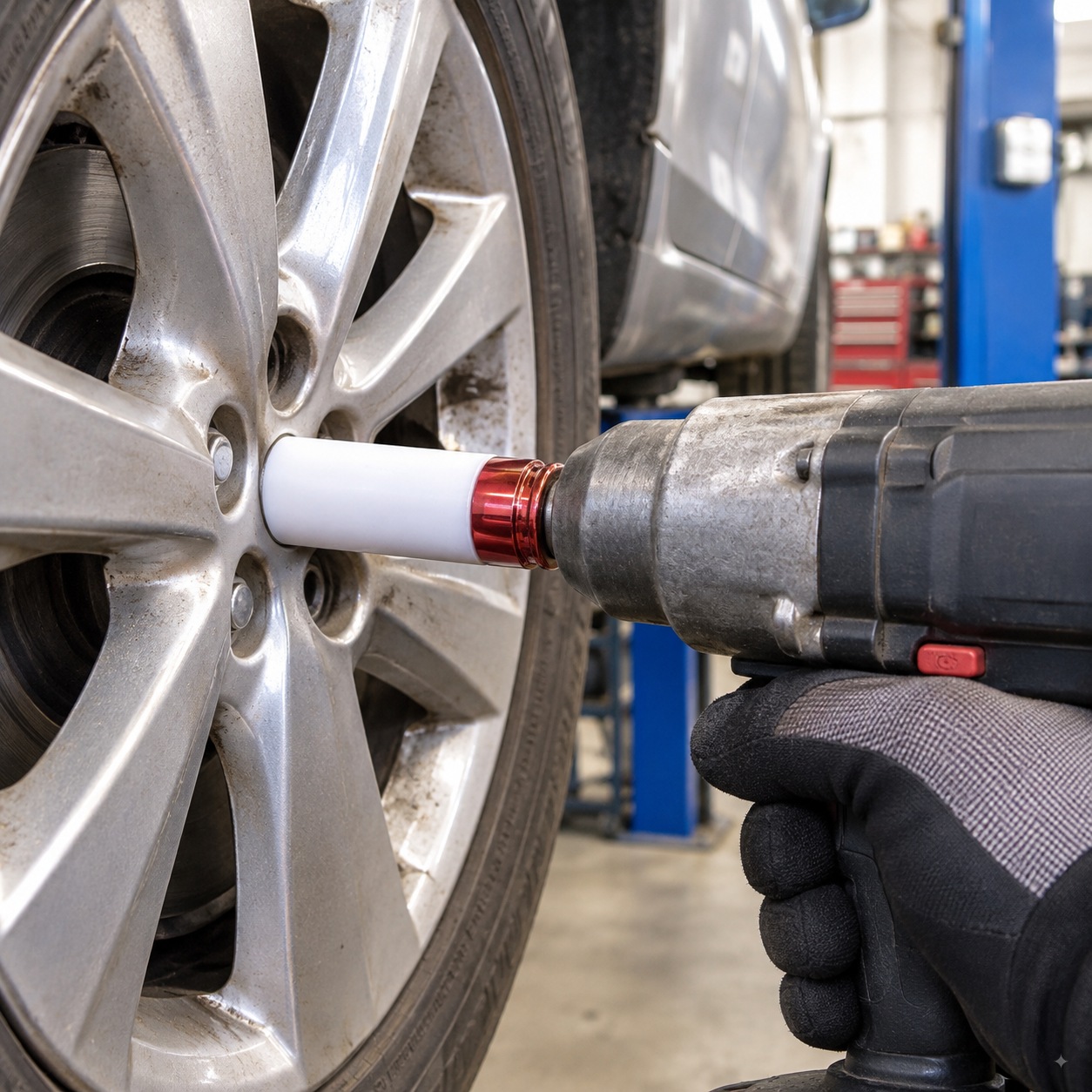
The set is designed for changing alloy wheels with a 1/2″ impact wrench. The plastic sleeve protects the paintwork of the wheel. The thin wall fits into a tight bolt hole.
- Tyre shops: Seasonal tyre changes on alloy wheels. The colour coding makes it quicker to choose the right size. The protective sleeve protects the wheel surface when the socket goes into the bolt hole.
- Car repair workshops: Removing and fitting wheels during brake, suspension and tyre work with a 1/2″ impact wrench or a cordless impact wrench.
- Impact wrench work: CrMo SCM-440 steel is intended for the high impact and pulsating loads an impact wrench produces when loosening wheel bolts.
- Narrow bolt holes: The thin-walled, deep socket reaches a bolt or nut sitting in the deep, tight hole of an alloy wheel.
The set can be used, for example, with the Yato cordless impact wrench 18V BL 1/2″ 700Nm, body only. For other bolt and nut sizes, the Yato impact socket 1/2″, long and the Yato deep socket set 1/2″ 11-piece 10-24 mm CrMo SCM-440 are suitable.
Package contents:
- Impact socket 17 mm, blue colour code and plastic protective sleeve
- Impact socket 19 mm, yellow colour code and plastic protective sleeve
- Impact socket 21 mm, red colour code and plastic protective sleeve
- Plastic storage case
Features:
- Protective sleeve: A soft plastic sleeve on the outside of the socket protects the paintwork of alloy wheels.
- Thin wall: The socket fits into the narrow bolt holes of alloy wheels.
- Deep socket: Reaches a bolt or nut sitting deep in the wheel hole.
- Colour coding: Blue 17 mm, yellow 19 mm and red 21 mm.
- CrMo SCM-440: The chrome molybdenum steel is intended for high impact and pulsating loads.
- AS-DRIVE: AS-DRIVE hexagon socket profile.
- Locking hole: A hole in the drive end for the wrench’s locking pin.
- Locking feature: Makes it easier to release the removed socket and bolt.
- Markings: Each socket is marked with its size and material (CR-MO).
- Storage case: Each socket has its own place in the case.
Technical specifications:
- Type: impact socket, hexagon
- Drive: 1/2″ (12.7 mm)
- Socket sizes: 17, 19 and 21 mm
- Socket outer diameter: 26, 29 and 31 mm
- Material: CrMo steel SCM-440
- Finish: chrome-plated, colour-coded
- Protective sleeve: soft plastic
- AS-DRIVE: yes
- Locking hole: yes
- Load: impact and pulsating loads
- Quantity: 3 sockets
Yato wheel socket set 1/2″ 17/19/21 mm user manual:
The sockets are used with a 1/2″ impact wrench or nut runner. Final tightening is always done with a torque wrench.
- Choosing the size: Check the spanner size of the wheel bolt or nut and choose the socket by its colour code.
- Check: Make sure the protective sleeve is intact and fits tightly on the socket.
- Fitting: Push the socket fully onto the 1/2″ drive of the wrench. If the wrench has a locking pin, line it up with the locking hole in the socket.
- Positioning: Place the socket straight onto the bolt head so that the sleeve does not rub against the wheel at an angle.
- Loosening: Loosen the bolts in a crosswise order.
- Tightening: Screw the bolts in and first tighten them lightly in a crosswise pattern. Do the final tightening with a torque wrench to the torque specified by the vehicle manufacturer.
- Re-tightening: Check the tightening torque again after a short drive.
- Care: Clean the sockets after use, put them back in the case and store them in a dry place.
Warnings:
- Wear safety glasses and work gloves.
- Do not tighten wheel bolts to the final torque with an impact wrench alone. Too much torque can stretch the bolts or damage the wheel.
- Do not use a cracked, bent or worn socket.
- Do not use the socket on an alloy wheel if the protective sleeve is cracked or loose.
- Before driving, make sure that all wheel bolts are tightened to the correct torque.
- Keep out of the reach of children.
Frequently asked questions (FAQ):
Does the Yato wheel socket set fit a cordless impact wrench?
Yes, if the wrench has a 1/2″ square drive. The three impact sockets in the set (17, 19 and 21 mm) are made of CrMo SCM-440 steel, which is intended for impact and pulsating loads.
Why do impact sockets for alloy wheels have a plastic protective sleeve?
The soft plastic sleeve prevents the steel of the socket from touching the paintwork of the alloy wheel when the socket goes into the bolt hole. All three 1/2″ impact sockets in the set have the sleeve.
What do the colours of the sockets mean?
On the sockets of the Yato YT-1056 set, blue means size 17 mm, yellow size 19 mm and red size 21 mm. Each socket is also marked with its size and material.
What are the outer diameters of the sockets?
The outer diameters of the 1/2″ impact sockets in the Yato YT-1056 set are 26 mm (17 mm socket), 29 mm (19 mm socket) and 31 mm (21 mm socket). The bolt hole in the wheel must be wider than the socket.
Can wheel bolts be fully tightened with an impact wrench?
No. The impact wrench is used to screw the bolts in, but the final tightening is done with a torque wrench to the torque specified by the vehicle manufacturer.
Recycling instructions:
Take the steel sockets of a Yato wheel socket set that is no longer in use to metal recycling. Remove the plastic protective sleeves before recycling if possible. Sort the plastic storage case according to local waste instructions. The cardboard collar of the retail packaging goes to cardboard recycling.


