Description
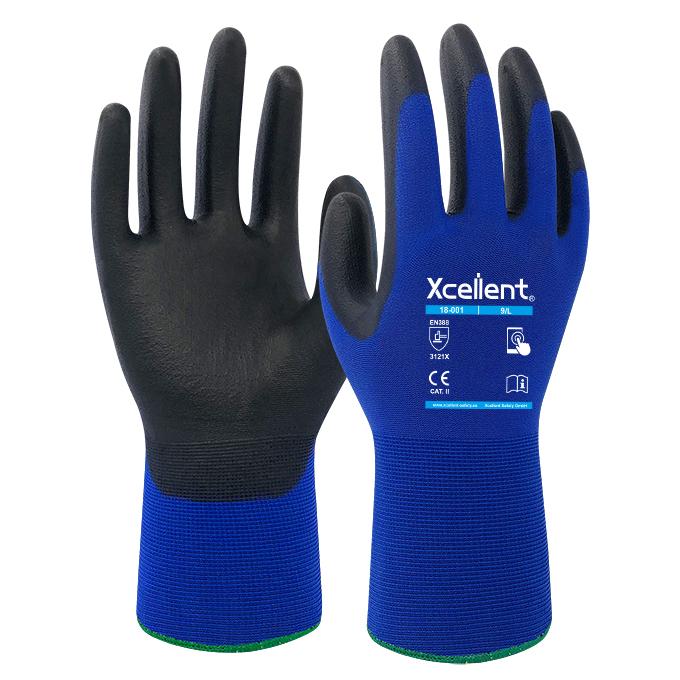
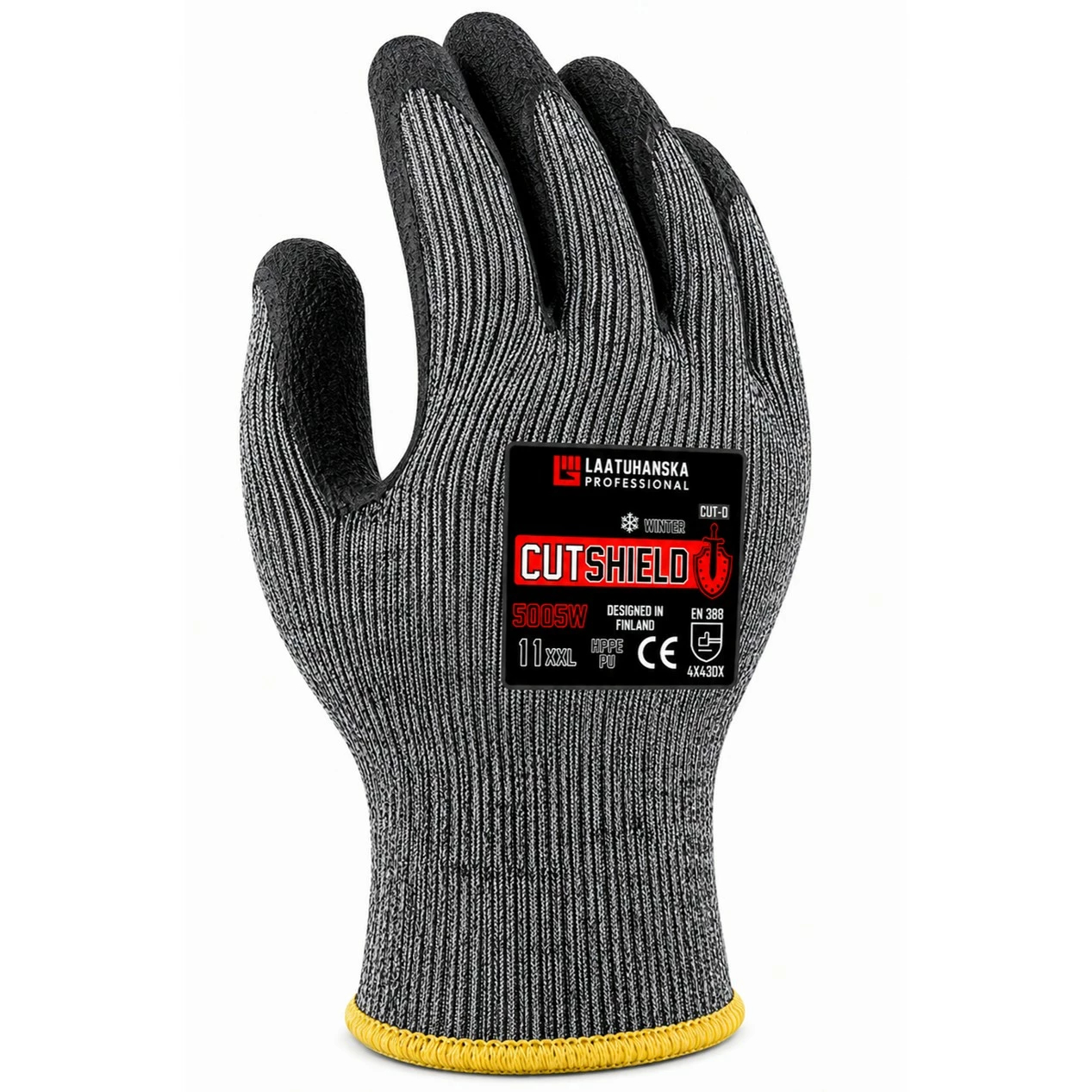
The Laatu cut-resistant glove 4343DX is a lined winter cut-resistant glove classified under EN 388:2016 with a mechanical protection rating of 4343DX: abrasion resistance level 4 (highest on the scale), cut resistance in the Coup test level 3, tear resistance level 4 (highest), puncture resistance level 3 and ISO 13997 cut level D. The glove combines cut protection and thermal insulation in one construction.
The body is a seamless knit made of HPPE yarn (ultra-high molecular weight polyethylene) and fibreglass reinforcement. HPPE is the standard material for cut-resistant gloves, its strength coming from the molecular structure of the fibre, and fibreglass increases the cut resistance of the yarn without metal wire. The seamless construction removes chafing seams and keeps the fit of the glove precise.
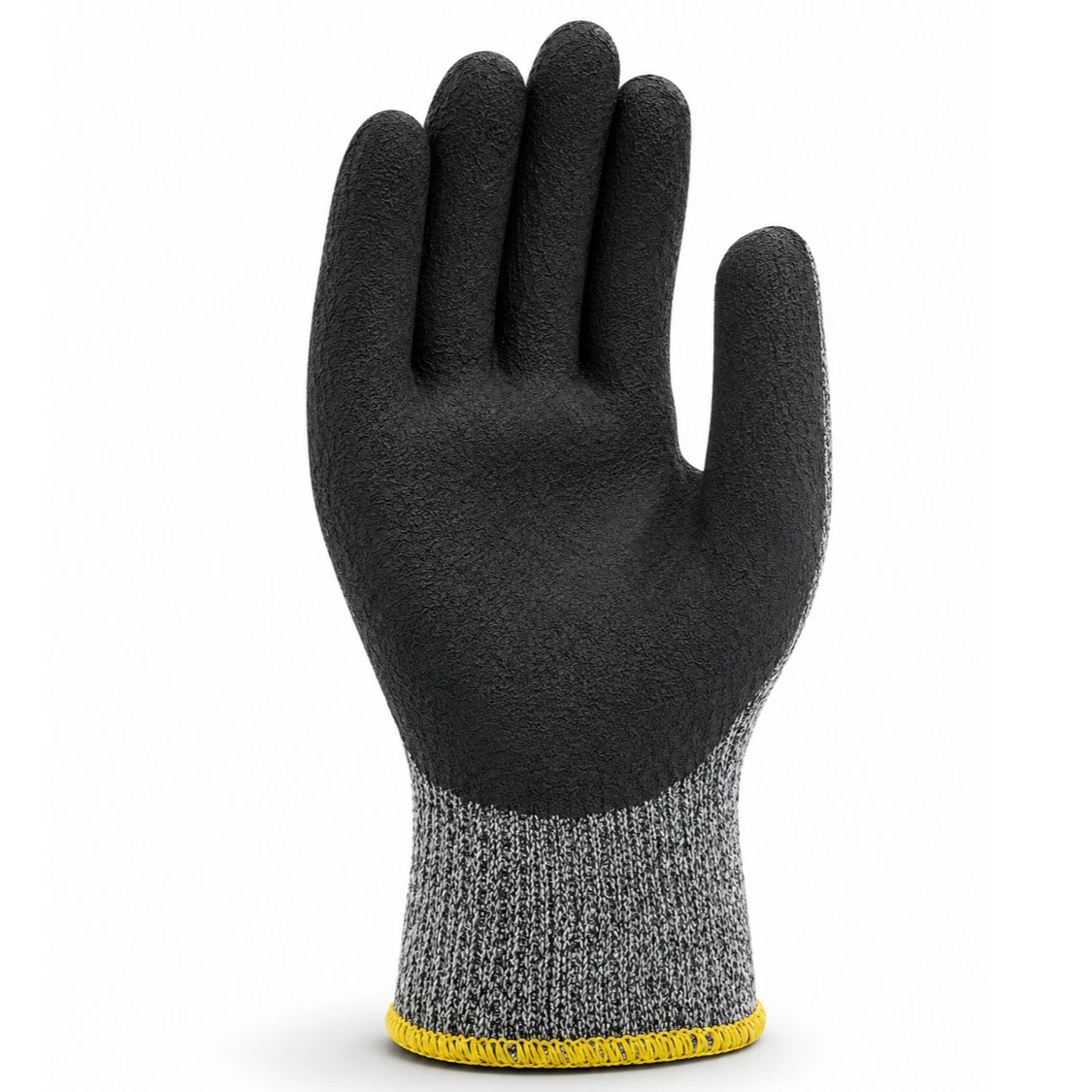
The palm is coated with latex, which is waterproof in its coated area and gives a secure grip on wet and icy items. Latex stays flexible in the cold better than many other coatings, which supports use of the glove in freezing conditions. The knit is low-linting, so the glove is suitable for work where loose fibres must be avoided.
The glove has a soft feel and the lining forms an insulating layer on the inside of the glove, so the same glove covers both cut risk and a cold environment. The Laatu cut-resistant glove 4343DX is a variable product available in several sizes; choose the right size from the size chart.
Laatu cut-resistant glove 4343DX, intended use and suitability:
The Laatu cut-resistant glove 4343DX is intended for work where there is a cut risk and a cold or wet environment at the same time. For the highest cut risk in warm spaces, choose the Laatu cut-resistant glove 4343FX Cut Super and for lighter class C cut protection the Laatu cut-resistant glove 3231CX Cut Light.
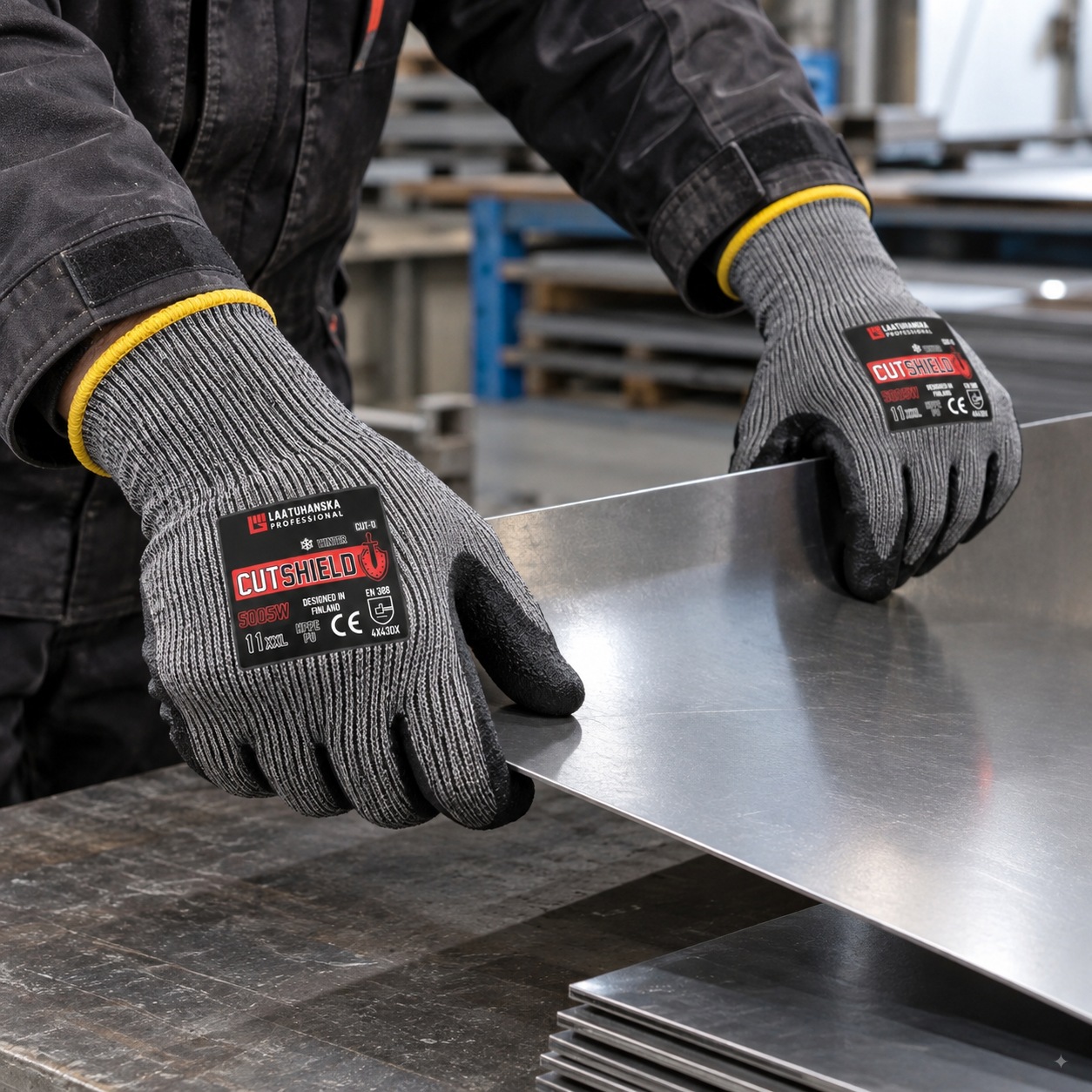
- Sheet metal and metal work outdoors: Handling thin sheets, profiles and cut edges, where ISO 13997 cut level D protects against sharp edges.
- Construction and element installation in winter: Lifting and guiding glass, panel and metal parts, where cut protection and grip on wet surfaces are needed.
- Glass handling and recycling: Sorting glass and scrap metal, where abrasion resistance level 4 and tear resistance level 4 extend the life of the glove.
- Fisheries and food industry: Handling blades and icy items in cold and wet spaces, where the latex coating keeps the palm dry.
- Maintenance and servicing work in cold spaces: Dismantling and assembling machines and steel parts, where the lining stops the hand cooling down.
Package contents:
- Laatu cut-resistant glove 4343DX lined winter glove, 1 pair
Laatu cut-resistant glove 4343DX features:
- ISO 13997 cut level D: The fourth level on the letter scale (A–F), covering a large share of industrial cut risks.
- Abrasion resistance and tear resistance level 4: Two of the highest EN 388:2016 classes in the same glove.
- HPPE and fibreglass body: A seamless knit whose cut resistance comes from the fibres, not from metal wire.
- Latex coated palm: A waterproof coated area and a secure grip on wet and icy items.
- Lined winter construction: The inner lining insulates and allows use in freezing conditions.
- Low-linting construction: Reduces loose fibres in work where cleanliness is a requirement.
- Variable product: Available in several sizes, so the fit can be chosen to suit the wearer.
Technical specifications:
- Product: Laatu cut-resistant glove 4343DX lined winter glove (manufacturer’s product name Laatuhanska CutShield D/5 Talvi, model 5005W).
- Standard: EN 388:2016.
- Protection rating: 4343DX (abrasion 4, cut Coup 3, tear 4, puncture 3, ISO 13997 cut level D, impact protection not tested).
- Cut protection class: D (ISO 13997, scale A–F).
- Body material: HPPE, fibreglass.
- Coating: Latex, palm.
- Waterproofing of the coating: The coated palm area is waterproof.
- Construction: Seamless knit, lined winter version, low-linting.
- CE marking: Yes.
Laatu cut-resistant glove 4343DX instructions for use:
Inspect the glove visually before each use. Do not use the glove if the knit has cuts or holes or if the latex coating has cracked: the cut protection depends on an intact knit, and a single cut-through removes the protection from that area. Choose a size that fits closely without squeezing, because a loose cut-resistant glove can twist and leave a finger unprotected.
Put the glove on a dry hand and pull the cuff over the wrist. Use a two-handed grip when handling sharp items and always direct the blade away from your hand. After use, remove loose dirt by shaking or brushing, rinse the coating with clean water if needed and let the glove dry at room temperature. Do not dry it on a radiator or near an open fire, because heat hardens the latex. Store dry and protected from light. Replace the glove immediately when a cut is visible in the knit.
Warnings:
- No protection against fire or heat: The Laatu cut-resistant glove 4343DX is a mechanical protective glove (EN 388). It is not EN 407 classified and does not protect against fire, flames, sparks, hot surfaces or molten metal. Do not use the glove for welding, hot work or handling hot objects; the HPPE fibre and latex coating can melt and cause burns.
- No puncture protection against needles: Puncture resistance level 3 is measured with a blunt point. The glove does not protect against hypodermic needles or thin spikes.
- Cut protection is limited: Cut level D is not the highest level (E and F are higher). The glove does not protect against saws, angle grinders or other powered blades.
- No chemical protection: The glove is not EN ISO 374 classified and must not be used for handling chemicals.
- Latex allergy: The coating contains natural rubber latex, which can cause an allergic reaction in sensitised users.
- No protection against rotating machine parts: Do not use the glove near rotating blades or machine parts because of the risk of entanglement.
- Damaged glove: A cut or hole in the knit removes the protection; dispose of a damaged glove.
Frequently asked questions (FAQ):
What does the EN 388:2016 rating 4343DX mean on a cut-resistant glove?
The numbers and letters give the test results in order: abrasion resistance 4 (scale 1–4, highest), cut resistance in the Coup test 3 (1–5), tear resistance 4 (1–4, highest), puncture resistance 3 (1–4), ISO 13997 cut level D (A–F), and the final X means that impact protection has not been tested.
What does cut level D mean in practice?
In the ISO 13997 method, D means that cutting through the glove takes a force of at least 10 newtons. The class covers a large share of industrial cut risks, such as the edges of sheet metal and glass, but not powered blades.
Is the Laatu cut-resistant glove 4343DX suitable for work in freezing conditions?
Yes. The glove is the winter version of the CutShield model: it has a lining that insulates and a latex coating that stays flexible in the cold. Numerical limits for cold protection require an EN 511 rating, which is not part of this model’s CE classification.
Is the glove waterproof?
The latex coated palm area is waterproof. The back of the hand is uncoated knit, so it lets water through.
Why does a cut-resistant glove contain fibreglass?
Fibreglass is a hard, unbreakable fibre that increases the cut resistance of the yarn without steel wire. It keeps the glove’s soft feel and keeps the weight low compared with metal-reinforced constructions.
Recycling instructions:
- Glove: The Laatu cut-resistant glove 4343DX is a combination of HPPE fibre, fibreglass and latex coating, and it goes to mixed waste or energy waste according to local waste management instructions. The fibreglass content prevents textile recycling.
- Packaging: Sort the hanger card into cardboard collection and any plastic bag into plastic collection.