
Description
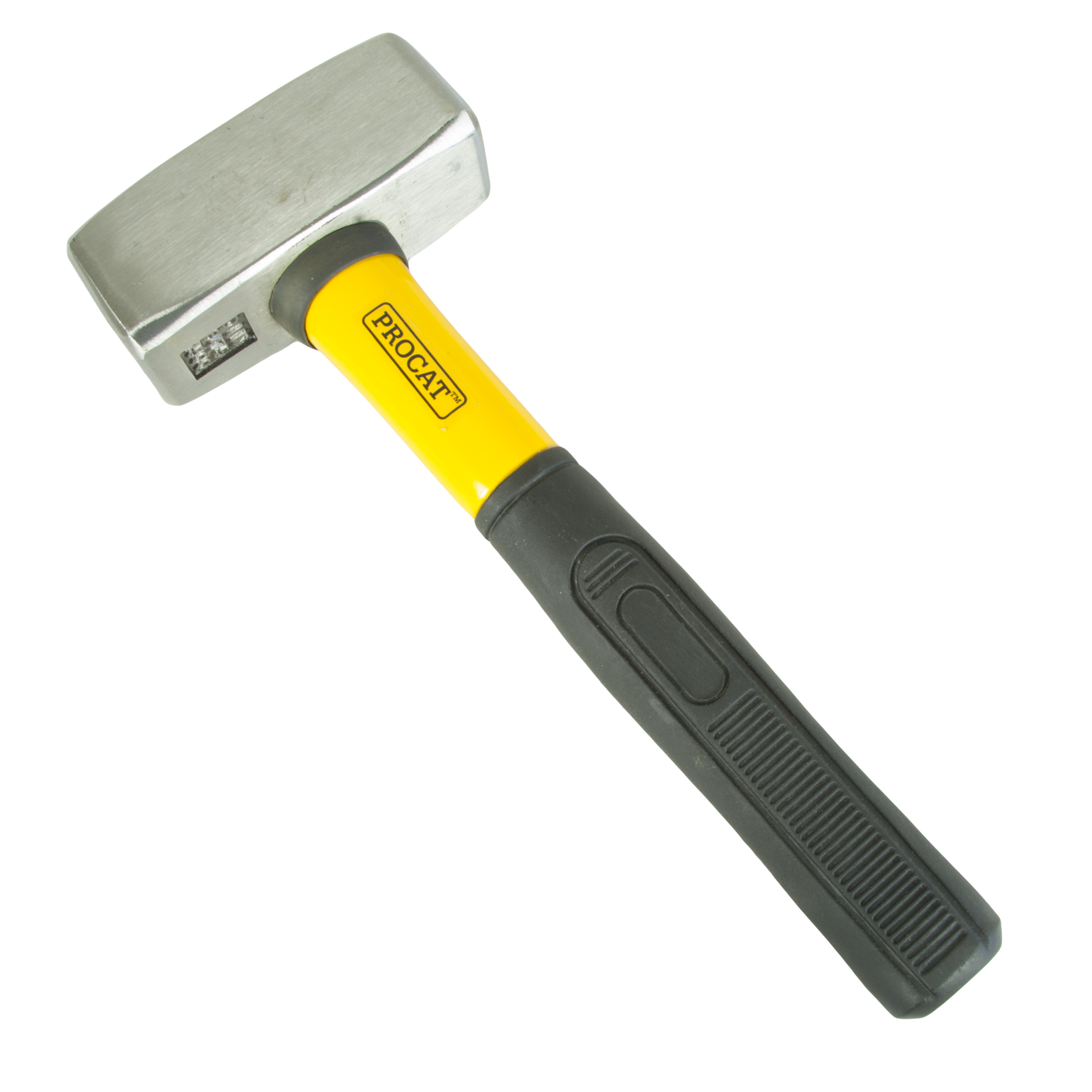
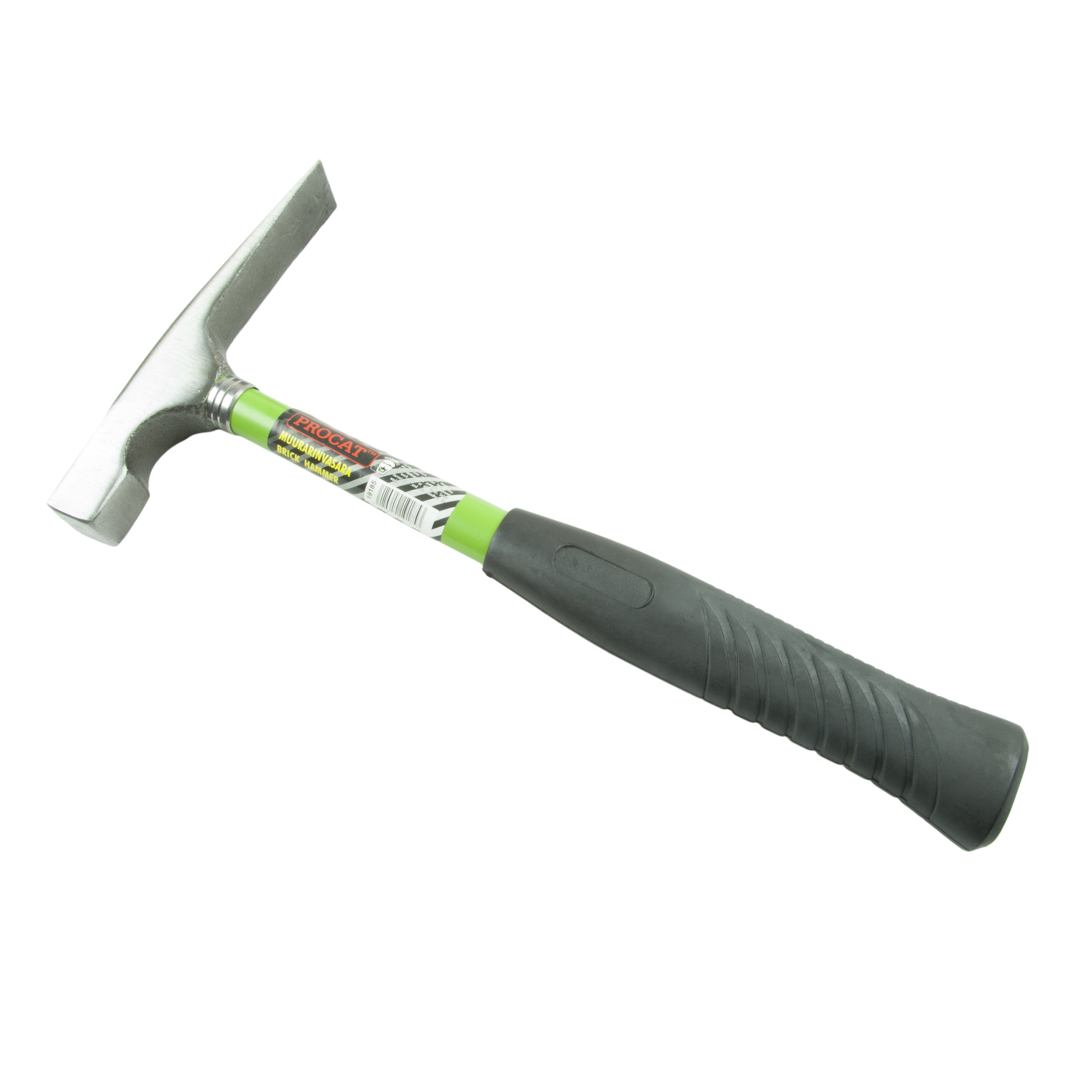
The Procat bricklayer’s hammer is a hammer for cutting and shaping bricks, with a flat striking face at one end of the head and a horizontal cutting blade at the other. The head weighs 620 g. The blade and the striking face are in the same forged piece, so there is no need to change tools between cutting and striking.
A brick is cut by scoring. A light groove is struck with the blade around the brick at the cutting line, after which one sharp blow is given with the flat striking face at the groove. The brick breaks along the guided line, because the groove has already broken the continuity of the surface. The same blade chamfers and shapes the cut surface and removes excess mortar from the joint.
The handle is steel tube, which continues in one piece through the head. The one-piece construction withstands the stress of impact without a separate wedge joint, so the head does not work loose in use as it can on a wooden-handled hammer. On the handle there is a rubber grip, which dampens impact vibration and keeps its hold in a hand covered in mortar or moisture.
The grip has a grooved finger profile and a flared end that stops the hand slipping off the end of the handle. The head weight of 620 g puts the tool in the light class of brick hammers: it suits repeated cutting and shaping, where accuracy of hit matters more than the energy of a single blow.
Intended use and suitability:
The hammer is a hand tool for masonry work, used to cut bricks to size and finish the cut surface. The blade and striking face cover both work stages.
- Cutting bricks to size: scoring the cutting line with the blade and cutting with the striking face when a whole brick is not the right length.
- Shaping the cut surface: chamfering edges and removing unevenness with the blade after fitting.
- Removing mortar: chipping squeezed-out and dried mortar off the joint and the brick surface.
- Light demolition: removing single bricks and mortar joints during repair masonry.
- Fitting blocks and lightweight aggregate blocks: shaping and notching the edge on site.
Package contents:
- 1 pcs bricklayer’s hammer, steel handle and rubber grip
Features:
- Dual-function head: flat striking face and horizontal cutting blade in the same piece, so the tool is not changed between work stages.
- 620 g head: a light class that favours accuracy of hit in repeated cutting.
- One-piece steel handle: the handle continues through the head without a wedge joint, so the head does not work loose in use.
- Rubber grip: dampens impact vibration and keeps its hold in a hand covered in mortar or moisture.
- Grooved finger profile: guides the grip to the same position and keeps the striking direction under control.
- Flared handle end: stops the hand slipping off the handle during a blow.
Technical specifications:
- Head weight: 620 g.
- Head type: flat striking face and horizontal cutting blade.
- Handle: steel tube, one piece through the head.
- Grip: rubber, grooved finger profile, flared end.
- Application: cutting and shaping bricks, removing mortar.
Procat bricklayer’s hammer instructions for use:
Mark the cutting line on all four sides of the brick. Place the brick on a firm base (sand, an offcut of board or the ground) so that the part to be cut off is supported. A hard, rigid base breaks the brick uncontrollably.
Strike a light groove with the blade along the marked line on all four sides. Use several light blows instead of one hard one: the groove forms gradually and stays straight. Keep the blade perpendicular to the surface so that the groove does not wander.
Turn the brick so that the groove faces up and the end to be cut off is supported. Give one sharp blow with the flat striking face at the groove. The brick breaks along the groove. If the cut does not succeed, deepen the groove with the blade before the next blow: repeated hard blows crush the edge of the brick.
Finish the cut surface with the blade using light chipping blows along the edge. Clean mortar off the head after use before it dries; dried mortar is removed with a wire brush. Check regularly that the blade has no chips and the grip has not come loose from the handle.
Warnings:
When cutting bricks, sharp fragments fly off at high speed. Safety glasses are mandatory for every blow, even when cutting a single brick. Keep bystanders outside the work area.
Wear protective gloves and a respirator. Working brick and mortar releases respirable crystalline silica dust, and exposure to it must be prevented. Ear defenders are needed when striking repeatedly against a hard base.
Do not strike another hammer, a chisel or hardened steel with the hammer: both surfaces can chip and a fragment can fly off. Do not use the hammer as a lever: the steel handle bends and does not spring back. Take the hammer out of use if the blade is chipped, the edges of the striking face have mushroomed or the grip has come loose from the handle. Keep your other hand away from the striking area when supporting bricks.
Frequently asked questions (FAQ):
How heavy is the head of the bricklayer’s hammer? 620 g. It is in the light class of brick hammers, where accuracy of hit in repeated work matters more than the energy of a single blow.
How is a brick cut with a bricklayer’s hammer? By striking a light groove with the blade along the cutting line on all four sides of the brick and then giving one sharp blow with the flat striking face at the groove. The brick breaks along the groove.
What is the blade of the hammer used for? For striking the cutting groove, chamfering and shaping the cut surface and chipping dried mortar off the joint and the brick surface.
Why is the handle steel and not wood? The one-piece steel handle continues through the head without a wedge joint, so the head does not work loose in repeated striking work. The rubber grip dampens the vibration that a wooden handle would otherwise absorb by flexing.
Can the hammer cut blocks and lightweight aggregate blocks? Yes. A notch is struck with the blade, and the cut is made on the same principle as with brick. A soft block splits with lighter blows than fired brick.
What protection does cutting bricks require? Safety glasses for every blow, protective gloves and a respirator against crystalline silica dust. Ear defenders for repeated striking work.
Recycling instructions:
The hammer is steel and rubber. Take a tool that is no longer used to metal collection or a municipal waste station; the rubber grip can be removed from the handle before metal recycling if the sorting point requires it.
Cardboard and carton packaging belongs in carton collection and the plastic hanging tag in plastic collection. Brick and mortar rubble produced during work belongs in construction waste or concrete and brick waste collection according to local instructions, not in mixed waste.