
Description
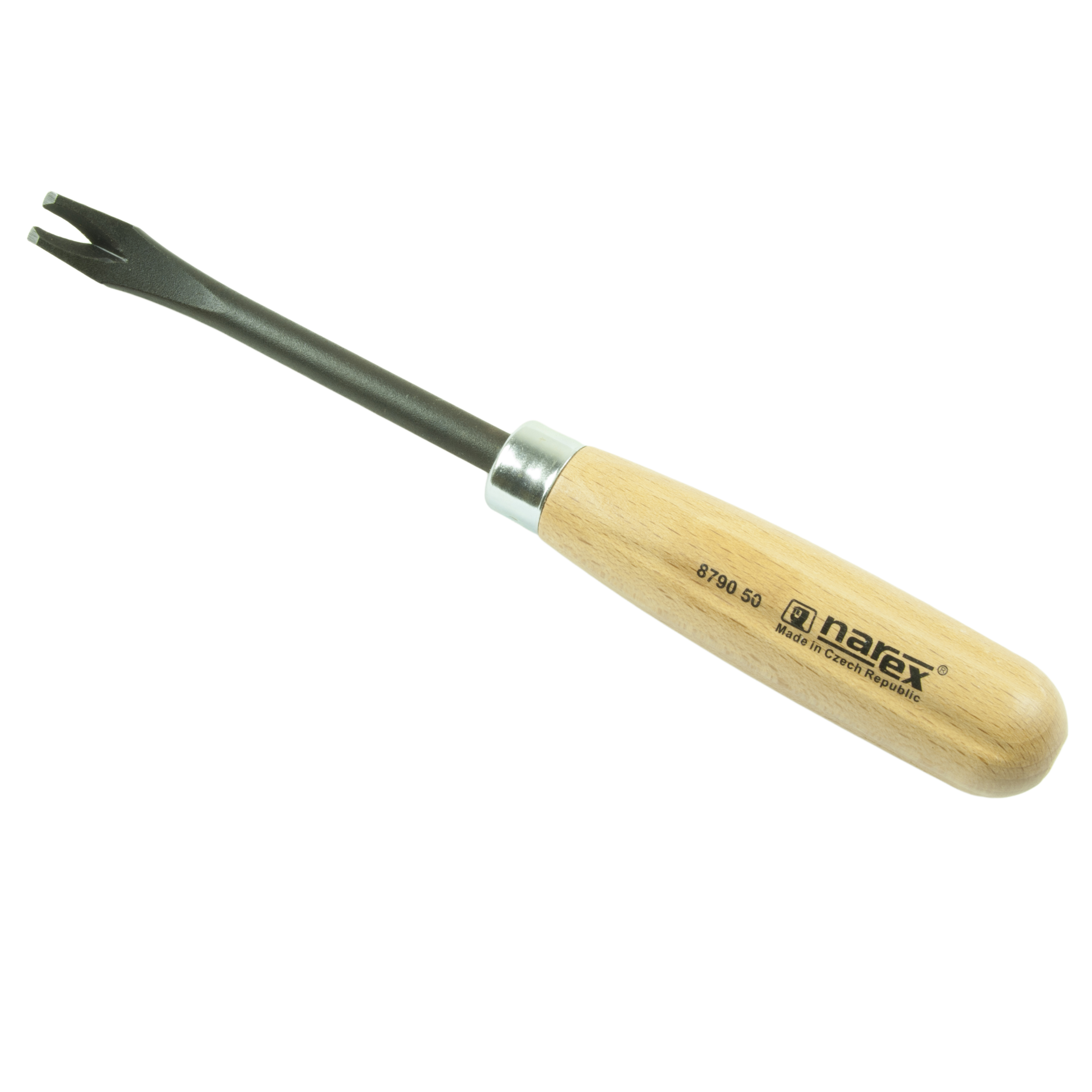
The Narex nail puller (model 879050) is a compact, versatile tool designed for places where a traditional crowbar is too large or clumsy. This 205 mm long tool is made of high-quality tool steel (carbon steel), which gives it excellent durability and torsional rigidity despite its small size.
The main job of the tool is to pull out nails, staples and tacks while sparing the surfaces. Its thin, curved “goat’s foot” design lets you work the claw under a tightly fixed head. The tool also works excellently as a small pry bar. It is a popular aid for painters and restorers, for example, when they need to carefully open painted-over window sashes, remove skirting boards or take apart small wooden joints without damaging the surrounding structures.
Intended use:
This tool is a “jack of all trades” in renovation and demolition work:
- Removal work: Removing nails, upholstery staples, tacks and staples.
- Window renovations: Gently prising open stuck or painted-over windows and hatches.
- Small demolition: Removing trims, panelling and other small structures.
- Installation aid: Works as a small lever for aligning parts.
Package contents:
- 1 pcs Narex nail puller 205 mm
Features:
- Material: High-quality carbon steel (Tool Carbon Steel) that withstands twisting.
- Design: Ergonomic shaft and optimal prying angle (Kozinožka type).
- Size: The compact 205 mm overall length allows work in confined spaces.
- Precision: The thin tip fits into small gaps.
Technical specifications:
- Overall length: 205 mm
- Working part length: 100 mm
- Material: Carbon steel (nástrojová uhlíková ocel)
- Shaft thickness: approx. 10 x 10 mm
Instructions for use:
Pulling nails: Place the split claw of the puller under the nail head. Press the shaft down or to the side, using the curve of the tool as a fulcrum for leverage. If the nail is tight, you can tap the heel of the puller lightly with a hammer to get the claw under the head.
Prising: Place the flat end in the joint of the piece to be removed (e.g. a trim or window) and lever carefully. If the surface is sensitive to dents, use a protective block under the tool if needed.