


Description
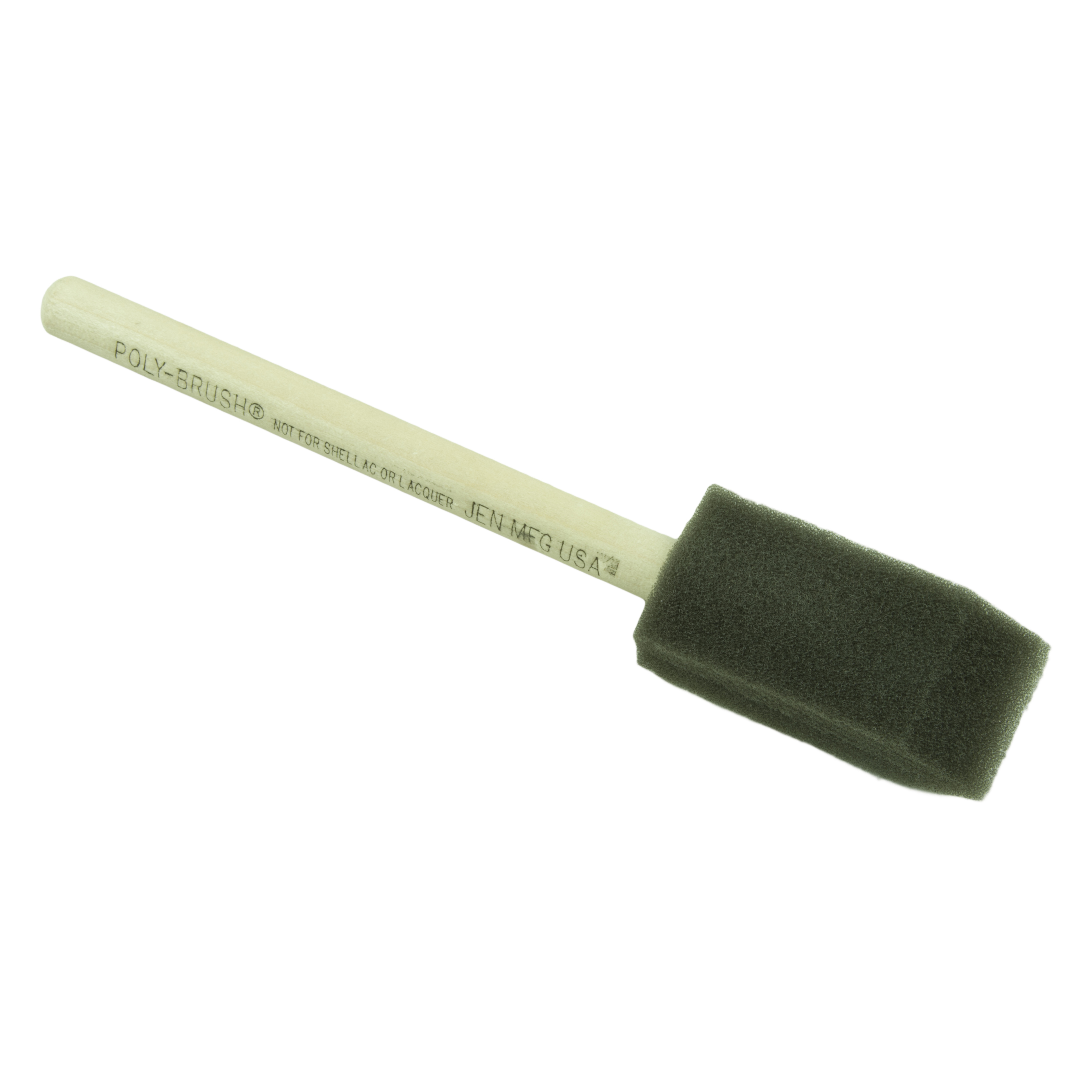
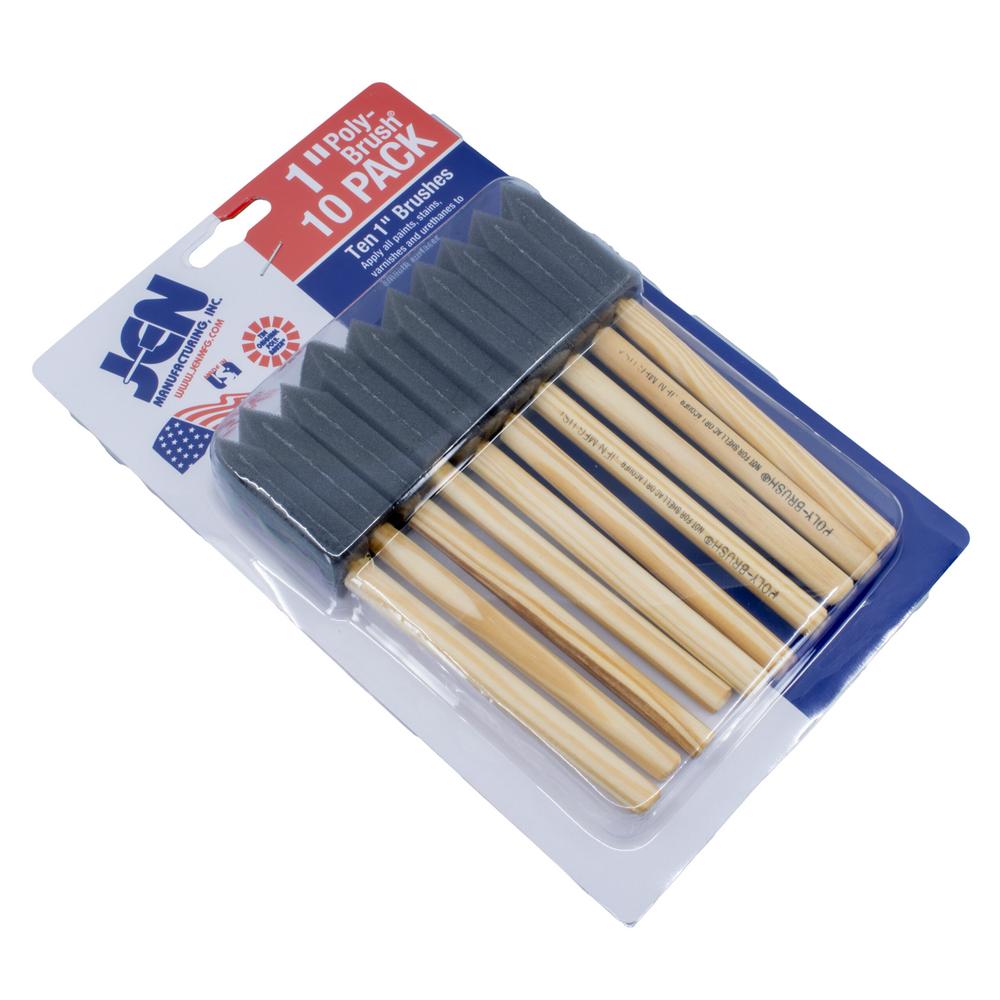
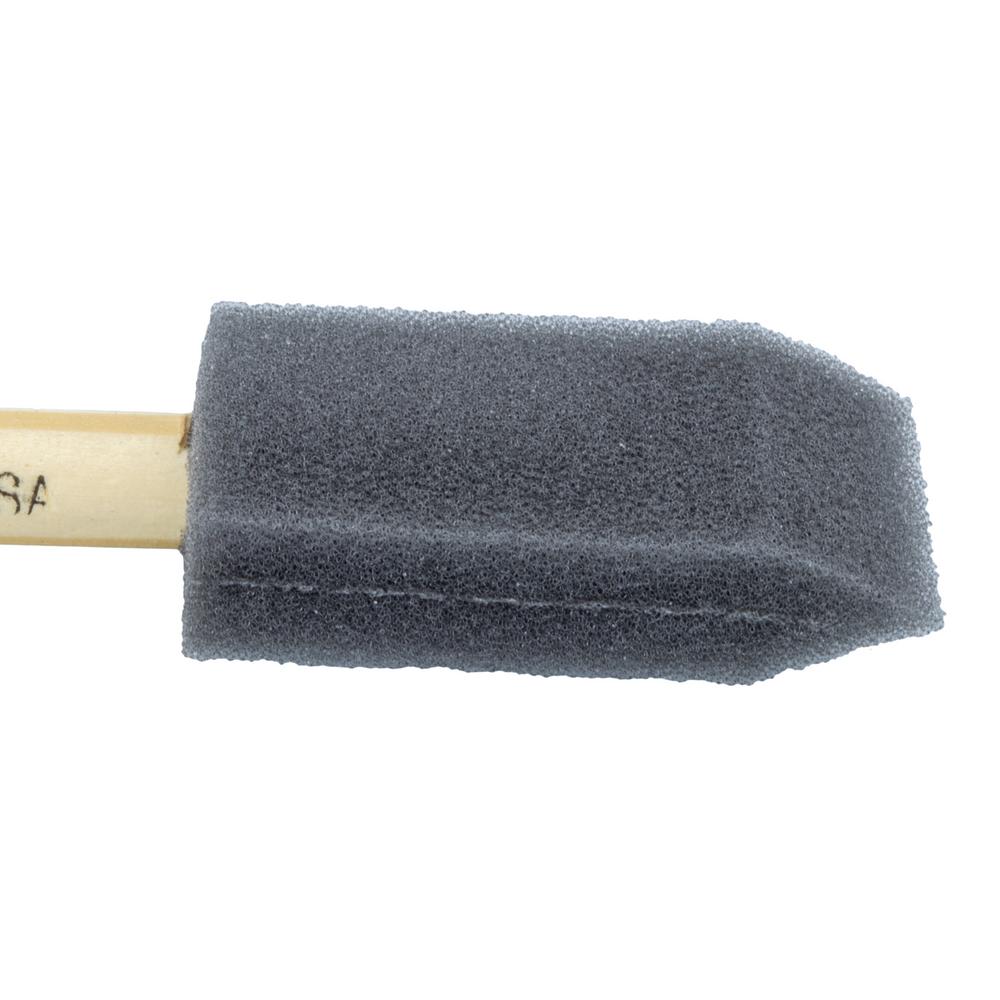
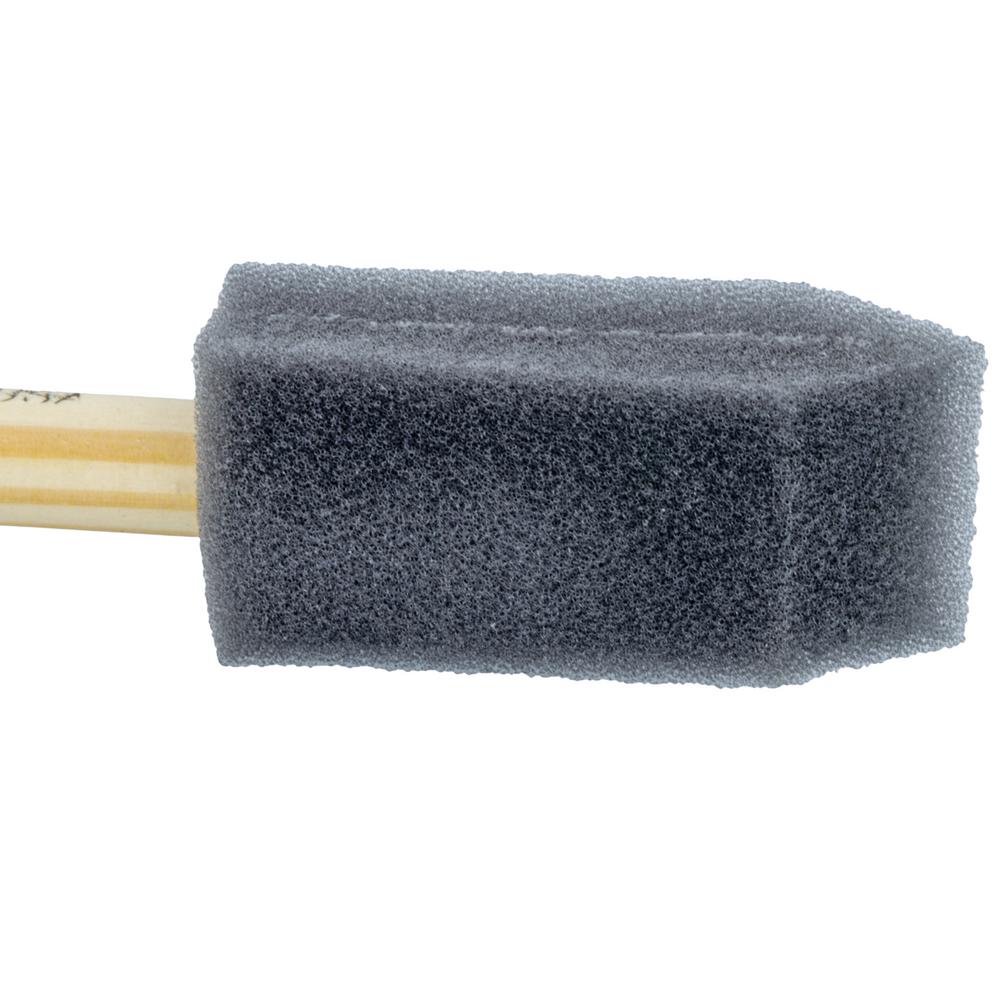
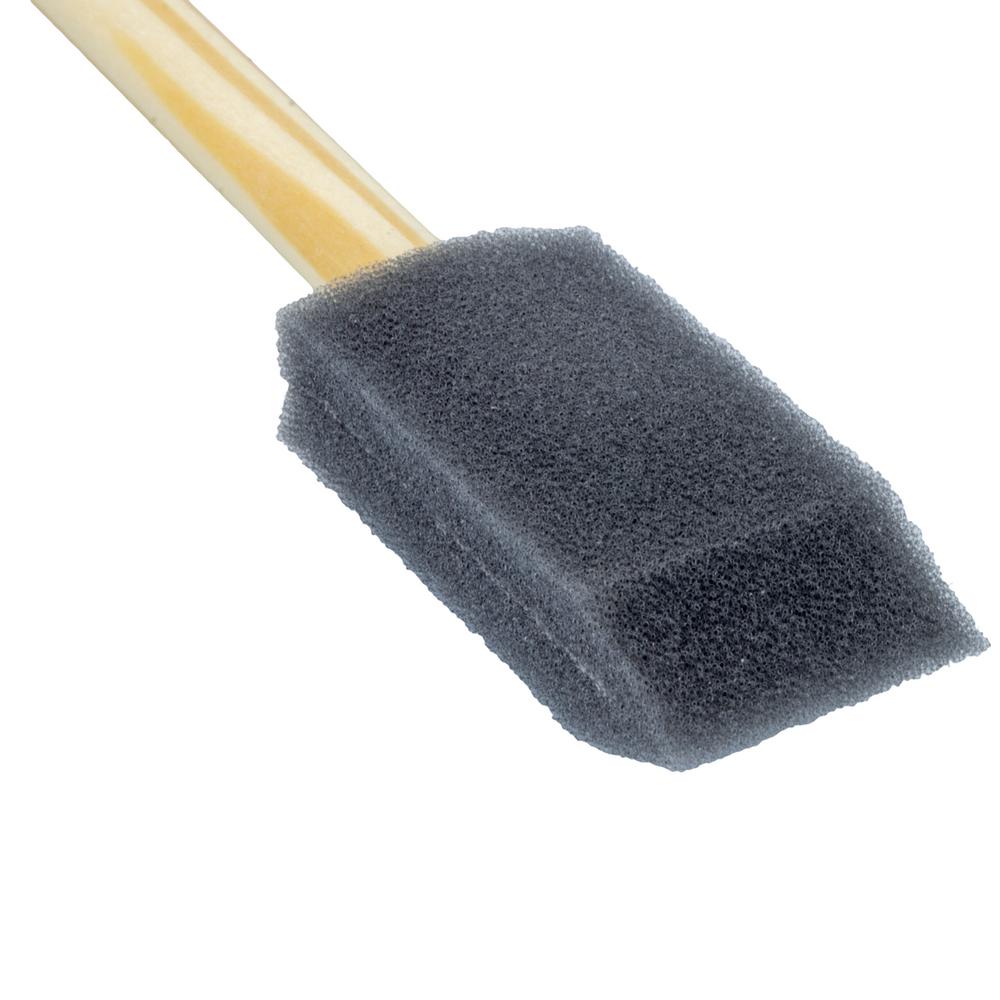
The Poly-Brush foam brush 25 mm is an applicator with a head of fine-cell foam and a handle of wood. The pack contains 10 brushes, so there is no need to wash the tool when the colour or product changes or in the middle of a job.
The 25 mm width is the narrowest size in the range. It is intended for narrow trims, frames, cover strips, window sashes and details where a wider head would not fit or would spread the product outside the area to be cut in. The thin profile also reaches into tight spots and grooves.
The foam head applies the product without bristles: no brush marks are left on the surface and no hairs come off the brush into the wet film. The tip of the head is bevelled, which guides the product into a narrow band and allows a straight cut-in at the edge of a trim or frame without masking tape.
The fine-cell structure holds the product inside the head and releases it as pressure is increased, so thin, runny products spread without runs or bubbles. The wider 8-piece set is the Poly-Brush foam brush 50 mm / 2″, 8 pcs set, the same brush sold individually is the Poly-Brush foam brush, and the shop display batch containing all four widths is the Poly-Brush stand 48 brushes, 12 x 25, 50, 75 & 100 mm.
Intended use and suitability:
The narrow foam brush is intended for precise application of thin, runny coatings when a surface without brush marks is wanted.
- Trims and frames: the 25 mm head covers a narrow trim in one stroke, and the bevelled tip cuts in the edge without masking tape.
- Window sashes and door panels: the thin profile reaches into the groove and corner of the sash where a wider head would not fit.
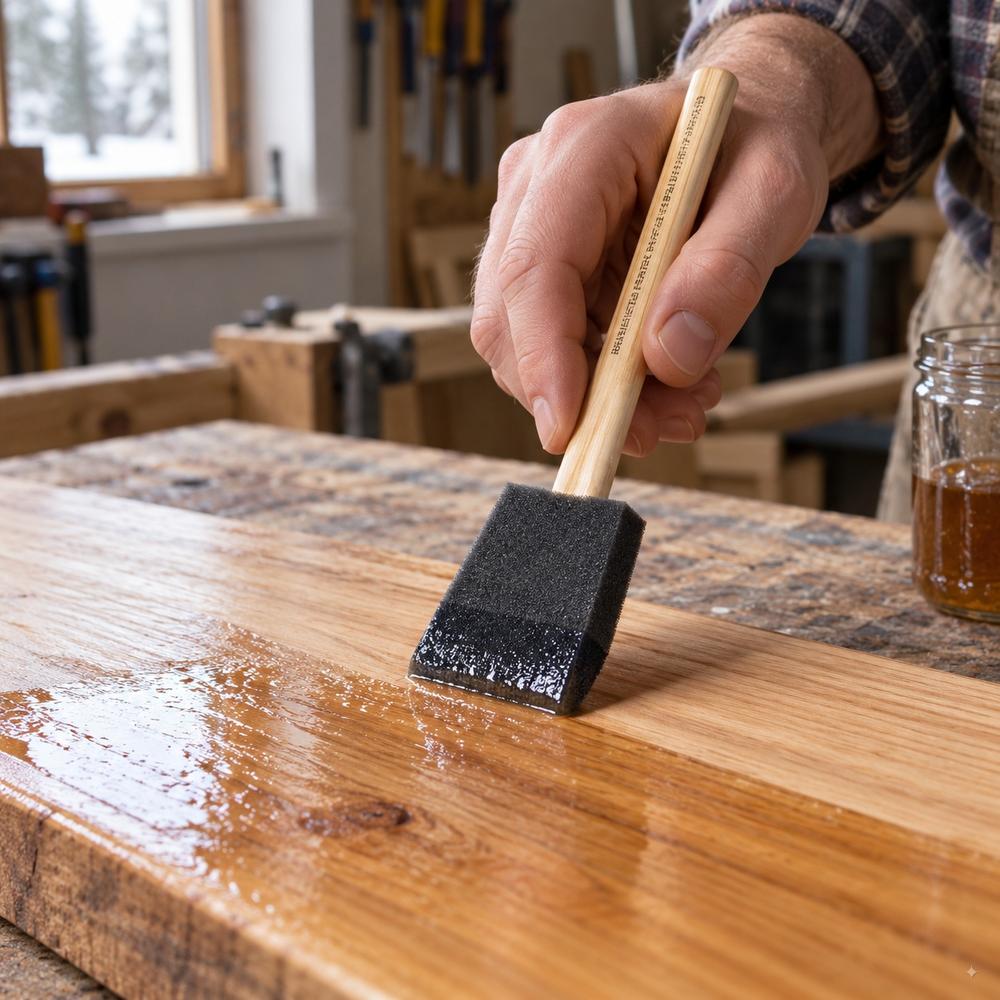
- Varnishing and staining: the foam surface leaves no brush marks and drops no hairs into wet varnish, so the surface does not need to be sanded as carefully between each coat.
- Touch-ups and repairs: painting and varnishing small areas when restoring furniture and finishes.
- Gluing and priming: the disposable head applies glue and primer to a narrow area with no need for cleaning.
- Crafts and model making: controlled application on small surfaces and details.
Package contents:
- 10 pcs foam brushes, width 25 mm (1″)
Features:
- Fine-cell foam head: holds the product in its pores and releases it evenly according to the pressure.
- No bristles: no brush marks or loose hairs are left on the surface.
- Bevelled tip: cuts in a straight edge on a trim, frame or corner without masking tape.
- Narrow 25 mm head: reaches tight spots and grooves where a wider applicator does not fit.
- Wooden handle: the rigid handle transfers pressure directly to the head.
- 10-piece set: the brush does not need washing when the colour or product changes.
- Disposable design: no cleaning after oil-based products; after water-based products the head can be washed.
Technical specifications:
- Width: 25 mm (1″).
- Quantity: 10 pcs.
- Head material: fine-cell foam.
- Handle material: wood.
- Tip: bevelled.
- Suitable products: enamel paint, emulsion paint, oil paint, stain, varnish.
- Not recommended: shellac, nitrocellulose lacquer.
- Country of manufacture: United States.
Poly-Brush foam brush 25 mm instructions for use:
Preparation: Check the solvent in the coating’s product information. If the product contains shellac, nitrocellulose, acetone or strong thinner, use another applicator; these solvents break down the foam. Stir the product and strain it if needed, as the foam head does not filter out lumps.
Dipping: Dip the head into the product to about halfway and squeeze out the excess against the rim of the container with light pressure. An overloaded head lets product run onto the handle, and with a narrow head a run starts sooner than with a wide one.
Application: Apply with parallel strokes and light pressure along the length of the trim or sash. Start strokes from the wet area towards the dry. Cut in edges with the bevelled tip without pressing the head flat.
After use: Wash the head with water and soap immediately after use if the product is water-based. After oil- and solvent-based products, dispose of the brush. Spread out a brush that has absorbed solvent- or oil-based product to dry on its own, not in a pile.
Warnings:
- Risk of spontaneous combustion: foam that has absorbed solvent- or oil-based product can ignite spontaneously when drying in a pile. Spread used brushes out to dry separately or immerse them in water before disposal.
- Follow the safety data sheet of the product being applied regarding ventilation, protective gloves and respiratory protection.
- Strong solvents break down the foam, so pieces of the head come off into the wet coating. Test the product on a small area before wider use.
- Not for hot surfaces or near open flames; the foam melts.
- A loose piece of foam is a choking hazard. Keep brushes and the products being applied out of reach of children and pets.
- Not intended for food contact.
Frequently asked questions (FAQ):
How many brushes are in the pack? Ten 25 mm wide foam brushes.
What is the 25 mm width best suited to? Narrow trims, frames, window sashes and details. For larger surfaces, choose a wider head so that there are fewer stroke joins.
Which products can the brush be used with? Enamel paints, emulsion paints, oil paints, stains and varnishes. It is not recommended for shellac and nitrocellulose lacquer, because their solvents break down the foam.
Can the brush be washed and reused? After water-based products, the head can be washed with water and soap and reused. After oil- and solvent-based products, dispose of the brush.
Will bubbles or brush marks be left on the surface? The fine-cell head releases the product as an even film without brush marks. Bubbles form if the product is stirred vigorously or the head is pressed flat during the stroke.
Why must used brushes be spread out to dry separately? Foam that has absorbed solvent- or oil-based product can heat up and ignite spontaneously when drying in a pile.
Recycling instructions:
Sort a dry, paint-free brush into mixed waste; the foam head and the wooden handle can also be separated and the wooden part sorted into wood waste.
A brush that has absorbed solvent-based paint or varnish is dried separately because of the fire risk and taken to a hazardous waste collection point in line with local waste management regulations.
Sort the cardboard and plastic retail packaging into their own collections.