


Description
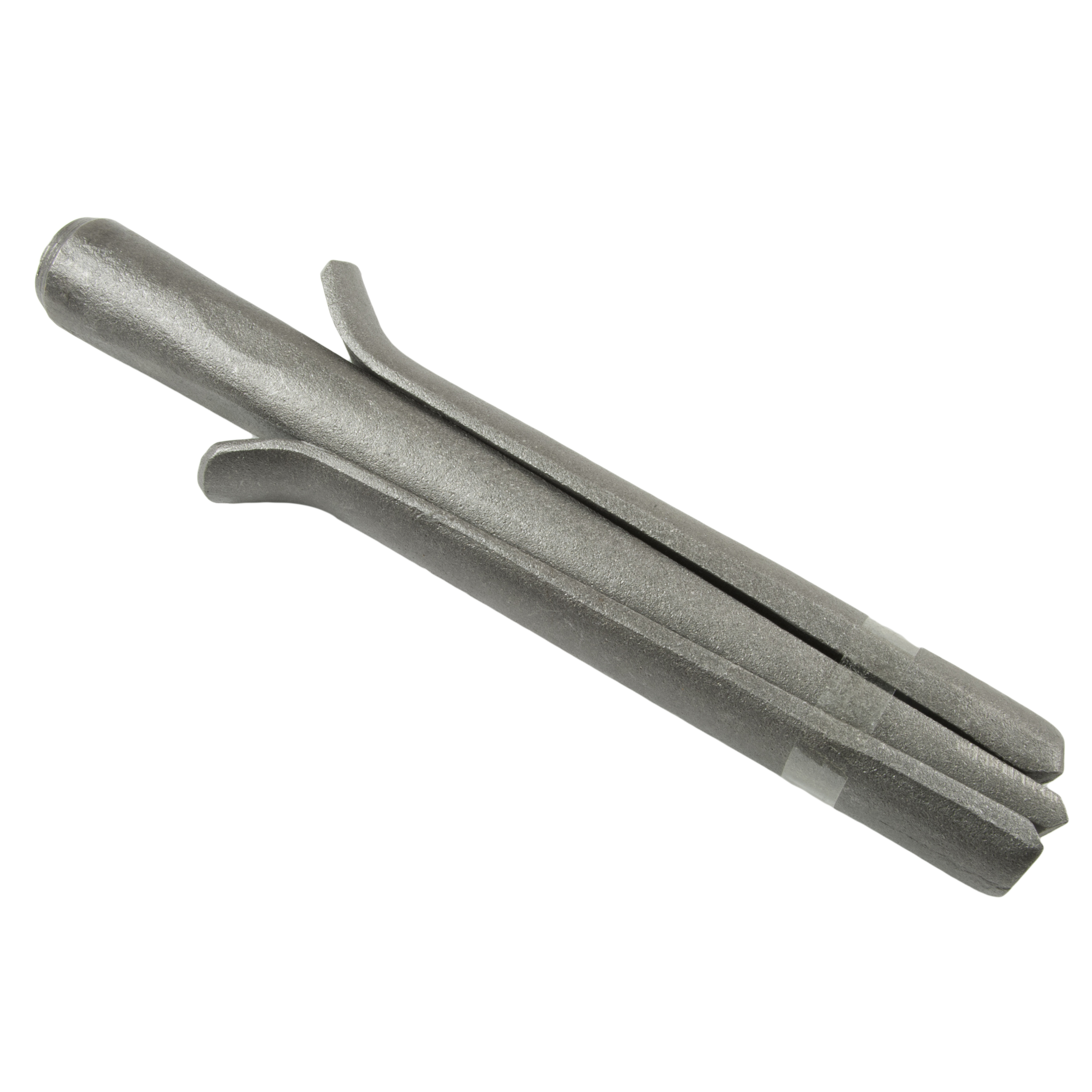
Procat stone splitting wedge is a steel wedge set used to split natural stone with wedges set into a row of drilled holes. The wedge is available in three sizes: 16 mm, 24 mm and 32 mm. The size gives the diameter of the drilled hole in which the wedge set is fitted.
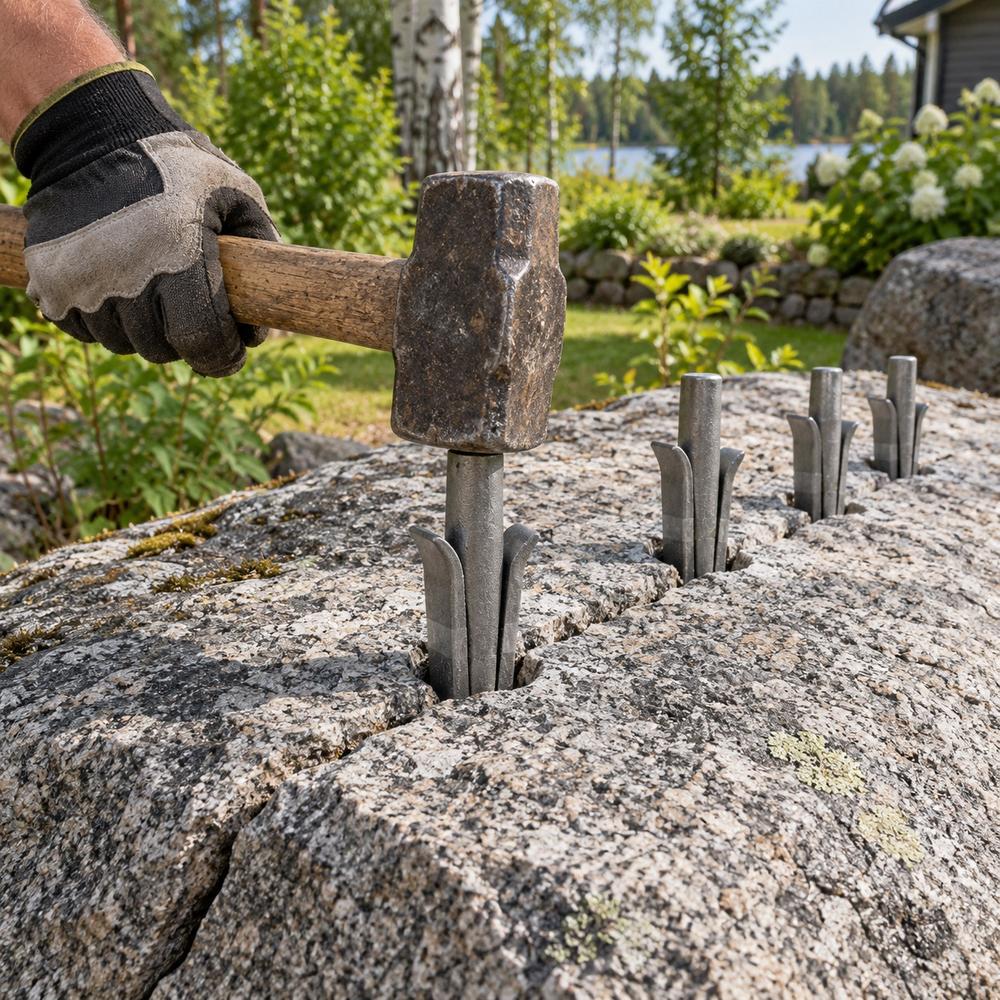
The set includes a tapered wedge and two half-shell feathers that sit on either side of it. The feathers are placed in the hole facing each other and the wedge is driven between them. As the wedge goes down, the feathers are pushed outwards and turn the vertical blow into a horizontal splitting force on the walls of the hole.
Stones are split with wedges so that a boulder too heavy to handle whole can be broken into pieces that can be moved and handled. The method is quiet and dust-free compared with cutting, and needs nothing more than a drill, wedges and a sledgehammer.
Splitting proceeds along the line formed by the holes. The bigger the stone, the more holes and wedge sets are needed so that the crack runs through the whole boulder in a controlled way. Procat stone splitting wedge is suitable for splitting granite, gneiss and other dense natural stone and concrete blocks.
Intended use and suitability:
The wedge turns the impact energy of the sledgehammer into tensile stress acting inside the stone, which opens the stone along the line of drilled holes.
- Breaking up boulders: dividing an immovable stone into smaller pieces that can be lifted.
- Stone fences and walls: splitting stones to give a straight laying face.
- Garden work: removing boulders exposed in the ground without blasting.
- Materials: granite, gneiss and other dense natural stone and concrete blocks.
- Choosing the size: the hole size is chosen according to the masonry drill available and the size of the stone; a larger wedge transmits more force.
Package contents:
- 1 wedge set in the selected size (16 mm, 24 mm or 32 mm)
- Set includes a tapered wedge and two half-shell feathers
Features:
- Wedge and two feathers: the three-part design turns a vertical blow into a horizontal splitting force.
- Steel construction: withstands repeated sledgehammer blows and can be reused from hole to hole.
- Three hole sizes: 16 mm, 24 mm and 32 mm.
- No machines or dust extraction: splitting is done with a drilled hole and a sledgehammer.
- Used in sets: several wedge sets in the same row of holes spread the force along the whole splitting line.
Technical specifications:
- Type: wedge set for splitting stone (wedge + two half-shell feathers).
- Hole sizes: 16 mm, 24 mm and 32 mm.
- Material: steel.
- Method of use: driven into a drilled hole with a sledgehammer.
- Matching drill size: the same as the size of the wedge set.
Procat stone splitting wedge instructions for use:
Drilling: Mark the splitting line on the surface of the stone. Drill a row of holes along the line with a masonry drill bit matching the wedge size; the holes should be equally deep and parallel, and at least as deep as the length of the wedge set. Blow or brush the drilling dust out of the holes.
Fitting: Place the two half-shell feathers in the hole facing each other so that the widening sides of the feathers point in the direction of the splitting line. Push the wedge between the feathers.
Splitting: Strike the wedges lightly with the sledgehammer, in turn from one end of the line to the other, so that the tension builds up evenly in all the holes. Keep going round until a crack appears in the stone, then strike a few more rounds to open the crack.
Removal and maintenance: Tap the wedges from the side once the stone has opened and lift them out. Wipe the stone dust off the wedges and feathers and lightly grease the bevelled faces of the wedge before the next use. Remove burrs from the striking end with a file.
Warnings:
- Always wear safety glasses and work gloves: steel and stone chips come off the blows.
- Wear safety footwear and make sure the stone cannot roll after splitting.
- Do not strike a wedge whose striking end is domed, cracked or badly burred.
- A splitting stone can throw pieces: keep bystanders out of the work area.
- Do not use the wedge in a hole whose diameter does not match the size of the wedge set; a wrong fit twists the feathers and the wedge can fly out of the hole.
- Protect your hearing when striking with a sledgehammer, and keep the wedges out of the reach of children.
Frequently asked questions (FAQ):
What is included in the Procat stone splitting wedge set? A tapered wedge and two half-shell feathers, which are placed in the drilled hole on either side of the wedge.
What does the wedge size of 16, 24 or 32 mm mean? It is the diameter of the drilled hole in which the wedge set is fitted; the drill bit size is chosen accordingly.
How many wedges are needed for one stone? A row of holes is drilled along the splitting line, and the wedges are struck in turn in several holes. The bigger the stone, the more holes and wedge sets are needed.
How deep should the hole be? At least as long as the wedge set, so that the feathers rest against the wall of the hole along their whole length.
Can the wedges be reused? Yes. The wedges and feathers are moved from hole to hole and reused until the striking end is worn.
Recycling instructions:
Sort discarded wedges and feathers into metal collection. Sort packaging cardboard into cardboard collection and packaging plastic into plastic collection. Take stone and drilling dust from splitting to soil or construction waste collection as instructed by your municipality.