

Description
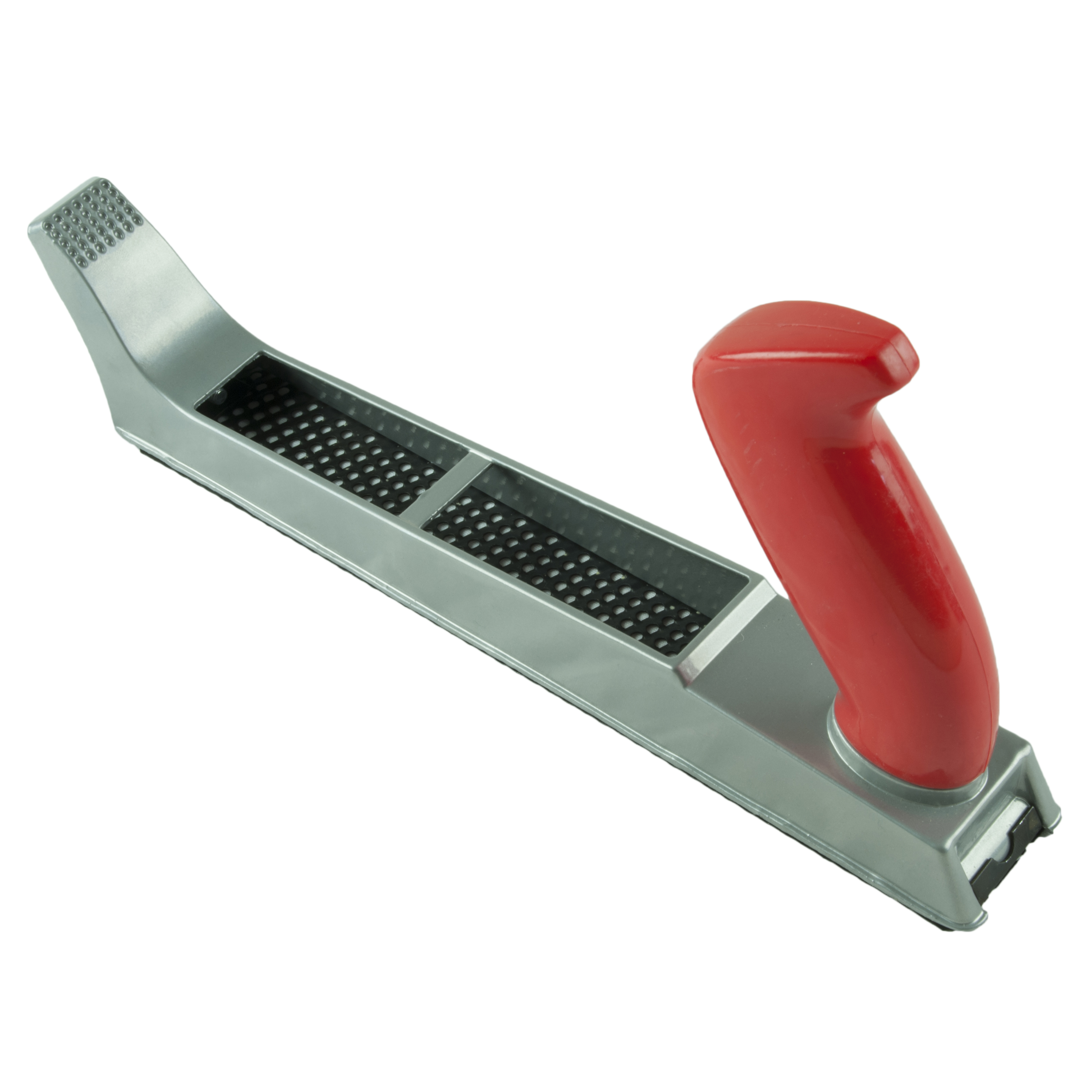
The Procat rasp plane 250 mm is an efficient hand tool designed especially for shaping and levelling the edges of sheet materials such as plasterboard. The tool is a two-handed model, which gives the user excellent stability and control while working. This lets you apply even pressure and get straight, clean edges quickly.
Particular attention has been paid to comfort in the design of the plane. It has an ergonomically shaped rear handle that gives a secure, comfortable grip, and a front support for the other hand. This design reduces strain on the hand and wrist, which is important especially in longer projects or when there is a lot of surface to work. The sturdy metal body gives the tool rigidity and durability.
One of the key features of the product is its replaceable blade. The rasp-type blade is designed to remove material efficiently, but it wears with use over time. Thanks to the replaceable blade system, there is no need to replace the plane body itself: changing the blade is enough to restore the tool’s original cutting performance. This makes the rasp plane a long-lasting and cost-effective solution.
The 250 mm length is optimal for many kinds of levelling tasks. It is long enough to cover the edge of a plasterboard well and level out small unevenness, yet agile enough to be easy to handle. The tool is excellent, for example, for preparing joints by chamfering the cut edges of plasterboard.
Intended use:
- Working plasterboard edges: The main use of the rasp plane is levelling and chamfering the cut edges of plasterboard. This prepares the edge for jointing, ensuring better adhesion of the joint tape and filler and a neat result.
- Shaping other soft materials: The tool can also be used for rough shaping and edge trimming of other relatively soft materials, such as certain wood fibre boards, softwood or plastics, when fast material removal is needed.
Package contents:
- 1 x Procat rasp plane 250 mm (fitted with blade)
Features:
- Two-handed use: Allows a stable grip, precise control and even application of force.
- Ergonomic design: The shaped handles reduce hand strain while working.
- Replaceable blade: An economical and ecological solution that extends the life of the tool.
- Efficient rasp blade: Designed especially for fast, efficient working of plasterboard.
- Sturdy construction: The metal body stands up to use and keeps the blade stable.
Technical specifications:
- Length: 250 mm.
- Type: Two-handed rasp plane.
- Blade: Replaceable rasp blade.
- Main material: Metal (body), plastic (handles).
- Suitability: Plasterboard and other soft materials.
Procat rasp plane 250 mm instructions for use:
Take a firm two-handed grip of the plane: one hand on the rear handle and the other on the support at the front. Place the plane blade on the edge of the material being worked (e.g. plasterboard). Push the plane forward along the edge of the material with even pressure. Several lighter strokes often give a better, more even result than one hard stroke. Work along the full length of the edge to get a uniform surface. To change the blade, use the mechanism on the body to remove the old blade and fix the new one firmly in place.
Warnings:
The blade is sharp and coarse; handle it with care to avoid cuts or scratches. Wear suitable personal protective equipment when working, such as work gloves to protect your hands and safety glasses to keep dust or loose particles out of your eyes. Make sure the workpiece is firmly supported so that it cannot move unexpectedly while you work.
Frequently asked questions (FAQ):
Can the blade be replaced when it wears?
Yes, this rasp plane has a replaceable blade, which extends the life of the tool significantly.
Is it suitable for materials other than plasterboard?
The tool is optimised for plasterboard, but it can also be used for rough working of other fairly soft materials, such as softwood or some plastics.
Why use a two-handed model?
A two-handed grip gives better stability and control, which makes it easier to produce a straight, even edge than with one-handed tools.
Recycling instructions:
The metal body of the tool can be recycled in metal collection. Recycle the plastic handle parts in line with local plastic recycling instructions. A worn blade is metal and must be disposed of safely as metal waste. Sort the packaging materials for cardboard or plastic collection.