
Description
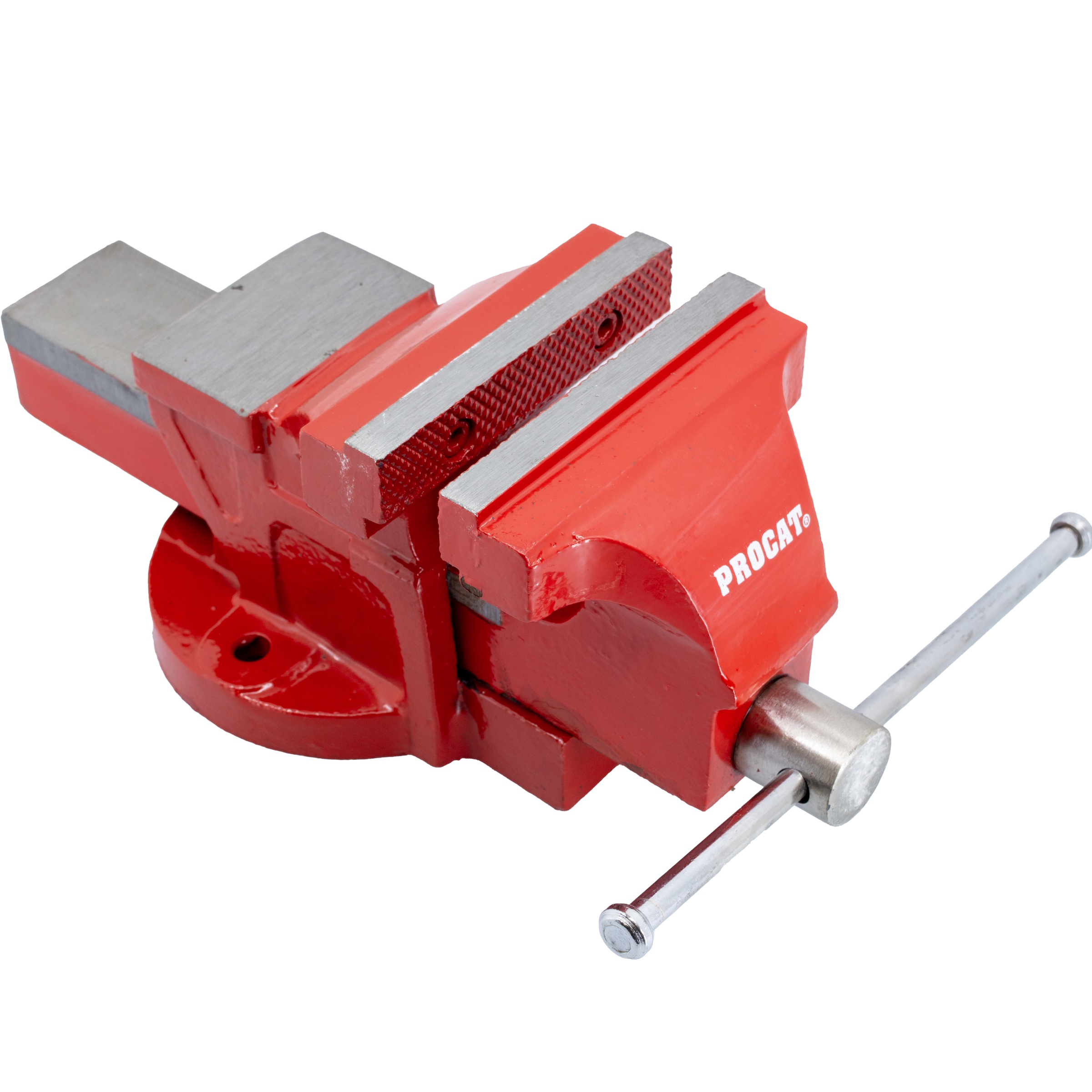
Procat bench vice 100 mm is a bench vice made of cast iron, with a fixed base and an anvil behind the jaws. The jaw width is 100 mm, the maximum jaw opening 100 mm and the maximum throat depth from the base to the jaws 100 mm. The vice holds the workpiece in place during sawing, filing, drilling and bending.
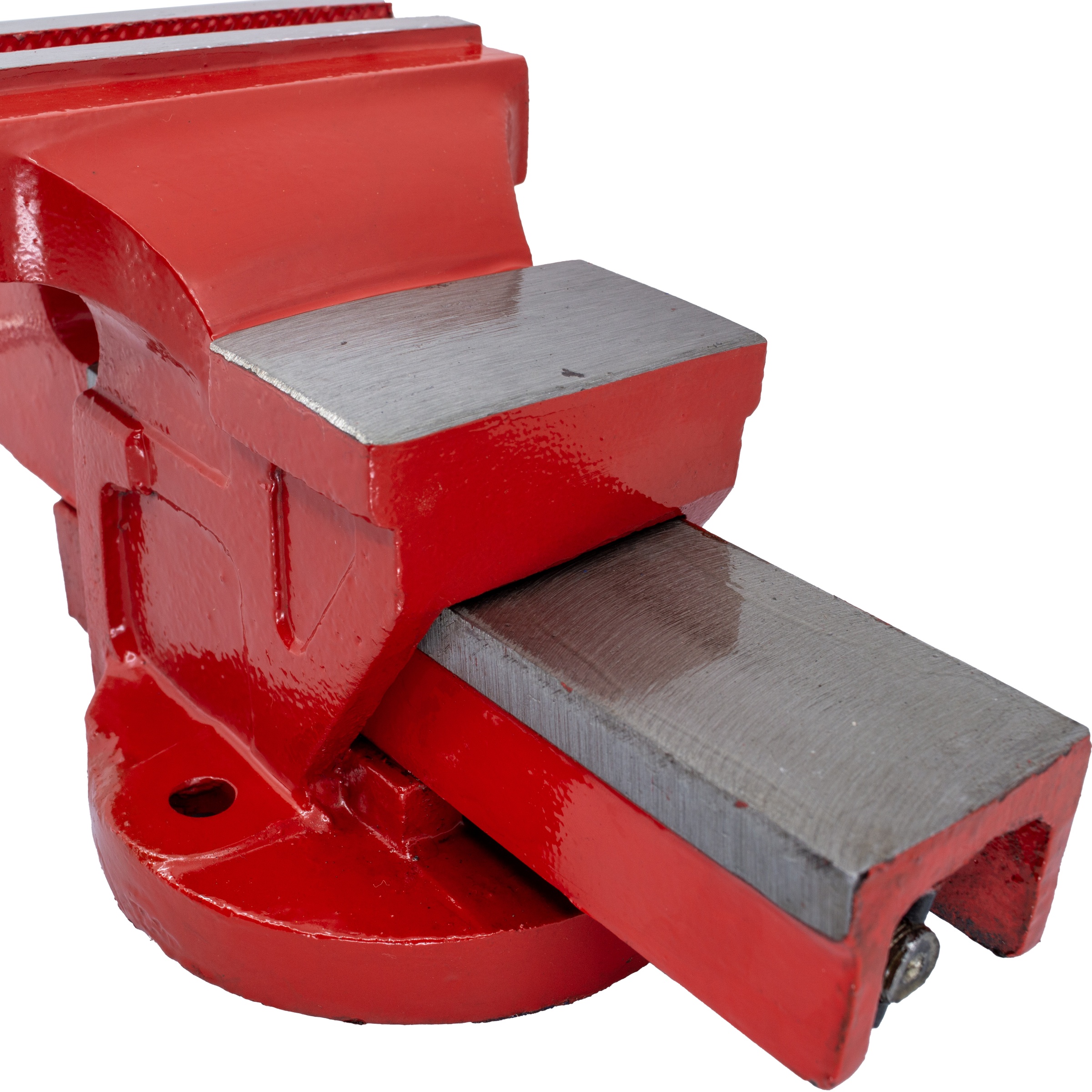
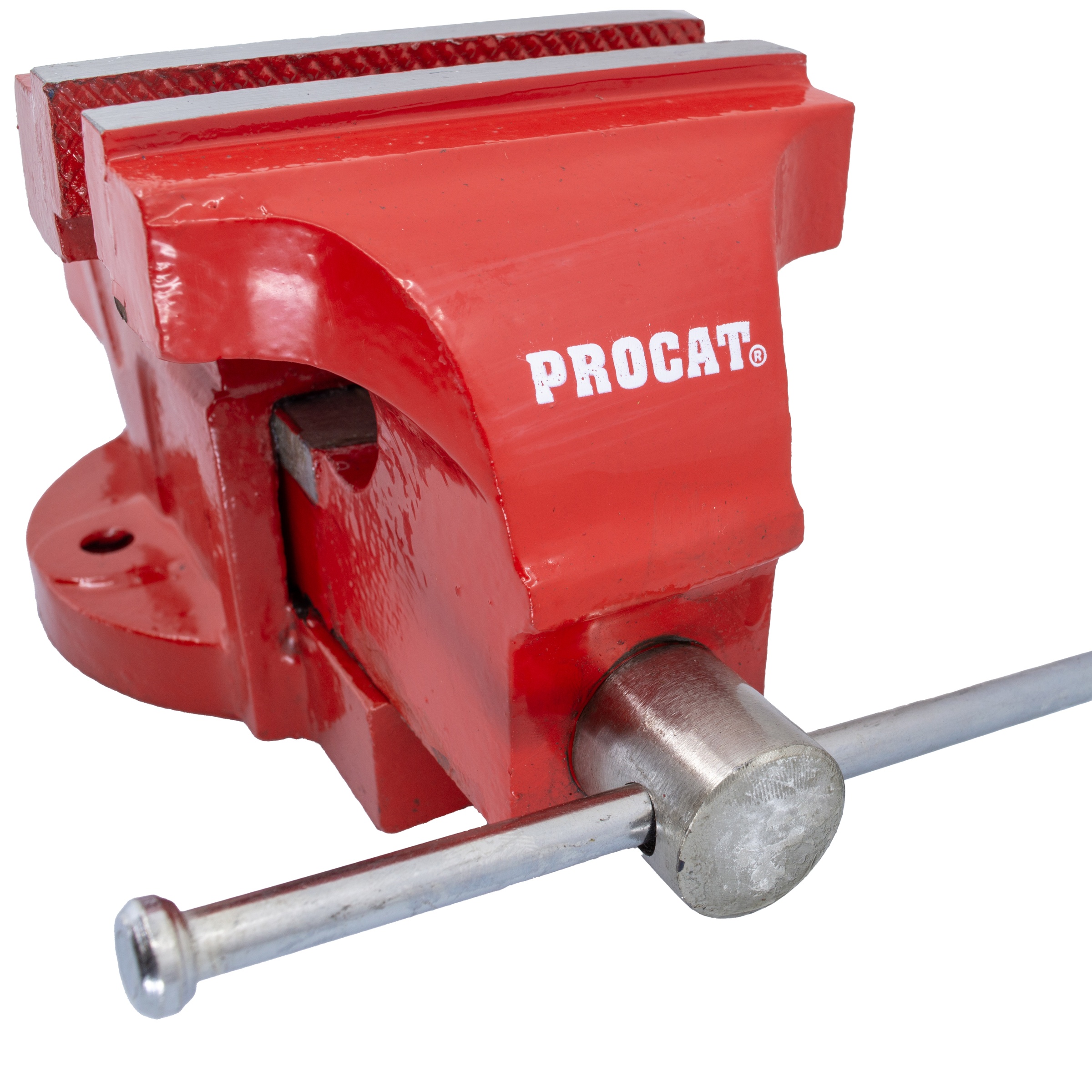
The body and the moving jaw are cast iron with a tensile strength of 220–260 MPa. The moving jaw runs through the body on a rectangular slide bar. The jaws are opened and tightened with a spindle turned by a T-handle. The handle bar slides through the end of the spindle, so the lever arm can be moved to either side.
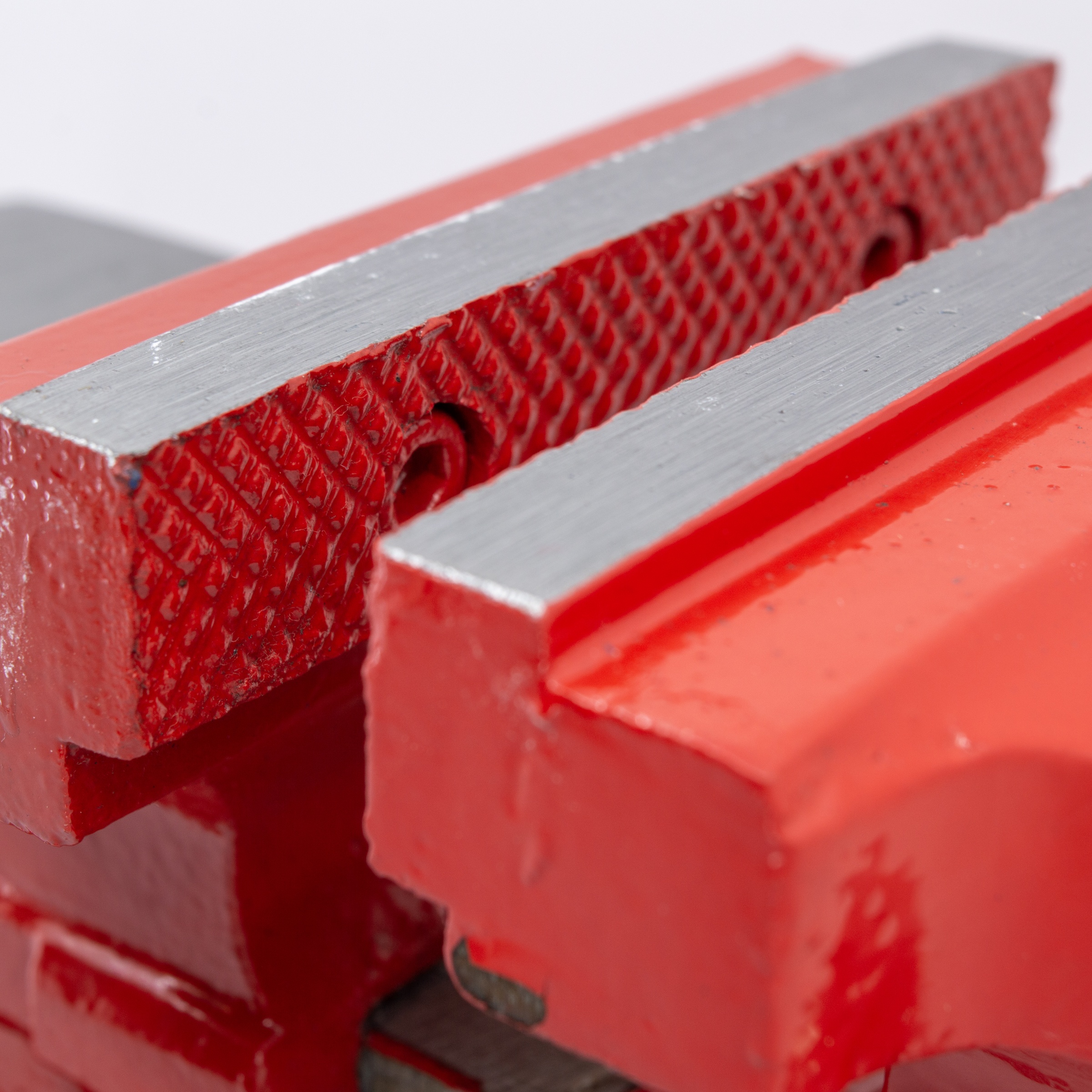
The jaws have serrated, hardened steel jaw inserts fastened to the body with screws. The cross-hatch serration holds the workpiece in place during clamping. Soft, painted or coated workpieces are protected with jaw pads so that the serration leaves no marks.
The fixed round base is bolted to the workbench through the mounting holes in the base. Mounting bolts are not included. The flat ground top face of the anvil is used for light straightening, bending and riveting. The vice weighs approx. 5.3 kg, and the side of the red-painted moving jaw carries a PROCAT® print.
Intended use and suitability:
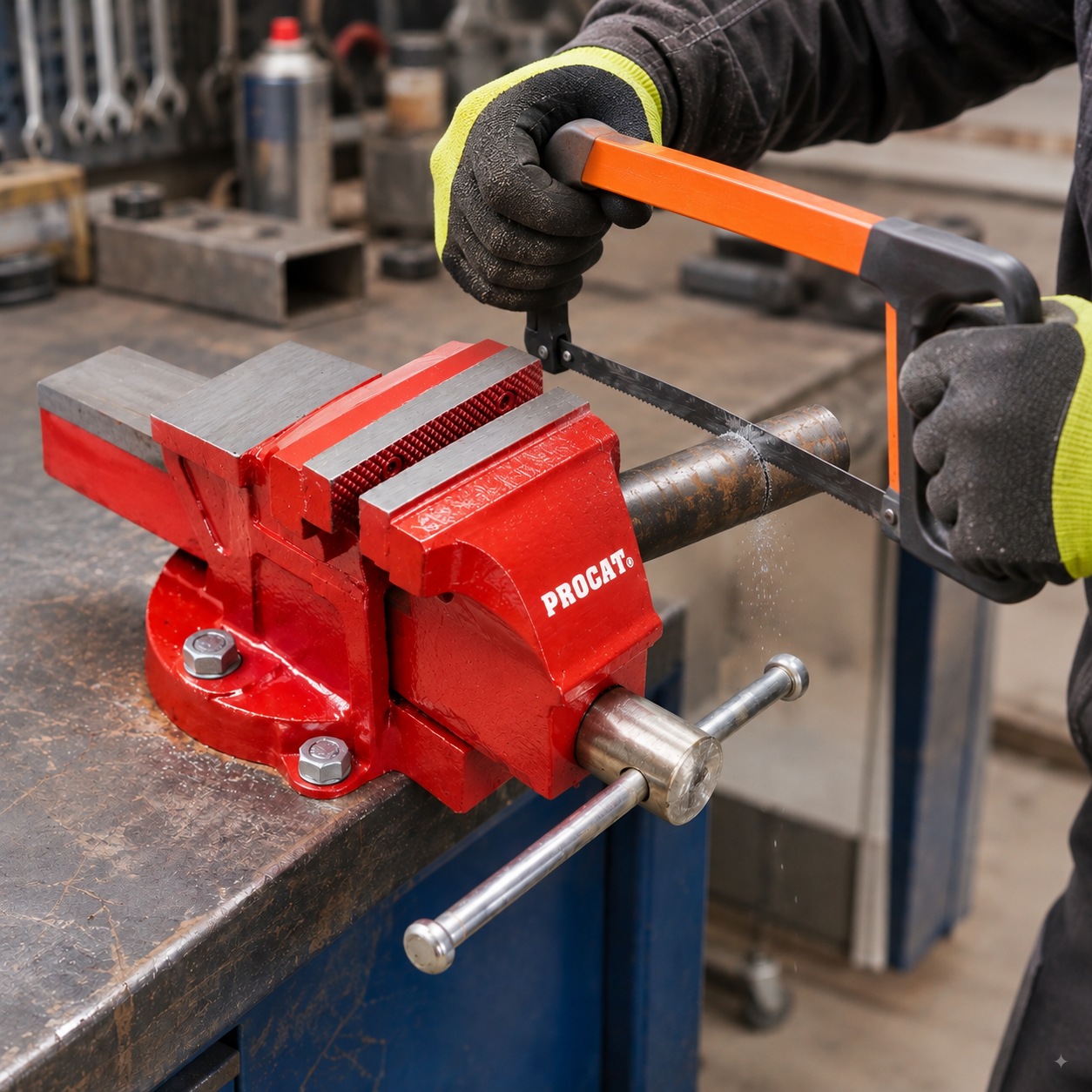
The vice is designed to be permanently mounted on a workbench. The fixed base always keeps the jaws facing the same way, which suits repeated work steps at the same workstation.
- Metalwork: Flat bars, profiles, bolts and small pipes stay held between the serrated jaws while you hacksaw, file, thread and drill them. The 100 mm jaw opening is enough for most garage and workshop parts.
- Maintenance and repair: Parts can be clamped for disassembly, assembly and cleaning. Round or polished parts are protected with jaw pads.
- Anvil work: The anvil behind the jaws is used for straightening small metal pieces, riveting and light hammering.
- Woodwork: Wooden pieces are clamped with jaw pads for planing, sawing and sanding, for example. For clamping long pieces to the edge of the bench, the Procat G-clamp 100 mm is also suitable.
Package contents:
- Bench vice 100 mm with fixed base and anvil
- T-handle fitted to the spindle
Mounting bolts, nuts and washers are bought separately to suit the thickness of the workbench.
Features:
- Cast iron body: The body and the moving jaw have a tensile strength of 220–260 MPa.
- Fixed base: The base does not swivel, so the jaws keep the same orientation from one clamping to the next.
- Anvil: Flat ground work surface behind the jaws for light hammering and straightening.
- Serrated jaw inserts: Hardened steel jaw inserts with cross-hatch serration. The inserts are fastened to the body with screws.
- Spindle clamping with T-handle: The sliding handle bar gives a lever arm on either side of the spindle.
- Slide bar: The moving jaw runs on a rectangular bar with a ground top face.
- Bolt mounting: The round base has mounting holes for bolts.
Technical specifications:
- Jaw width: 100 mm
- Max. jaw opening: 100 mm
- Max. throat depth from base to jaws: 100 mm
- Body material: cast iron
- Cast iron tensile strength: 220–260 MPa
- Jaw inserts: hardened steel, cross-hatch serration, screw-fastened
- Base: fixed, non-swivel
- Anvil: behind the jaws
- Clamping: spindle and sliding T-handle
- Mounting: bolted to the workbench (bolts not included)
- Finish: painted, red
Procat bench vice 100 mm instructions for use:
Install the vice on a sturdy workbench that can take the loads from clamping and hammering. Place the vice at the edge of the bench so that the moving jaw and the handle do not hit the bench edge as they move.
- Positioning: Place the vice on the bench with the fixed jaw slightly past the edge of the bench. Long pieces will then fit vertically between the jaws.
- Mounting: Mark the mounting holes of the base on the bench and drill the holes. Fasten the base with through bolts, washers and nuts. Tighten the bolts evenly.
- Clamping the workpiece: Open the jaws by turning the handle. Place the piece in the centre of the jaws and tighten the handle by hand until the piece stays in place.
- Surface protection: Use jaw pads when clamping soft metal, wood, plastic or finished surfaces.
- Using the anvil: Strike only the top face of the anvil. Do not strike the jaws, the slide bar or the handle.
Maintenance: clean chips and dust off the spindle and the slide bar regularly. Lubricate the spindle and the sliding surfaces of the bar with light oil or grease. Check from time to time that the mounting bolts are tight.
Warnings:
- Mounting: Always bolt the vice to the workbench before use. A vice that is not fastened can tip over or slide.
- No extensions: Do not use an extension pipe on the handle or a hammer for tightening. Excessive torque can break the cast iron body.
- Safety glasses: Wear safety glasses when sawing, filing, hammering and drilling.
- Crushing hazard: Keep your fingers out from between the jaws while tightening.
- Cast iron: Cast iron is brittle under impact. Hammer only on the anvil and with moderate force.
- Load: Support long and heavy pieces so that they do not twist the vice or fall.
Frequently asked questions (FAQ):
What are the jaw dimensions of the Procat bench vice 100 mm?
The Procat bench vice has a jaw width of 100 mm, a maximum jaw opening of 100 mm and a maximum throat depth from the base to the jaws of 100 mm.
Does the base of the Procat bench vice 100 mm swivel?
No. The Procat bench vice 100 mm has a fixed cast iron base that is bolted to the workbench.
What is the Procat bench vice 100 mm made of?
The body of the Procat bench vice 100 mm is cast iron with a tensile strength of 220–260 MPa. The jaw inserts are hardened steel.
Are mounting bolts included with the Procat bench vice 100 mm?
No. The Procat bench vice 100 mm is fastened to the workbench with through bolts, washers and nuts bought separately.
How much does the Procat bench vice 100 mm weigh?
The Procat bench vice 100 mm weighs approx. 5.3 kg. The cast iron body, the anvil and the fixed base make up most of the weight.
Recycling instructions:
The Procat bench vice 100 mm is made of cast iron and steel. Take a vice that is no longer used to metal collection or a waste station as scrap metal.
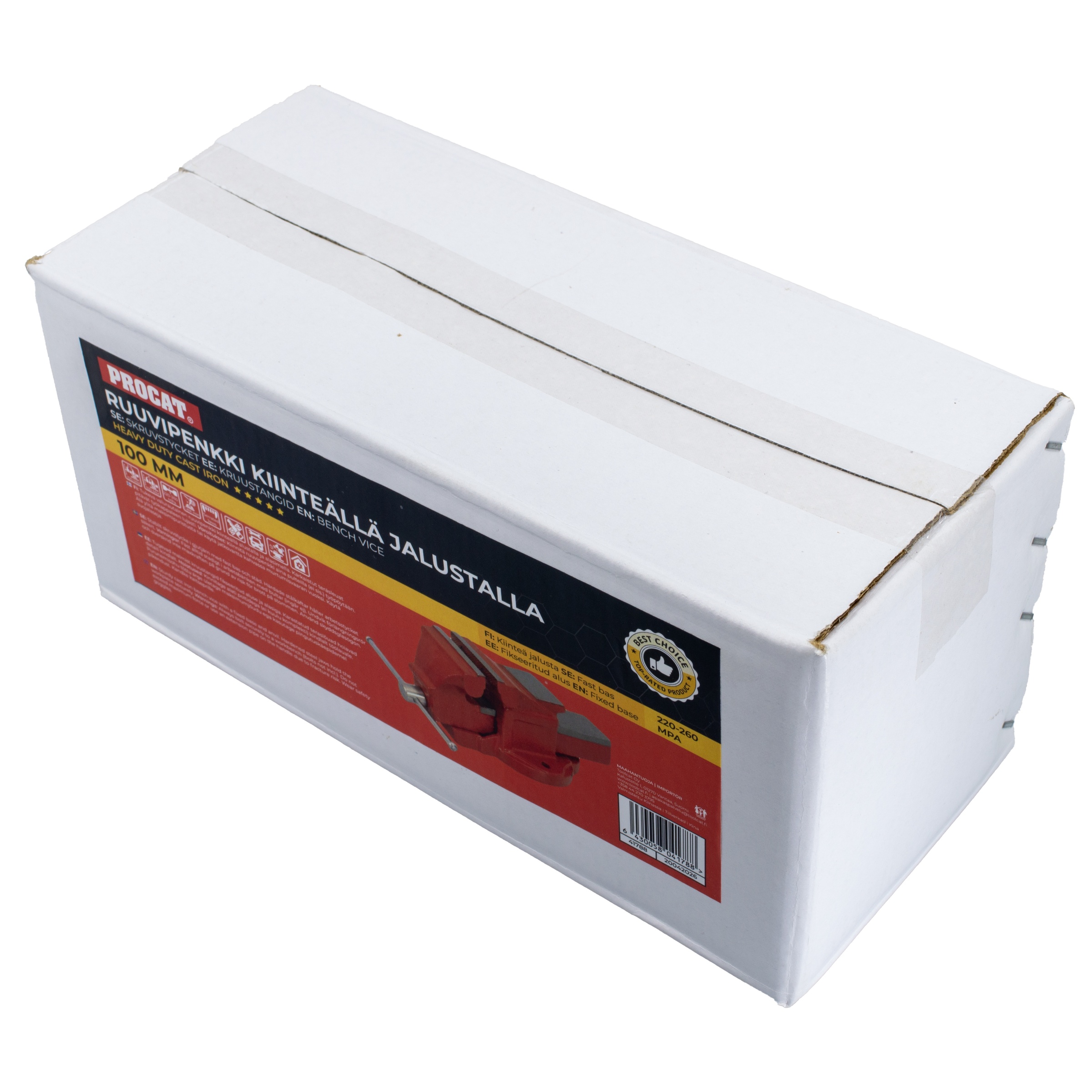
The retail packaging is a cardboard box with a product sticker. Sort the cardboard box with its stickers into cardboard recycling.