


Description
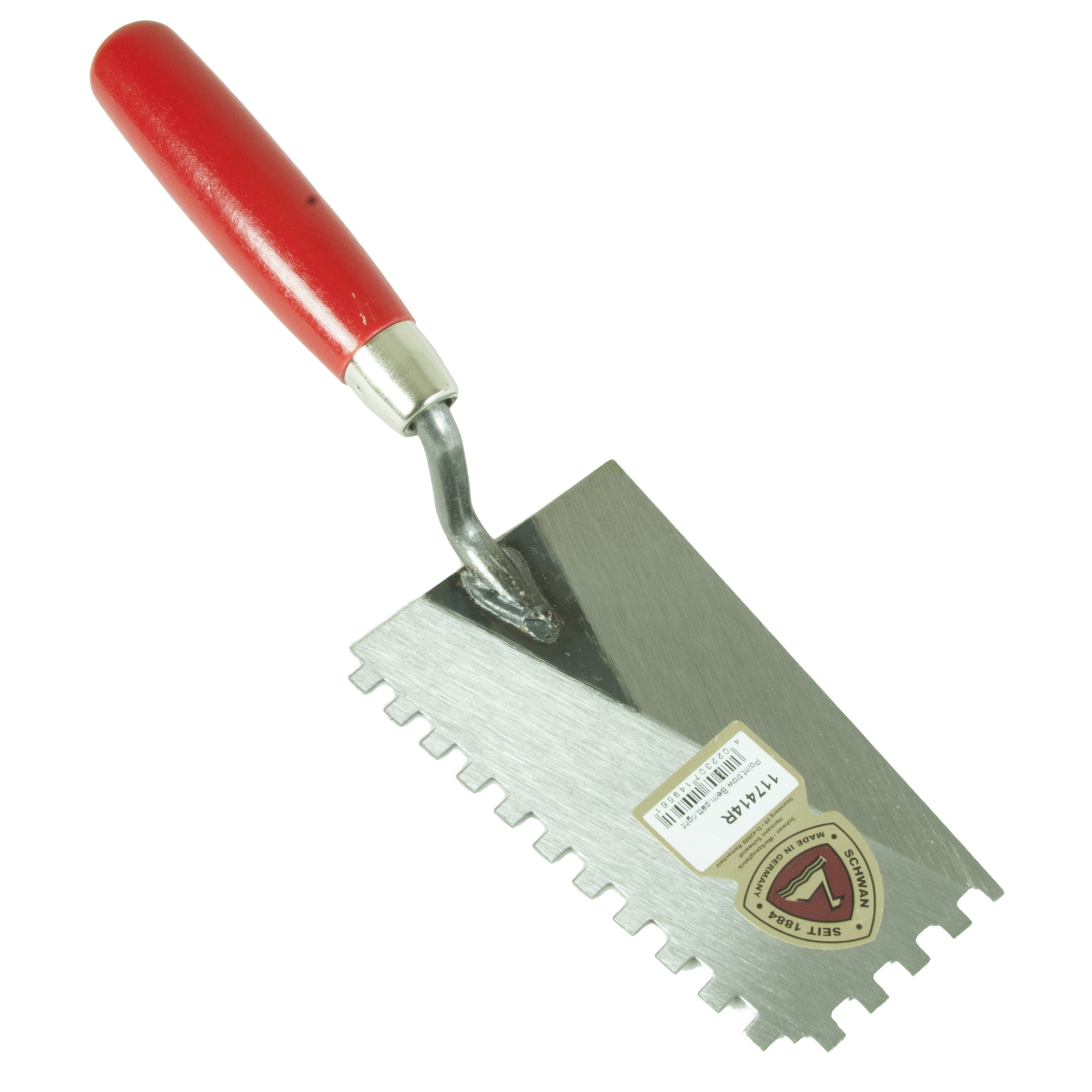
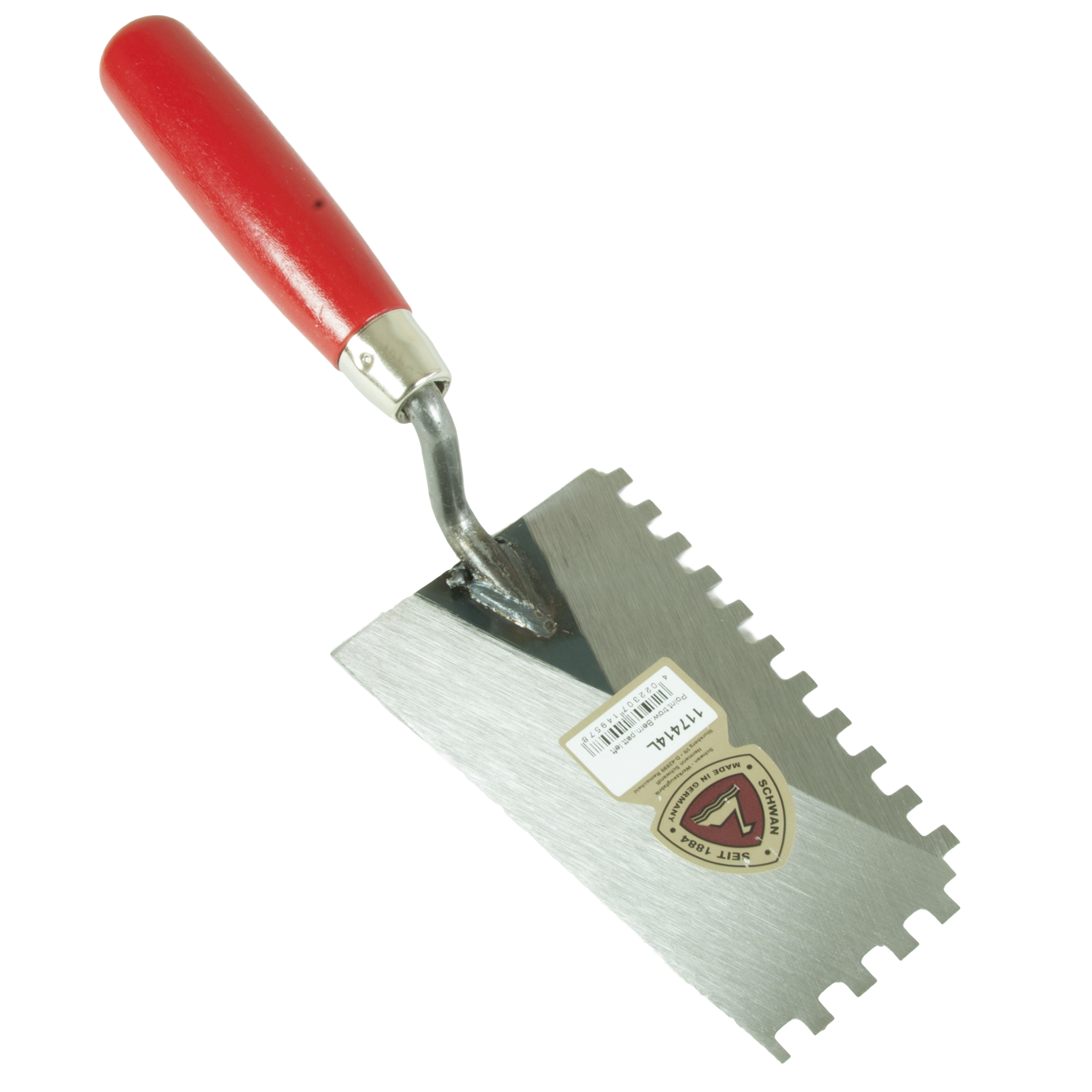
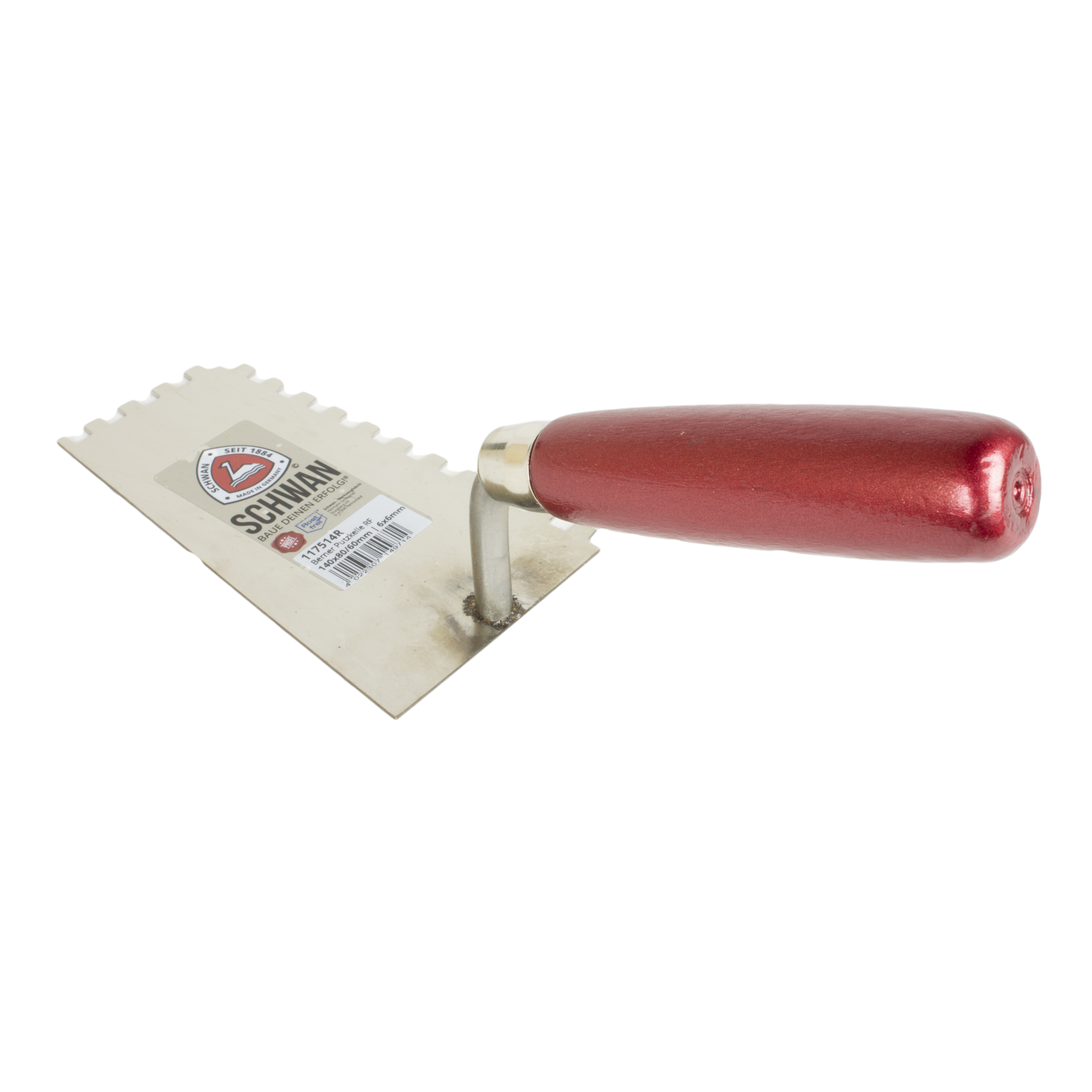
The Schwan notched plastering trowel, “Berner” model, is German craftsmanship at its best. This tool is designed for demanding professional use by bricklayers, tilers and plasterers who value traditional design, durable materials and a reliable construction.
The blade of the trowel is made of high-quality hardened steel. This choice of material guarantees excellent wear resistance and a long service life, as hardened steel keeps its shape and sharp notches for a long time even when working with coarse mortars. The notched blade lets you spread mortar or adhesive by “combing”, which gives the material the right layer thickness and bonding surface.
What makes this model particularly durable is its welded joint between the blade and the neck. The G-shaped neck (G-Hals) is not riveted but firmly welded to the blade plate. This construction eliminates the risk of rivets loosening and guarantees maximum strength even in heavy use. The shape of the G-neck lifts the wooden handle higher above the blade, giving more room for the knuckles and optimising the balance of the trowel. The handle is made of traditional shaped wood, which gives a pleasant, warm grip and a good feel for the work even in damp conditions.
Intended use:
The notched plastering trowel is an essential tool especially in tiling and masonry work:
- Spreading tile adhesive: Used for combing mortar or adhesive onto wall or floor surfaces before fixing tiles. The notches ensure the right amount of adhesive.
- Repair rendering: Suitable for patching render on small areas and spreading levelling mortars when a textured surface is wanted to improve bonding for the next coat.
- Masonry work: Can be used for dosing and spreading mortar in precise spots.
Features:
- Professional quality: Designed to withstand daily site use.
- Welded construction: The joint between the blade and the G-neck is welded, which guarantees superior durability and prevents loosening.
- Hardened steel: A very wear-resistant material that keeps its sharpness and shape for a long time.
- G-neck: The ergonomic neck design improves handling and protects the hand.
- Wooden handle: The traditional handle has a pleasant feel and guarantees a good grip.
- Notches: Allow precise combing of mortar (notch size depends on the model).
- Country of manufacture Germany: A quality tool from Remscheid.
Technical specifications:
- Blade material: Hardened steel
- Handle material: Wood (wooden handle)
- Neck type: G-Hals, welded (welded G-neck)
- Model: Berner Putzkelle gezahnt
Instructions for use and maintenance:
Clean the trowel carefully with water immediately after every use, before the mortar or adhesive has time to dry. Important: As the blade is made of hardened steel (not stainless), it is prone to rust if not looked after properly. After cleaning and careful drying, it is advisable to protect the blade with a thin layer of oil (e.g. machine oil) to prevent rust during storage. Do not use the trowel as a hammer or strike hard materials with it; although the welded joint is strong, misuse can still damage the tool. The wooden handle can be treated with wood oil if needed to extend its life.
Warnings:
The metal edges and notches of the trowel can be sharp. Wear work gloves to avoid cuts. The tool is intended for spreading mortar, not as a striking tool.
Frequently asked questions (FAQ):
Why is a welded joint better than a riveted one?
A welded joint between the blade and the neck is considerably stronger and more durable. It cannot loosen or come off over time the way rivets can in heavy use. This guarantees a long, reliable service life for the tool.
Why choose a wooden handle?
Many professionals prefer a wooden handle for its natural feel and good grip. It does not feel cold in the hand and absorbs a little moisture, which can improve the grip with sweaty hands.
Does this trowel rust?
Yes, if it is not looked after properly. The blade is made of hardened carbon steel for its superior wear resistance, but it is not stainless. That is why the blade should be cleaned, dried and oiled carefully after every use to prevent rust.
Recycling instructions:
At the end of its life, the product can be taken apart. The metal blade and neck can be recycled through metal collection. The wooden handle can be disposed of as energy waste.