
Description
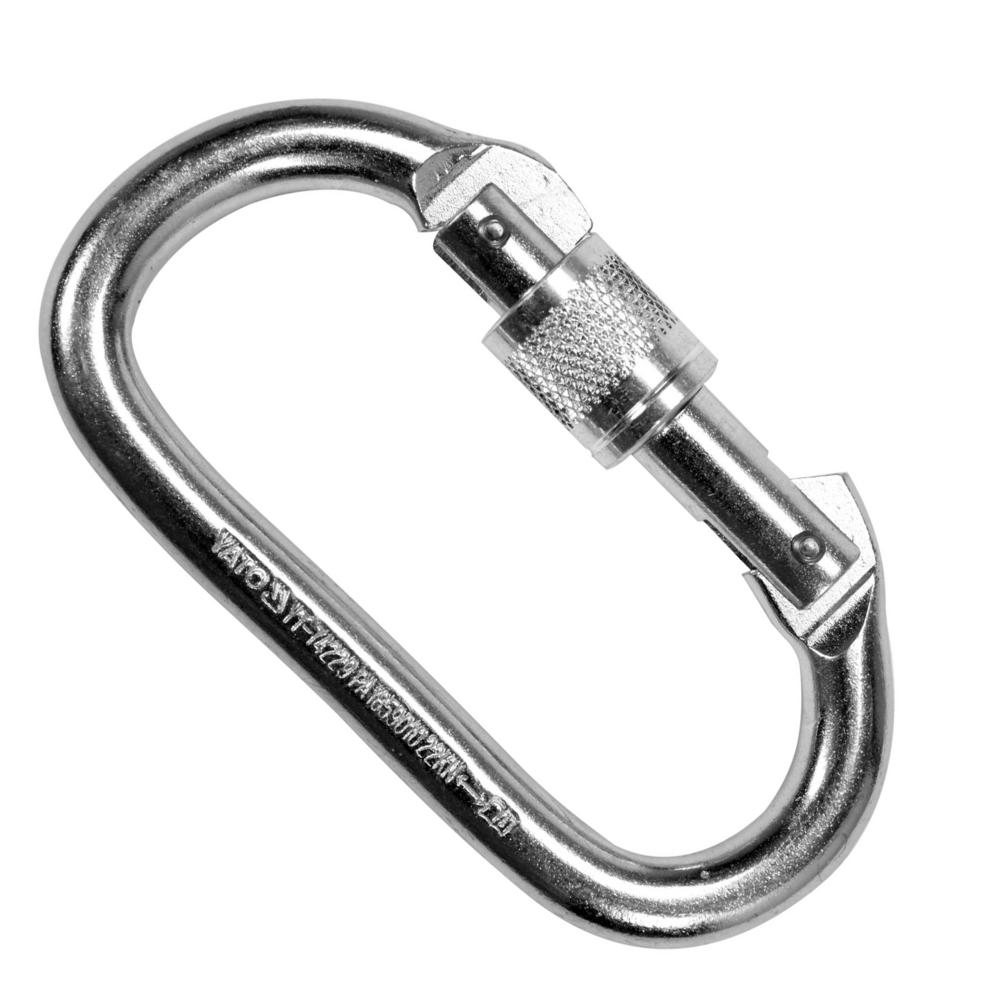
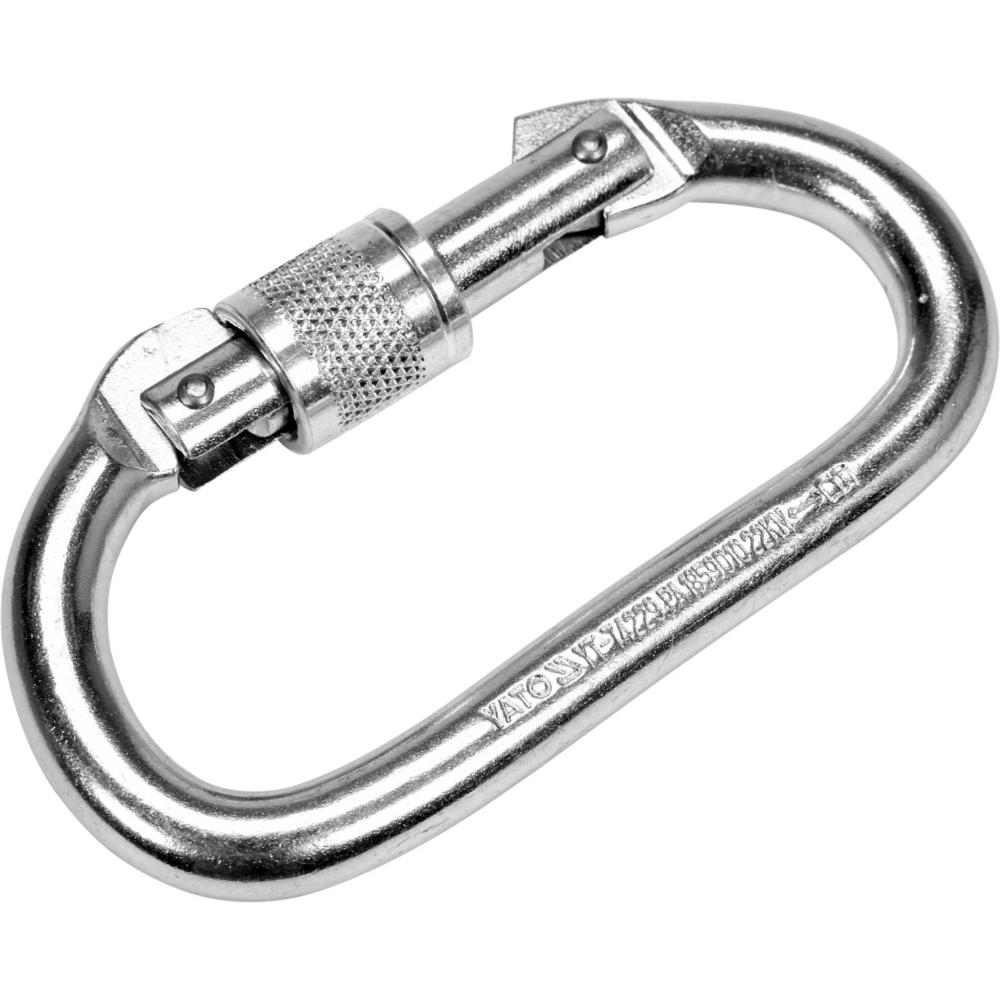
The Yato karabiner for safety harnesses is designed as a reliable connecting component for industrial fall protection systems. This connector with a manual screw lock is the critical link between the safety harness (EN 361) and anchor points or shock absorbers. The karabiner combines high mechanical durability with a simple, dependable locking mechanism.
The karabiner is made of corrosion-protected carbon steel, which gives it a static tensile strength of over 25 kN along its major axis. The heavy steel construction makes the component very hard-wearing, so it is suitable for continuous use in abrasive and demanding industrial environments. The screw-lock gate prevents the karabiner from opening accidentally under load or through the action of the rope and vibration.
The gate opening allows connection to standard-size anchor loops and rope systems. The shape concentrates the load on the strongest axis of the karabiner, the spine, optimising safety in a fall. The knurled surface of the locking sleeve gives a secure grip even when working with thick work gloves or in damp conditions.
The product is tested and certified to the European EN 362 standard for connectors in fall protection equipment. The mechanical construction withstands significant temperature changes, and the manual thread is a weather-resistant solution; it is much less prone to freezing or jamming from fine dirt than more complex automatic locks.
Intended use and suitability:
The product is designed for demanding conditions of work at height that require absolute breaking strength and mechanical durability against external stresses.
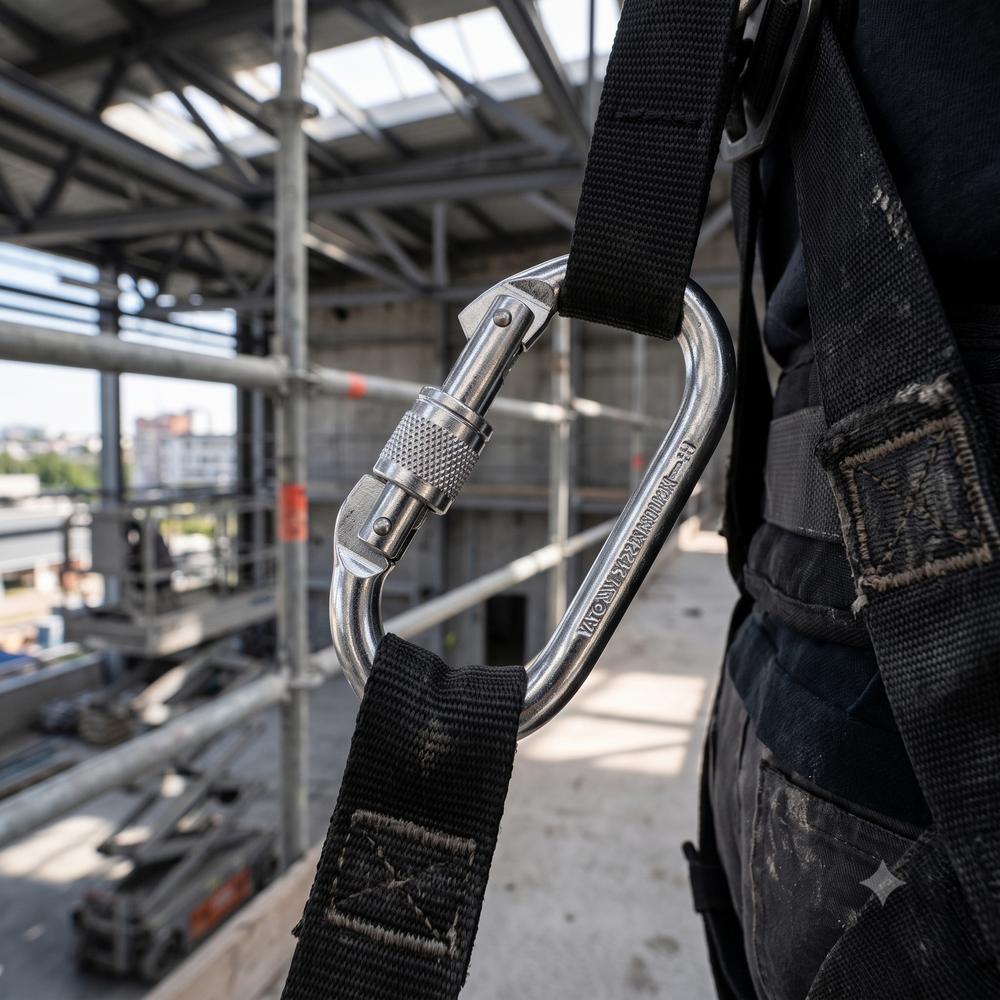
- Fall protection systems: Used to connect shock absorbers (EN 355), lanyards (EN 354) and full body harnesses (EN 361) to each other. The hardened steel construction withstands friction from metal components and anchor cables without wearing grooves.
- Anchoring and rope work: Suitable for installation work, scaffolding, masts and personnel lift baskets when the connector is attached to approved anchor points to EN 795.
- Industrial pulley systems and securing: With a mechanical strength of 25 kN, the karabiner is suitable not only for fall protection but also for securing heavy tools and handling static loads in industrial environments.
Package contents:
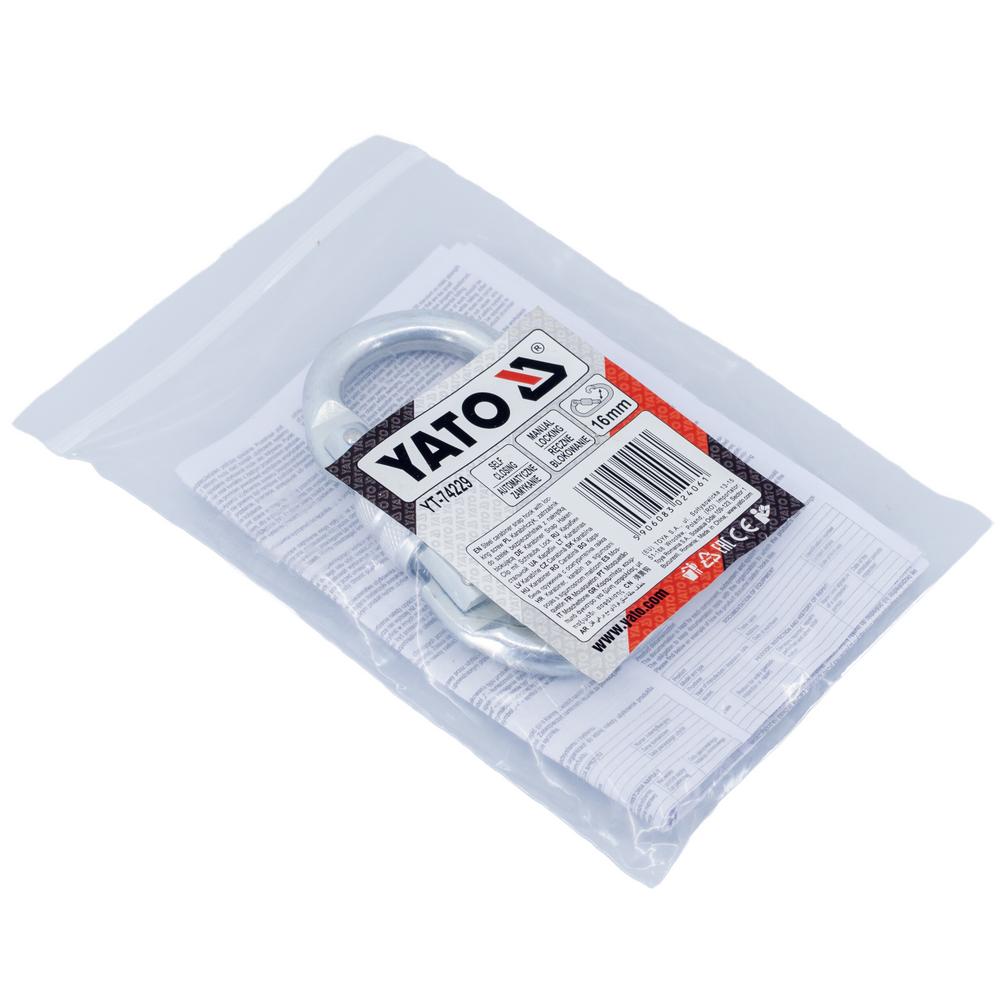
The product is supplied as a ready-to-use component in individual packaging.
- Yato steel karabiner: 1 pc screw-lock karabiner meeting EN 362.
Features:
The design of the connector maximises safety with conventional but very durable mechanical solutions.
- Manual screw lock: The threaded locking sleeve (Screw Gate) physically closes the gate, which makes accidental opening impossible and guarantees function even in winter conditions.
- Carbon steel construction: The material gives excellent wear resistance and a breaking strength of over 25 kN, exceeding the durability of aluminium karabiners, especially against metal edges or steel cables.
- Corrosion-protected surface: The galvanised coating protects the metal from rust in outdoor use and keeps the locking mechanism working smoothly despite exposure.
Technical specifications:
- Material: Carbon steel (galvanised)
- Locking mechanism: Manual screw lock (Screw gate)
- Static strength (major axis): > 25 kN
- Standards: EN 362 (fall protection equipment, connectors)
Yato karabiner instructions for use:
Safe use requires regular inspection of the component and loading it correctly.
1. Inspect the karabiner visually and mechanically before each shift. Look for signs of wear, corrosion, cracks or a bent body.
2. Make sure the gate and screw lock work properly: open the gate, let go (the spring should close the gate immediately), and turn the locking sleeve smoothly closed to its end position.
3. Attach the karabiner to the anchor point, shock absorber or safety harness. When assembling the system, make sure any load acts only along the major axis of the karabiner.
4. Always turn the locking sleeve carefully closed by hand. Never use tools (such as pliers) to tighten the lock, as overtightening when unloaded can make the thread seize under tension.
5. While working, check regularly that the karabiner is not loaded sideways, does not twist against edges, and that the locking sleeve cannot turn open from the friction of the rope or clothing.
Warnings:
Exceeding the mechanical limits can lead to structural failure of the karabiner.
- Danger to life from misuse: The karabiner is a safety-critical component. Always check manually that the screw lock is fully closed after each connection, as it does not lock automatically.
- Danger of side loading: The karabiner is designed to withstand a tensile strength of 25 kN only along its major axis, when the gate is fully closed and locked. Cross or side loading breaks the metal at a significantly lower force.
- Taking out of use: A connector that has taken the impact force of a fall must be taken out of use immediately and physically destroyed, even if the component shows no visible external damage.
Frequently asked questions (FAQ):
Why choose a steel karabiner instead of an aluminium one for fall protection?
A steel karabiner is heavier, but it gives superior durability against abrasion and mechanical stress. Especially when the karabiner is used against metal anchor points, steel cables or installation rails, aluminium quickly wears notches, while carbon steel keeps its shape and breaking strength for a long time in hard industrial use.
Does the screw lock need to be tightened with tools to maximise safety?
Absolutely not. The screw lock is designed to be tightened and opened only with finger force. If the locking sleeve is tightened with pliers or other tools, the thread may jam irreversibly when even a slight pull is applied to the karabiner or its body deforms elastically under load.
Can a screw-lock karabiner be used where it is opened hundreds of times a day?
A screw-lock karabiner is best suited to applications where the anchoring is semi-permanent or the karabiner is opened only rarely (e.g. the permanent connection between a lanyard and a harness). For frequent, fast-paced changes of anchor point (e.g. in scaffold erection), an automatic locking (Double- or Triple-Action) karabiner is recommended to minimise human errors of forgetfulness.
Recycling instructions:
When the karabiner is taken out of use because of wear, deformation, a fall or the end of its service life, it should be recycled as metal waste. Before recycling, the karabiner must be made unusable (for example by cutting through the gate with an angle grinder), so that a product whose safety is compromised cannot be used again. The individual packaging materials are recycled in plastic or cardboard collection according to local sorting instructions.