
Description
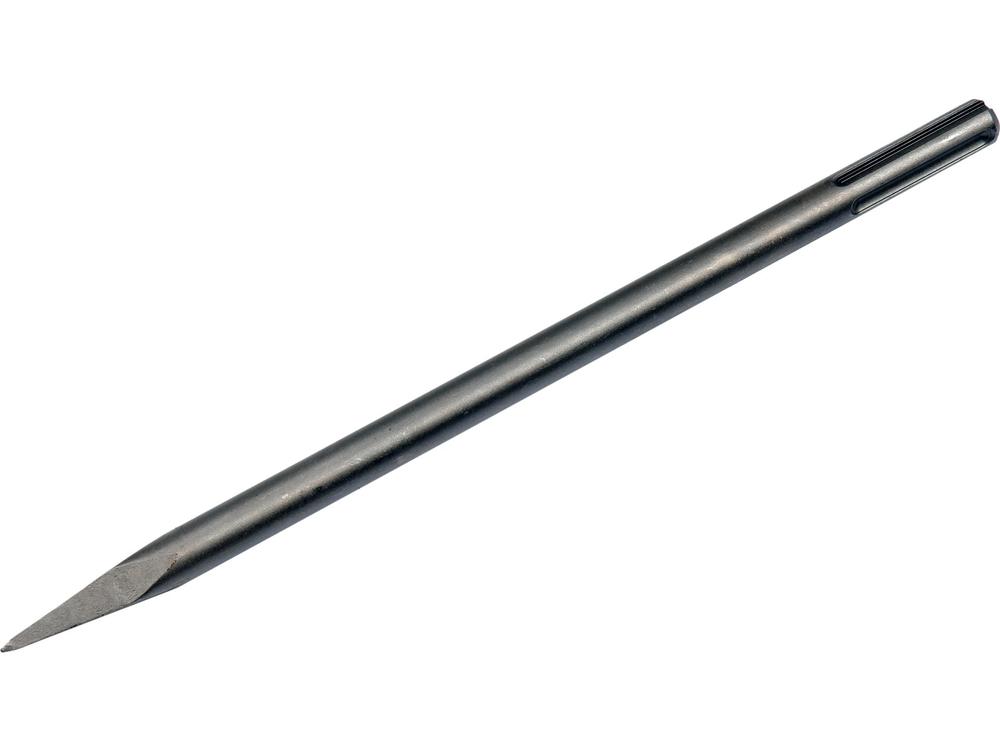
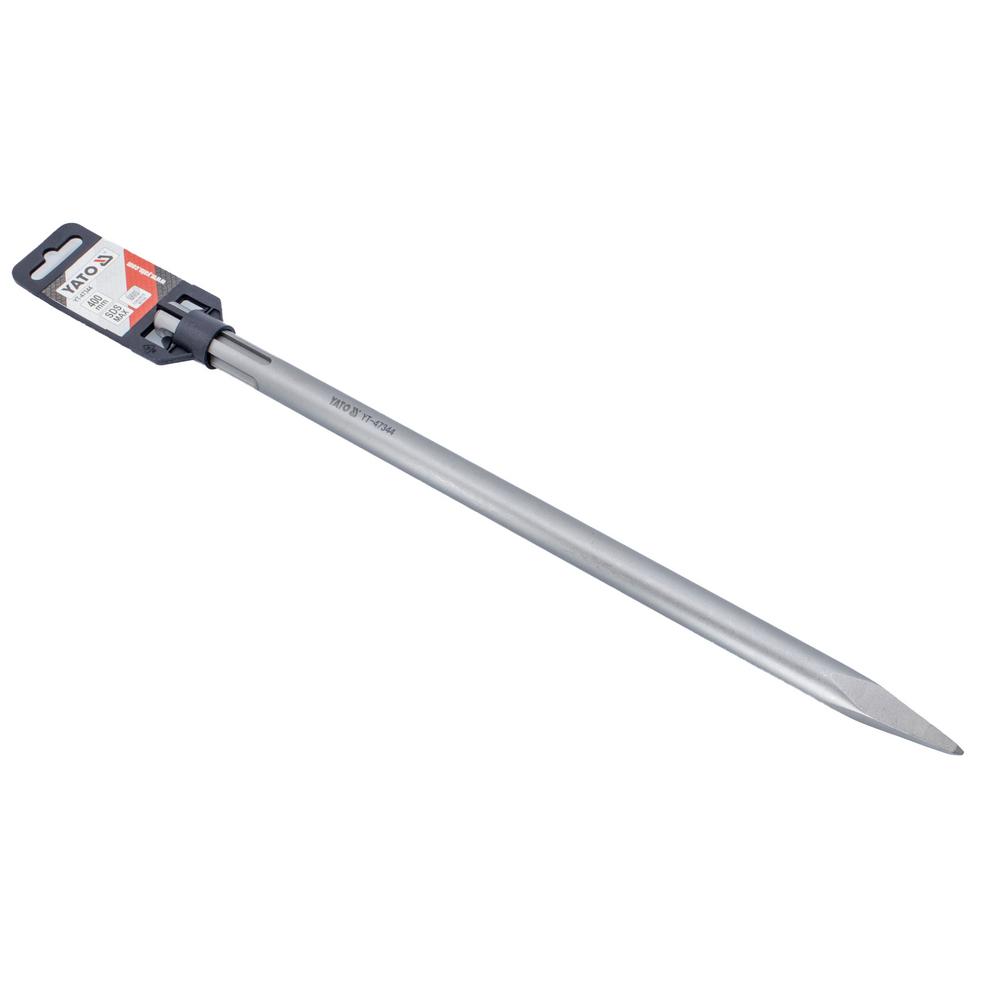
The Yato SDS-MAX point chisel is a mechanical demolition tool designed for heavy electric and cordless rotary hammers. The overall length of the tool is 400 mm, which offers excellent reach in deep demolition work and when breaking through thick structures. The fixing system is the industrial standard SDS-MAX, designed to withstand the stress of large machines that typically produce more than 5 joules of impact energy.
The sharp point geometry of the tool is designed to concentrate the kinetic energy produced by the hammer mechanism of the rotary hammer at a single point. This point load exceeds the structural tensile strength of hard material, such as unreinforced concrete, very efficiently. The concentrated breaking force makes the point chisel a more efficient option than a flat chisel in the initial stage of demolition work.
The tool is made of heat-treated steel, optimised to withstand repeated linear impact stress without premature blunting or chipping of the blade. The hardening process of the material guarantees a balance of flexibility and hardness, which is critical for the life of the tool under continuous mechanical stress.
The tool is fitted exclusively to rotary hammers with an SDS-MAX chuck in which rotary movement is stopped (Roto Stop). Direct power transmission through the 18 mm thick shank to the tip of the chisel minimises energy losses and maximises material removal capacity in heavy stone working.
Intended use and suitability:
The point chisel is a special tool for heavy mechanical breaking of stone materials and breaking massive structures, where kinetic energy must be concentrated on a small area to achieve maximum breaking force.
- Heavy demolition of concrete structures: The sharp point penetrates hard concrete and breaks the bonds of the material efficiently over large areas. This is critical in the mechanical demolition of floor slabs, foundation walls or thick wall structures with an SDS-MAX machine.
- Chiselling deep penetrations: The tool’s 400 mm length gives the reach needed to break through thick brick or concrete walls for HVAC and electrical installation routes. The pointed tip allows an accurate starting hole to be broken before the hole is enlarged.
- Splitting natural stone and rock: The point geometry suits mechanical breaking of bedrock or natural stone by exploiting the natural weaknesses and fracture lines of the stone. The impact energy penetrates the surface structure of the stone efficiently.
Package contents:
The product is supplied individually packed.
- 1 x Yato SDS-MAX point chisel, length 400 mm
Features:
- Fixing method: SDS-MAX shank guarantees compatibility with heavy demolition hammers, ensuring safe, efficient transfer of high impact energy.
- Reach: 400 mm overall length allows a more ergonomic working position in floor-level demolition work and making deep penetrations in thick walls.
- Point geometry: The sharp point (pointed profile) directs all the impact energy to a single point, which maximises penetration in hard stone materials.
Technical specifications:
- Blade profile: Point (point chisel)
- Overall length: 400 mm
- Fixing system: SDS-MAX
Yato SDS-MAX point chisel instructions for use:
Before use, make sure the rotary function of the demolition hammer is mechanically switched off and the machine is in hammer mode. Clean the SDS-MAX shank of the chisel carefully and lubricate the fitting grooves thinly with heat-resistant bit grease to reduce friction. Push the chisel into the chuck and lock it in place, making sure the tool can move freely lengthways. Place the tip of the chisel on the material and let the hammer mechanism of the machine do the demolition work; avoid applying excessive body weight, because it increases friction and overheating of the blade. In deep holes, withdraw the tip of the tool from the material regularly so that loosened dust can escape and the blade does not get wedged in the structure.
Warnings:
Because of the high impact energy, using the product requires heavy protective equipment.
- Risk of eye and facial fractures: Stone material breaking off during heavy demolition work flies off at exceptionally high speed; wearing a visor or safety-rated safety glasses is mandatory.
- Risk of hearing damage: Chiselling with SDS-MAX machines produces a very high noise level, which requires good-quality ear defenders.
- Risk of burns: The blade heats up as a result of intense mechanical friction; let the tool cool freely before changing it.
- Mechanical breakage: Never use the chisel as a pry bar, because high sideways stress on the 400 mm shank can break the hardened steel and cause an accident.
Frequently asked questions (FAQ):
- Can this SDS-MAX chisel be used in an SDS-Plus rotary hammer? No. The SDS-MAX shank has a diameter of 18 mm, whereas the SDS-Plus chuck only takes 14 mm shanks. These systems are not cross-compatible without a mechanical conversion adaptor, which is not generally recommended for heavy demolition work.
- Is the 400 mm length a disadvantage compared with shorter chisels? A longer chisel is heavier and needs more space, but it saves the user’s back when chiselling floors and gives critical reach into thick walls. In terms of transferring impact energy, the 400 mm length still works very efficiently with SDS-MAX machines.
- How should a blunt point chisel be sharpened? Sharpen it with a whetstone wheel or another slow-turning grinder, using plenty of water cooling. If the steel turns blue during grinding, it loses its hardness and the tip of the blade softens.
Recycling instructions:
Instructions for sorting the materials of the chisel correctly.
- Disposing of the product: A worn-out or broken steel tool goes to metal recycling.
- Recycling the packaging: Any product labels go to cardboard collection and plastic fasteners to plastic collection.