
Description
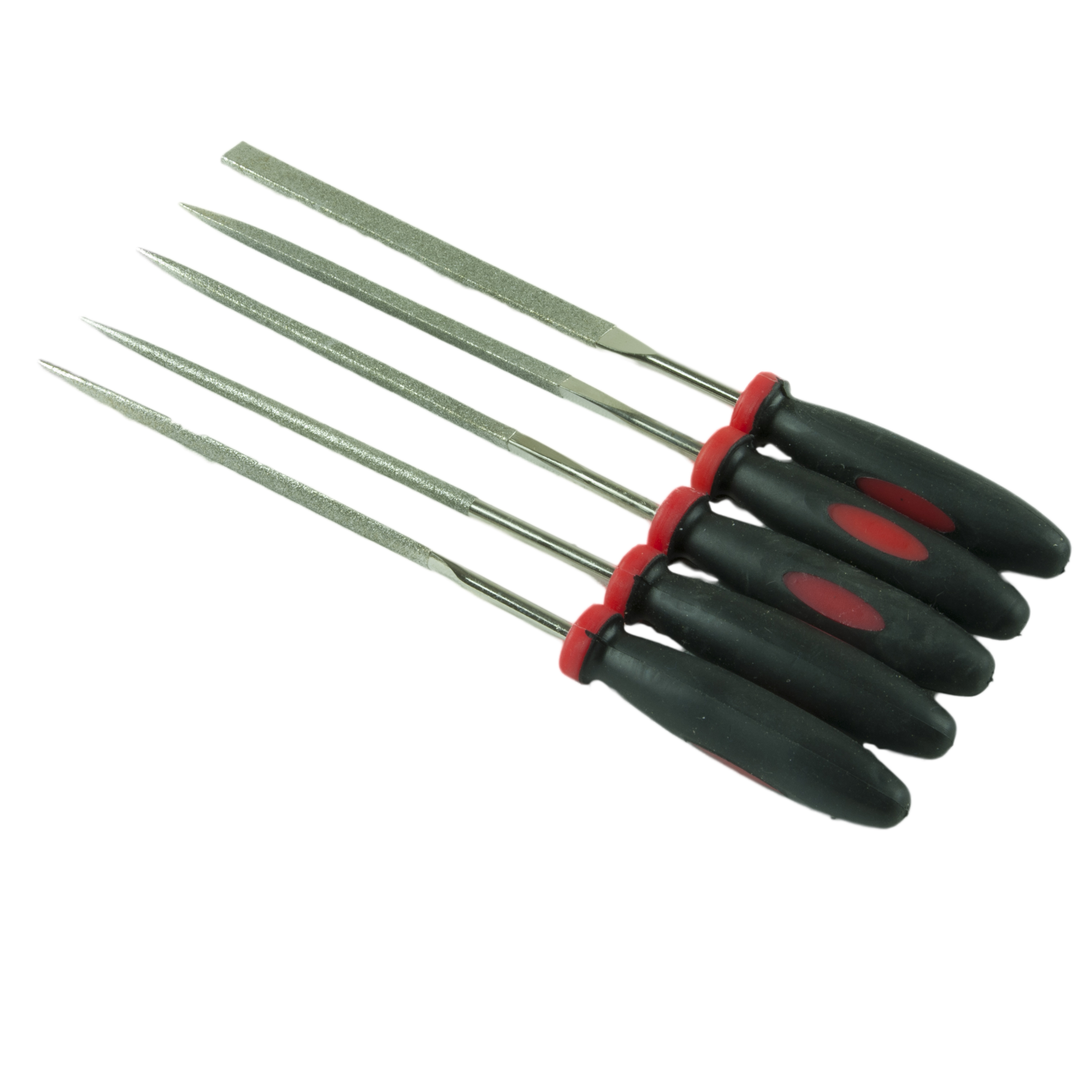
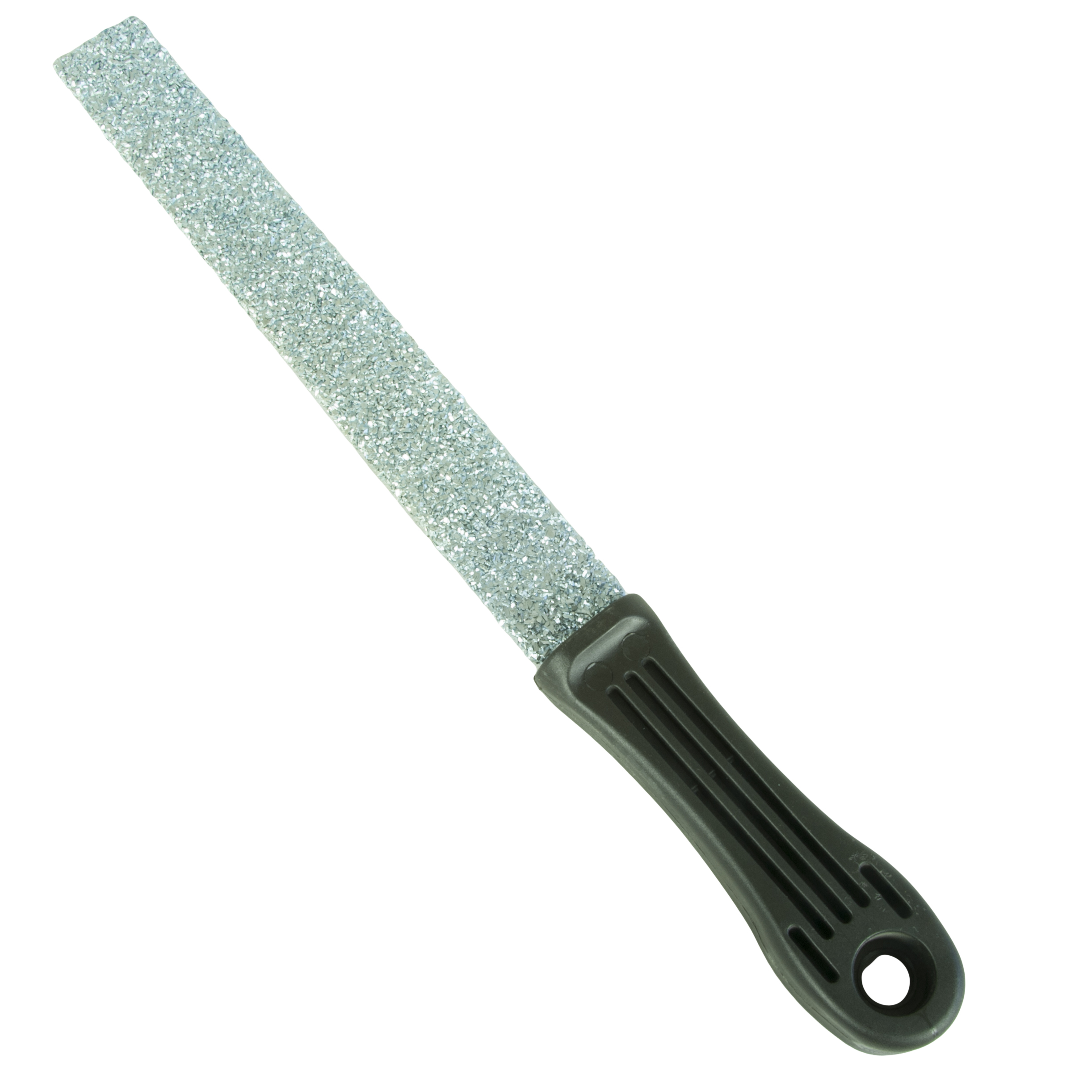
The Artu KM tile file 150 mm is a flat hand file for finishing the cut edges of ceramic tiles and porcelain stoneware tiles. The working surface of the file is a granular carbide coating: instead of the teeth of an ordinary file, the surface has brazed hard grains that grind the glass-like tile material without the surface going blunt quickly like steel teeth.
The granular surface works in both directions. An ordinary file only cuts on the push stroke, but the granular tile file grinds both when pushed and when pulled, which speeds up tidying the edge. The surface is open, so tile dust does not clog the working surface as easily as with a toothed file.
The file has a plastic handle, which has grooves for grip and, at the end, a hanging hole. The working part is flat and rectangular, so it is used to work straight edges and chamfers; the narrow side also reaches into narrow grooves. The tool weighs 213 g.
The tile file is used after the tile has been cut with a tile cutter or shaped with nibbling pliers. The cut edge is left glass-sharp and uneven; the file straightens the edge to the marked line and rounds the arris so that it does not cut during installation. The companion product for shaping is the Schwan parrot-beak tile nippers.
Intended use and suitability:
The tile file is a hand tool for removing small amounts of material from the edge of a hard, brittle tile. It is intended for finishing, not for heavy material removal.
- Straightening the cut edge: an edge cut with a tile cutter is ground straight up to the marked line.
- Tidying a nibbled edge: a curved or irregular edge shaped with pliers is smoothed.
- Rounding the arris: the glass-sharp cut arris is chamfered so that it does not cut during installation or stay sharp where visible.
- Fitting adjustment: a tile that is a few millimetres too wide is ground to size without a new cut.
- Edges of penetrations: smoothing the edges of drilled holes and openings.
Package contents:
- 1 pcs tile file with handle
Features:
- Granular carbide coating: grinds glass-like tile material; does not go blunt like steel teeth.
- Two-way grinding: the surface cuts both when pushed and when pulled.
- Open surface: tile dust does not clog the working surface as easily as on a toothed file.
- Flat rectangular shape: straight edges, chamfers and narrow grooves with the same tool.
- Plastic handle: grooved grip surface and hanging hole.
- Hand-operated: no electricity, water or dust extraction.
Technical specifications:
- Model: KM 150 mm.
- Shape: flat, rectangular working part.
- Working surface: granular carbide coating.
- Grinding direction: two-way.
- Handle: plastic, grooved, hanging hole.
- Materials worked: ceramic tile, porcelain stoneware tile.
Artu KM tile file 150 mm instructions for use:
Preparation: Support the tile against a workbench or trestle so that the edge being worked is free and the tile cannot move. If needed, mark the line you want on the edge.
Grinding: Take a full-palm grip on the handle and guide the other end of the file with your other hand. Hold the file perpendicular to the tile surface when straightening the edge, and at about 45 degrees when chamfering the arris. Work with even strokes along the full length; short back-and-forth movements wear the surface unevenly.
Method of progress: Remove material a little at a time and check the fit in place. Do not press the file hard: too much pressure breaks the edge of the tile in chips and does not speed up grinding.
Cleaning: Brush the working surface with a wire brush or a stiff plastic brush when tile dust built up between the grains slows down grinding. Dry brushing is enough.
Maintenance: Wipe the file dry after use and store it in a dry place so that the working surface does not rub against other tools. Before use, check that no grains have come off the coating.
Warnings:
- Wear a respirator: grinding ceramic tiles and porcelain stoneware tiles releases crystalline quartz dust, which is harmful to health when inhaled.
- Wear safety glasses with side protection; particles and chips come off when grinding.
- Wear cut-resistant gloves: the cut arris of a tile is glass-sharp before chamfering.
- Support the tile while working: a tile held in the hands moves and can break.
- Do not press the file hard; too much pressure chips the edge of the tile and pulls grains out of the coating.
- Do not use the file on metal, wood or plastic; the gaps between the grains clog and grinding no longer works.
- Do not use it as a lever or strike with the file.
- Keep out of reach of children.
Frequently asked questions (FAQ):
What is the Artu KM tile file 150 mm intended for? For straightening the cut edge of ceramic tiles and porcelain stoneware tiles, chamfering the arris and fitting adjustment in the finishing stage.
Why does the tile file have a granular surface rather than teeth? Tile is glass-hard: steel teeth go blunt on it quickly, whereas hard brazed grains grind the surface without wearing as quickly.
Does the file work in both directions? Yes. The granular surface grinds both when pushed and when pulled, unlike a toothed file.
Why does grinding slow down during use? Tile dust fills the gaps between the grains. Brush the working surface with a wire or plastic brush, and the cutting performance returns.
Is a respirator needed when grinding? Yes. Grinding tiles releases crystalline quartz dust, so a respirator and safety glasses are needed even for short manual work.
Can a tile be ground to size with the file without a cutter? It is not worth it. The file removes a few millimetres; larger dimensions are cut with a tile cutter and finished with the file.
Recycling instructions:
Take apart a file that is no longer used: the metal working part to metal collection and the plastic handle to plastic collection or the energy fraction. Take grinding dust and tile waste to construction waste collection according to local instructions. Packaging cardboard to carton collection and plastic packaging to plastic collection.