
Description
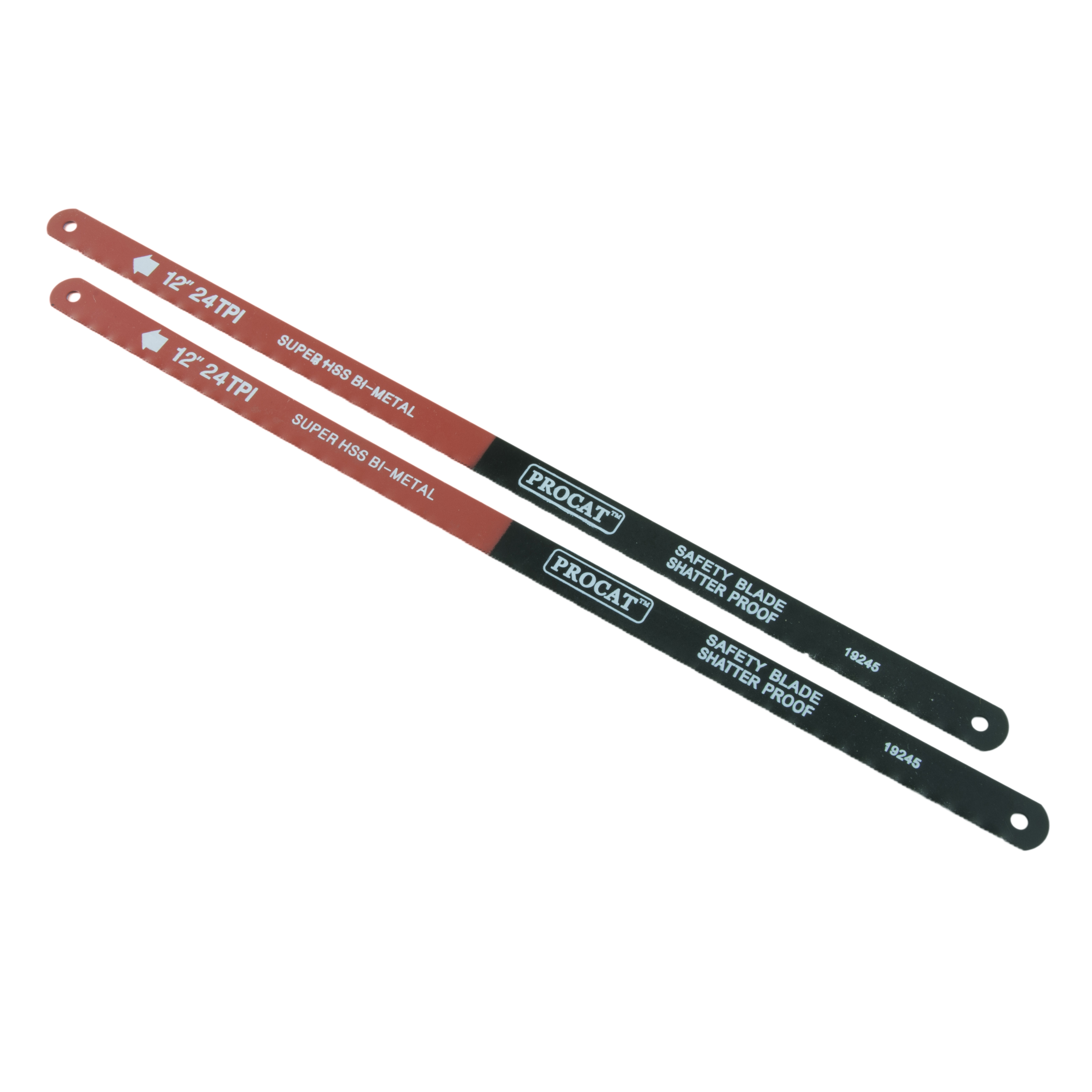
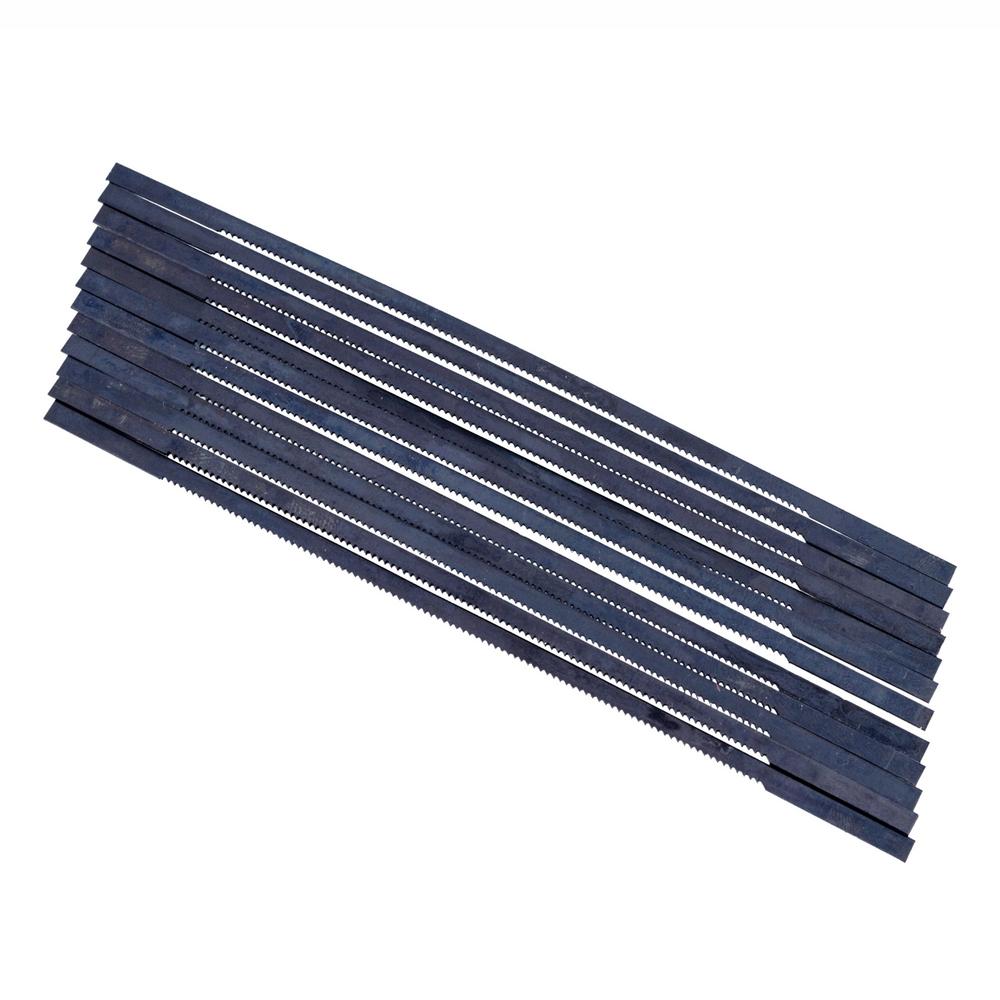
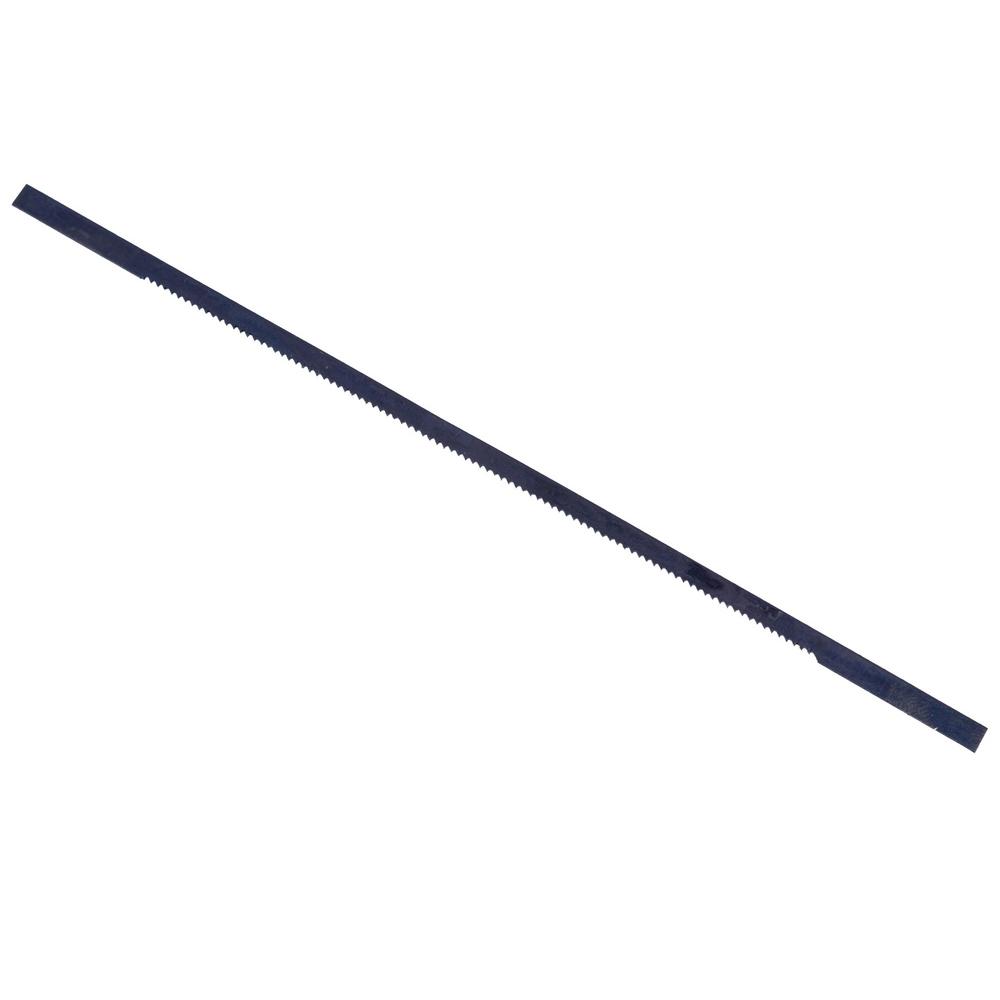
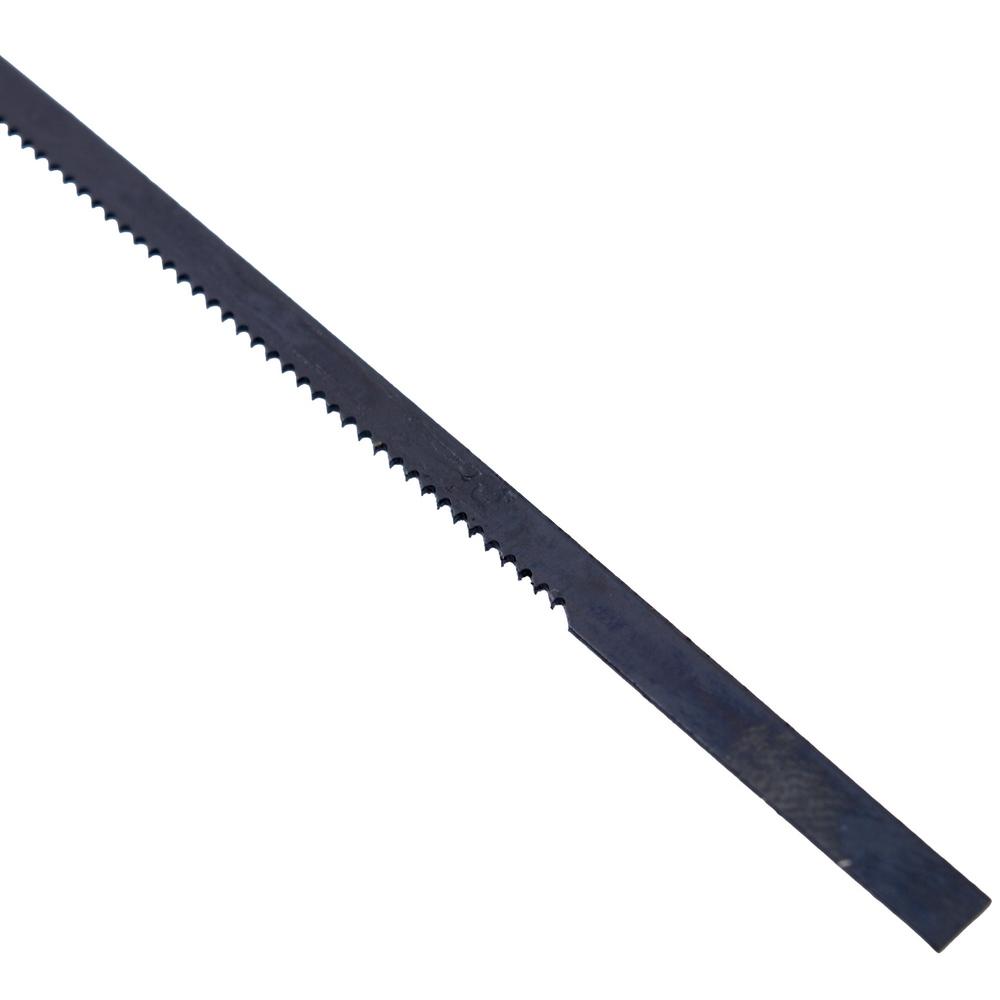
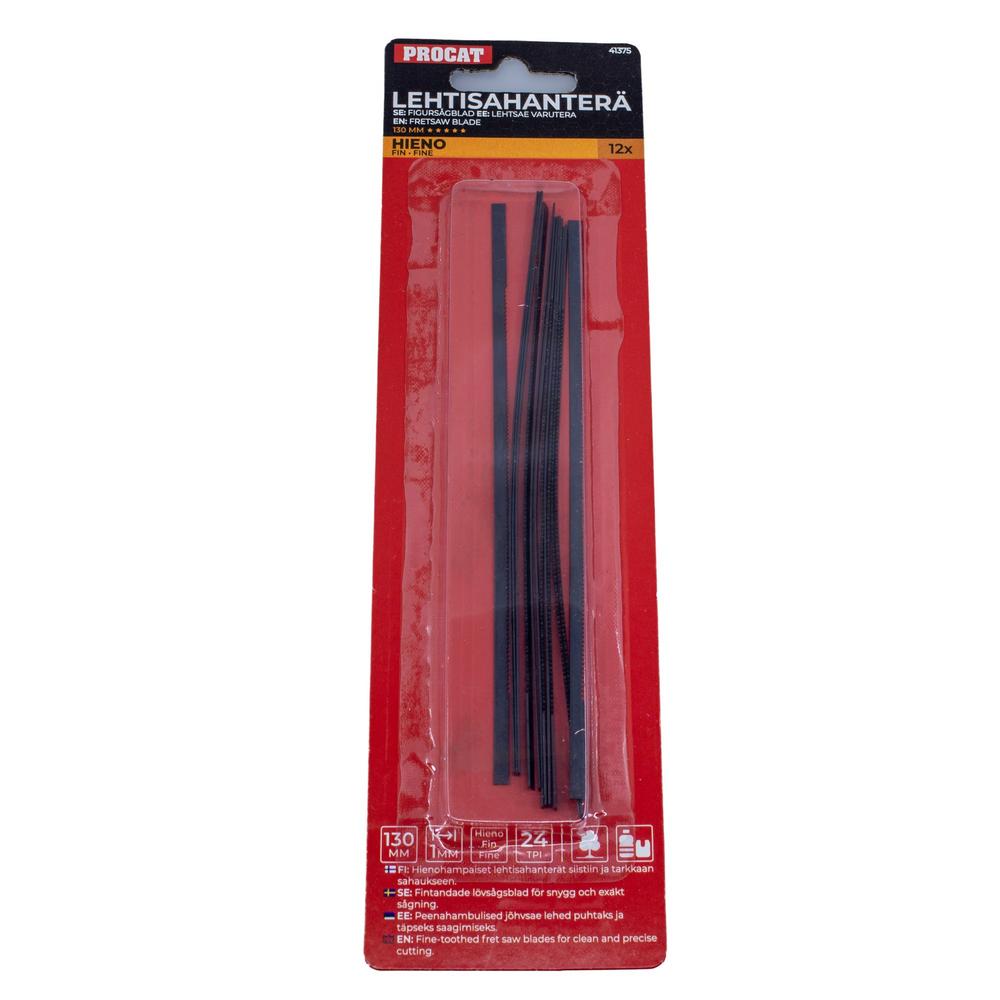
Procat fretsaw blade fine is a pack of 12 fine-toothed replacement blades for a fretsaw. The tooth pitch of the blade is 24 TPI (teeth per inch) and the length of the cutting part 130 mm. The fine teeth make a narrow kerf and leave a neat cut with little splintering.
A fretsaw blade is a thin, narrow steel band that is tensioned between the ends of the fretsaw frame. The spring force of the frame keeps the blade taut, so the thin blade stays straight and turns into small radii while sawing. This lets you saw precise patterns, curves and internal openings in thin materials with a fretsaw.
The tooth pitch determines the finish and speed of sawing: a high TPI number means small teeth and an even finish, a low TPI number faster but rougher sawing. 24 TPI is a fine tooth pitch especially suitable for thin plywood, thin wood and plastic, where a neat edge is more important than sawing speed.
The blade fits the Procat fretsaw frame 300 mm and other standard-size fretsaws. A thin blade can break when bent or with too much feed force, so the 12 pcs pack ensures that a replacement blade is always to hand for scroll sawing.
Procat fretsaw blade fine: intended use and suitability:
The fine-toothed fretsaw blade is intended for precise hand sawing of patterns and shapes.
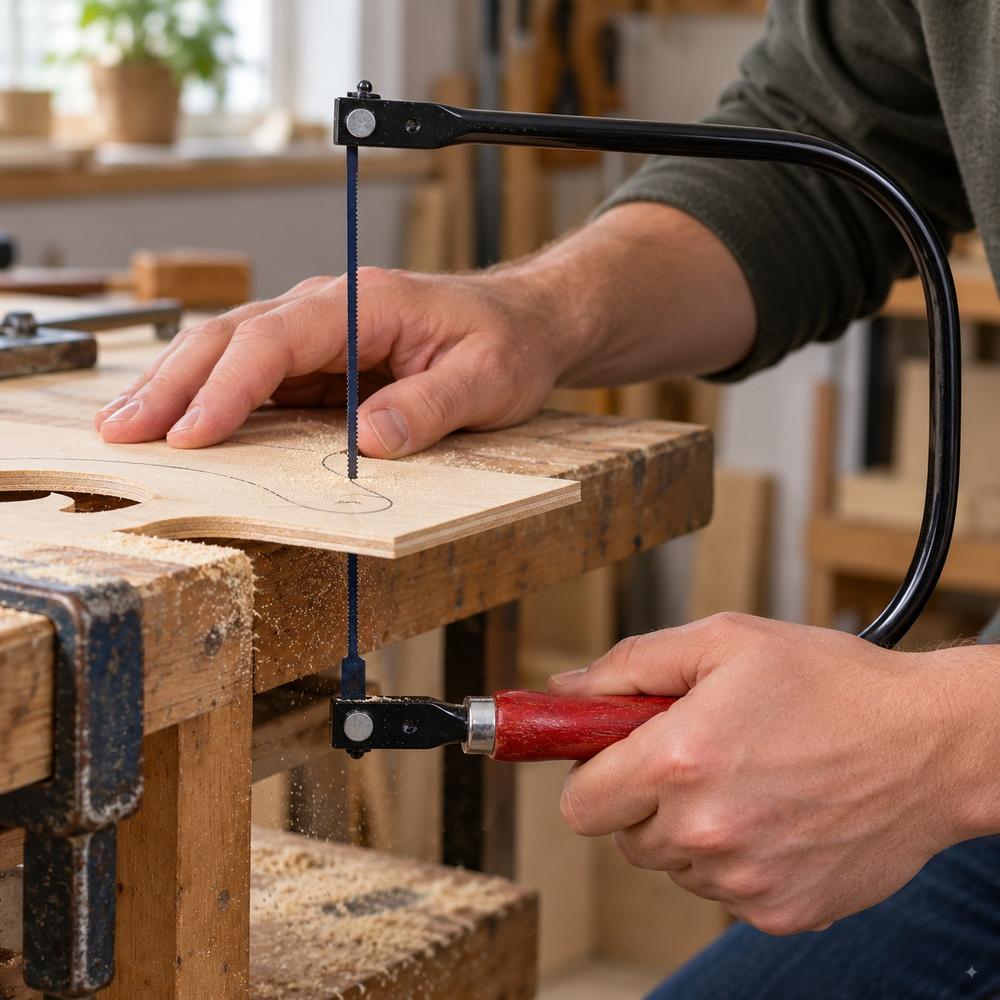
- Scroll sawing in plywood: Letters, decorations, jigsaw puzzles and models are sawn from thin plywood. The fine 24 TPI teeth reduce splintering of the plywood face veneer at the cut edge.
- Thin wood and trims: Thin wooden boards, battens and trims can be cut and shaped with a neat finish, which reduces the need for sanding afterwards.
- Plastic sheets: Thin plastic sheets are sawn with a slow, even movement; the fine teeth keep the edge smooth.
- Internal openings: The blade can be released at one end and threaded through a hole drilled in the workpiece, so the opening can be sawn without breaking the edge.
- Model making and crafts: Small, precise parts and curved shapes where a wider saw blade will not turn.
Package contents:
- Fretsaw blade, fine: 12 pcs.
Features:
- Fine 24 TPI teeth: Narrow kerf and a neat cut in thin materials.
- Narrow, thin blade: Turns into small radii and is suitable for scroll sawing.
- Compatibility: Fits the Procat fretsaw frame 300 mm and other standard-size fretsaws.
- Pack of 12: Enough for several blade changes.
Technical specifications:
- Product type: Fretsaw blade, fine.
- Tooth pitch: 24 TPI.
- Length of cutting part: 130 mm.
- Quantity: 12 pcs.
Procat fretsaw blade fine instructions for use:
1. Fitting the blade: First attach the blade to one end of the fretsaw frame with the teeth towards the handle, so that the saw cuts on the pull stroke. Squeeze the frame together gently and attach the other end of the blade. When the frame is released, the blade should be taut.
2. Sawing an internal opening: Drill a hole inside the opening, release one end of the blade, thread the blade through the hole and tension the blade again.
3. Sawing: Clamp the workpiece firmly. Saw with vertical, even strokes without much pressure, and turn the workpiece rather than the saw on curves.
4. Storage: Store the replacement blades in a dry place so that they do not rust, and release the blade tension when the saw is not in use.
Warnings:
- Sharp teeth: Handle the blades with care and keep your fingers away from the cutting line.
- Breaking blade: A thin blade can break and fly off; wear safety glasses and avoid twisting the blade.
- Firm clamping: Clamp the workpiece with a clamp or to the edge of a table before sawing.
- Children: Keep the blades out of the reach of children.
Frequently asked questions (FAQ):
Which fretsaw does the Procat fretsaw blade fine fit? The blade fits the Procat fretsaw frame 300 mm and other standard-size fretsaws.
What does 24 TPI mean on a fretsaw blade? The blade has 24 teeth per inch. The fine teeth give a neat finish in thin materials but saw more slowly than a coarser blade.
Which way are the teeth of a fretsaw blade fitted? The teeth point towards the handle, so the saw cuts on the pull stroke and the blade stays taut.
Can thick wood be sawn with a fine fretsaw blade? The fine blade is intended for thin materials such as plywood, thin wood and plastic; in thick wood sawing is slow and the blade heats up.
Recycling instructions:
Used and broken fretsaw blades are sorted for metal collection. Wrap sharp blades, for example in paper or tape, before putting them in the collection bin. The packaging is sorted by material for cardboard and plastic collection.