
Description
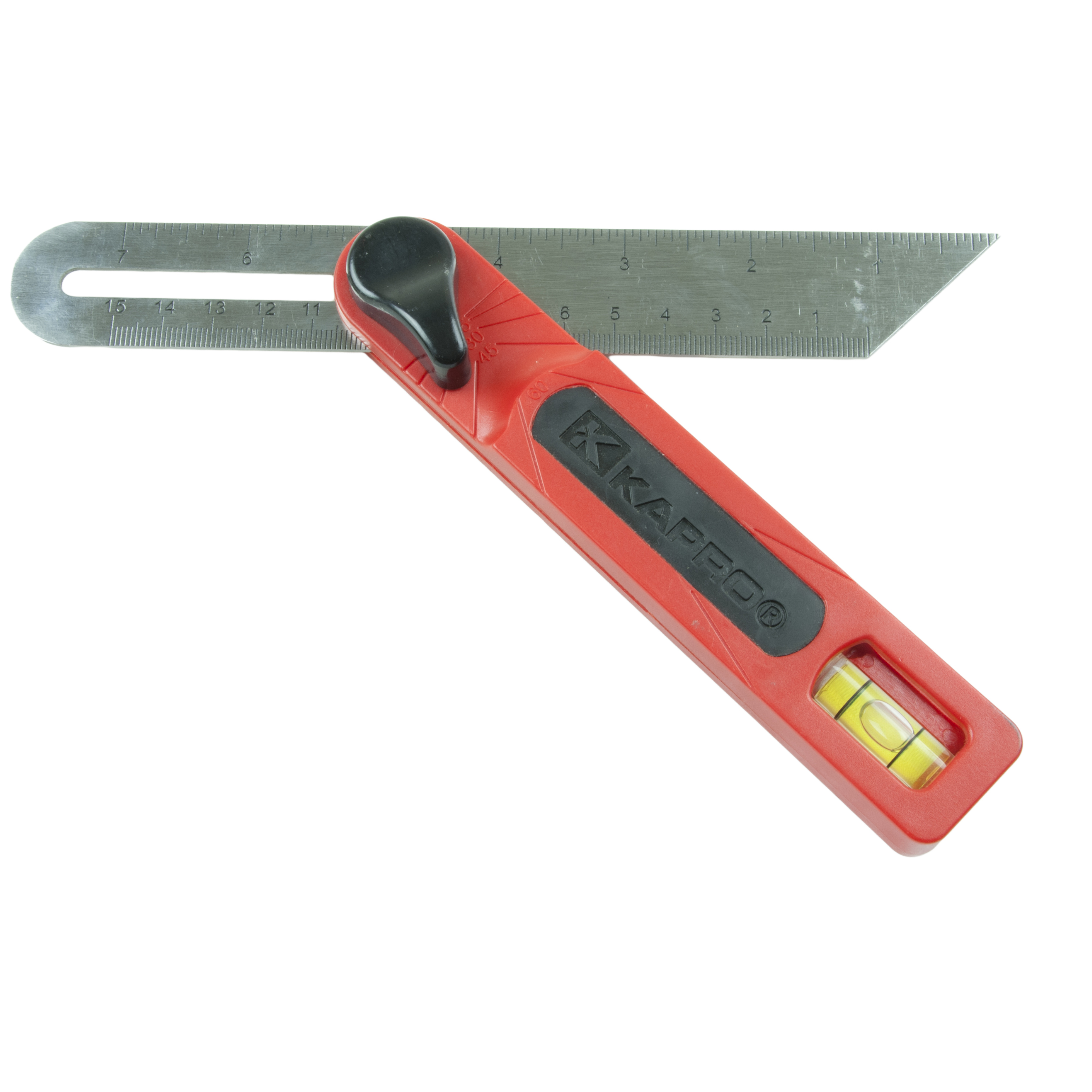
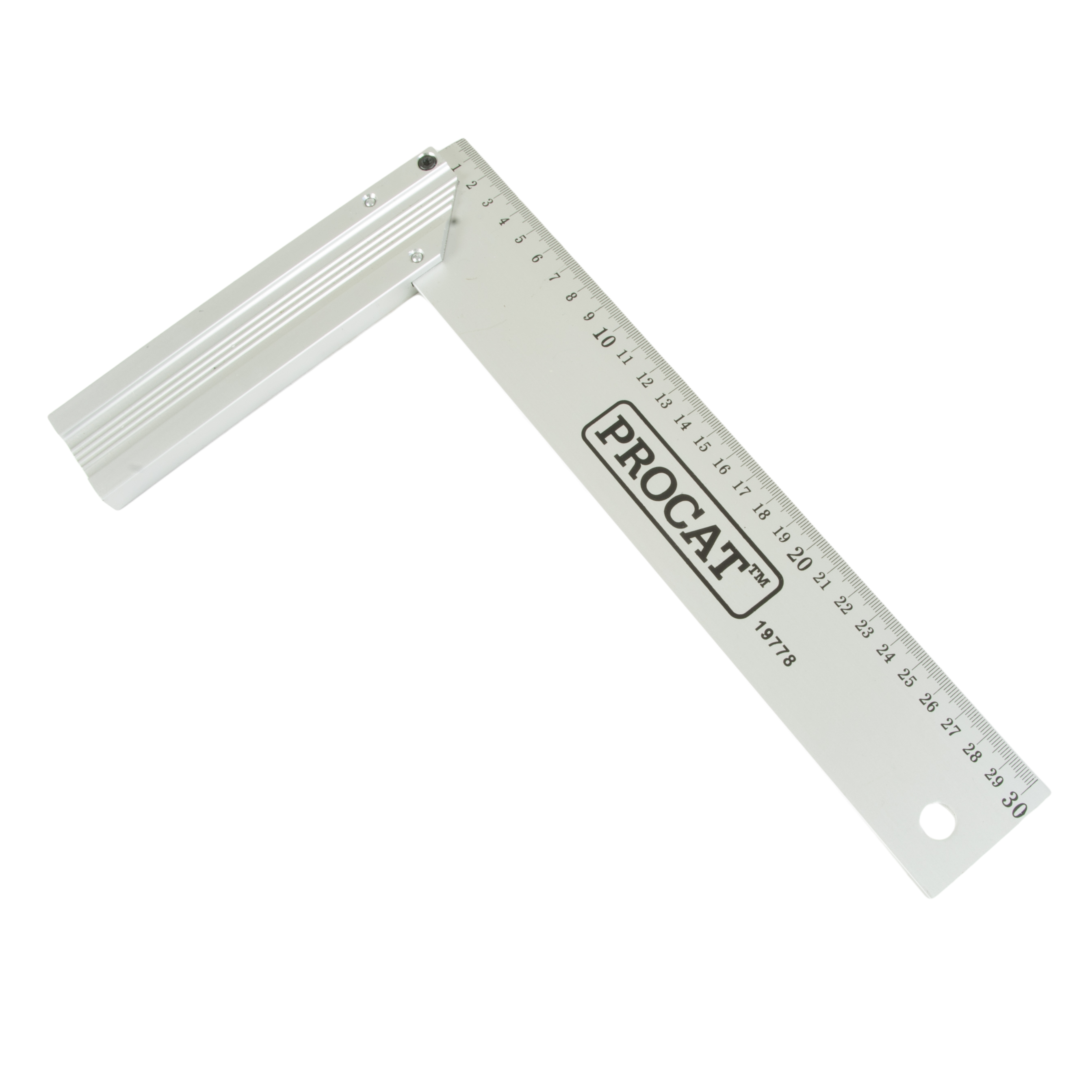
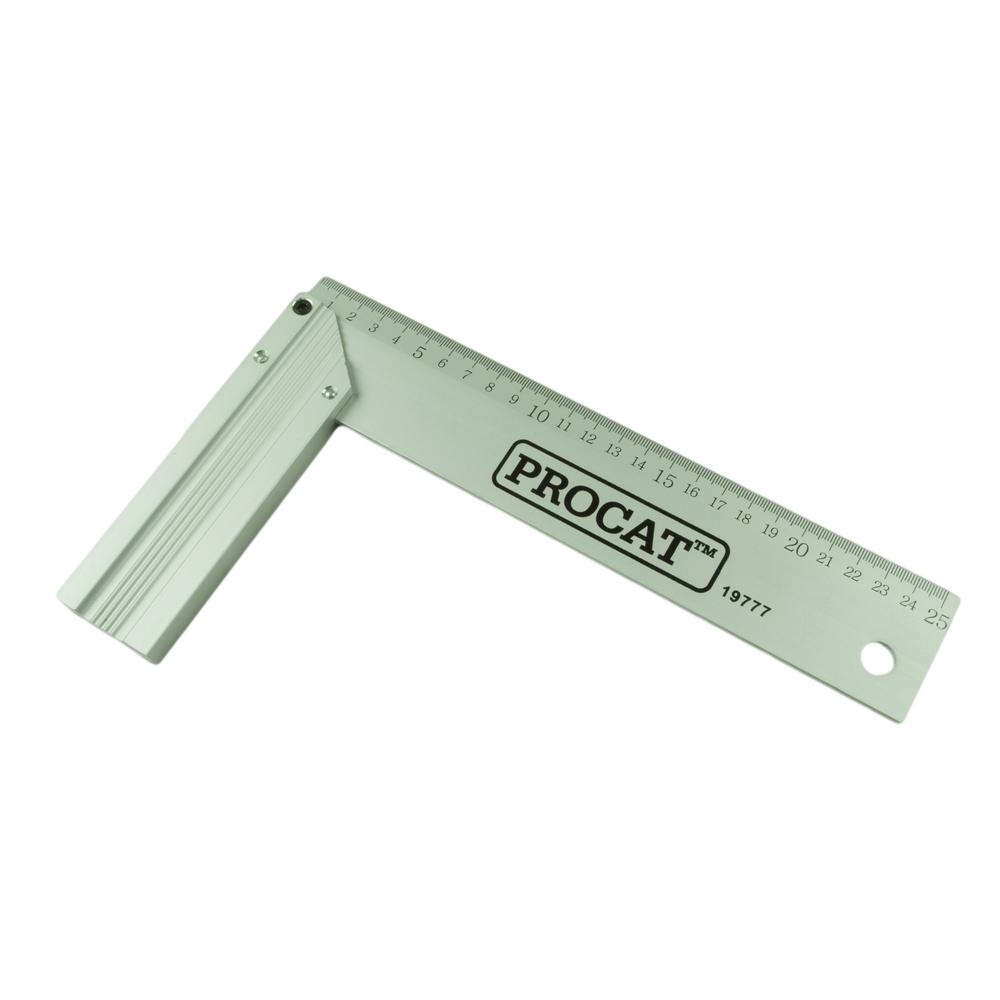
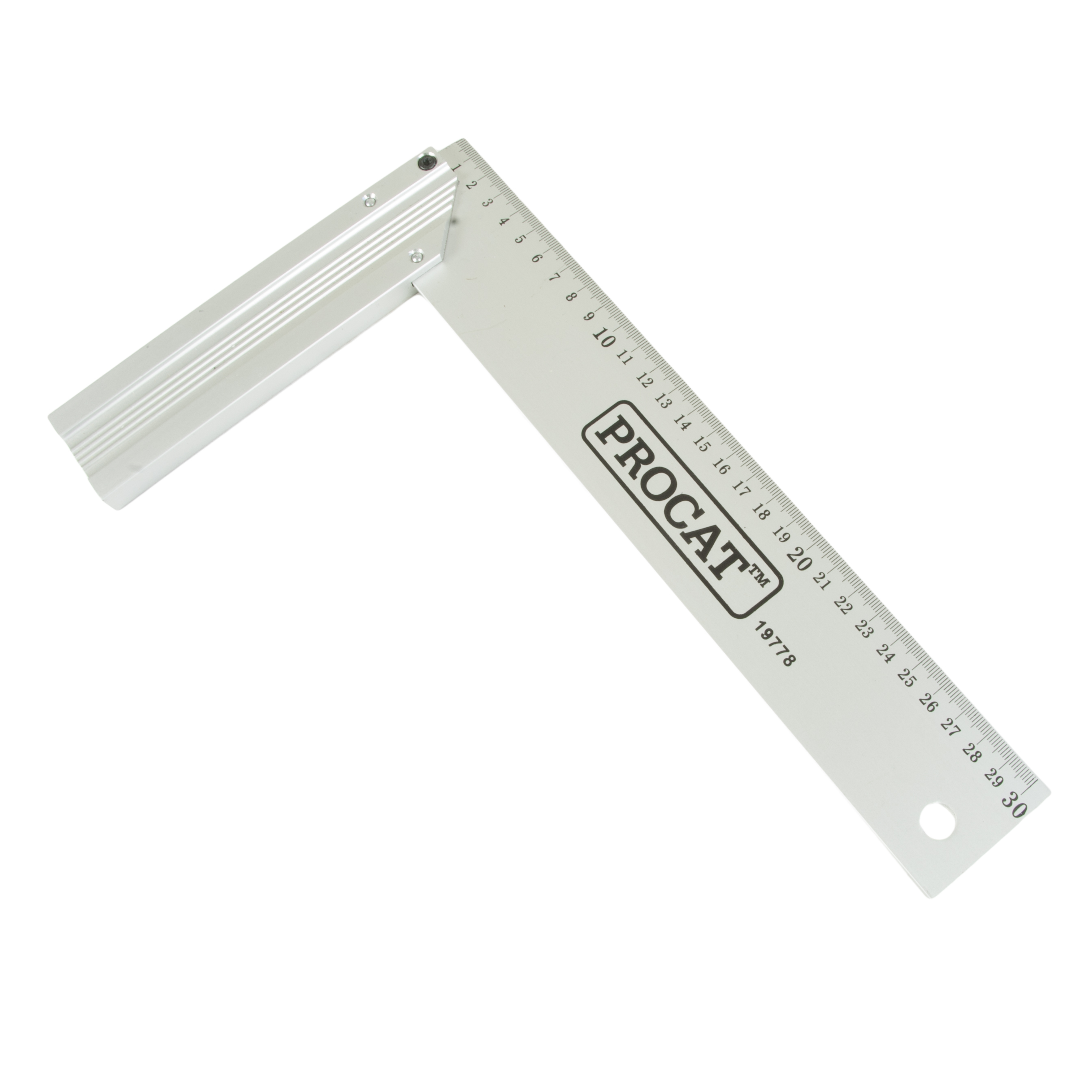
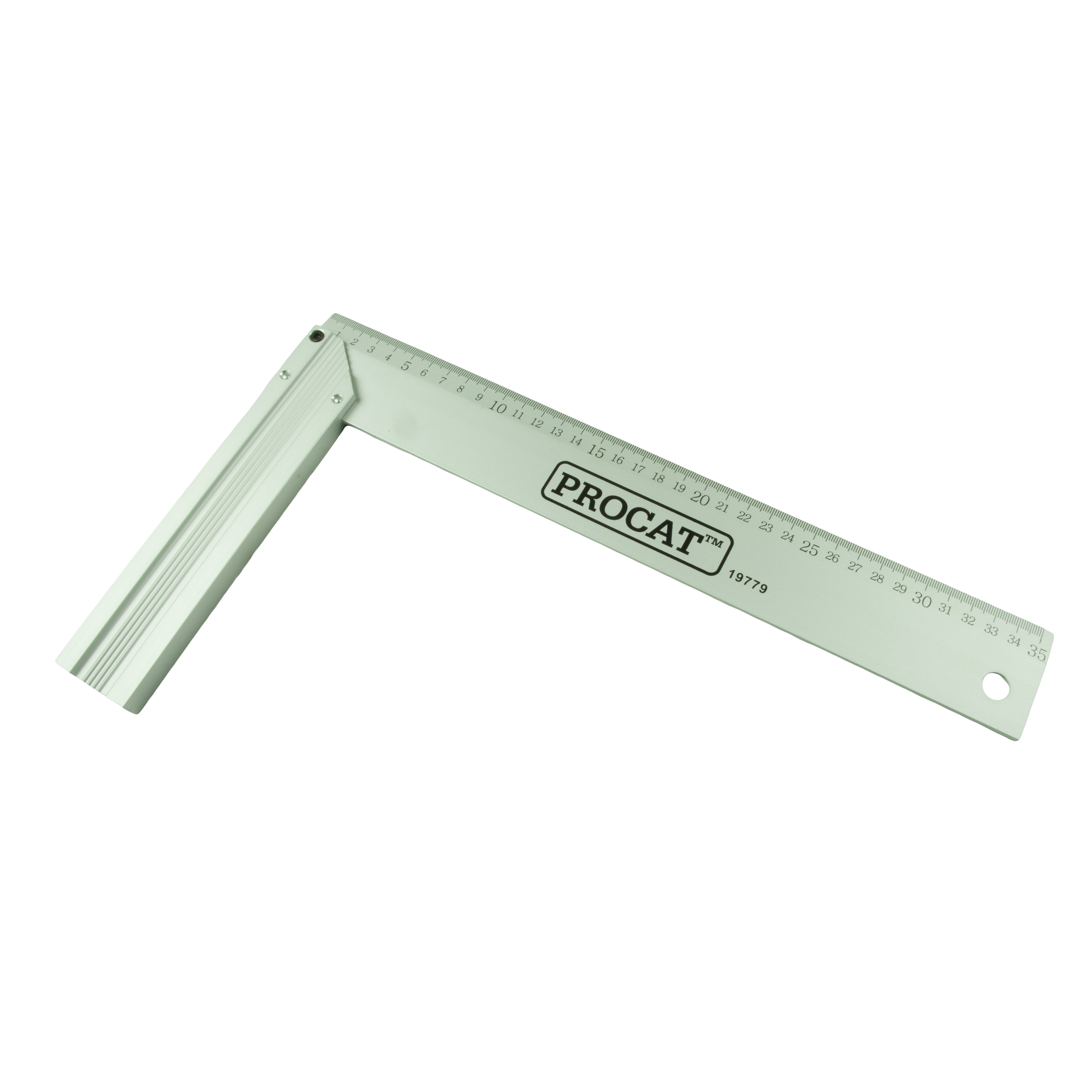
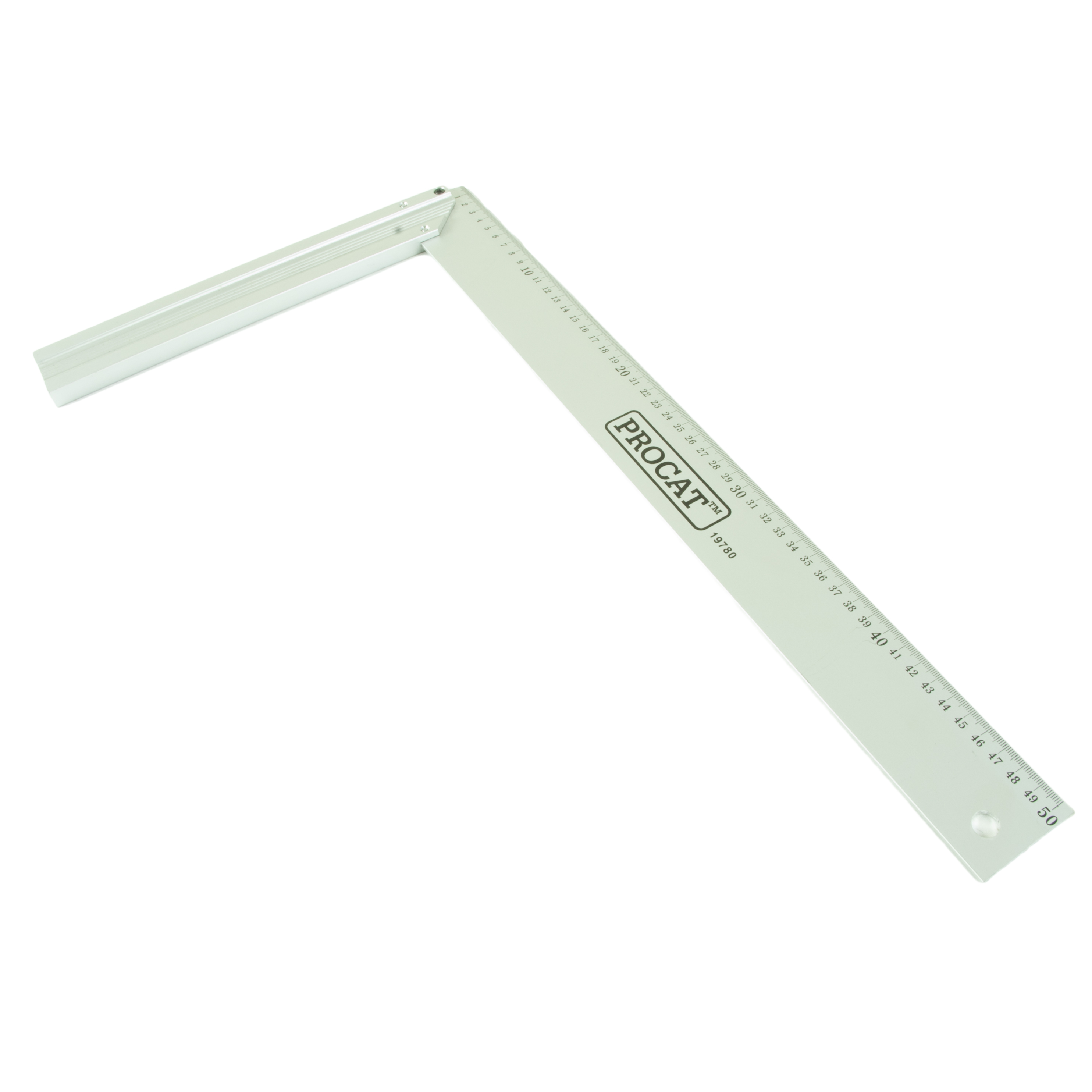
The Procat try square is a measuring and marking tool made entirely of aluminium. It consists of an aluminium blade and an aluminium handle (stock) attached to it. The tool is used mainly to check or mark a 90-degree angle (right angle) between two surfaces on a workpiece. The bevelled end of the handle also lets you mark 45-degree angles (mitre angles).
The aluminium blade of the tool has a printed or engraved measuring scale (usually in millimetres and centimetres), so it can also be used to measure short distances while marking angles. The all-aluminium construction makes the tool light to handle. The aluminium handle works as a stock that is placed against the edge of the workpiece during measuring.
Intended use:
This try square is intended for the following tasks:
- Measuring and marking 90° angles: The most common use, where you check that angles are square or draw a line at right angles to the edge of the workpiece.
- Marking 45° angles: Using the bevelled part of the handle, you can draw 45-degree bevel angles, for mitre sawing for example.
- Measuring: The scale on the blade can be used to measure short distances.
- Checking straightness: The edge of the blade can also be used for a quick check of surface flatness or edge straightness.
Features:
- All-aluminium construction: Both the handle and the blade are aluminium, which makes the tool light.
- Angles: Handles 90° and 45° angles.
- Measuring scale: The blade has a clearly legible measuring scale (e.g. mm/cm).
Technical specifications (general):
- Material: Aluminium (handle and blade)
- Angles: 90° and 45°
- Scale: Metric (mm/cm)
Procat try square instructions for use:
Place the handle (stock) of the try square tightly against the straight edge of the workpiece. To mark or check a 90-degree angle, let the blade rest on the surface of the workpiece at right angles to the edge. Draw a line along the edge of the blade or check against the light whether the angle is square. To mark a 45-degree angle, use the bevelled end of the handle as the stock against the edge and draw a line along the blade. Keep the tool clean and avoid dropping it, so that the angle stays accurate.
Warnings:
Avoid dropping or knocking the tool, as this can twist the aluminium blade or handle and affect measuring accuracy. Do not use the blade as a lever or a hammer.
Frequently asked questions (FAQ):
What material is the tool made of?
The tool is made entirely of aluminium, both the handle and the blade.
Is there a scale on both sides of the blade?
The scale is on one side
Can this measure angles other than 90 and 45 degrees?
No, this tool is designed only for measuring and marking fixed 90° and 45° angles.
Recycling instructions:
The tool is made of aluminium. At the end of its life, it can be recycled through metal collection in line with local waste management regulations.