
Description
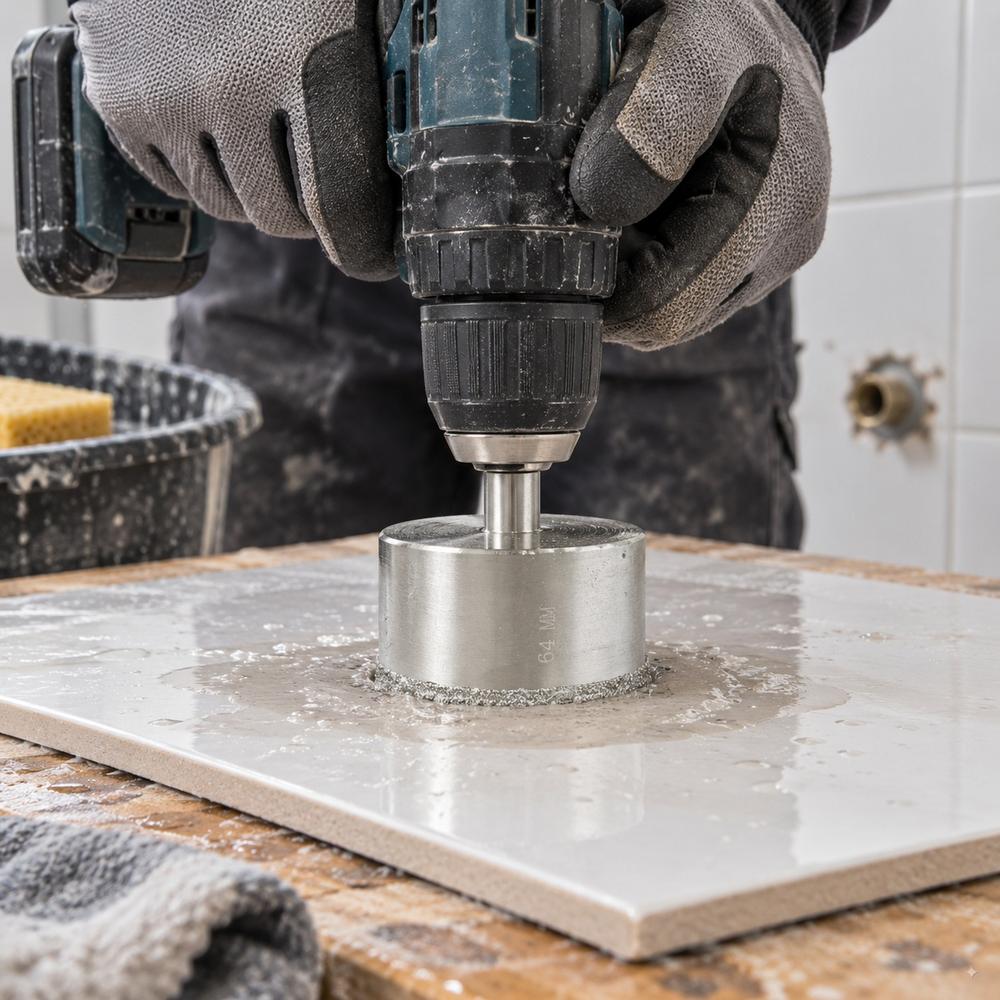
Procat diamond hole saw is a hole saw coated with electroplated diamond grit for drilling hard and brittle materials. The cutting edge is not toothed like metal saws; instead, it grinds the material away with diamond grit, so the tile surface does not chip the way it does with a striking blade.
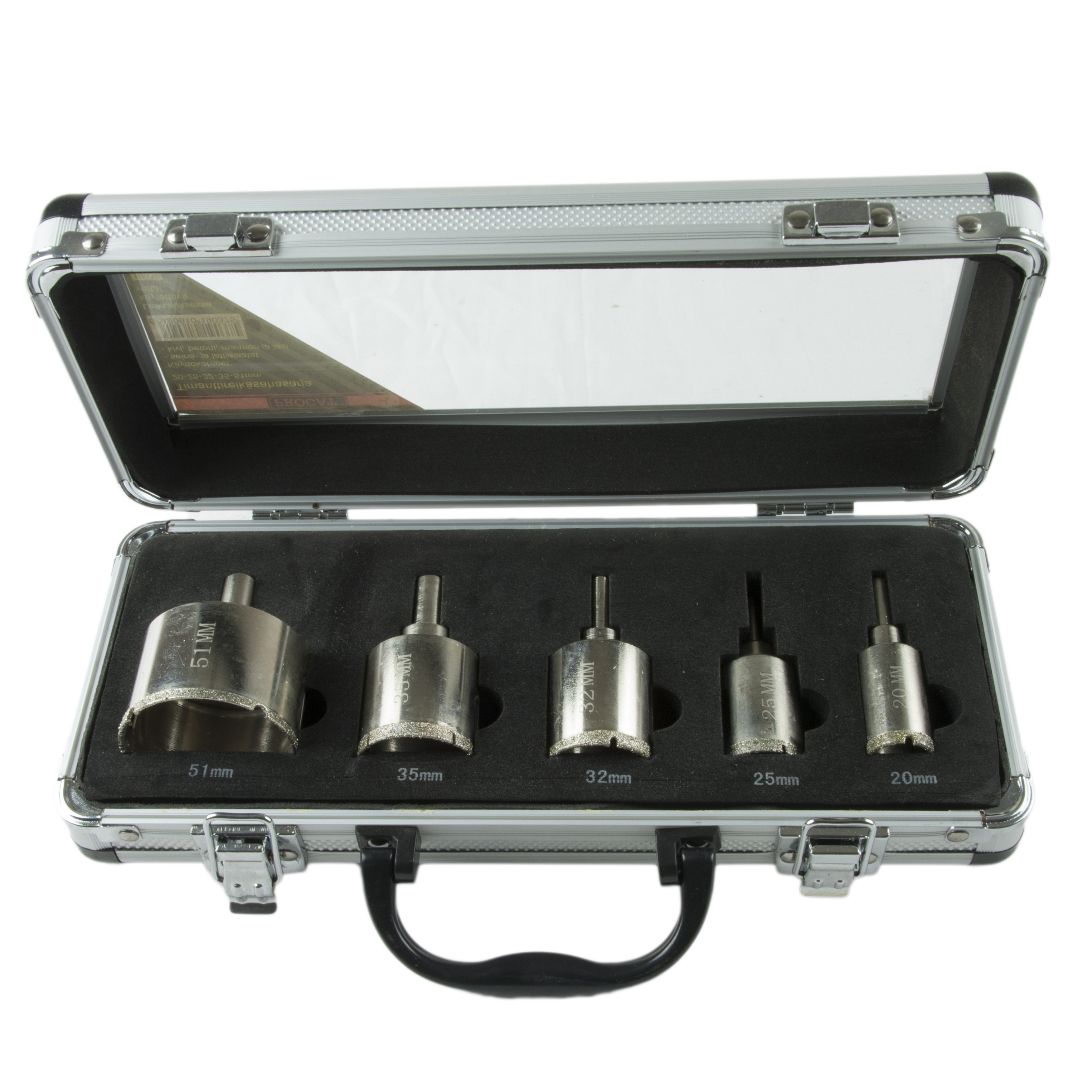
The range covers 20 diameters from 8 mm to 120 mm: 8, 10, 12, 20, 25, 32, 35, 38, 40, 44, 51, 57, 64, 70, 73, 76, 95, 105, 114 and 120 mm. The small sizes 8–20 mm are intended for fixing and pipe lead-through holes, the medium sizes 25–57 mm for plumbing fixture and electrical conduit lead-throughs, and the large sizes 64–120 mm for lead-throughs for boxes, drain pipes and extract air valves.
Drilling is water-cooled. The water carries the grinding dust out of the groove and cools the diamond layer; without water, the bond overheats, the diamond grit comes loose and the blade goes blunt quickly. The water also binds quartz dust, which is harmful to health if breathed in.
Starting the cut on a hard, slippery surface needs guidance: the hole saw can be guided with a separate guide or by placing the bit in a V-notch cut in a piece of cardboard, which holds the bit in place until the cutting groove has formed. Bi-metal hole saws for drilling metal, wood and boards are a separate range, Procat hole saws and the Procat hole saw set 15 pieces 22–114 mm in aluminium case; the guide used with them is the Procat hole saw guide 4-90 mm.
Intended use and suitability:
The diamond hole saw drills lead-through holes in brittle, hard building materials where a toothed blade would chip the surface.
- Wall and floor tiles: ceramic tiles and clinker are drilled with water cooling for tap, shower and pipe lead-throughs without chipping the edges.
- Natural stone and marble: the diamond grit grinds the stone away evenly, so the edge of the hole stays neat even on a polished surface.
- Concrete: small lead-throughs and fixing holes in thin concrete structures.
- Glass: a slow speed and plenty of water make it possible to drill a hole in glass without breaking the sheet.
- Electrical and plumbing/HVAC installations: sizes 64–120 mm cover the most common lead-through sizes for boxes and pipes.
Package contents:
- 1 diamond hole saw in the selected diameter (8–120 mm)
Features:
- Electroplated diamond coating: the diamond grit is bonded to the cutting edge galvanically, so the grit is at the surface right from the start and the bit does not need opening up separately.
- Untoothed cutting edge: the material is removed by grinding, not striking, so the tile surface and glaze stay intact.
- 20 diameters: 8–120 mm with the same construction and the same working method.
- Water cooling: extends the life of the bit and binds the grinding dust.
- Guidance: the bit can be started with a guide or with the help of a V-notch cut in cardboard.
Technical specifications:
- Diameters: 8, 10, 12, 20, 25, 32, 35, 38, 40, 44, 51, 57, 64, 70, 73, 76, 95, 105, 114 and 120 mm.
- Cutting material: electroplated (galvanised) diamond grit.
- Cutting edge: continuous, untoothed.
- Cooling: water-cooled drilling.
- Materials: ceramic tile, clinker, natural stone, marble, concrete, glass.
Procat diamond hole saw instructions for use:
1. Choose the diameter and fit the bit. Fit the hole saw in the drill chuck. Use the drill without hammer action: hammering breaks the tile and dislodges the diamond grit.
2. Start the groove. Position the bit with a guide or a piece of cardboard with a V-notch cut in it. Start at an angle of about 45 degrees, so that only part of the edge touches the surface, and straighten the bit up once the groove has formed.
3. Cool with water. Feed water to the cutting point throughout drilling, or use a drilling water ring. Stop drilling if the water runs out.
4. Drill with a light feed. Use a slow speed and even, light pressure. Lift the bit out now and then so that the water flushes the groove and the dust is removed.
5. Finish the breakthrough. Reduce the pressure as the bit approaches the opposite surface. The back of the tile chips if the bit is forced through.
6. Maintenance. Rinse and dry the bit after use. If the cutting speed slows down, run the bit briefly into sandstone or a grinding stone, so that blunt grit comes off and new grit is exposed.
Warnings:
- Always drill with water. Dry drilling overheats the bond, dislodges the diamond grit and destroys the bit in a few minutes.
- Do not use hammer drilling. Hammering breaks the tile and damages the diamond layer.
- Water and a power tool together: use a residual current device and keep the electrical connections of the machine dry.
- Wear safety glasses and protective gloves. Drilling can chip fragments off the tile, and the edge of the bit is hot straight after drilling.
- Quartz dust from stone is harmful if breathed in. Water cooling binds the dust; if dust is produced, wear a respirator.
- Before drilling, make sure there are no electrical cables or pipes in the wall at the drilling point.
- Clamp the workpiece. A loose tile spins with the bit and can be thrown.
Frequently asked questions (FAQ):
What sizes are in the Procat diamond hole saw range? Twenty diameters: 8, 10, 12, 20, 25, 32, 35, 38, 40, 44, 51, 57, 64, 70, 73, 76, 95, 105, 114 and 120 mm.
Can a diamond hole saw drill without water? No. Without water cooling, the bond overheats, the diamond grit comes loose and the bit no longer cuts.
What size is needed for a tap lead-through in a tile? The most common lead-throughs for plumbing fixtures and pipes are made with 25–57 mm bits; a lead-through for an electrical box needs a 64–76 mm bit.
How do I keep the bit in place at the start? Use a guide or place the bit in a V-notch cut in cardboard and start at an angle of about 45 degrees until the groove has formed.
What is the difference between a diamond hole saw and a bi-metal hole saw? A diamond hole saw grinds brittle materials such as tile, stone and glass. A bi-metal hole saw has a toothed blade for metal, wood and board materials; it does not cut stone.
Can the bit be used in a hammer drill? Yes, if the hammer function is switched off. Drilling with hammer action breaks the tile and damages the diamond layer.
The bit no longer cuts: what should I do? Drill for a few seconds into a grinding stone or sandstone, so that blunt grit comes off and the cutting ability of the bit is partly restored.
Recycling instructions:
A discarded diamond hole saw is metal and belongs in metal collection. The drilling water contains fine stone dust: let it settle, dispose of the sludge with mixed waste or as instructed by the recycling centre, and do not rinse it down the drain. Cardboard packaging to cardboard collection and plastic packaging to plastic collection.