
Description
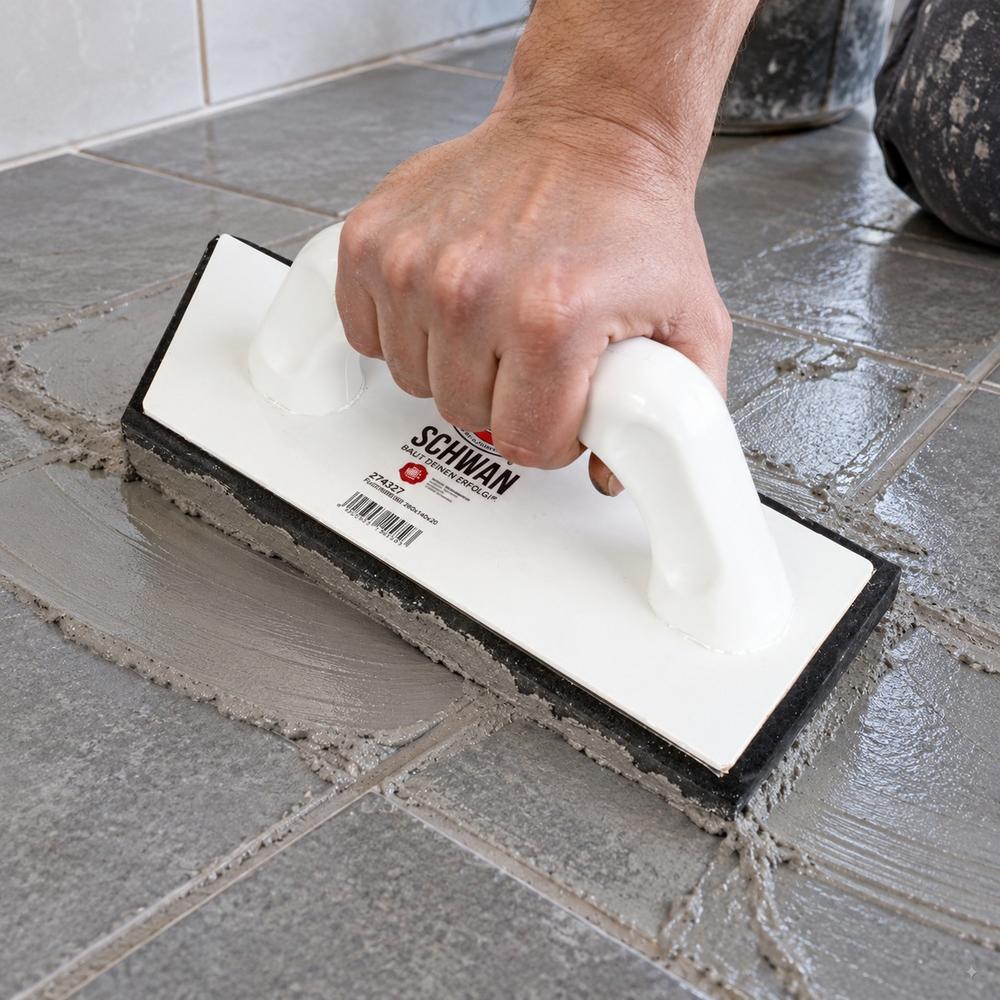
The Schwan grout float 270 x 90 mm is a grouting float with a 10 mm thick cellular rubber facing on its base. The rubber surface presses the grout evenly into the joints and glides over the tile without scratching glazed or polished surfaces.
The base area of the float is 270 x 90 mm. The narrow 90 mm width keeps the weight centred over the joint line, so the grout is pressed into the joint and is not wiped off the tile surface. The long 270 mm side covers several joints in one stroke on large tiles.
One end of the float is angled and tapered. The angled end reaches into corners, next to fixtures and into the junctions between wall and floor, where a rectangular float leaves the joint unfilled.
The body is made of plastic and has a fixed two-component handle, in which the hard body carries the load and the soft surface layer cushions the pressure on your palm. The plastic body does not absorb water or swell, so the float withstands constant contact with wet grout.
Uses and suitability:
The grout float is used to apply and compact grout in the joints of tiling and to remove excess grout from the tile surface.
- Wall and floor tiling: applying and compacting grout in the joints of ceramic tiles.
- Corners and junctions: the angled end reaches the junction between wall and floor and next to fixtures.
- Tight spots: the narrow 90 mm width suits narrow strips of tiles and areas around pipes.
- Removing excess: moving grout off the tile surface before wiping with a sponge.
The cellular rubber facing is suitable for glazed and polished surfaces, where a hard float leaves scratches. With rough and unpolished natural stone surfaces, the rubber wears faster.
Package contents:
- Grout float 270 x 90 mm, angled end
- Fixed cellular rubber facing, thickness 10 mm
- Fixed two-component handle
Features:
- Cellular rubber facing 10 mm: flexes against the tile surface and presses grout into the joint without scratches.
- Base dimensions 270 x 90 mm: the narrow width centres the weight on the joint line, the long side covers several joints.
- Angled end: reaches into corners, junctions and next to fixtures.
- Plastic body: does not absorb water or swell in wet grout.
- Two-component handle: cushions palm pressure during long grouting strokes.
- Light construction: the float can be handled with one hand on vertical surfaces.
Technical specifications:
- Base dimensions: 270 x 90 mm.
- Facing material: cellular rubber.
- Facing thickness: 10 mm.
- Body material: plastic.
- Handle: two-component handle, fixed.
- Shape: one end angled and tapered.
Schwan grout float 270 x 90 mm instructions for use:
Timing: Start grouting only when the tile adhesive has cured according to its instructions. Remove excess tile adhesive and dust from the joints before applying the grout.
Applying: Take grout onto the rubber surface of the float and spread it over the tiling diagonally to the joint line, so that the rubber presses the grout into the joint and does not pull it out. Go over the same area in two directions so that the joints are filled to the bottom.
Removing excess: Turn the float almost upright and draw the excess grout off the tile surface, still diagonally to the joint. Clean the rubber surface regularly during the work.
Finishing: Let the grout set for the time given in its instructions and wash the surface with a damp grouting sponge or wash board. Change the washing water often so that no grey film is left on the surface.
Cleaning and care: Wash the rubber surface with water immediately after work, before the grout hardens. Do not remove hardened grout with a sharp tool, as it tears the cellular rubber. Store the float dry with the rubber surface free.
Warnings:
- Grout contains cement and is alkaline: wear protective gloves and safety glasses, and avoid skin contact.
- Dry grout powder creates dust, so wear a respirator when mixing the powder.
- Grouting floors on your knees puts strain on the joints: wear knee pads.
- A wet tile surface is slippery, so take care not to slip during the work.
- Do not use the float for striking or scraping; the cellular rubber comes off the body.
- Keep out of the reach of children.
Frequently asked questions (FAQ):
What is the angled end of the Schwan grout float 270 x 90 mm needed for? The angled, tapered end reaches into corners, the junctions between wall and floor and next to fixtures, where a rectangular float does not fill the joint to the bottom.
Does the rubber surface scratch glazed tiles? No. The soft cellular rubber flexes against the tile surface and glides without scratching, unlike a hard plastic or metal float.
In which direction is the grout float drawn? Diagonally to the joint line. A stroke along the joint pulls the fresh grout out of the joint.
How is the rubber surface cleaned? Wash with water immediately after work, before the grout hardens. Hardened grout is soaked off, not scraped with a sharp tool.
Can the grout float be used with epoxy grout? Epoxy grouting needs its own epoxy grout float with a facing that withstands epoxy and solvents. Cellular rubber wears and comes off with the agents used to clean epoxy.
Recycling instructions:
Sort a grout float that is no longer used: the plastic body and handle to plastic collection or the energy waste fraction, and the removed cellular rubber facing to mixed waste. Remove hardened grout before recycling and dispose of it as construction waste. Cardboard packaging to cardboard collection. Grout washing water is not poured down the drain; let the cement sludge settle and dispose of the solids as construction waste.