
Description
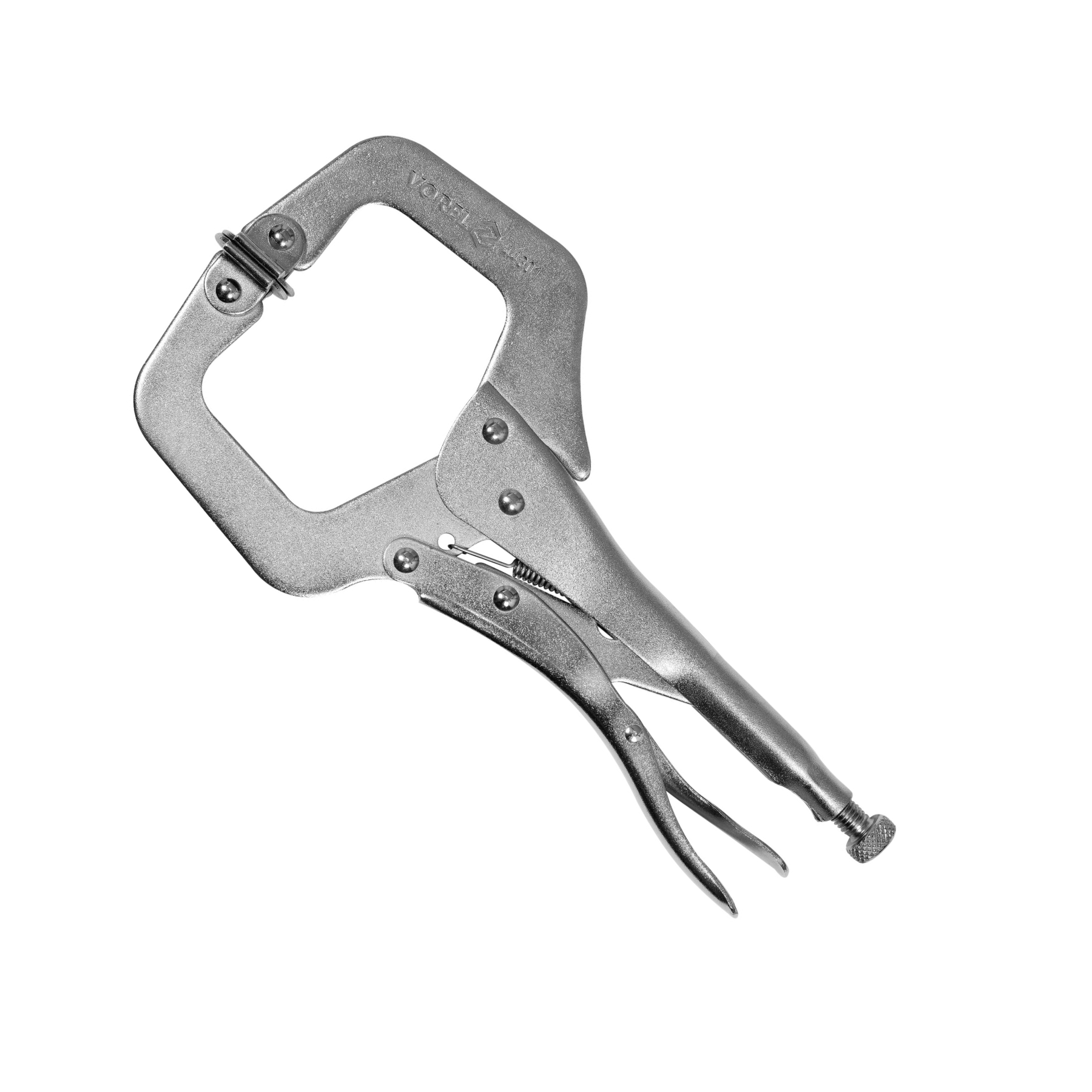
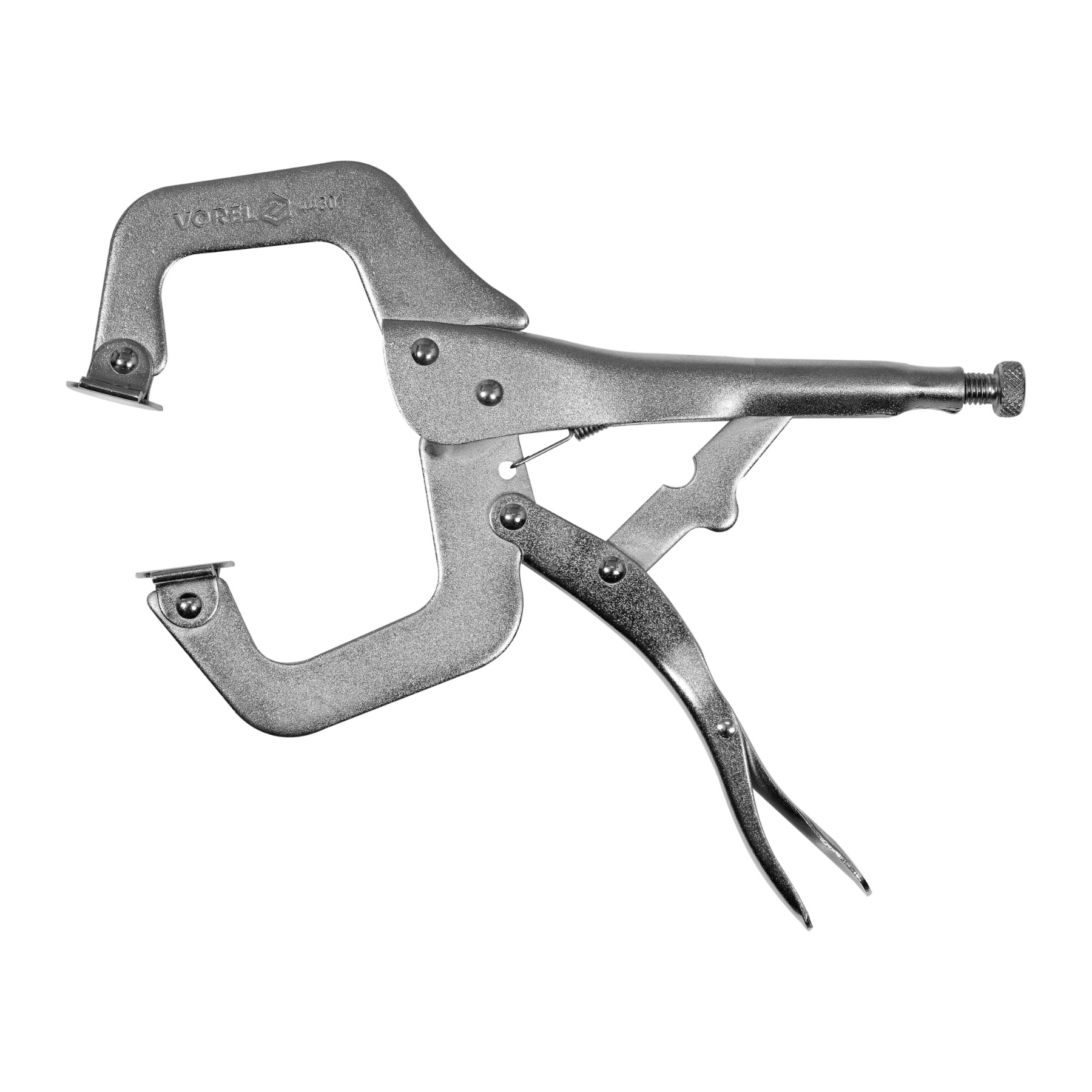
Vorel locking pliers C-type 11″ are welder’s locking pliers whose C-shaped jaws clamp profiles, sheets and pipes in place during welding. The overall length is 280 mm, the working range 0–70 mm and the jaw depth 70 mm. The body is nickel-plated carbon steel and the jaws have self-aligning swivel pads.
The locking pliers work on a toggle mechanism: the adjusting screw at the end of the handle sets the jaw opening, and the handles lock into the clamping position in one movement. The lock is released with the release lever between the handles. The lock type is European.
The swivel pads align with the surface of the workpiece, so the pliers clamp evenly even on angled and uneven surfaces. The C shape reaches to a depth of 70 mm, so you can clamp far from the edge, for example in the middle of a box section or behind a sheet joint.
Intended use and suitability:
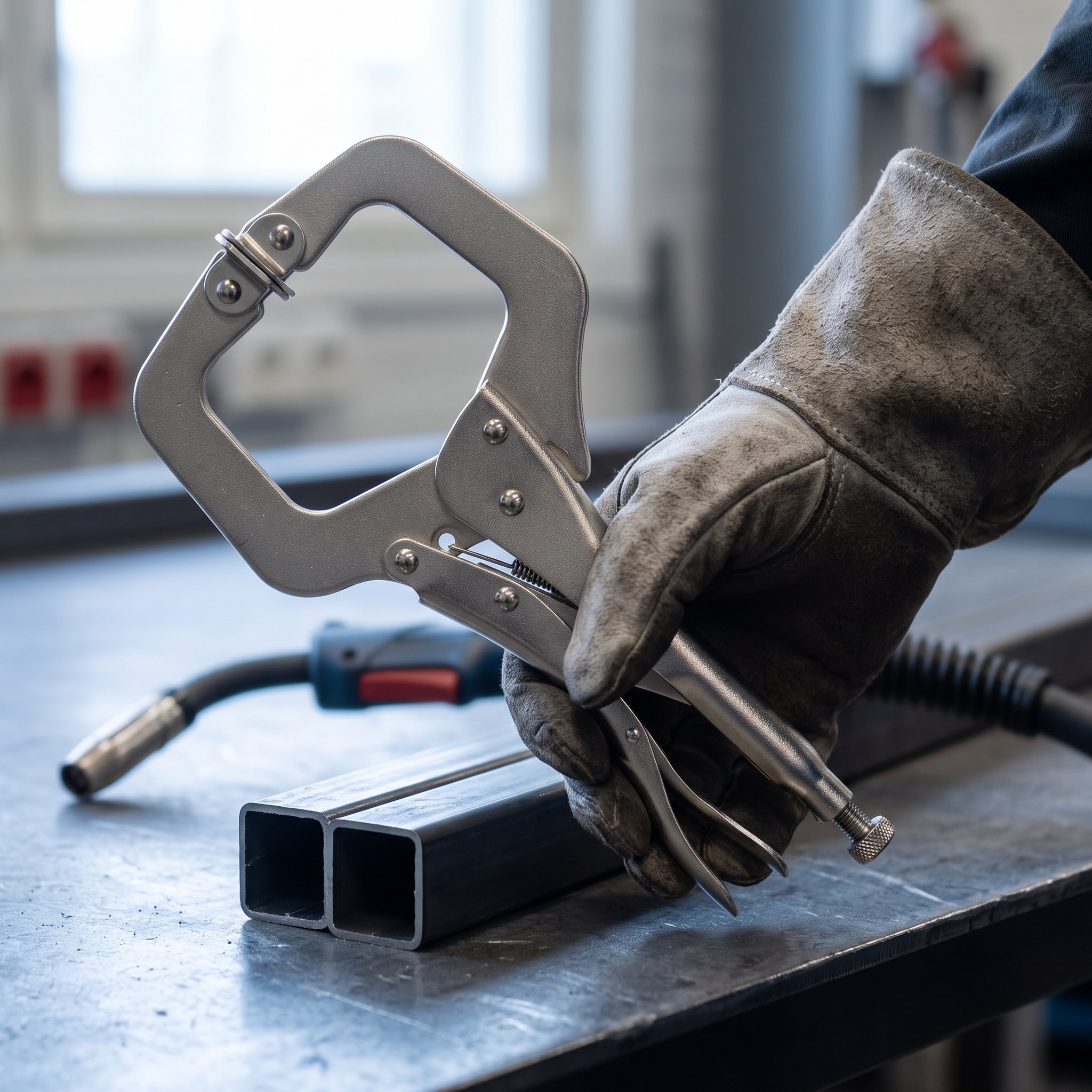
The Vorel locking pliers C-type 11″ are intended for fixing and aligning workpieces to be welded.
- Welding and metal fabrication: Clamping box sections, angle irons and sheets together for tack welding. The 70 mm working range covers the most common 20–60 mm profiles.
- Workshop and bodywork: Aligning and clamping panels before welding or riveting. The swivel pads do not leave point-like dents in thin sheet metal.
- Wood and panel work: Temporary clamping when gluing and drilling, when a screw clamp is too slow.
Package contents:
- Locking pliers C-type 11″ (280 mm), 1 pc
Features:
- C-shaped jaws: The 70 mm jaw depth reaches deep over the edge of the workpiece.
- Swivel pads: Align automatically with the shape of the surface and spread the clamping force evenly.
- Stepless opening adjustment: Adjusting screw at the end of the handle, working range 0–70 mm.
- Nickel-plated carbon steel: A corrosion-resistant surface for workshop and site use.
- European lock type: Release lever between the handles.
Technical specifications:
- Type: Locking pliers, C-type (welding clamp)
- Size: 11″
- Overall length: 280 mm
- Working range (opening): 0–70 mm
- Jaw depth: up to 70 mm
- Jaw pads: Swivelling, self-aligning
- Material: Carbon steel
- Coating: Nickel-plated
- Lock type: European
Vorel locking pliers C-type 11″ instructions for use:
Adjustment: Place the pliers around the workpiece and turn the adjusting screw at the end of the handle until the jaws touch the workpiece with the handles open. Turn the screw about a further quarter turn so that locking needs a clear squeeze.
Locking: Squeeze the handles together until the toggle locks. Check that the swivel pads sit evenly against the workpiece.
Release: Press the release lever between the handles and open the handles.
Maintenance: Wipe welding spatter and dust off the jaws; lightly oil the joints and the adjusting screw. Do not use the pliers as a hammer or with an extension bar.
Warnings:
- Wear personal protective equipment during work (manufacturer’s instruction): protective gloves and safety glasses.
- Keep your fingers out from between the jaws and the handles when locking: the toggle clamps with great force.
- The pliers get hot during welding: let them cool before handling with bare hands.
- Do not overtighten the adjusting screw: too tight a setting damages the mechanism and the jaw pads.
Frequently asked questions (FAQ):
What is the maximum clamping thickness of the Vorel locking pliers C-type 11″?
The working range is 0–70 mm and the jaw depth up to 70 mm.
What do swivel pads mean?
The jaw pads are articulated and swivel to follow the surface of the workpiece, so the clamping force is spread evenly even on angled surfaces and leaves no dents.
What is a European lock type?
The lock is released with a separate lever between the handles, not by pulling the handle.
Are the pliers suitable for welding stainless steel?
Nickel-plated carbon steel pliers are suitable for clamping, but it is worth protecting the contact points of the jaw pads if you want to avoid iron contamination of the stainless surface.
Recycling instructions:
The Vorel locking pliers C-type 11″ are made entirely of steel and go to metal collection at the end of their life. Recycle the cardboard of the packaging as cardboard and any plastic in plastic collection.