
Description
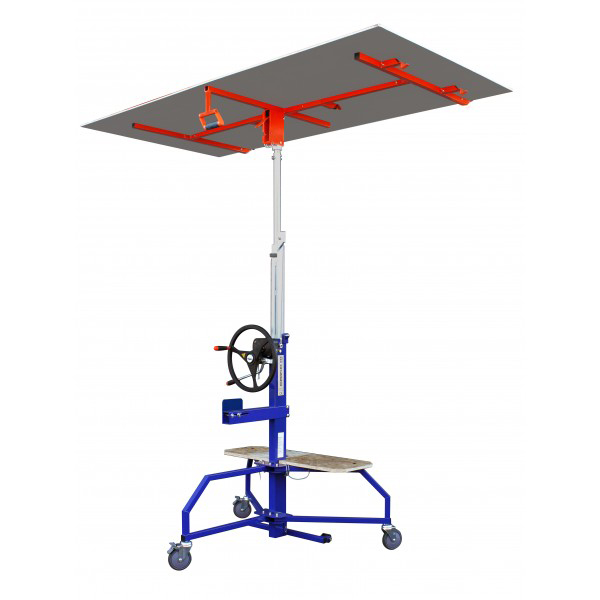
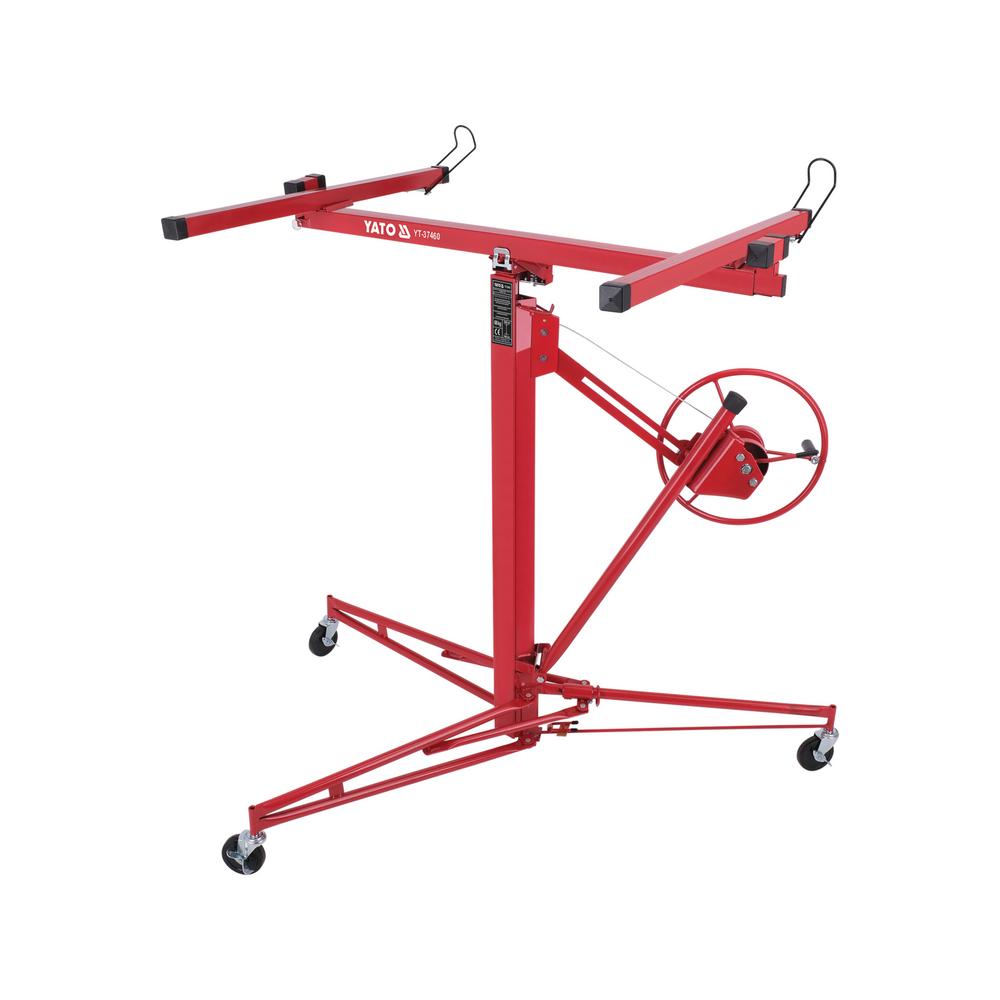
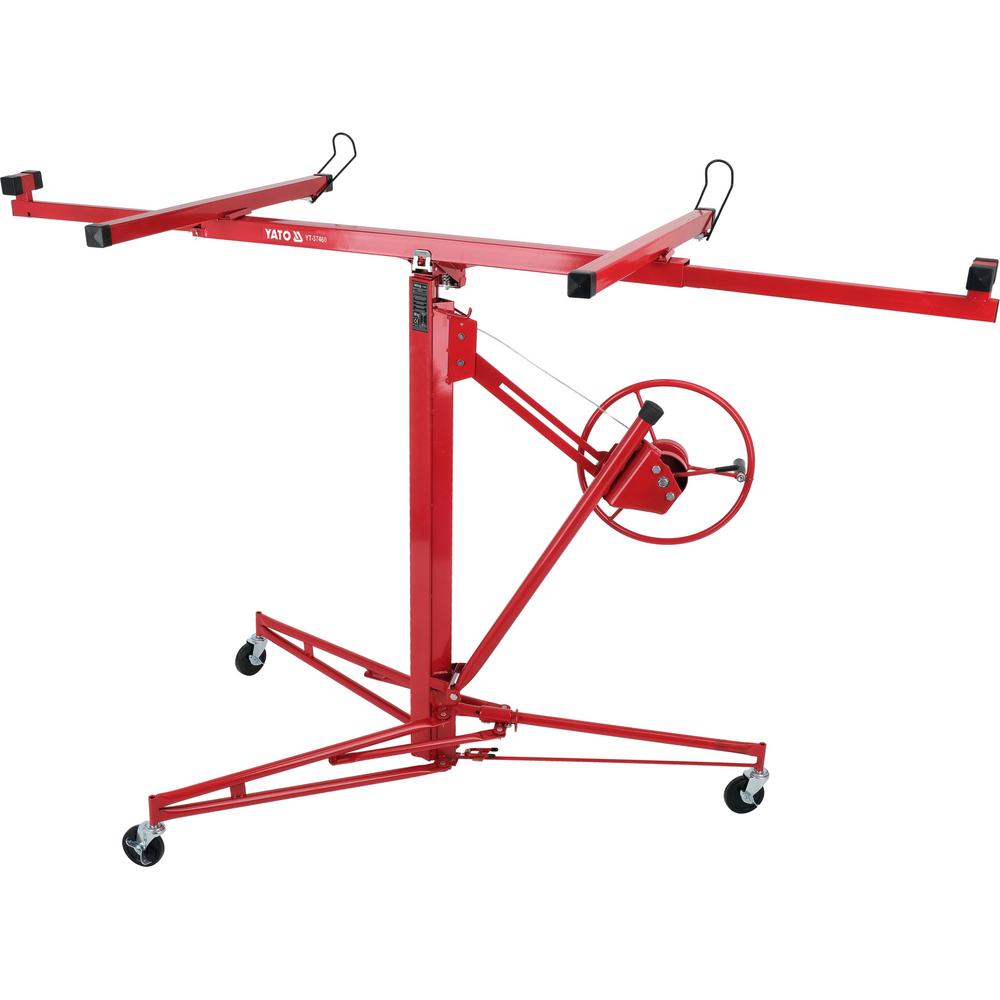
Yato drywall lift (YT-37460) is a manually operated plasterboard lift with which one person lifts, supports and positions a plasterboard against the ceiling or the upper part of a wall. The lifting table has a working height of 1.4–3.4 m and a maximum load capacity of 68 kg.
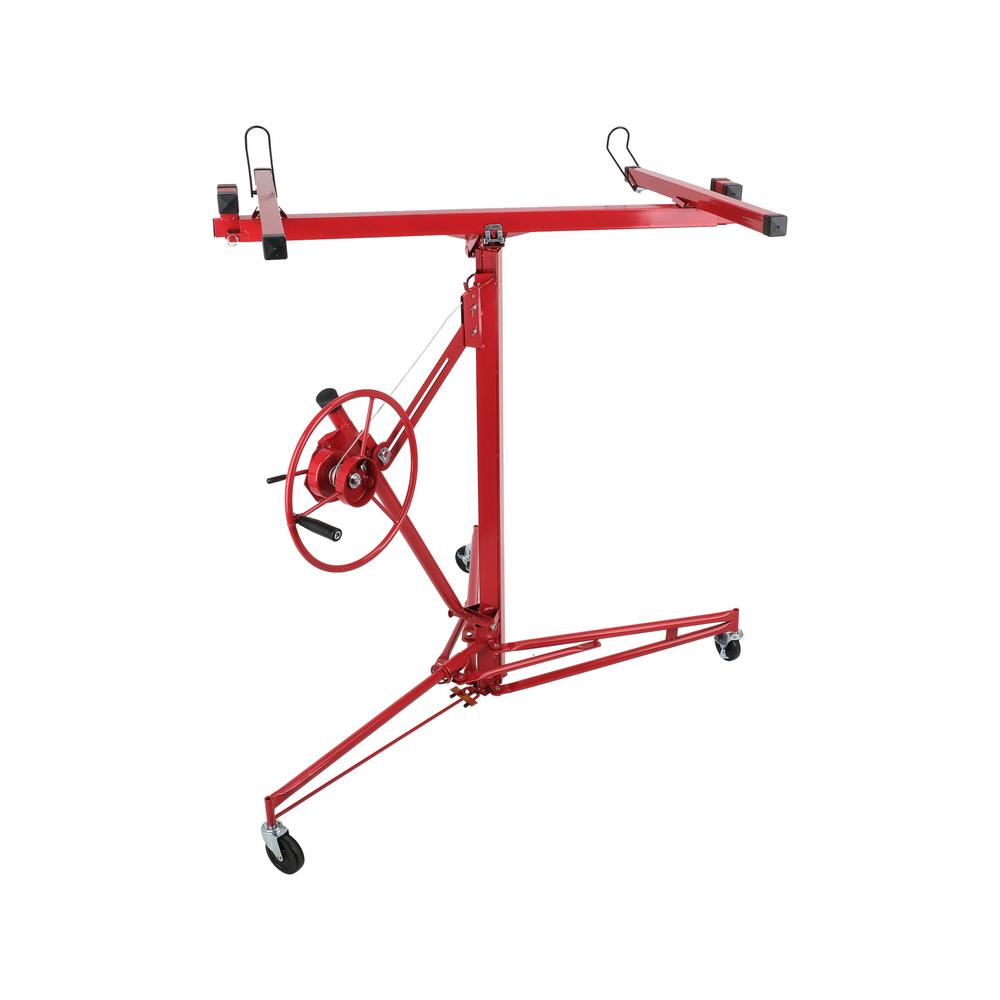
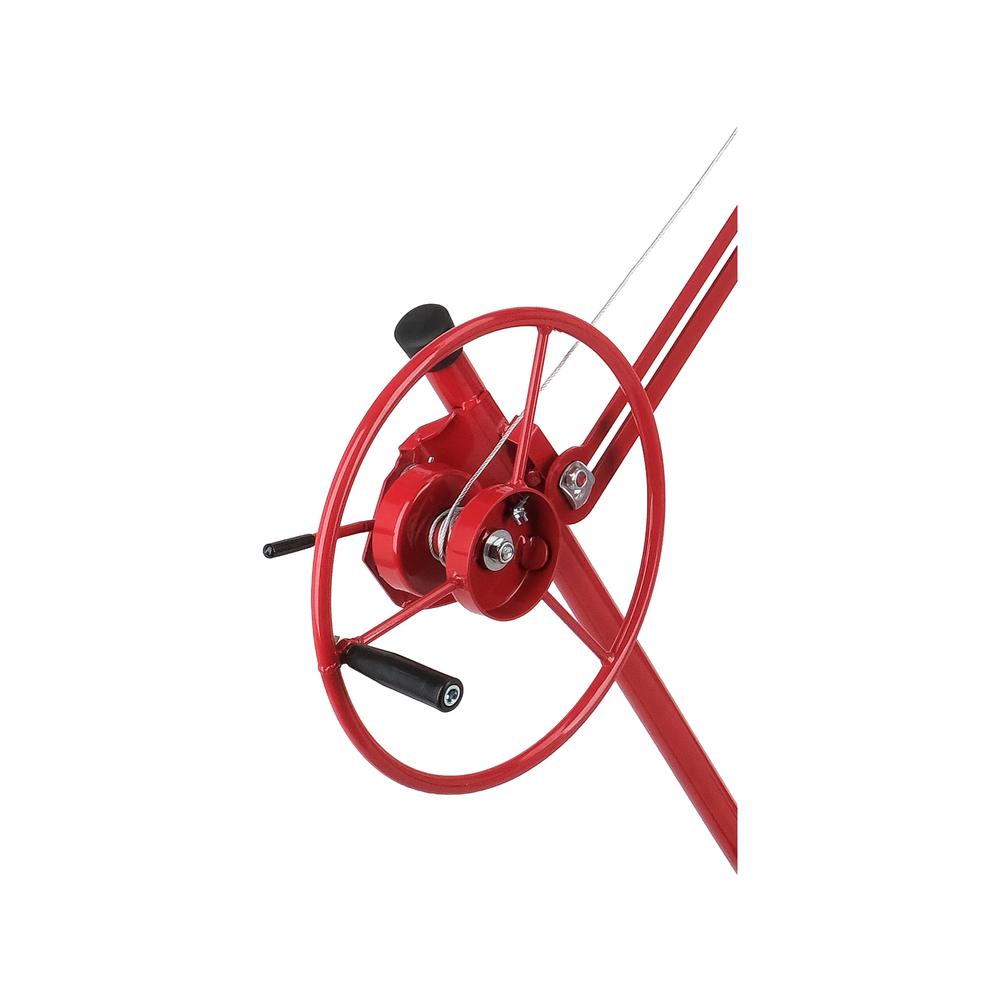
The board is lifted with a hand winch. When the winch wheel is turned, a steel cable raises the telescopic section of the column, and a brake holds the table at the selected height. The table is lowered in a controlled way by lifting the brake lever while holding on to the winch wheel.
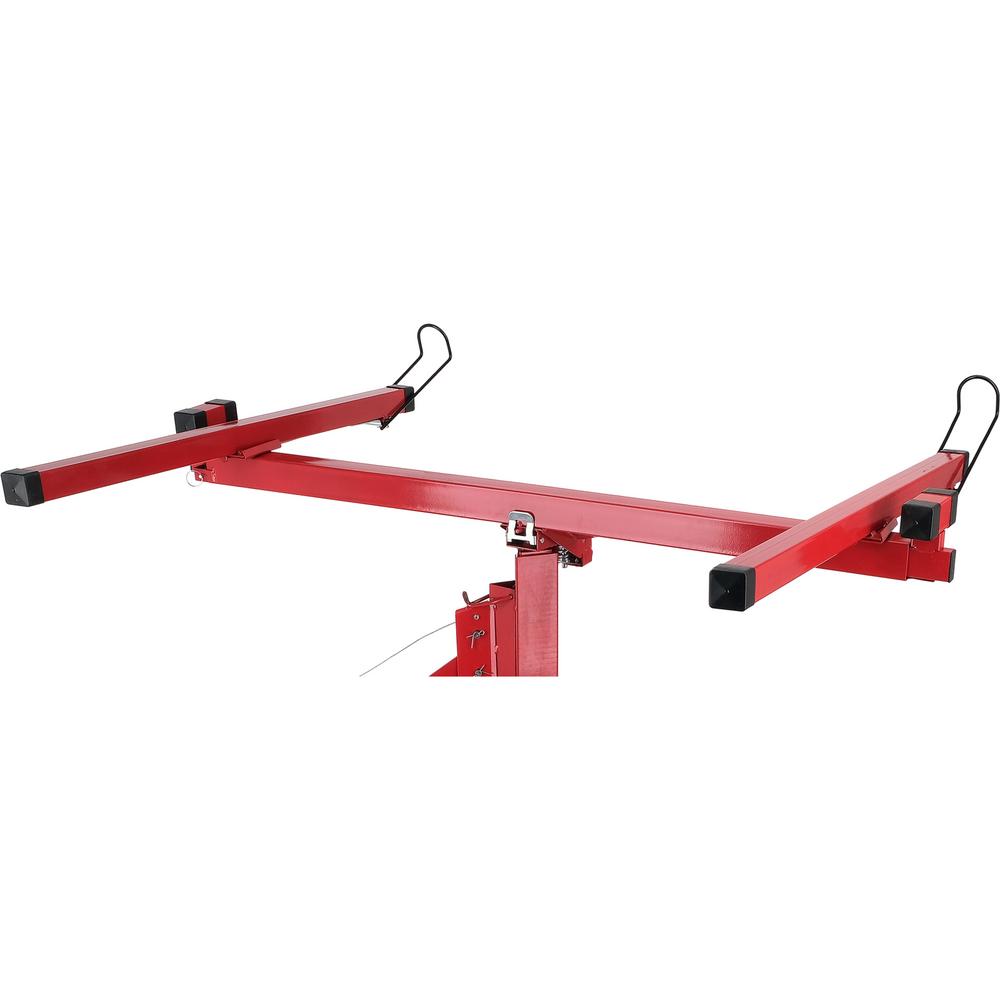
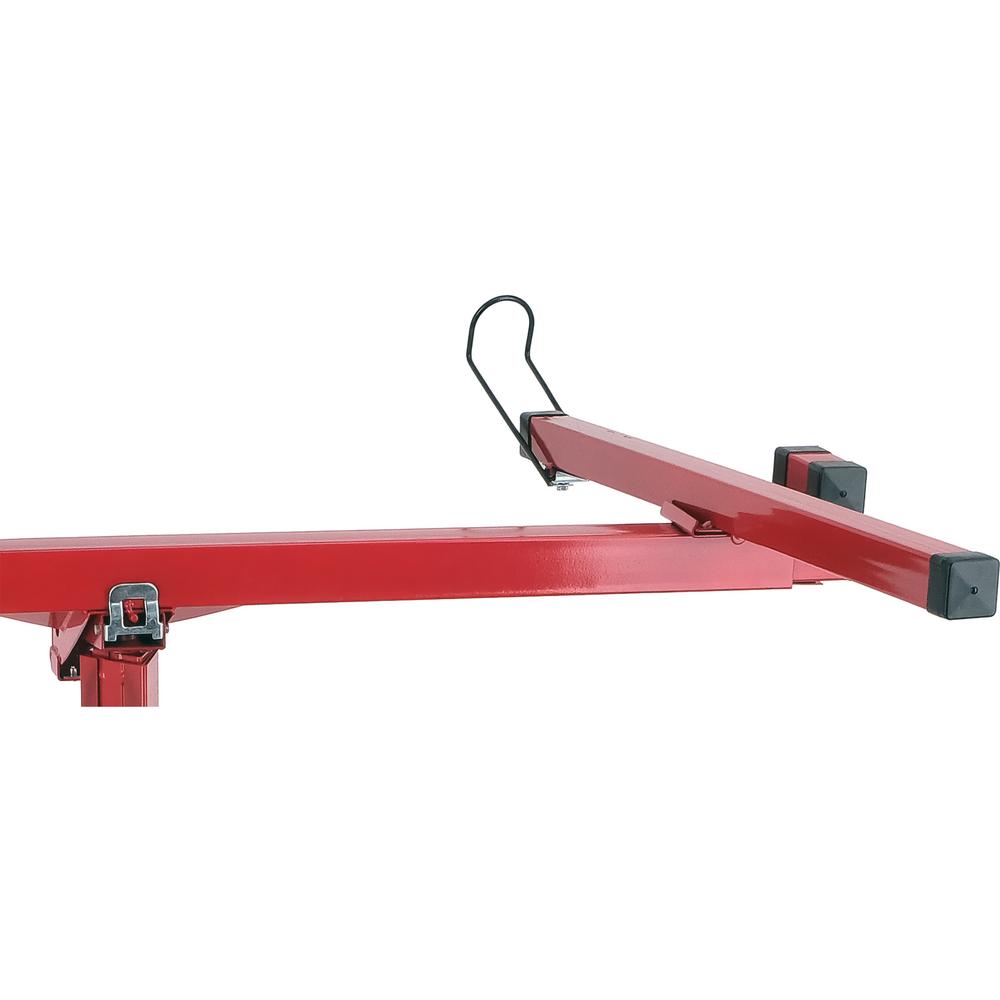
The lifting table with its arms and side supports supports boards of different sizes. The table is locked horizontal for a suspended ceiling or left free to tilt when the board is fitted at an angle, for example to a sloped attic ceiling.
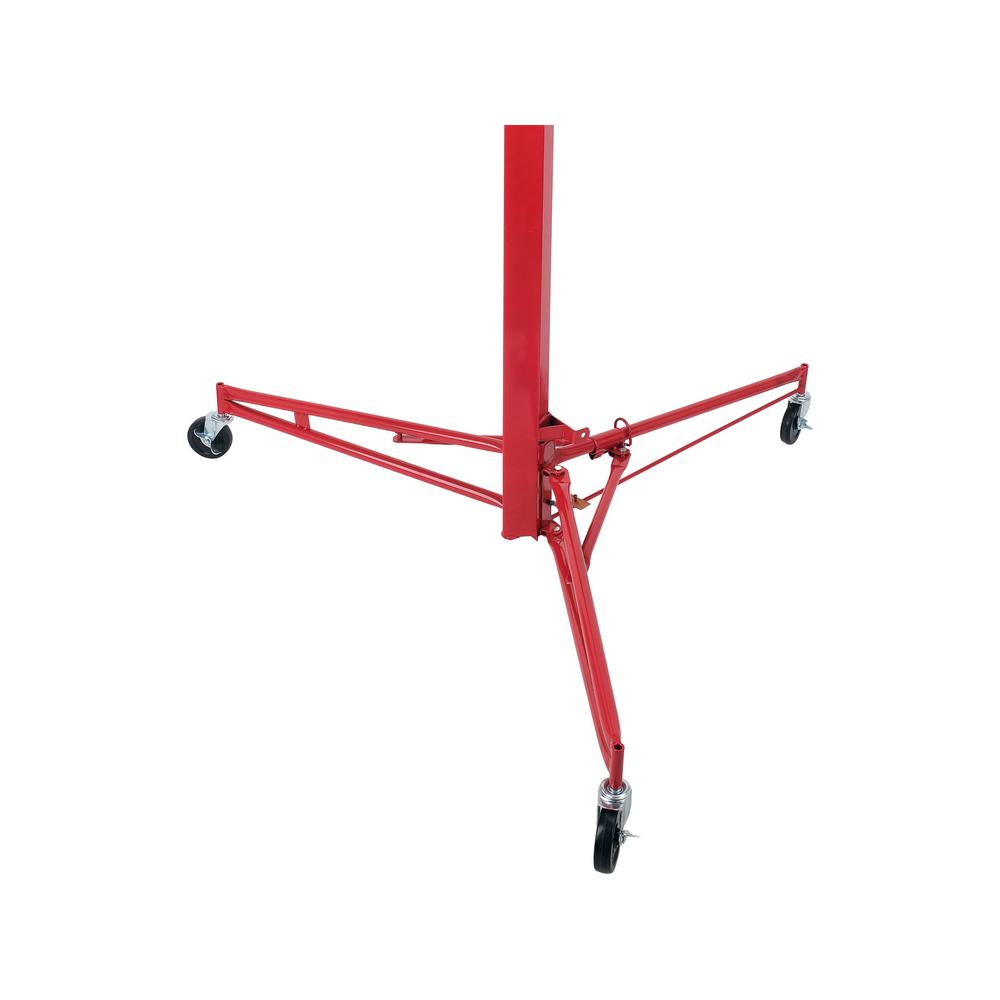
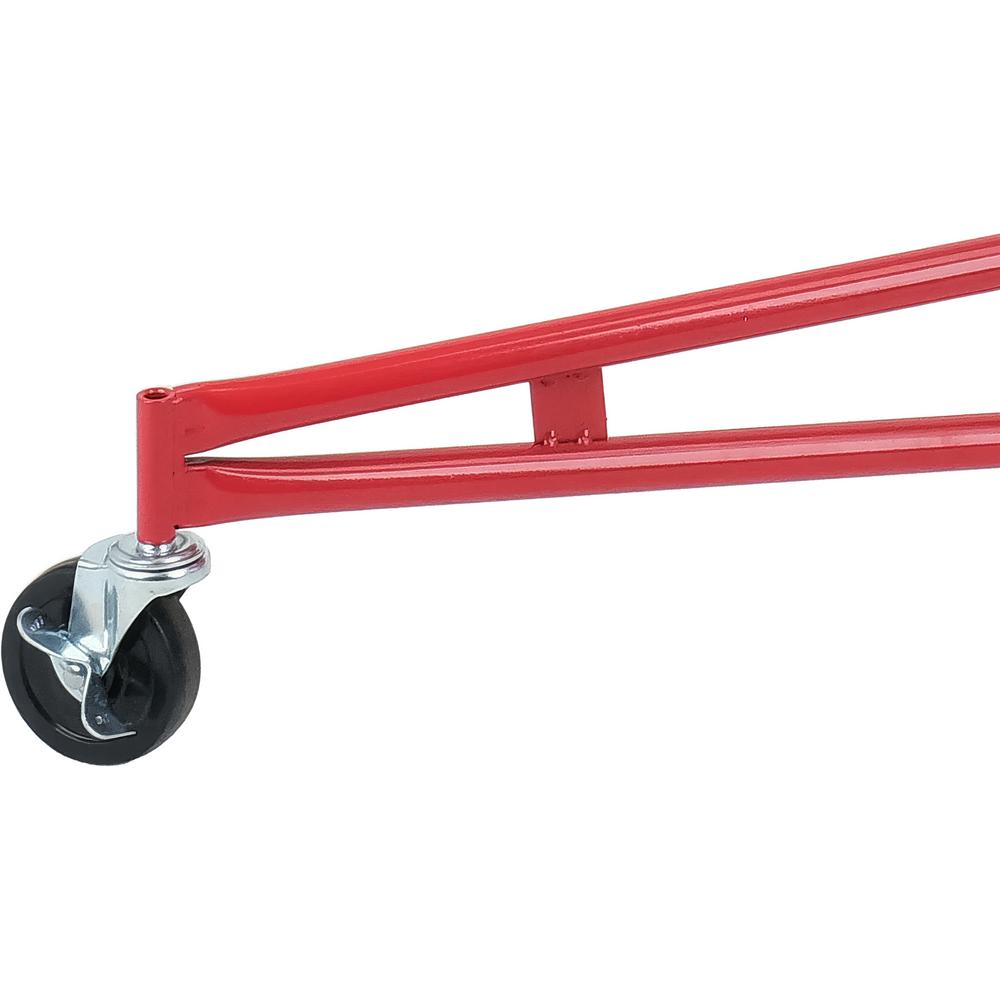
The frame is made of lacquered steel. The folding base moves on wheels, and the base brake stops the lift from moving during loading and lifting. The unit weighs 35 kg. For storage and transport, the table is removed and the winch is folded into the transport position.
According to the manufacturer’s declaration of conformity, the drywall lift meets the requirements of the Machinery Directive 2006/42/EC and standard EN ISO 12100:2010. The lift is intended only for lifting plasterboards and similar dry construction boards, one board at a time.
Uses and suitability:
The drywall lift holds the board throughout fixing. The installer’s hands stay free for positioning and screwing the board.
- Suspended ceilings: The plasterboard is lifted on the horizontal table against the ceiling battens or brackets and screwed in place while the table supports the board. For driving the board screws, the Edma depth stop + bit for drywall screws with magnet is a suitable choice.
- Wall structures: The lift supports the board at the top of the wall while it is positioned and fixed to the frame.
- Attics and sloped ceilings: When the tilt locking latch is left open, the table angle adapts to the slope of the structure.
- Other board structures supported at height: The lift holds the board at the required height of 1.4–3.4 m when the board weighs no more than 68 kg.
Package contents:
- 1 × drywall lift YT-37460, disassembled: base, column, hand winch with crank, lifting table, lifting table arms and side supports
- User manual
Assemble the drywall lift according to the user manual before first use.
Features:
- Load capacity 68 kg: The lift raises one plasterboard or similar dry construction board at a time.
- Working height 1.4–3.4 m: The telescopic column raises the table from wall height to suspended ceiling height.
- Hand winch and brake: The winch wheel raises the table with a steel cable. The brake locks the table at the set height.
- Tilting lifting table: The table is locked horizontal with the tilt locking latch or left free to tilt for angled installations.
- Arms and side supports: Arms that slide into tapered sockets and pull-out side supports stabilise boards of different sizes on the table.
- Base on wheels: The loaded lift is rolled to the installation point, after which the base brake locks it in place.
- Transport position: The base folds up and the winch is locked next to the column with the transport hook. The table and arms are removed for storage.
- One-person installation: There is no need to hold the board by hand while screwing.
Technical specifications:
- Maximum load capacity: 68 kg
- Lifting range (working height): 1400–3400 mm
- Material: steel
- Surface finish: lacquered
- Lifting mechanism: hand winch, steel cable and brake
- Lifting table: tilting, can be locked horizontal
- Base: folding, wheels and base brake
- Weight: 35 kg
- Intended use: lifting, supporting and positioning plasterboards in finishing work
- Conformity: CE, Machinery Directive 2006/42/EC, EN ISO 12100:2010
User instructions for the Yato drywall lift:
Before use: Before each use, check the winch steel cable, the cable drum and the operation of the brake. Do not use the lift if the cable is frayed, damaged or twisted, or if the brake does not work properly. The lift is used only when fully assembled, with the arms and side supports fitted and locked.
Assembly: Assemble the lift on a level, hard and stable surface. Open the clamping ring and turn the base legs into the working position. Release the ring and check that the legs lock. Push the column all the way into the base. Attach the winch arm to the column with a bolt, a nut and a pin secured with a cotter pin. Fit the crank to the winch wheel so that it turns freely.
Winch working position: Release the brake by lifting the brake lever and pull the winch all the way out, keeping the brake lever raised the whole time. Turn the transport hook out and press the winch towards the column until the extension lock engages. Attach the cable end to the hub of the winch wheel with the locking screws. Turn the wheel without load and check that the cable winds evenly onto the drum.
Lifting table: Lower the column to its lowest position and lock the table onto the top of the column. Push the arms all the way into the tapered sockets. Fit the side supports using the locking pin on the side of the table and check that the pin locks the support.
Lifting a board: Open and lock the base and turn the base brake to the working position. Lower the table to its lowest position and turn the board supports to the working position. For horizontal installation, lock the table with the tilt locking latch. For angled installation, the latch is left open. Place one board on the table, roll the lift to the installation point and lock the base brake. Lift the board by turning the winch wheel.
Lowering: Hold the winch wheel firmly, lift the brake lever and let the table descend slowly. Never release the brake without holding the wheel, as the table may drop suddenly. Release the base brake before moving the lift.
Maintenance and storage: Clean dust and material residue off the lift with a brush and a dry or slightly damp cloth. Check the screw joints, locks, steel cable, drum and brake regularly. Protect moving parts and joints with a thin layer of technical lubricant. Fold the lift into the transport position according to the user manual and store it in a dry place protected from moisture and large temperature fluctuations.
Warnings:
- Load capacity: Do not exceed the 68 kg load capacity and do not lift more than one board at a time.
- Boards only: Do not use the lift to raise other loads or people.
- Damaged cable or brake: Do not use the lift if the cable, drum or brake is damaged or the joints are loose.
- Sudden drop: The table can drop if the brake is released without holding the winch wheel.
- Risk of tipping over: Use the lift only on a level, hard and stable surface. Keep the work area clear of materials and debris you could trip over.
- Overhead space: Before lifting, check that the board will not catch on ceiling brackets, fittings or light fixtures.
- Temperature changes: Large or sudden temperature changes can affect the operation of the brake. Let the lift warm up to room temperature and check the brake without load before use.
- Protective equipment: Wear protective gloves. Wearing a safety helmet is recommended.
Frequently asked questions (FAQ):
How heavy a board can the Yato drywall lift raise?
The maximum load capacity of the Yato drywall lift YT-37460 is 68 kg. The lift raises one plasterboard or similar dry construction board at a time.
How high does the Yato drywall lift YT-37460 raise the board?
The working height of the lifting table of the Yato drywall lift YT-37460 is 1.4–3.4 m. The table is raised with the hand winch and stays at the selected height on the brake.
Can boards be fitted to a sloped ceiling with the Yato drywall lift YT-37460?
Yes. The lifting table of the Yato drywall lift YT-37460 is locked horizontal with the tilt locking latch. For angled installation, the latch is left open so that the table can tilt.
Can one person fit a ceiling board with the Yato drywall lift YT-37460?
Yes. The Yato drywall lift YT-37460 holds a board of up to 68 kg at a height of 1.4–3.4 m, so the installer’s hands stay free for positioning and screwing.
How much does the Yato drywall lift YT-37460 weigh and how is it transported?
The Yato steel drywall lift YT-37460 weighs 35 kg. For transport, the lifting table and arms are removed, the winch is folded into the transport position and the base is folded up. The base wheels make it easier to move around the site.
Which standards does the Yato drywall lift YT-37460 meet?
According to the manufacturer’s declaration of conformity, the Yato drywall lift YT-37460 meets the requirements of the Machinery Directive 2006/42/EC and standard EN ISO 12100:2010.
Recycling instructions:
The Yato drywall lift is made mainly of lacquered steel. Take a lift at the end of its life to metal collection or a waste station; do not dispose of it with mixed waste. Remove the wheels, plastic end caps and handles where possible and sort them according to local waste management instructions. Sort the cardboard packaging into cardboard collection.