Description
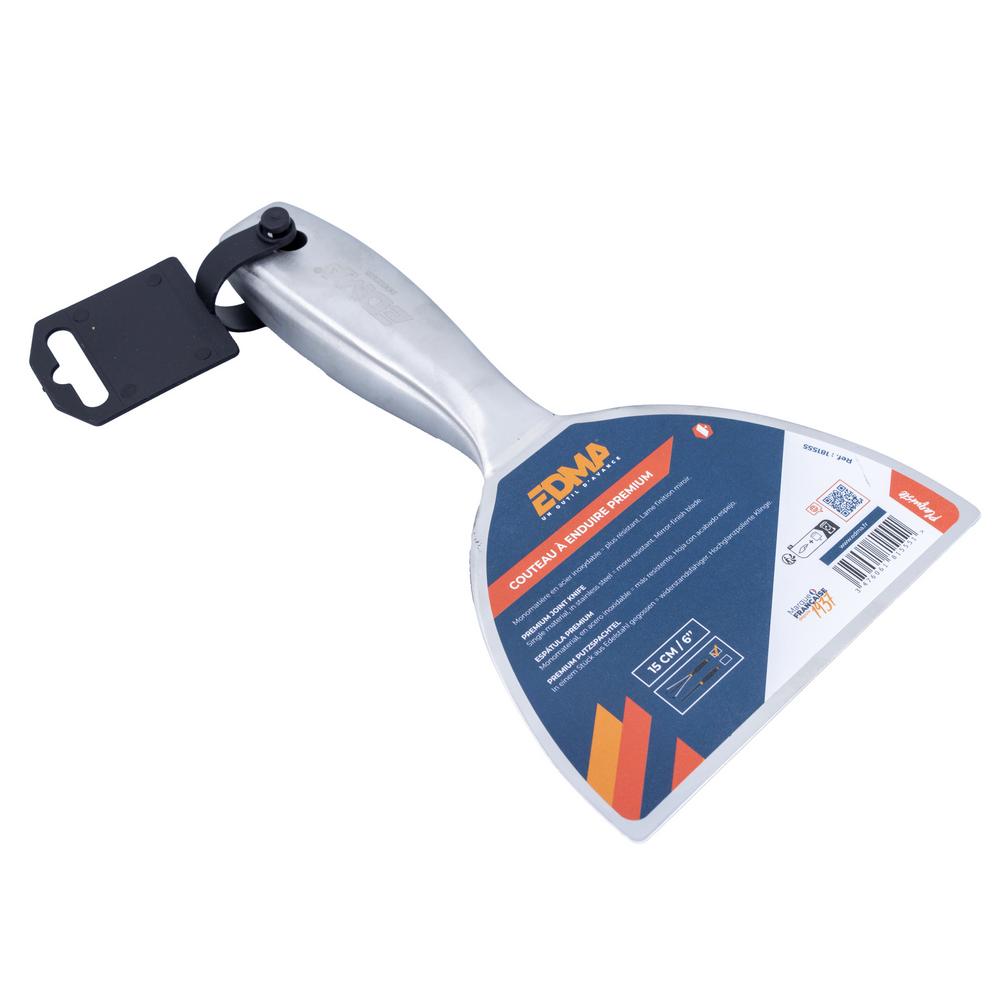
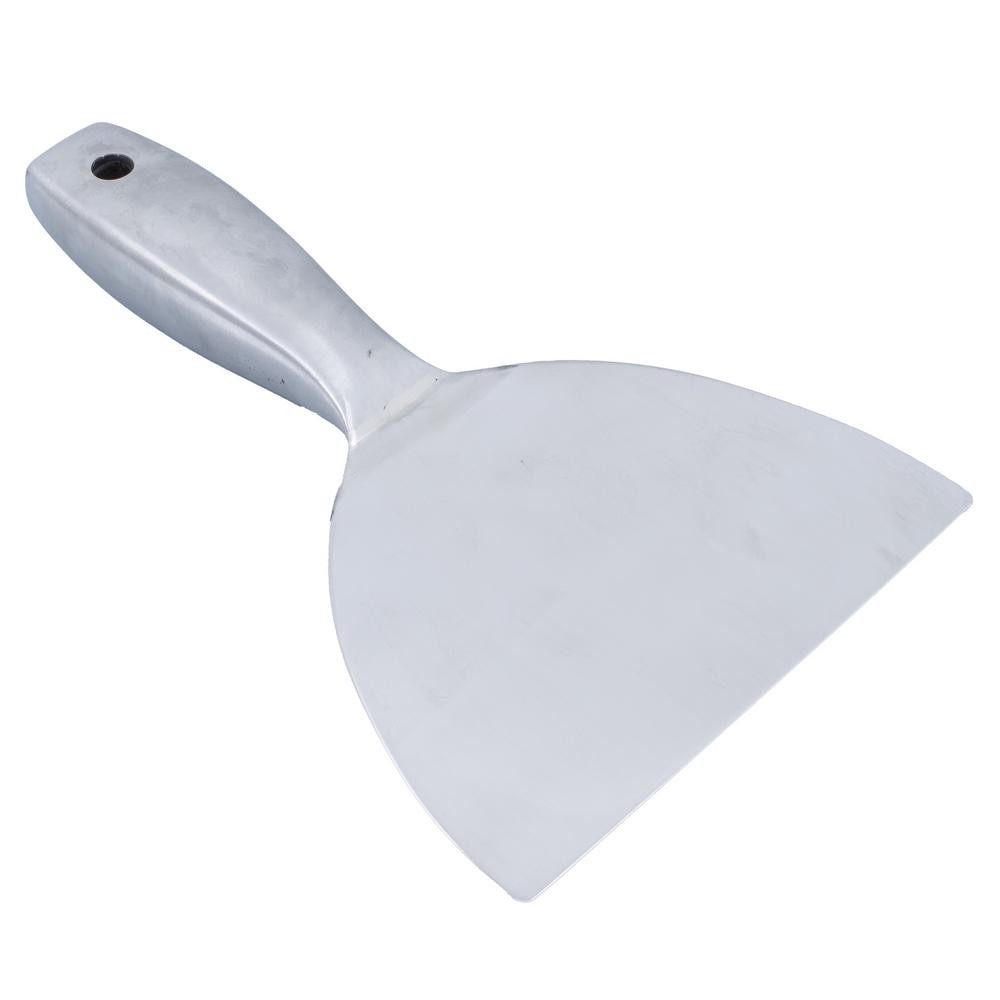
Edma taping knife 15 cm is a taping knife from the Premium series by French manufacturer Edma, with a 150 mm wide flexible blade. The whole knife is made of stainless steel with a mirror-polished surface. It is used to apply, press and smooth filler into plasterboard joints, over screw heads and into repair spots on wall surfaces.
The flexible blade bends under light pressure and follows the shape of the surface. With a flexible blade you feather the edges of the filler layer into the surrounding surface, which levels the joint before sanding and painting. By adjusting the pressure, you can do both filling and smoothing coats with the same knife.
The 15 cm blade width covers a standard 50 mm joint tape and about 50 mm on either side of it in one pass. The same width suits filling screw heads, internal corners and small patches. Wider knives and taping blades are meant for large surfaces and the final wide smoothing coats.
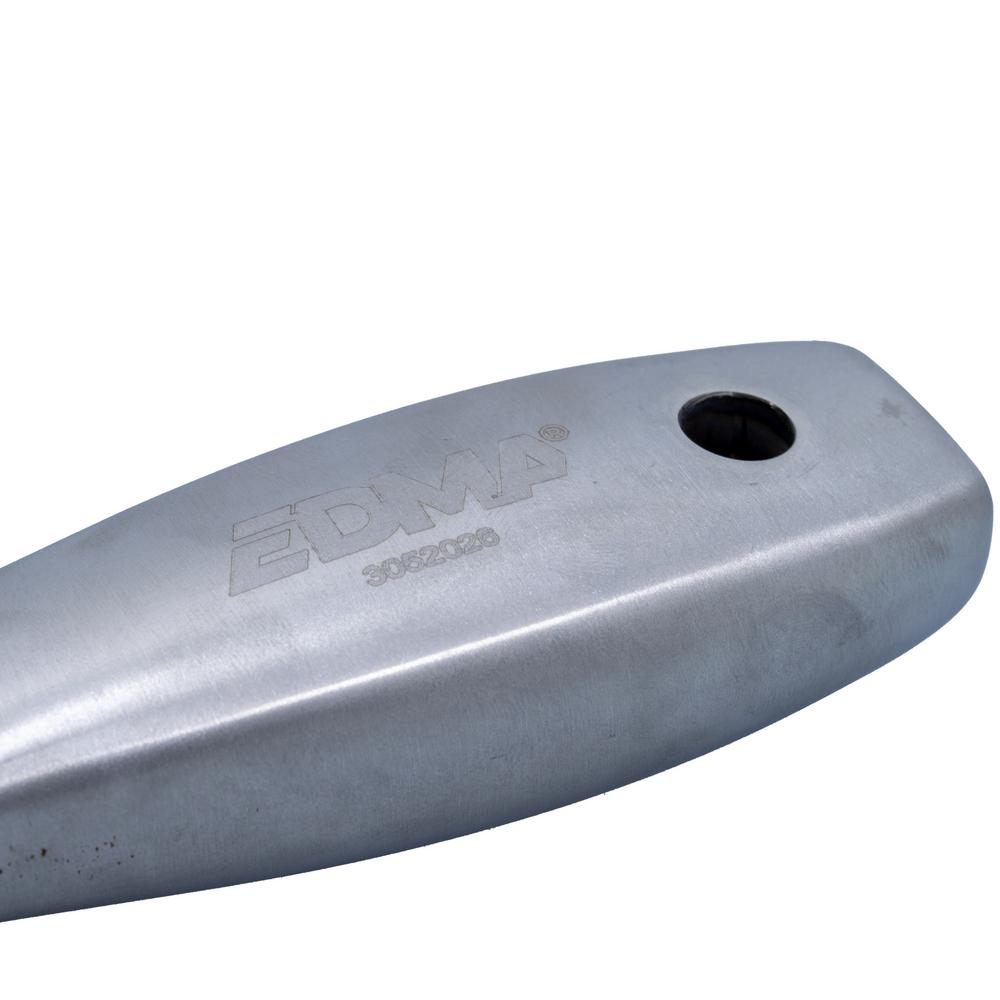
In the single-material design, the handle and blade are the same stainless steel, and the tool has no plastic or wooden parts. Stainless steel withstands the moisture of water-based fillers. The whole knife can be washed with water after work.
The Edma Premium series includes flexible-blade knives in widths of 4, 6, 8, 10, 12, 15, 20 and 25 cm, as well as stiff-blade models. Different widths are used side by side: a narrow knife takes filler from the container and applies it in tight spots, and a wider one smooths it.
Intended use and suitability:
Edma taping knife 15 cm is intended for applying and smoothing fillers on indoor wall and ceiling surfaces. The flexible 150 mm blade is especially suited to taping plasterboard joints and to repair filling.
- Plasterboard joints: The joint tape is pressed into the filler and covered with a thin layer. The blade is wide enough to cover a 50 mm joint tape including its edges. The flexible blade feathers the edges of the filling coat into the board surface.
- Screw heads and fixing points: The recesses over screw heads are filled and smoothed level with the board surface. With two crossing passes, the recess fills without leaving excess filler around it.
- Internal corners: The sides of the corner are filled one at a time, so the freshly filled opposite side is not damaged. Corner tape is covered with the same technique as straight joints.
- Repair filling: Holes, gaps and hairline cracks in walls and ceilings are filled before priming. The flexible blade follows the old paint surface and leaves the edges of the repair thin.
- Transferring filler: The knife is used to take filler from a filler pan or tray and load it onto a wider taping blade. The blade is wiped against the edge of the pan before the next scoop.
Package contents:
- 1 × Edma Premium taping knife 15 cm, flexible steel
Features:
- Flexible blade: The thin steel blade bends under light pressure, so the edges of the filler layer feather into the surrounding surface.
- 150 mm width: Covers a 50 mm joint tape including its edges in one pass, and also suits screw heads and patches.
- Single-material design: The handle and blade are the same stainless steel, with no plastic or wooden parts.
- Stainless steel: Withstands the moisture of water-based fillers. The whole tool can be washed with water.
- Mirror-polished surface: Filler that has not dried rinses off the smooth surface with water.
- Premium series: The same design is available with flexible blades in widths of 4–25 cm and with stiff blades.
Technical specifications:
- Blade width: 150 mm (15 cm)
- Blade type: flexible
- Material: stainless steel
- Construction: single-material, handle and blade in stainless steel
- Surface finish: mirror polish
- Series: Edma Premium
Edma taping knife 15 cm user instructions:
- Check the blade: The blade edge must be straight and free of dents, because a dent leaves a streak in the filler surface. Clean the knife before use.
- Load filler: Take filler from the container onto one edge of the blade. Keep each load small so that the filler does not run onto the handle.
- Apply: Hold the knife at a shallow angle to the surface and apply the filler in long strokes. Joint tape is pressed into the fresh filler, and excess filler is removed from under the tape with the knife.
- Smooth: Raise the knife to a steeper angle and draw it lightly, so the blade removes excess filler. Press the outer edge of the blade slightly harder so that the edge of the layer feathers into the surrounding surface.
- Let it dry: Let the layer dry as instructed by the filler manufacturer before the next coat or sanding.
- Clean: Wash the knife with water and a soft brush or sponge before the filler dries on the blade. Wipe the knife dry. Do not use abrasive tools, which scratch the mirror-polished surface.
- Store: Store the knife in a dry place where the blade edge will not be dented or bent under the weight of other tools.
Warnings:
- Risk of cuts: The edges and corners of the thin steel blade can cause cuts. Handle the blade with care and wear protective gloves when needed.
- Misuse: Do not use the knife as a lever, chisel or striking tool. The blade bends permanently if it is loaded sideways.
- Electricity: The whole knife is metal and conducts electricity. Switch off the power before working near electrical boxes and cables.
- Fillers: Follow the safety data sheet of the filler you use and protect your skin and eyes accordingly.
- Children: Keep the knife out of the reach of children.
Frequently asked questions (FAQ):
What is Edma taping knife 15 cm suitable for in plasterboard work?
Edma taping knife 15 cm is suitable for covering joint tape on plasterboard joints, filling screw heads, filling internal corners and repair filling. Its 150 mm wide flexible blade feathers the edges of the filler layer into the board surface.
What material is the Edma Premium taping knife made of?
The Edma Premium taping knife is single-material: the handle and blade are the same stainless steel. The tool has no plastic or wooden parts. The surface is mirror-polished.
Is a 15 cm taping knife wide enough to cover the joint tape on a plasterboard joint?
Yes. The 150 mm blade of the Edma Premium taping knife covers a 50 mm joint tape and about 50 mm on either side of it in one pass. The final wide smoothing coats are usually done with a wider knife or taping blade.
What is the difference between a flexible and a stiff taping knife?
A flexible blade bends under pressure and suits smoothing and feathering the edges of a layer. A stiff blade does not bend, so it is used for thicker fills and scraping. The Edma Premium series has both: the 15 cm model has a flexible blade.
How is the Edma Premium taping knife cleaned?
The Edma Premium taping knife is washed with water and a soft brush or sponge before the filler dries. Stainless steel withstands the washing water. Abrasive tools are not used, because they scratch the mirror-polished surface.
What widths are Edma Premium knives available in?
Flexible-blade knives in the Edma Premium series come in widths of 4, 6, 8, 10, 12, 15, 20 and 25 cm. All knives in the series are single-material and made of stainless steel with a mirror-polished surface.
Recycling instructions:
- Product: Take a knife made of stainless steel that is no longer in use to metal collection. Remove dried filler before recycling.
- Packaging: Sort the cardboard parts of the packaging into cardboard collection and the plastic parts into plastic collection.