


Description
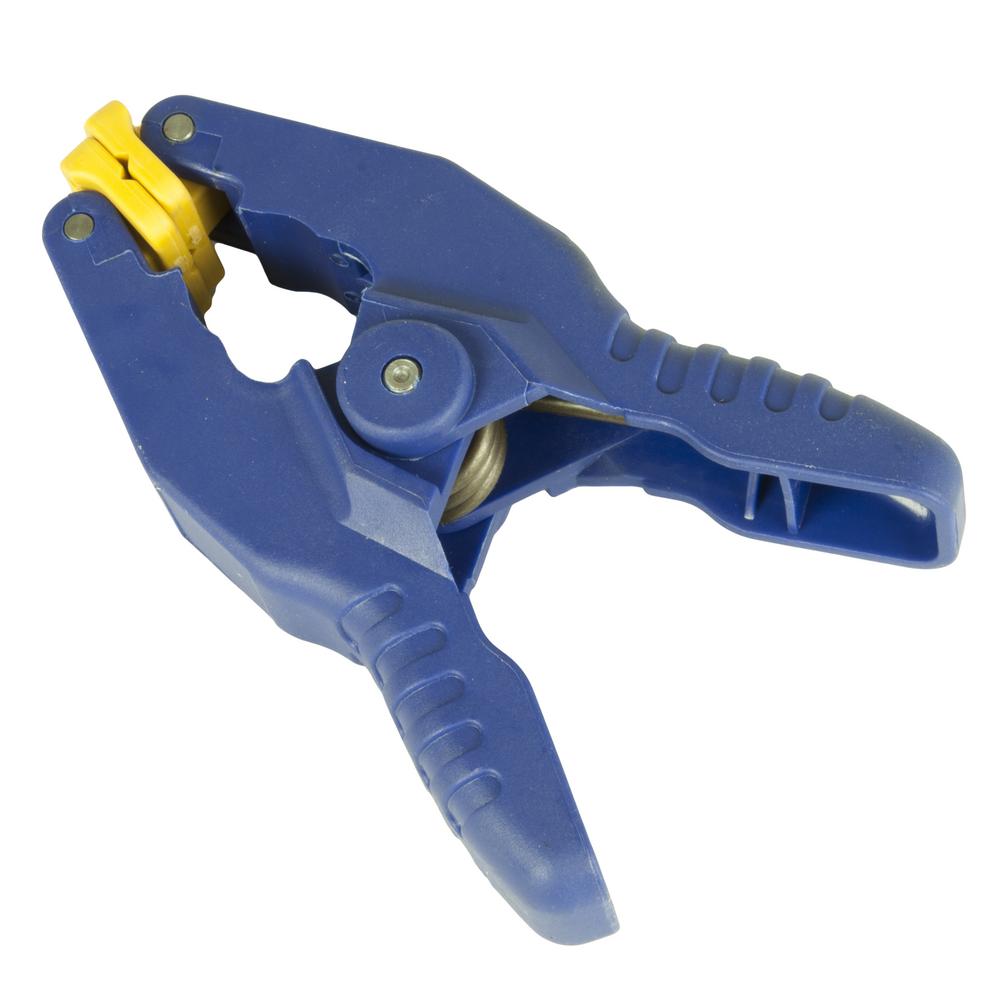
Irwin spring clamp is a spring-powered clamp for light clamping jobs. The clamp is available with three jaw openings: 25 mm (1″), 50 mm (2″) and 75 mm (3″). The clamping force comes from a spring built into the body, so the tool has no thread, screw or trigger mechanism.
The body is made of reinforced plastic (resin). A plastic body is lighter than a metal one, does not conduct electricity or rust, and stays dimensionally stable even in damp conditions. The construction withstands the clamping force of the spring in continuous use.
The clamp is opened with one hand by squeezing the handles, which opens the jaws, and released by easing your grip. One-handed use leaves your other hand free to position the workpiece, which is essential in gluing and temporary clamping where the position is corrected while clamped.
The jaws have soft protective pads, which spread the clamping force over a wider area and stop the jaws leaving marks on soft wood, veneer or painted surfaces. The clamping force of a spring clamp is fixed and cannot be adjusted; for gluing that needs adjustable force, use a trigger-operated quick clamp such as the Irwin quick clamps Quick-Grip Light-Duty 63 kg 2 pcs / pack.
Intended use and suitability:
The spring clamp is intended for quick, light clamping, where a piece is held in place for a short time or while the glue dries.
- Gluing: clamping thin wooden pieces, mouldings and edge banding while gluing. Several clamps are used side by side along the joint for even clamping.
- Positioning workpieces: holding parts in place while measuring, marking, drilling or screwing.
- Fixing guides: clamping a straight strip or guide to the workpiece as a sawing or routing line.
- Protective sheets and films: fixing protective plastic, cloth or sheeting to scaffolding, a table or a tube structure.
- Electrical work: the plastic body does not conduct electricity, so the clamp can be used near electrical installations.
- Cables and hoses: light fixing and temporary routing during installation work.
Package contents:
- 1 pcs Irwin spring clamp with the selected jaw opening: 25 mm, 50 mm or 75 mm
Features:
- Spring mechanism: the clamping comes from spring force, with no thread or adjustment; clamping takes a second.
- One-handed use: open and release by squeezing the handles, leaving your other hand free to guide the workpiece.
- Reinforced plastic body: light, rustproof and non-conductive body material.
- Soft jaw pads: spread the clamping force and stop marks being left on soft or painted surfaces.
- Three jaw openings: 25, 50 and 75 mm cover everything from thin mouldings to boards.
- Shaped handles: the grip surface keeps your fingers in place when opening the clamp.
Technical specifications:
- Jaw openings: 25 mm (1″), 50 mm (2″), 75 mm (3″).
- Mechanism: spring clamping, fixed clamping force.
- Body material: reinforced plastic (resin).
- Jaw surfaces: soft protective pads.
- Operation: one-handed opening and release.
- Electrical property: the body does not conduct electricity.
Irwin spring clamp instructions for use:
Choosing the size: Choose the jaw opening according to the total thickness of the stack to be clamped. 25 mm suits thin mouldings and edge banding, 50 mm boards and panels, and 75 mm thicker pieces and tube structures. The clamp will not hold if the stack is thicker than the jaw opening.
Clamping: Squeeze the handles together to open the jaws. Place the jaws on both sides of the workpiece so that the clamping point is as close as possible to the tips of the jaws only when the piece is thin; otherwise, take the piece deep into the throat of the jaws, where the clamping force is greatest. Release your grip slowly; the jaws close around the piece.
Glue clamping: Place the clamps about 10–20 cm apart along the joint so that the clamping is spread evenly. Wipe off excess glue before it dries; dried glue sticks to the jaw pads. If needed, use a caul between the jaws and the piece to spread the clamping force.
Removing: Open the clamp by squeezing the handles and lift it off; do not pull the clamp off the piece while it is closed, as this wears the jaw pads and scratches the surface of the piece.
Maintenance: Clean glue and dust off the jaw pads after use. Check regularly that there are no cracks in the body and that the jaws close in line. Store the clamps closed in a dry place; storing them permanently open under tension fatigues the spring.
Warnings:
The spring closes the jaws with force, so keep your fingers out from between the jaws. Do not let the clamp snap shut empty. The clamp is intended for light clamping; it must not be used for lifting, hanging, carrying loads or as a safety device. Do not use the clamp on a piece thicker than the jaw opening, or on a round piece without a shaped support, as the clamp can fly off. Do not use a cracked or distorted clamp: if the body fails, the spring throws the parts off. Wear safety glasses if the clamp is under tension at head height. The plastic body does not withstand heat, so do not use the clamp near welding, soldering or a heat gun. The clamping force is fixed and cannot be adjusted; it is not enough for joints that need controlled clamping pressure.
Frequently asked questions (FAQ):
What does the jaw opening of 25, 50 or 75 mm mean?
It is the maximum thickness the clamp can take between its jaws. So a 75 mm clamp takes a stack up to 75 mm thick.
When should I use a spring clamp and when a trigger clamp?
A spring clamp is fastest for temporary clamping and light gluing, because clamping takes one squeeze. When the clamping force needs adjusting or more force is needed, use a trigger-operated quick clamp, for example the Irwin quick clamps Quick-Grip Light-Duty 63 kg 2 pcs / pack.
Does the clamp leave marks on wood?
The jaws have soft protective pads that spread the force. On very soft wood and veneer, it is still worth using a caul between the jaws and the piece.
Can the clamp be used for electrical work?
The plastic body does not conduct electricity. Live parts must still not be handled before the power is switched off.
How many clamps are needed for a glue joint?
About one clamp every 10–20 cm. If the clamps are too far apart, the joint opens between them.
Can something be hung from the clamp?
No. The clamp is not a lifting device and must not be used to support a load.
Why does the clamp no longer hold?
The spring is fatigued or the jaw pads are worn or covered in glue. Clean the jaws; if the clamping force does not return, the clamp has reached the end of its life.
Recycling instructions:
Take a discarded clamp apart where possible: the plastic body and handles go to plastic collection and the steel spring and metal rivets to metal collection. If the parts cannot be separated, take the clamp to mixed waste or a sorting station. The soft jaw pads are plastic. Recycle the cardboard product packaging through cardboard collection and any blister pack through plastic collection. The clamp must not be disposed of by burning.