
Description
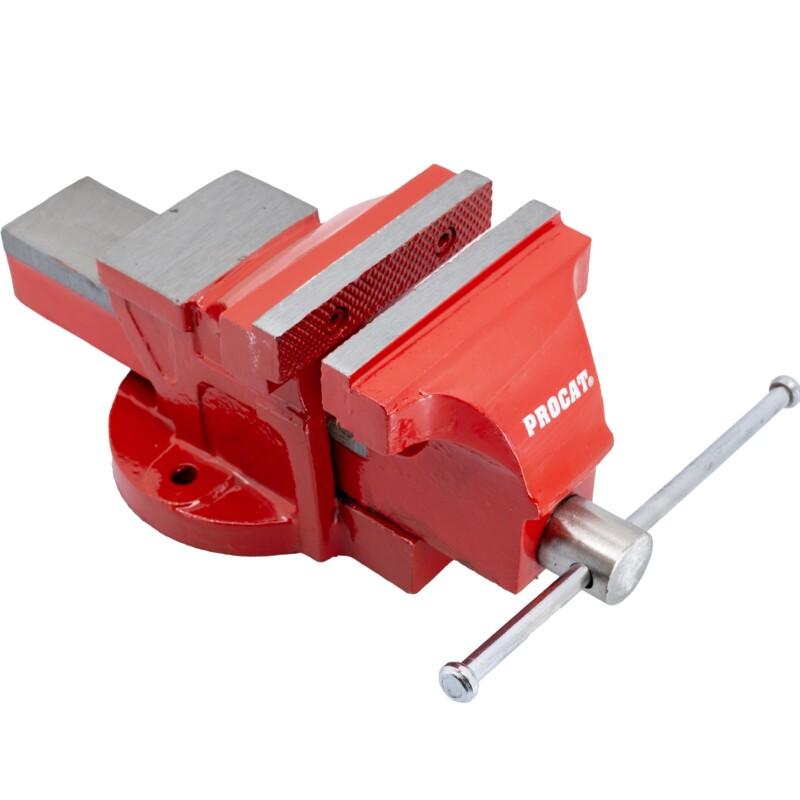
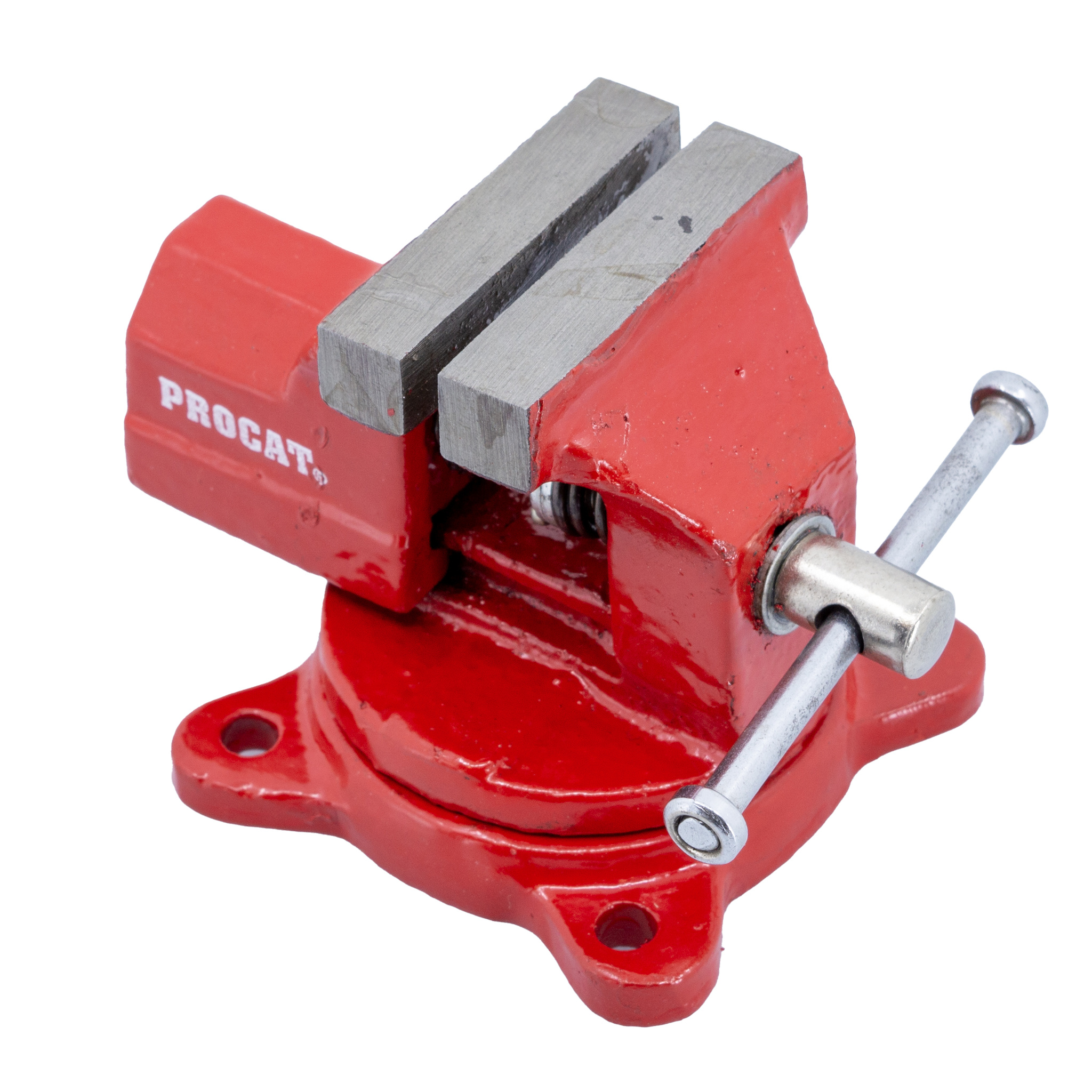
Procat bench vice 50 mm is a small vice with a swivel base, so it can be turned sideways even after the base has been fixed to the workbench. Jaw width is 50 mm, maximum jaw opening 50 mm and throat depth 50 mm. The vice holds small workpieces in place during filing, sawing and assembly.
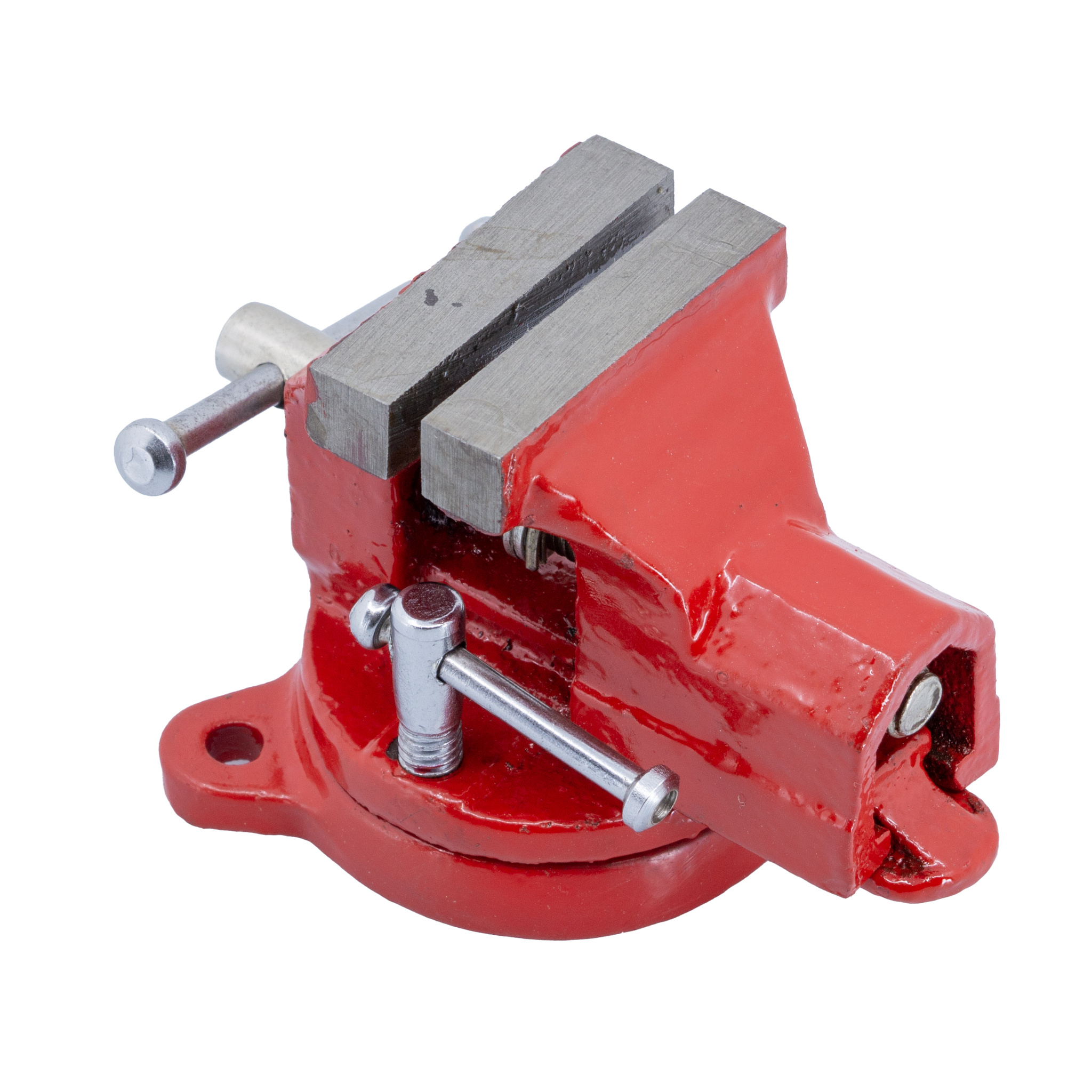
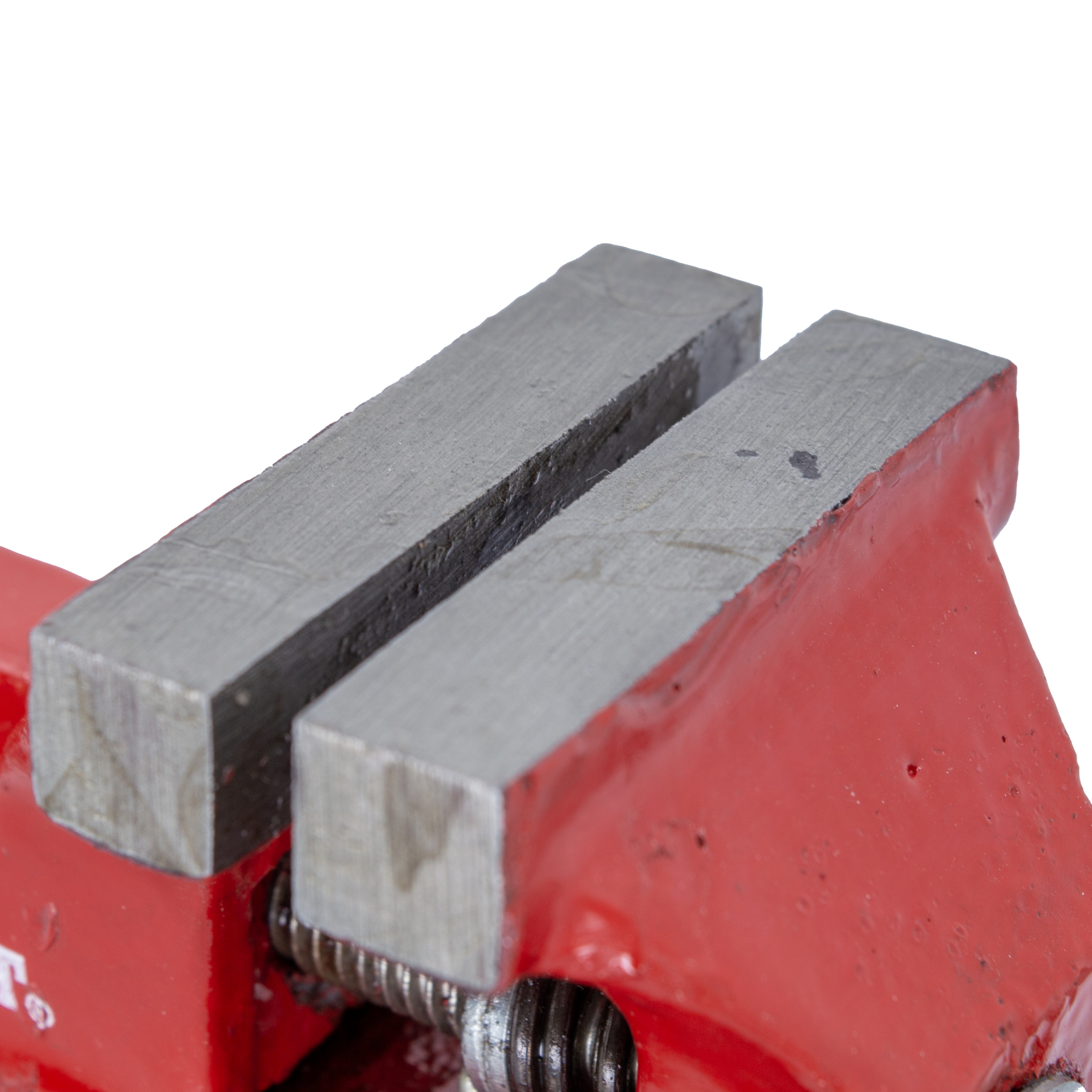
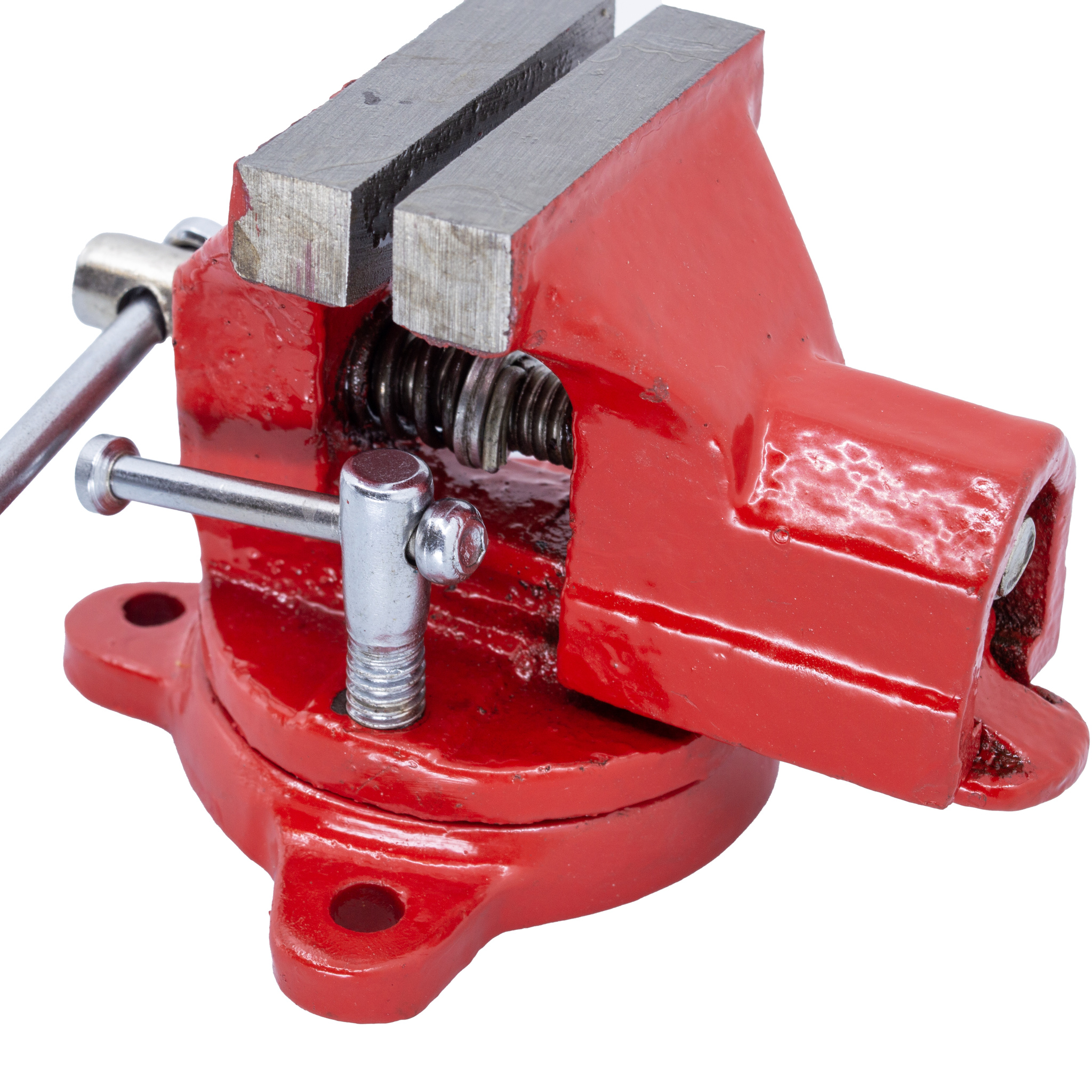
The movable jaw is opened and tightened with a spindle turned by a T-handle. The handle bar slides through the end of the spindle, so the lever arm can be moved to either side. The clamping faces of the jaws are smooth, with no serrations.
The base consists of a lower part that is fixed to the workbench and an upper part that swivels on top of it. The swivel is locked with the locking screw on the base, which is tightened with its own T-handle. The mounting lugs on the lower part have holes for screws or bolts.
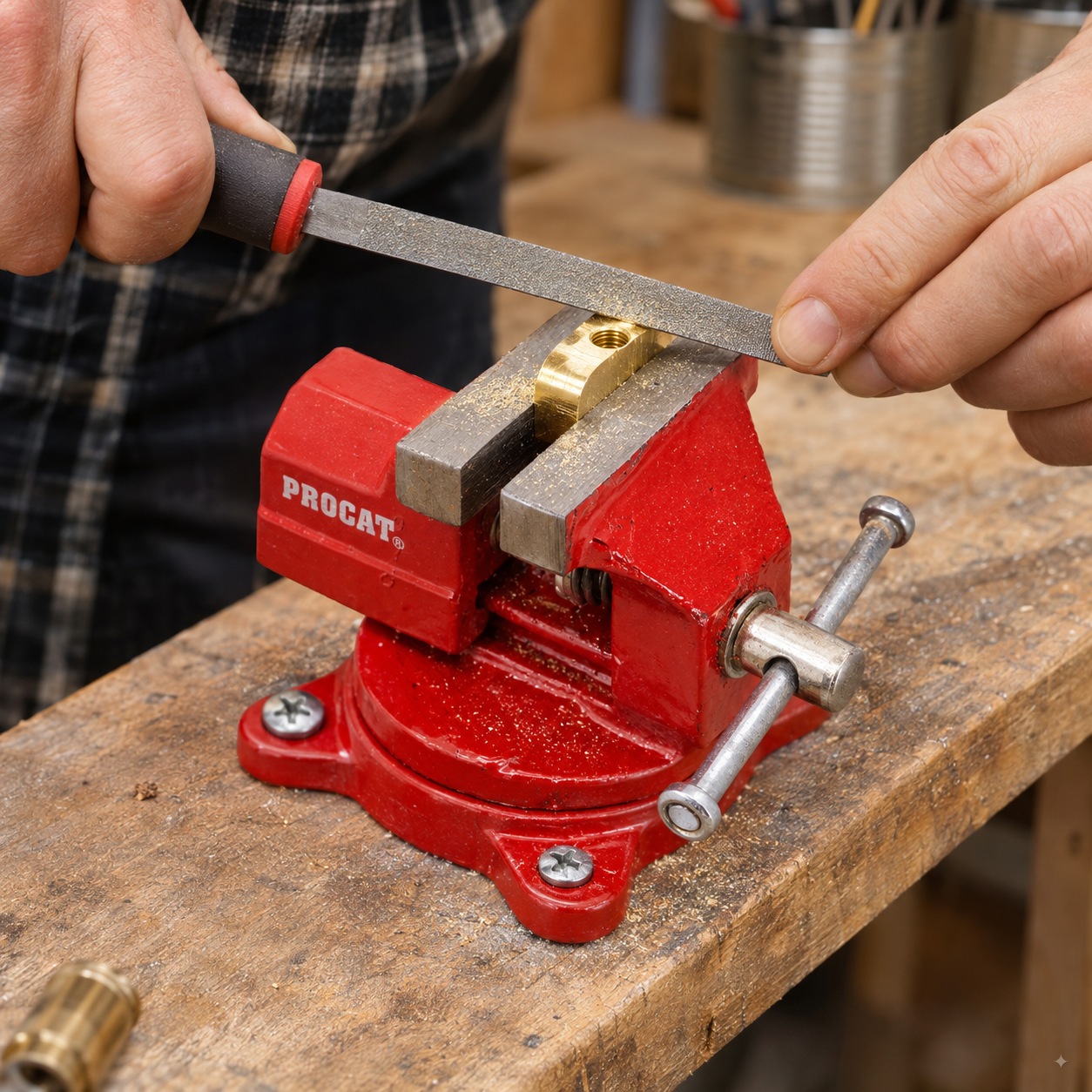
The red-painted body has a PROCAT® print on its side. Its small size lets the vice fit a cramped workstation, such as the corner of an electronics or model-making bench. When the workpiece needs to face a different way, the whole vice is turned on its base without removing the piece from the jaws.
Intended use and suitability:
Fixed to the edge of a workbench, the bench vice holds small pieces in place. The swivel base lets you set the workpiece at the angle the job needs.
- Model making: Small wood, plastic and metal parts stay between the jaws during sawing, drilling and gluing. Soft materials are protected with a thin cardboard or rubber pad.
- Electronics: Enclosures, connectors and small fasteners stay in place during soldering and assembly. Delicate surfaces are protected with a soft pad before tightening.
- Filing and small sawing jobs: Bolts, pieces of flat bar and thin profiles are clamped in the jaws for filing or cutting with a hacksaw. The 50 mm jaw opening is enough for small pieces.
- Jewellery repair: Parts of jewellery and small metal items stay in place during filing and sanding. Polished surfaces are protected with a leather or rubber pad.
Package contents:
- Procat bench vice 50 mm with swivel base
- T-handle fitted to the spindle
- T-handle fitted to the base locking screw
Features:
- Swivel base: The vice can be turned sideways after installation, so the workpiece angle can be set to suit the job.
- Locking screw: The base swivel is locked with a T-handle screw.
- Spindle tightening with T-handle: The sliding handle bar gives a lever arm on either side of the spindle.
- Smooth jaws: The clamping faces have no serrations.
- Mounting lugs: The lugs on the lower part of the base have holes for fixing with screws or bolts.
- Small size: The 50 mm jaws suit small workpieces and cramped workstations.
Technical specifications:
- Jaw width: 50 mm
- Maximum jaw opening: 50 mm
- Throat depth: 50 mm
- Base: swivel, turns sideways, locking screw with T-handle
- Tightening: spindle and T-handle with sliding bar
- Jaws: smooth clamping faces
- Mounting: screws or bolts through the holes in the base lugs
- Finish: painted, red
Procat bench vice 50 mm instructions for use:
Fix the vice to a sturdy workbench that does not flex when the vice is tightened. Position the vice so that the handles and the workpiece can move freely past the edge of the bench.
- Positioning: Place the vice at the edge of the bench so that the jaws project slightly beyond the edge. Long, thin pieces can then be held upright between the jaws.
- Mounting: Mark the base mounting holes on the bench. Fix the base with screws or through bolts and tighten them evenly.
- Adjusting the direction: Loosen the base locking screw with its T-handle. Turn the vice to the required direction and tighten the locking screw.
- Clamping the workpiece: Open the jaws by turning the handle. Place the piece in the centre of the jaws and tighten the handle by hand until the piece stays in place.
- Surface protection: Use a soft pad when clamping wood, plastic, soft metal or a polished surface.
Maintenance: clean chips and dust off the spindle and the base swivel surface regularly. Lubricate the spindle with light oil. Check the tightness of the mounting screws and the locking screw from time to time.
Warnings:
- Mounting: Always fix the vice to the workbench before use. A loose vice can tip over or slide.
- Locking: Tighten the base locking screw before starting work so that the vice does not turn during filing or sawing.
- No extensions: Do not use an extension pipe or a hammer on the handles. Excessive torque can damage the spindle or the body.
- No hammering: Do not strike the jaws, body or base with a hammer.
- Safety glasses: Wear safety glasses when sawing, filing and drilling.
- Pinch hazard: Keep your fingers out from between the jaws while tightening.
Frequently asked questions (FAQ):
What are the jaw dimensions of the Procat bench vice 50 mm?
The Procat bench vice 50 mm has a jaw width of 50 mm, a maximum jaw opening of 50 mm and a throat depth of 50 mm.
Can the Procat bench vice 50 mm be turned after mounting?
Yes. The Procat bench vice 50 mm sits on a swivel base, so it can be turned sideways even after it has been fixed to the workbench. The swivel is locked with the base locking screw.
How is the Procat bench vice 50 mm fixed to a workbench?
The Procat bench vice 50 mm is fixed to the bench top with screws or bolts through the holes in the mounting lugs of the base.
Do the jaws of the Procat bench vice 50 mm leave marks on the workpiece?
The jaws of the Procat bench vice 50 mm are smooth, without serrations. Soft and polished surfaces should still be protected with a pad, because heavy clamping can leave an imprint.
What jobs is the Procat bench vice 50 mm suitable for?
The Procat bench vice 50 mm is suitable for holding small workpieces in model making, electronics work and jewellery repair, as well as for filing and small sawing jobs. Jaw width, jaw opening and throat depth are 50 mm each.
Procat bench vice 50 mm recycling instructions:
A vice taken out of use is metal. Take it to metal collection or to a waste station as scrap metal.
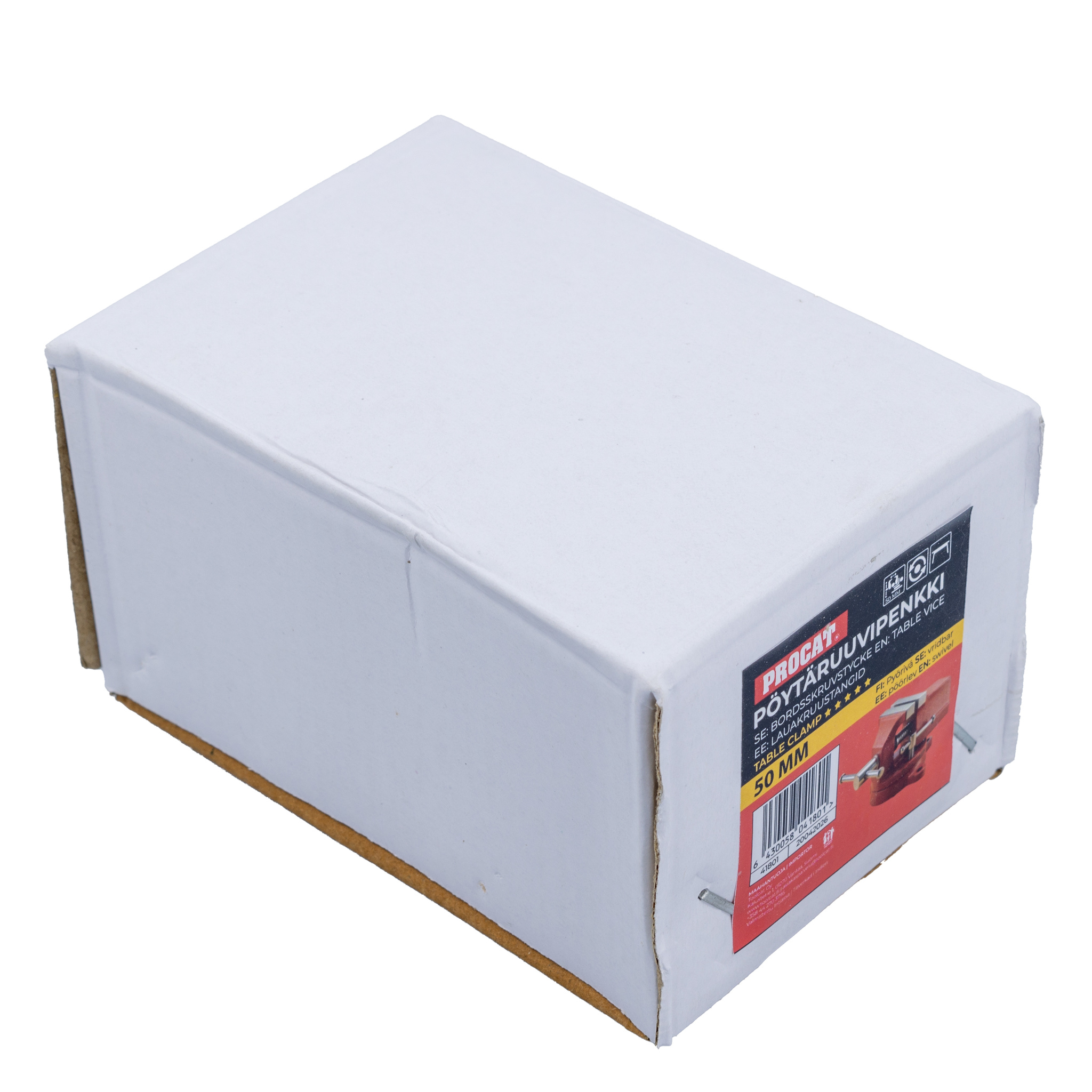
The retail packaging is a cardboard box with a product sticker. The box and its sticker go into cardboard recycling.