
Description
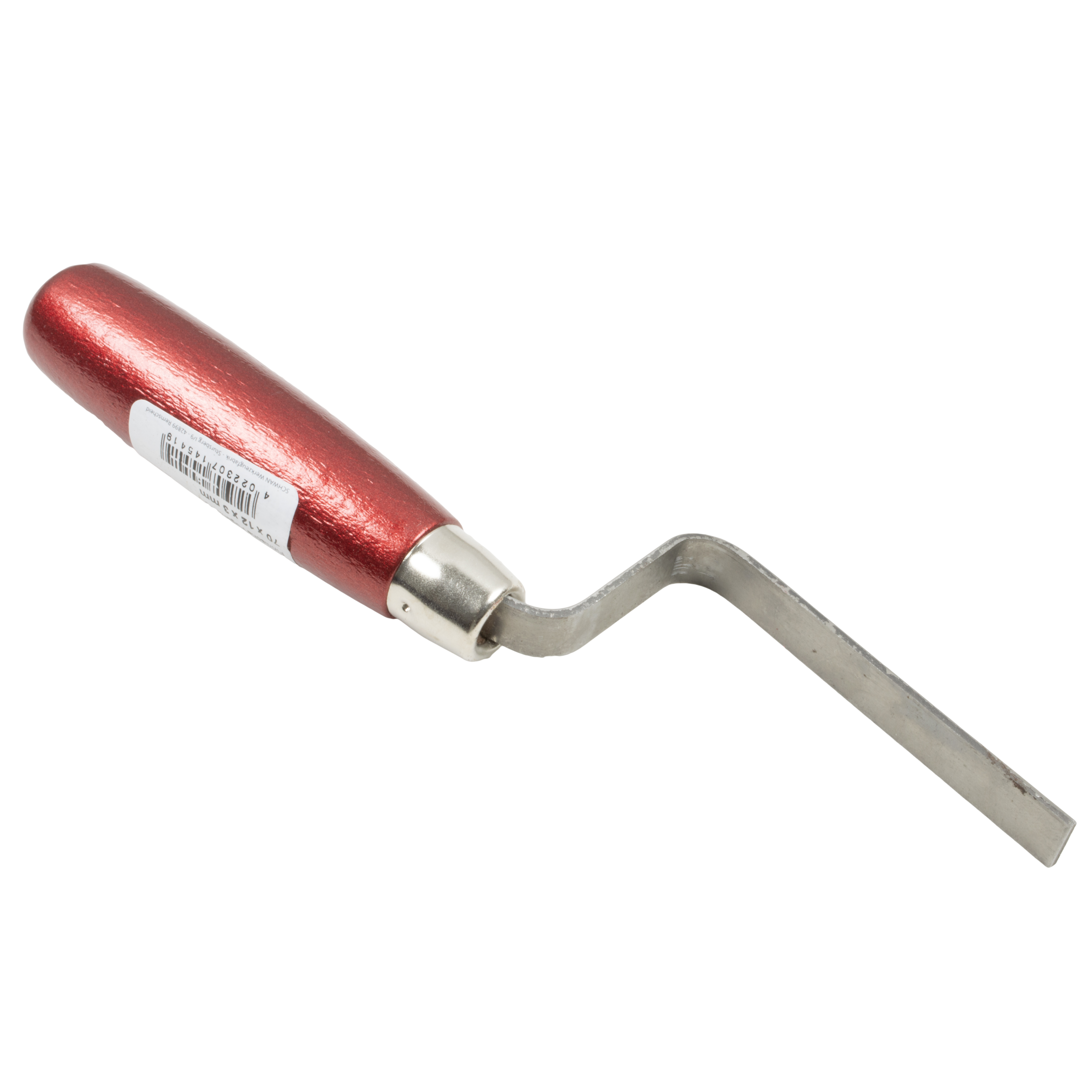
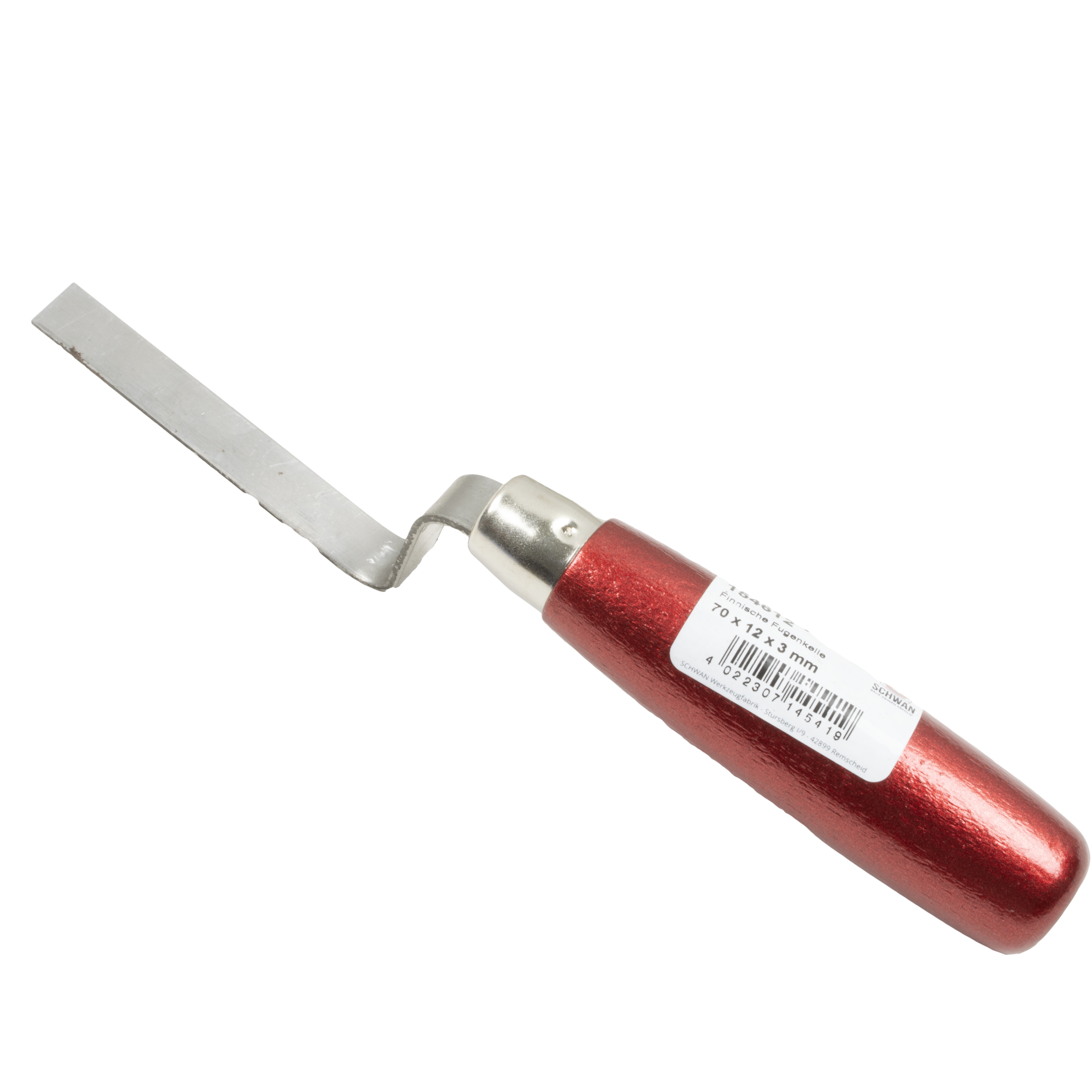
The Schwan 12×70 mm perpend jointing iron is a masonry jointing tool with a blade 12 mm wide and 70 mm long. The blade is double-cranked: it rises from the handle, turns horizontal and ends in a straight, flat working part. The cranking lifts the handle and your hands clear of the wall surface, so the working part presses into the joint at right angles without your knuckles hitting the wall.
A perpend is the vertical joint between masonry units. It is narrow and short, and a long bed-joint iron reaches it poorly. The 70 mm length of the working part matches the height of a standard masonry unit, so the whole vertical joint can be compacted in one stroke from top to bottom.
The working part width of 12 mm determines the joint width the iron fits. The narrow working part presses the mortar to the bottom of the joint and compacts it, so the joint withstands rainwater and frost. It also shapes the joint surface flat and to the same depth all the way along; this decides the look of the finished wall as much as the accuracy with which the units are laid.
The handle is made of wood and is attached to the blade with a metal ferrule, which stops the handle from splitting. The wooden handle stays dry in the hand even when working with wet mortar. The tool has no adjustments and no moving parts. A wider or longer jointing iron is used for compacting bed joints, and a pointing trowel for pre-filling the joint.
Intended use and suitability:
The perpend jointing iron is used to compact and shape the vertical joints in masonry while the mortar is still workable.
- Brickwork: the vertical joints between bricks are compacted and finished straight after laying, before the mortar hardens.
- Block and lightweight aggregate blockwork: the perpends between blocks are pressed closed so that the wall stays airtight and resistant to rainwater.
- Natural stone and concrete block surfaces: irregular vertical joints are shaped by hand with the narrow working part.
- Joint repairs: a joint raked out of an old wall and refilled is compacted with the same tool, so the repair blends into the old surface.
- Chimneys and fireplaces: finishing narrow vertical joints, where the cranked shank keeps your hands away from hot or wet surfaces.
- Joint width: the 12 mm working part suits joints 12 mm wide and wider; narrower joints need a narrower iron.
Package contents:
- 1 pc perpend jointing iron, working part 12 x 70 mm, wooden handle, product number 154612
Features:
- Working part 12 x 70 mm: the width determines the joint width, and the 70 mm length covers a vertical joint the height of a masonry unit in one stroke.
- Double-cranked shank: the handle and your hands stay clear of the wall surface, and the working part presses into the joint at right angles.
- Steel blade: withstands the abrasive aggregate in mortar and keeps the edges of the working part straight.
- Wooden handle with metal ferrule: the ferrule stops the handle from splitting, and the wooden surface stays grippy even in wet conditions.
- Smooth working surface: leaves an even finish in the joint without grooves.
- No moving parts: no adjustment and no wearing parts.
Technical specifications:
- Working part width: 12 mm.
- Working part length: 70 mm.
- Blade shape: double-cranked, straight flat working part.
- Blade material: steel.
- Handle: wood, metal ferrule.
- Suitable joint width: 12 mm and wider joints.
Schwan 12×70 mm perpend jointing iron instructions for use:
Timing: Compact the joint when the mortar has stiffened enough that pressing with your thumb leaves a mark but the mortar no longer sticks to your finger. Mortar that is too wet sticks to the iron; mortar that is too dry crumbles and will not compact.
Filling the joint: Fill the vertical joint with mortar using a pointing trowel or brick trowel before compacting. An underfilled joint does not compact with the iron but is left as a cavity.
Compacting: Place the working part at the top of the joint, press the iron against the joint and draw it down in one continuous stroke. Keep the pressure even throughout the stroke. Varying pressure leaves the joint at an uneven depth.
Finishing: Do the vertical joints before the bed joints, so that drawing the bed joint tidies the ends of the vertical joints. Remove excess mortar squeezed out of the joint with the edge of the trowel.
Cleaning: Wash the iron with water straight after work. Hardened mortar roughens the working surface and leaves grooves in the joint. Dry the tool before storing it.
Care and storage: Oil the blade lightly and store it in a dry place. Check that the working part has not bent: a bent iron leaves a crooked joint.
Warnings:
- Fresh mortar and cement are alkaline and corrosive to skin. Wear protective gloves and wash off splashes immediately.
- Wear safety glasses. A splash of mortar in the eye causes an alkali injury.
- Do not use the iron as a chisel and do not strike it with a hammer: the blade will bend and the handle will split.
- Do not lever stones into place with the iron; the thin cranked blade will bend under a sideways load.
- Check that the handle is tight before use. A loose handle will come off during the stroke.
- Keep out of the reach of children and pets.
Frequently asked questions (FAQ):
What is a perpend? The vertical joint between masonry units. Bed joints run between the courses, and perpends between the ends of the units.
What joint width does the 12 mm iron suit? The 12 mm working part suits joints 12 mm wide and wider. In a narrower joint the iron will not reach the bottom.
Why is the blade cranked? The crank lifts the handle clear of the wall surface, so your knuckles do not rub against the wall and the working part presses into the joint at right angles.
When should the joint be compacted? When the mortar has stiffened so that pressing with your thumb leaves a mark but the mortar does not stick to your finger. The time depends on the mortar, the weather and how absorbent the substrate is.
Can the same iron be used for bed joints too? The 70 mm working part is short for a long horizontal stroke. Use a longer jointing iron for bed joints so that the joint stays straight.
Why does the joint crumble when compacted? The mortar has dried too much or the joint has been underfilled. Refill the joint and compact it at the right stiffness.
Does the blade rust? The blade is steel and rusts in damp conditions. Wash, dry and oil the blade after use.
Recycling instructions:
At the end of the tool’s life, take the blade and metal ferrule to metal collection and the wooden handle to wood waste or energy waste. Sort the cardboard packaging into carton collection and any plastic film into plastic collection. Do not pour mortar slurry washed off the tool into the drain; let it harden and sort it as construction waste.