
Description
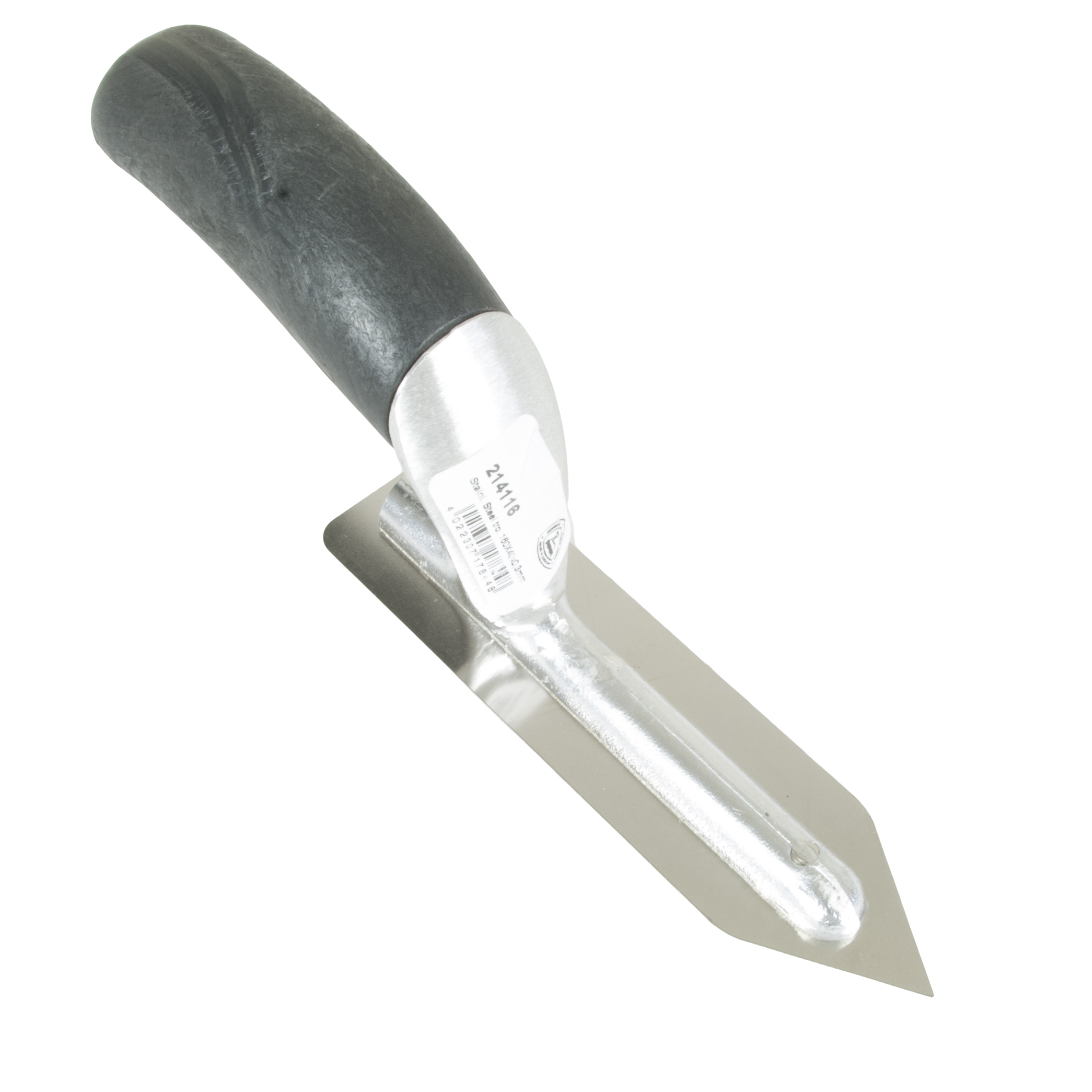
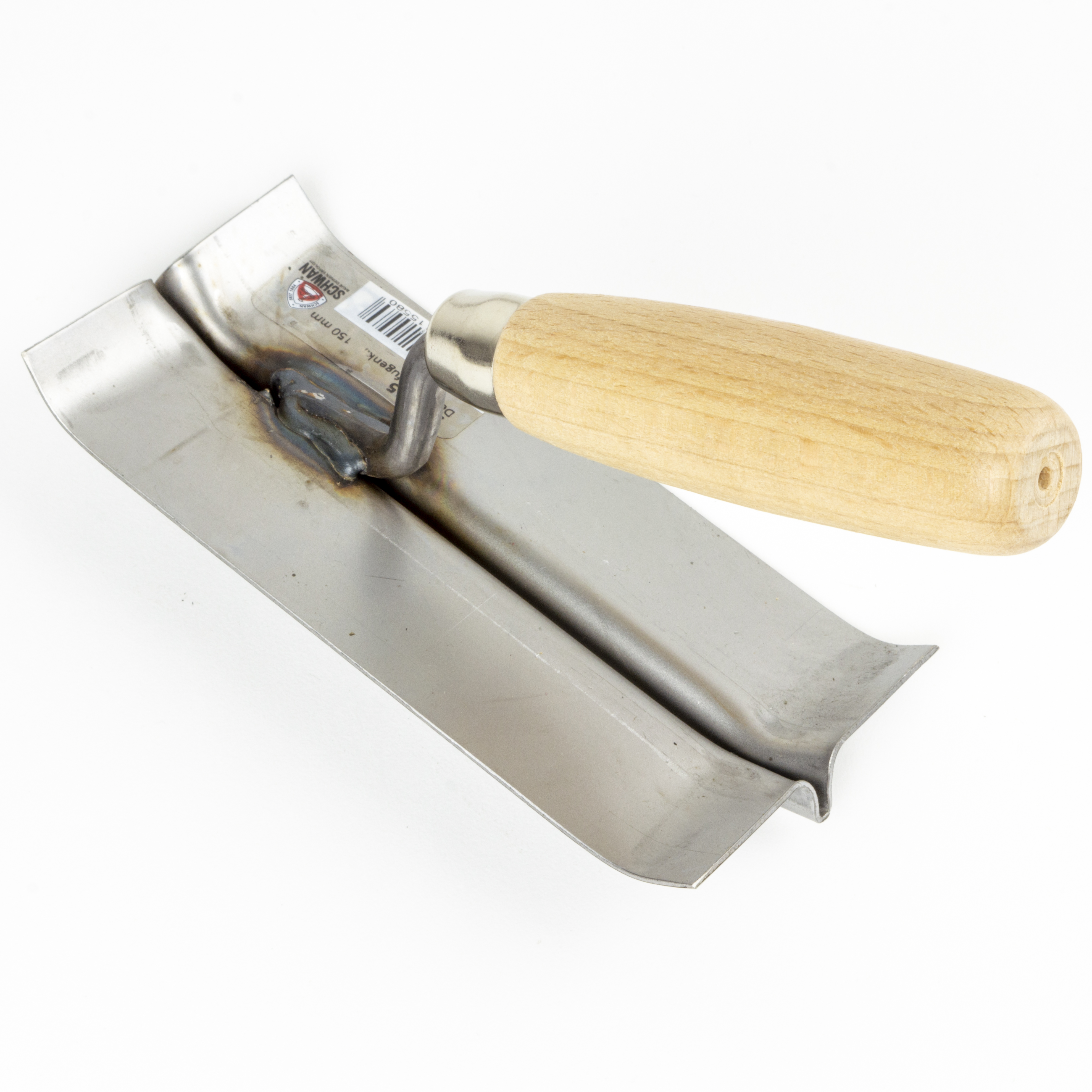
The Schwan 150 x 65 mm grooving trowel is a hand-operated steel grooving tool for pressing a continuous groove into a fresh concrete or mortar surface. The blade is 150 mm long and 65 mm wide, and the blade is shaped into a channel-like profile that determines the shape of the groove produced.
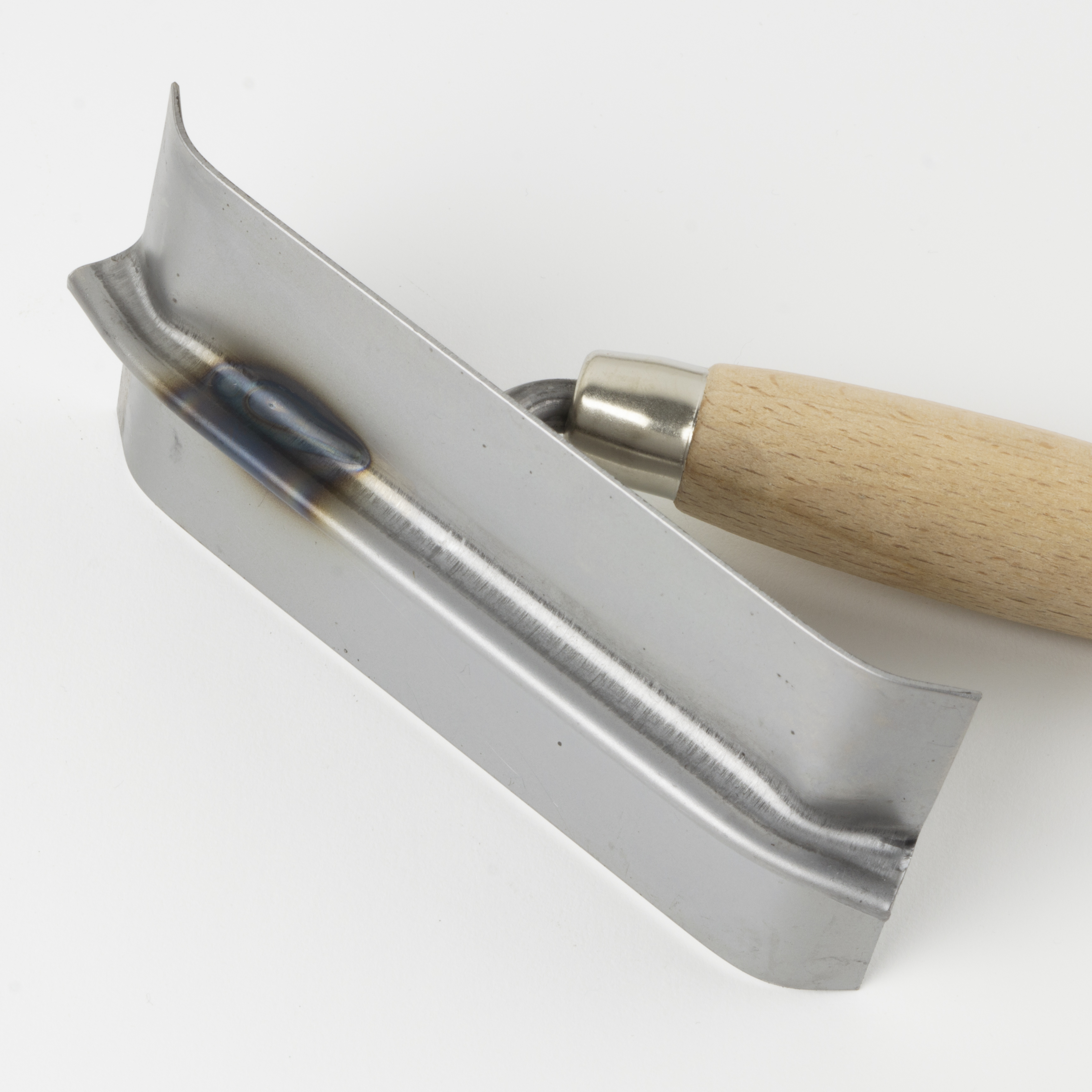
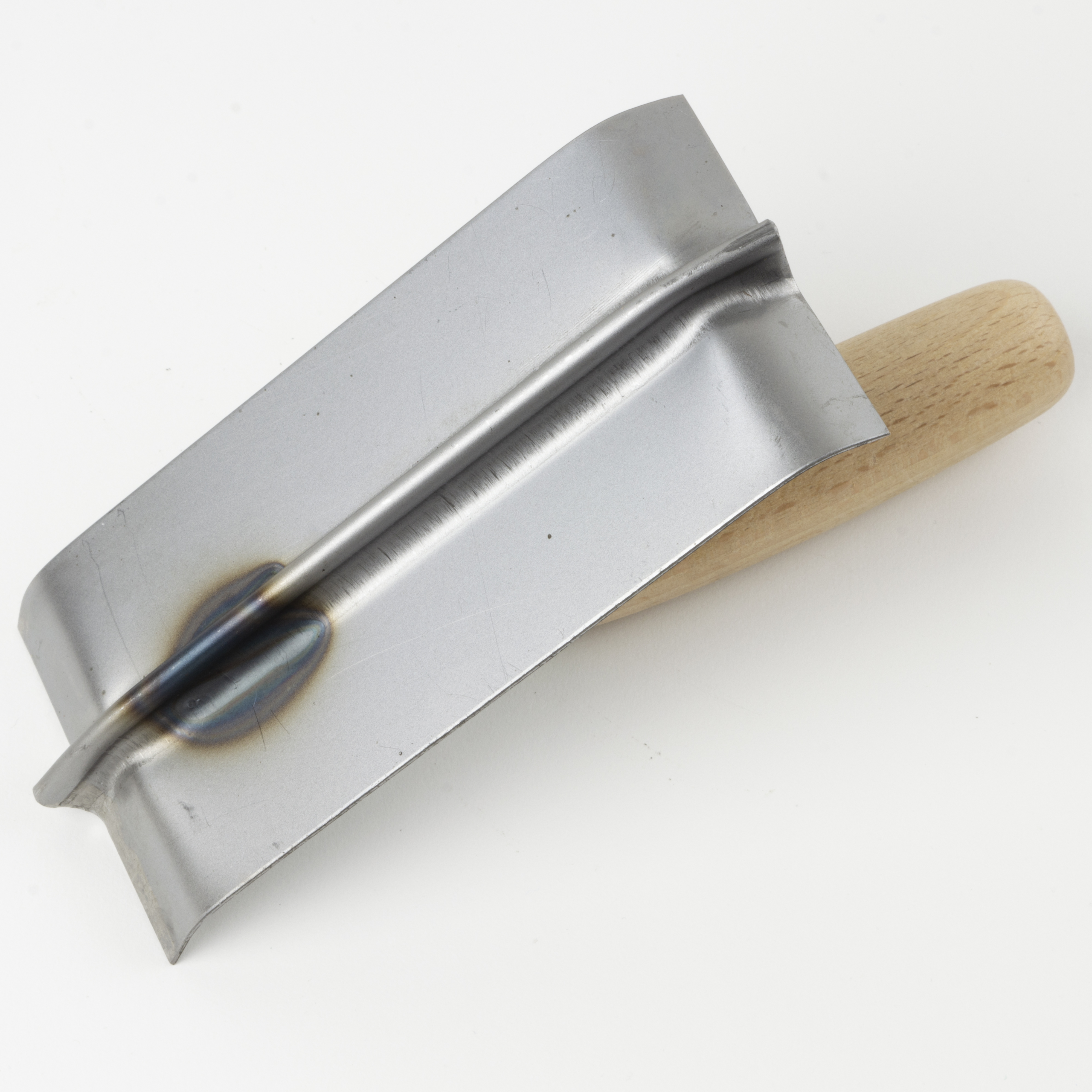
The blade is bent steel: the lengthwise channel forms the bottom of the groove, and the upturned side edges define its width. The bent edges also act as stiffeners that stop the thin blade bending under the pushing force. Because the edges are bent, the edge of the blade does not cut the surface; instead the tool shapes and compacts the mass around the groove without tearing it.
The blade is attached to a welded steel neck, which lifts the handle above the surface and leaves room for your hand. The neck ends in a metal ferrule into which the wooden handle is fitted. The raised neck transfers the pushing force to the centre line of the blade, so the groove stays straight and at the same depth all the way along. The end of the handle has a hanging hole.
The tool is used when the concrete or mortar is still workable but already holds its shape. One stroke forms the bottom and edges of the groove at once, so no separate finishing of the groove is needed. The groove dimensions stay the same along its whole length, because the profile is fixed and the position of the tool does not change the width of the groove. The groove is smooth and dense, which lets water flow along the groove without stopping.
Intended use and suitability:
The grooving trowel is used to press a groove into fresh concrete or mortar when a groove is needed for directing water, laying a pipe or dividing up a surface.
- Water channels and drainage grooves: a continuous groove pressed into a fresh concrete floor or ramp directs water to a drain. The smooth, dense surface of the groove does not collect dirt as easily as a rough cast surface.
- Pipe grooves: shaping grooves for underfloor heating and conduit pipes in the fresh mass before it hardens, so the pipe sits in the groove without chiselling.
- Channel and gutter casting: shaping small channels and gutters in masonry mortar and making surface grooves in castings.
- Shaping joints and connections: pressing the channel profile into a mortar joint when you want a continuous concave joint.
- Repair and patching work: extending an old groove or reshaping it in patching mortar so that the profile matches the surrounding groove.
Package contents:
- 1 pc grooving trowel 150 x 65 mm, with wooden handle
Features:
- Channel-shaped steel profile: shapes the bottom and edges of the groove in one stroke, so no separate finishing is needed.
- Upturned side edges: define the width of the groove and stop the mass spreading over its edges; they also stiffen the blade.
- Steel blade 150 x 65 mm: the 150 mm guiding length along the groove keeps it straight even on long strokes.
- Welded steel neck: lifts the handle above the surface and transfers the pushing force to the centre line of the blade.
- Wooden handle with metal ferrule: a secure grip even in wet conditions; the ferrule supports the joint between handle and neck.
- Smooth steel surface: compacts the groove surface and releases from the mass without sticking; easy to wash with water.
- Hanging hole in the end of the handle: the tool can be hung up to dry after washing.
- Weight 200 g: a light tool for long, continuous groove strokes.
Technical specifications:
- Blade length: 150 mm.
- Blade width: 65 mm.
- Blade material: steel.
- Blade shape: lengthwise channel, upturned side edges.
- Neck: welded steel neck, raised.
- Handle: wood, with metal ferrule, hanging hole.
- Use: fresh concrete and mortar.
Schwan 150 x 65 mm grooving trowel instructions for use:
Timing: Make the groove while the mass is still workable but already holds its shape; the groove must not close up after the stroke. In mass that has hardened too much, the groove no longer presses in and the surface tears instead.
Lining up the groove: Mark the line of the groove and, if needed, use a straight board or guide against the edge of the blade. Place the blade on the surface along its whole length before starting the stroke.
Pressing the groove: Press the blade into the mass to the groove depth you want and draw the tool at an even speed in one direction. Keep the handle at the same angle throughout the stroke; changing the angle changes the depth of the groove. Work in overlapping passes so that each stroke starts inside the previous groove.
Finish: Repeat the stroke with light pressure if there are marks or loose material in the groove. Remove excess mass pushed up at the edges of the groove with a trowel before it hardens.
Cleaning: Wash the tool with water straight after work, before the mass hardens, and dry the blade. Remove hardened mortar carefully with a scraper; do not use force that would change the shape of the blade.
Care and storage: Oil the steel blade lightly after washing to prevent rust. Store in a dry place, hung up or with the blade protected, so that the profile does not distort.
Warnings:
- Fresh concrete and cement mortar are alkaline and corrosive to skin and eyes. Wear protective gloves and safety glasses.
- The bent edges of the blade are thin and can scratch or cut; handle the tool with the edges pointing away from your hand.
- Do not use the tool as a hammer, chisel or lever: the blade or the welded neck can bend or break.
- A bent blade produces an uneven groove and can slip during the stroke; check the profile before use.
- Dry scraping of hardened mortar creates dust; wear a respirator.
- A steel blade that gets wet and is not dried will rust. Not for use by children without supervision.
Frequently asked questions (FAQ):
What is the Schwan 150 x 65 mm grooving trowel for? For pressing a continuous groove into a fresh concrete or mortar surface, for example as a water channel or a pipe groove.
How wide a groove does the tool make? The width of the groove is defined by the upturned side edges of the blade; the overall width of the blade is 65 mm and the guiding length 150 mm.
When should the groove be made? When the mass is still workable but holds its shape. A groove pressed too early closes up; one pressed too late tears the surface.
Why press a groove rather than chisel it? A pressed groove is made in fresh mass without dust or hammering, and the surface of the groove stays dense and smooth. Chiselling hardened concrete breaks the surface around the groove.
How do I get the groove straight? Use a straight board or guide against the edge of the blade and draw the tool at an even speed at the same angle.
How is the tool cleaned? With water straight after work, before the mass hardens. Dry the blade and oil it lightly.
Can the tool be used on masonry mortar joints? Yes, the channel profile can also be pressed into a mortar joint when you want a continuous concave joint.
Recycling instructions:
Take a grooving trowel at the end of its life apart where possible: the steel blade, neck and ferrule go to metal collection and the wooden handle to wood waste or energy waste. A tool that cannot be taken apart belongs in metal collection. Cardboard and paper packaging goes to carton and paper collection, plastic wrapping to plastic collection. Concrete and mortar dried onto the tool is construction waste and should be disposed of according to municipal guidelines.