
Description
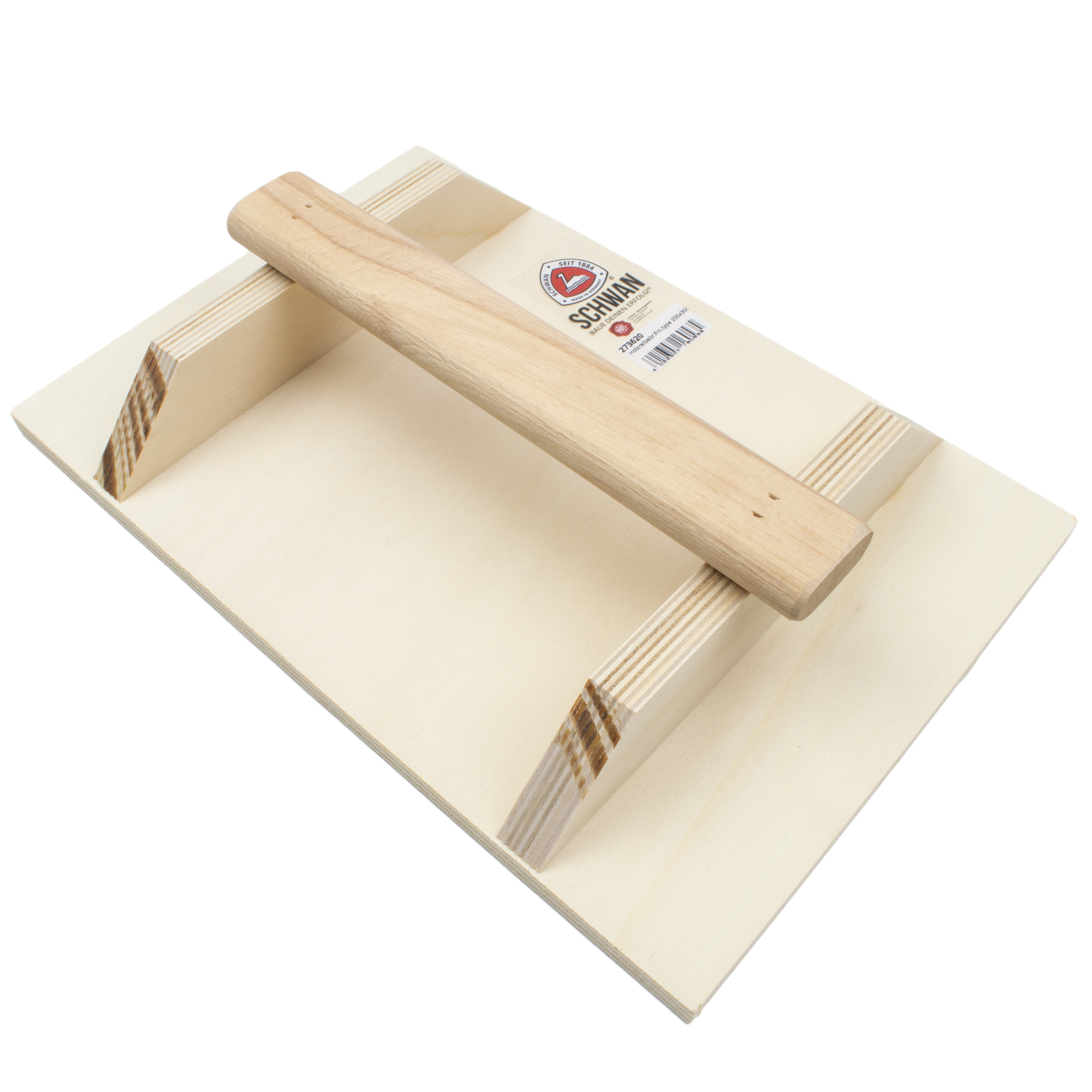
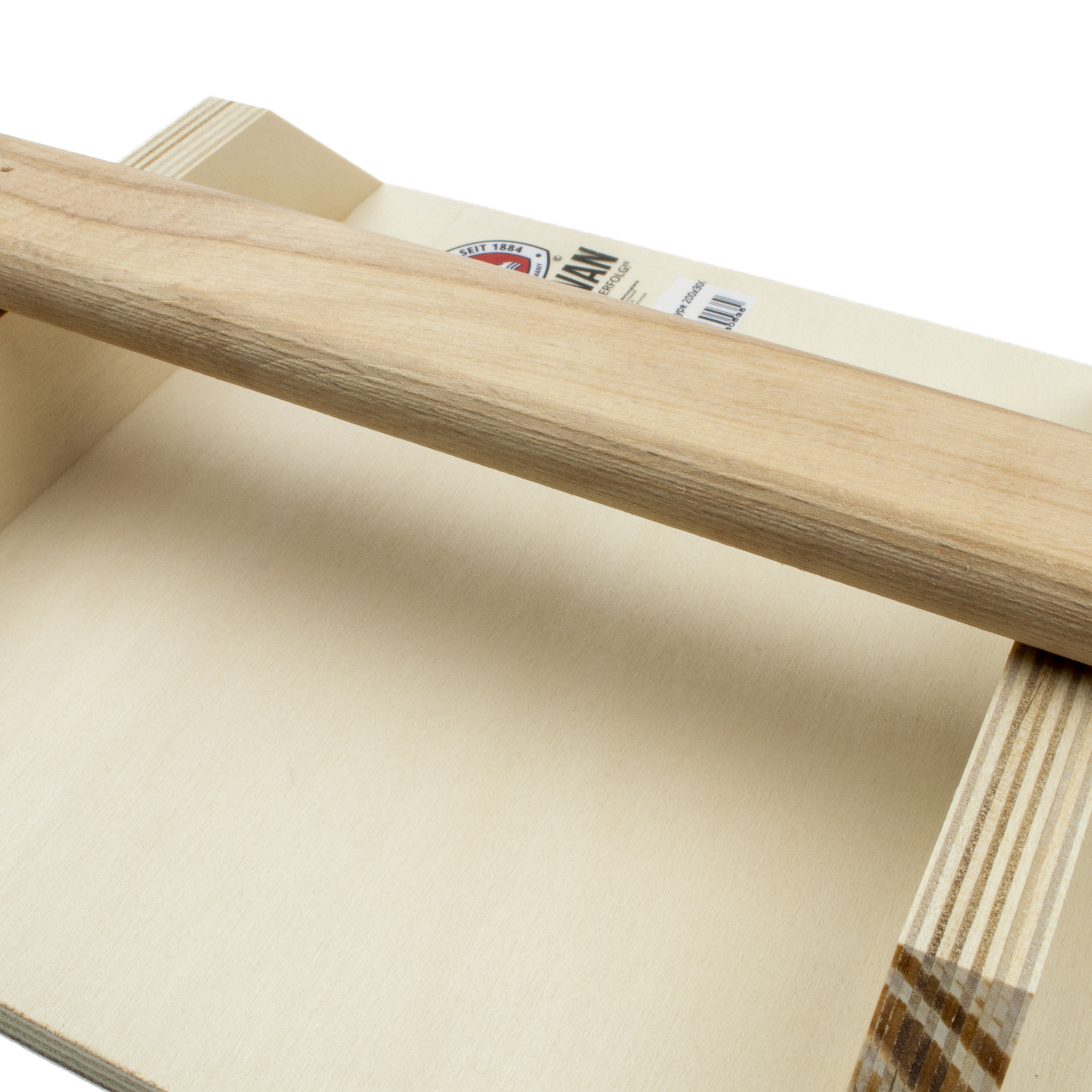
The Schwan 200 x 300 mm plywood float is a hand float with a working surface made of multi-layer glued plywood and a handle of turned wood. The float plate measures 200 x 300 mm, which gives a working area of about 600 cm². The manufacturer’s product number is 273620 and the model name refers to a Finnish float design in which the handle is raised above the plate on two transverse plywood risers.
The construction has three parts: a flat plywood plate, two plywood riser strips and, fixed on top of them, a lengthwise wooden handle. The risers lift your hand about the height of the handle above the plate, so your fingers fit under the handle and the pressing force is transferred along the centre line of the plate to the whole working surface. The handle extends almost the full length of the plate’s shorter side, so your grip stays the same when you turn the float during work.
The material of the working surface determines the result. Plywood is porous and slightly springy: it draws up the cement paste and opens the render surface, leaving a matt, fairly coarse, evenly roughened finish. A wooden surface does not slide the mortar as strongly as steel, so it does not close the surface but leaves it breathable and with good adhesion for the next coat. The cross-glued structure of multi-layer plywood keeps the plate straight when it gets wet better than solid wood.
The large 200 x 300 mm working surface covers a wide strip in one stroke and evens out variations in the thickness of the mortar layer with its long bearing length. The product weighs 485 g, which keeps the tool manageable even during long floating sessions without any added weight. Plywood wears slowly in use and the surface becomes smoother with use, so over time the same float produces a finer surface texture.
Intended use and suitability:
The plywood float is used for floating cement and lime-cement mortar surfaces when the aim is an open, matt and evenly roughened surface.
- Floating rendered surfaces: levelling and roughening base and filler render once the mortar has stiffened enough to resist finger pressure. The porous surface of the plywood brings up the fines without polishing the surface closed.
- Opening the bonding surface: the rough surface left for the next coat, such as a finish or decorative render, is created directly by floating, without a separate roughening stage.
- Levelling masonry joints and patches: the wide plate spans several joints at once and levels patching mortar with the surrounding masonry surface.
- Concrete surface finishing: floating a fresh concrete surface when you want a non-slip, rough surface, for example on ramps or steps.
- Large wall and floor areas: the 600 cm² working surface reduces the number of strokes on large continuous areas.
Package contents:
- 1 pc plywood float 200 x 300 mm, with wooden handle
Features:
- Plywood working surface: the porous wooden surface opens the mortar surface and leaves a matt, rough finish; it does not polish the surface closed the way a steel trowel does.
- Multi-layer cross-gluing: the layered structure of the plywood keeps the plate straight in wet work and resists bending lengthwise.
- Plate size 200 x 300 mm: a working surface of about 600 cm² levels a wide strip in one stroke.
- Raised wooden handle: two plywood risers lift the handle above the plate, so your whole palm fits on top of the handle and your fingers underneath it.
- Lengthwise handle design: the handle runs across the plate along its centre line and spreads the pressing force symmetrically over both halves.
- Wooden construction: the whole tool is wood, so it does not scratch a hardening surface the way metal does and leaves no dark marks on the surface.
- Lightweight body: 485 g keeps the tool manageable in repeated circular floating movements.
- Resandable surface: a roughened plywood surface, or one hardened with mortar, is restored to working order with sandpaper.
Technical specifications:
- Float plate dimensions: 200 x 300 mm.
- Working area: about 600 cm².
- Plate material: multi-layer glued plywood.
- Handle material: wood, turned lengthwise handle.
- Handle mounting: two transverse plywood risers on the centre line of the plate.
- Model: Finnish float design, raised handle.
- Surface type: open, matt and rough floated finish.
Schwan 200 x 300 mm plywood float instructions for use:
Preparation: Wet a new plywood plate lightly with water before using it for the first time, so that the dry wood does not draw water out of the mortar unevenly. Check that the working surface is clean and flat.
Timing: Only start floating once the mortar has stiffened so that a finger no longer sinks into the surface but still leaves a visible mark. Floating that starts too early tears the surface, and floating that starts too late no longer levels it.
Floating movement: Grip the handle with your whole palm, place the plate flat against the surface and move the float in wide circular movements. Keep the pressure even and the plate parallel to the surface; lifting the edge of the plate leaves grooves. Work in overlapping passes so that each stroke covers the edge of the previous one.
Wetting: Wet the working surface during work if needed, but do not add more water to the surface through the float than the workability of the mortar requires; too much water weakens the surface strength.
Cleaning: Wash the float with water straight after work, before the mortar hardens, and let it dry lying flat. Remove hardened mortar carefully with a scraper and smooth the surface with sandpaper.
Storage: Store in a dry place on a flat surface. Do not leave the plate soaking in water or dry it on a heat source, as the glue lines can open and the plate can warp.
Warnings:
- Fresh cement mortar is alkaline and corrosive to skin and eyes. Wear protective gloves and safety glasses.
- The edges of the plywood plate and the arrises of the risers can cause splinters and chafing; check the condition of the surface before use.
- Do not use the float as a hammer, lever or scraper: impact loads can split the plywood plate or loosen the handle.
- A plate that has got wet and been poorly dried can warp and its glue lines can open, which makes the floated finish uneven.
- Removing hardened mortar creates dust; wear a respirator when scraping dry.
- Not for use by children without supervision.
Frequently asked questions (FAQ):
What is the Schwan 200 x 300 mm plywood float for? For floating cement and lime-cement mortar surfaces when you want a matt, rough and open surface.
What is the difference between a plywood float and a plastic float? Plywood is porous and slightly absorbent, so it opens the surface and leaves a coarser texture. A plastic or polyurethane float slides more and produces a more even, finer surface.
When should floating start? When the mortar has stiffened so that a finger does not sink into the surface but leaves a mark on it. The timing depends on the mortar, the temperature and how absorbent the substrate is.
How large an area does the plate cover? The plate is 200 x 300 mm, so the working surface is about 600 cm².
Can the float be used on fresh concrete? Yes. The wooden surface leaves a non-slip, rough surface on concrete, which suits ramps and steps, for example.
How do I remove hardened mortar from the float? Scrape carefully and sand the surface smooth with sandpaper. Do not soak hardened mortar for long, as water makes the plywood swell.
How should the float be stored? Clean, dry and lying flat, so that the plate stays straight.
Recycling instructions:
Sort a plywood float at the end of its life into wood waste or energy waste. Glued plywood is not suitable for the garden compost or for burning on an open fire. Remove any metal fasteners and take them to metal collection. Cardboard and paper packaging goes to carton and paper collection, plastic wrapping to plastic collection. Cement mortar dried onto the tool is construction waste and should be disposed of according to municipal guidelines.