



Description
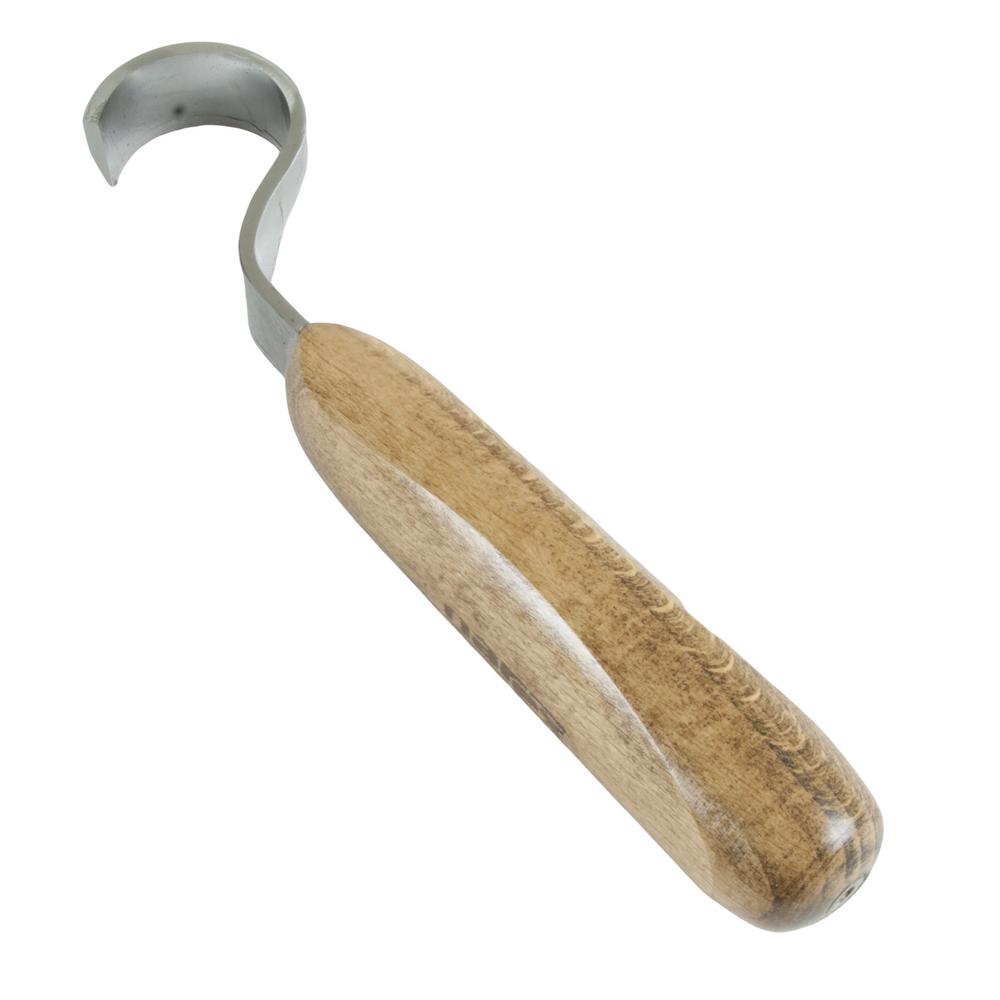
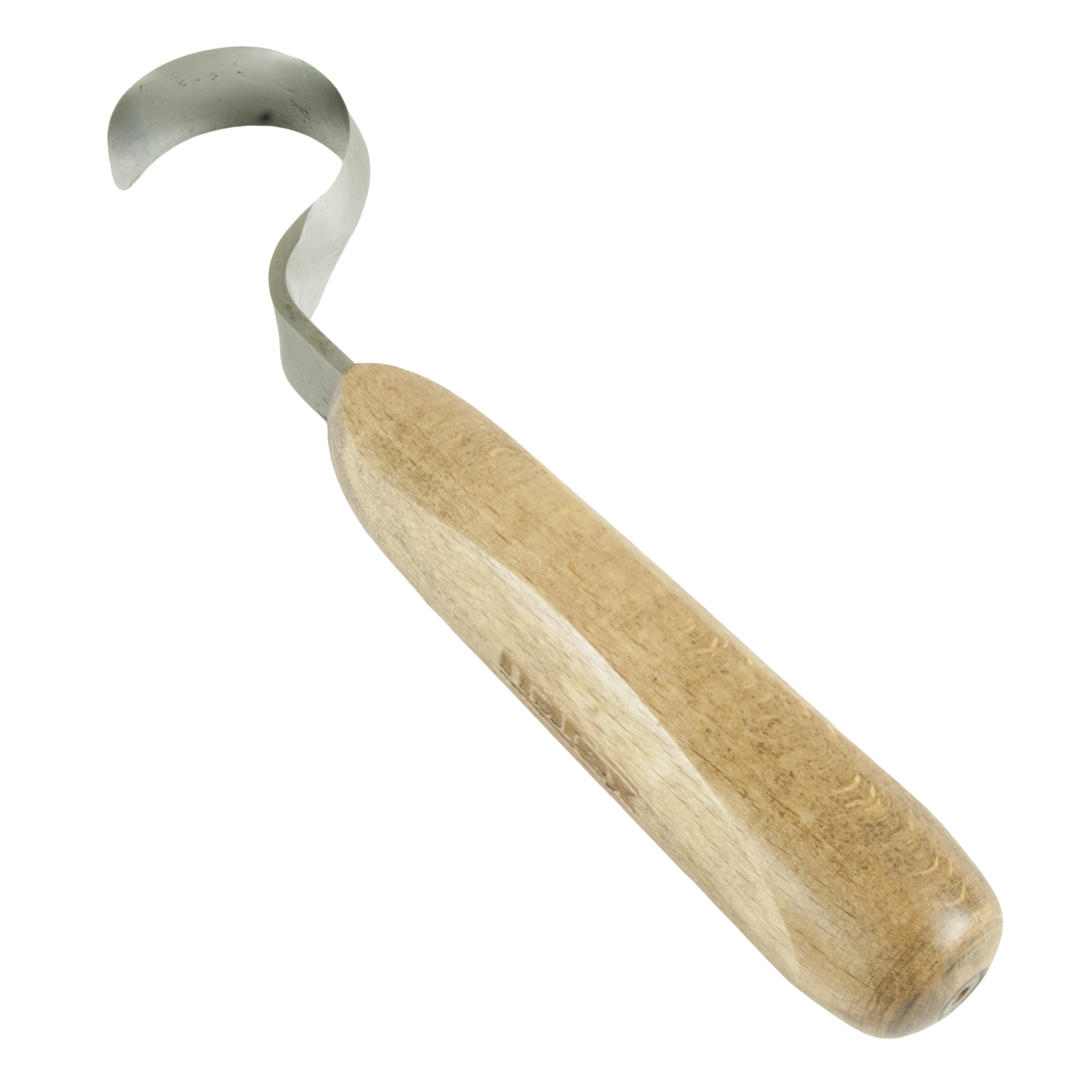
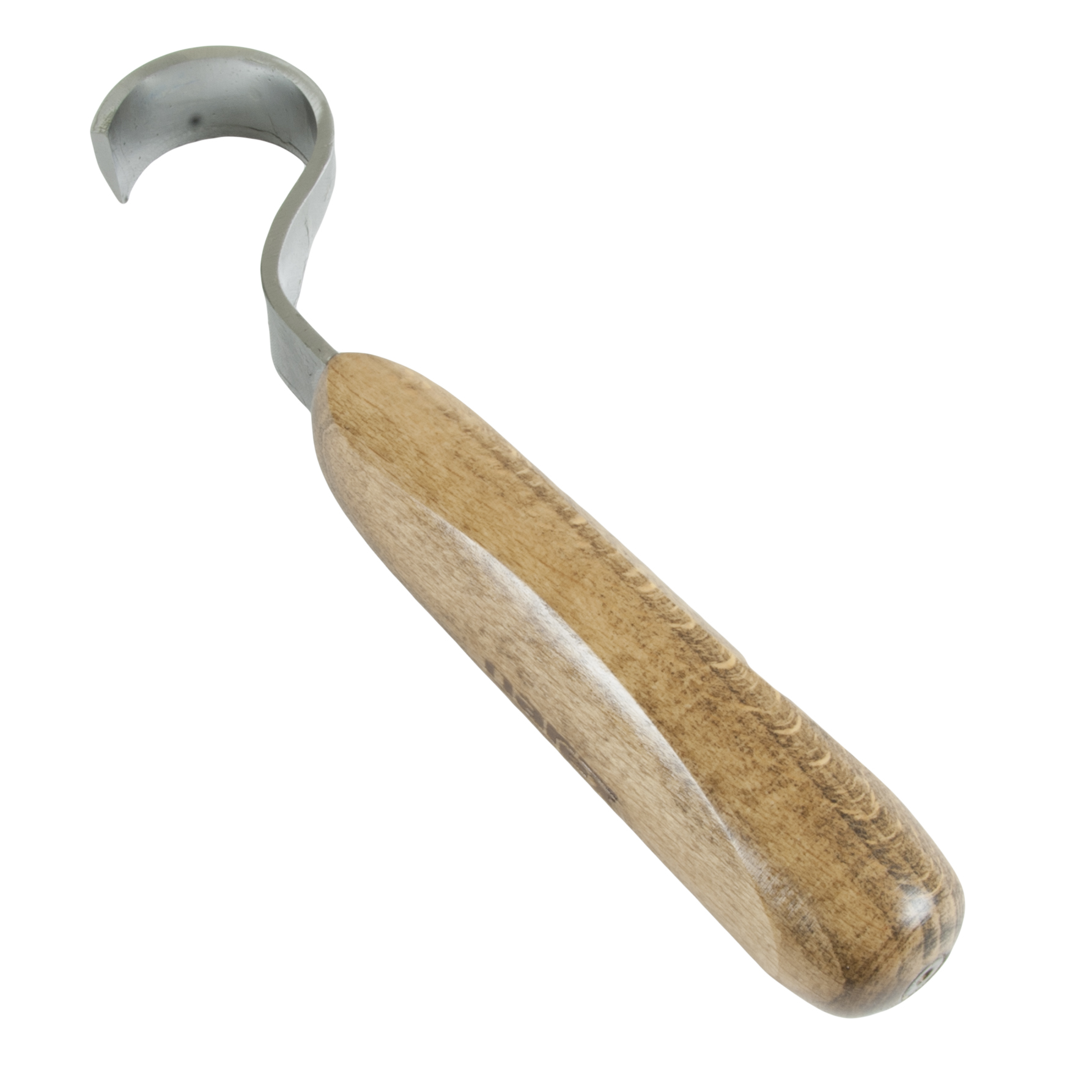
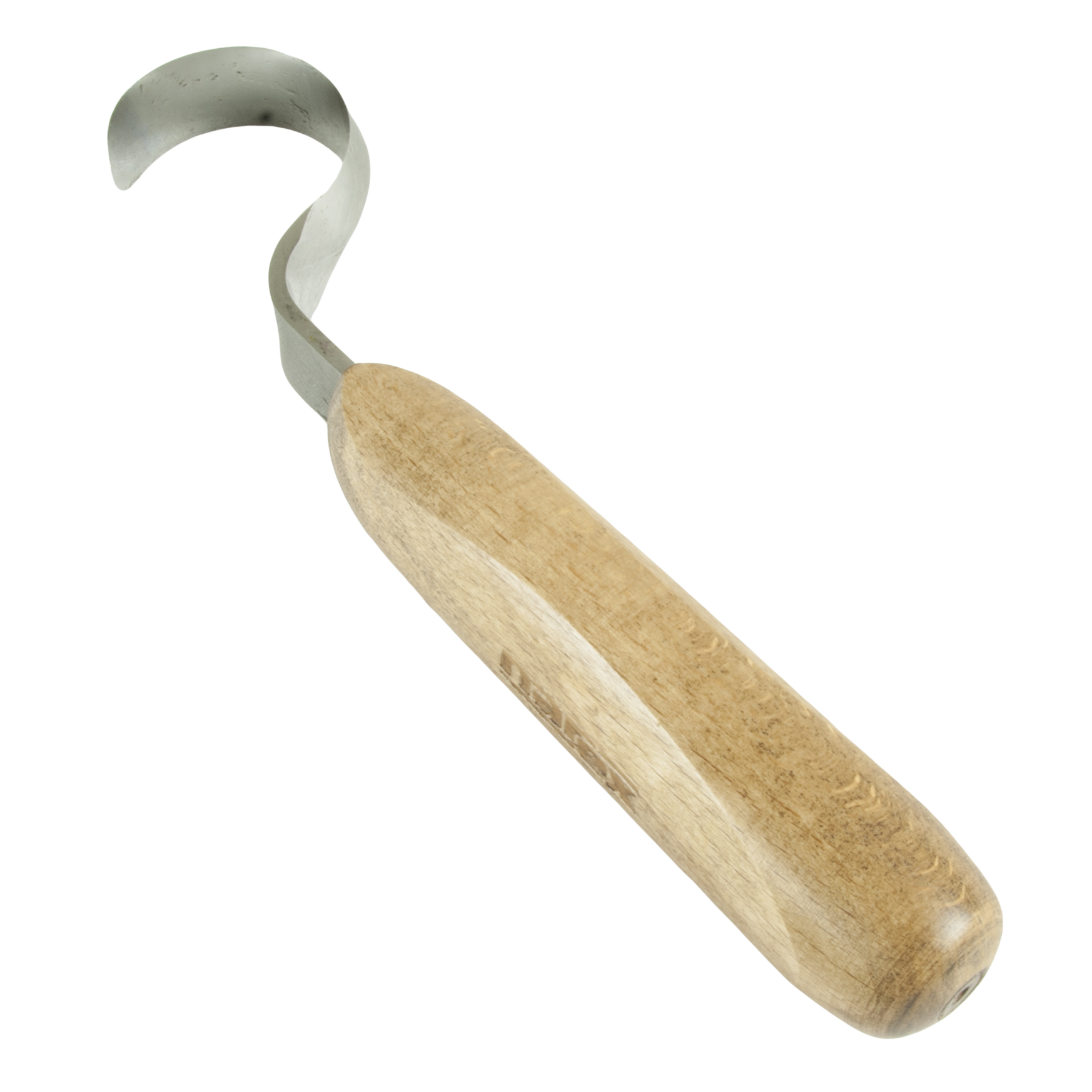
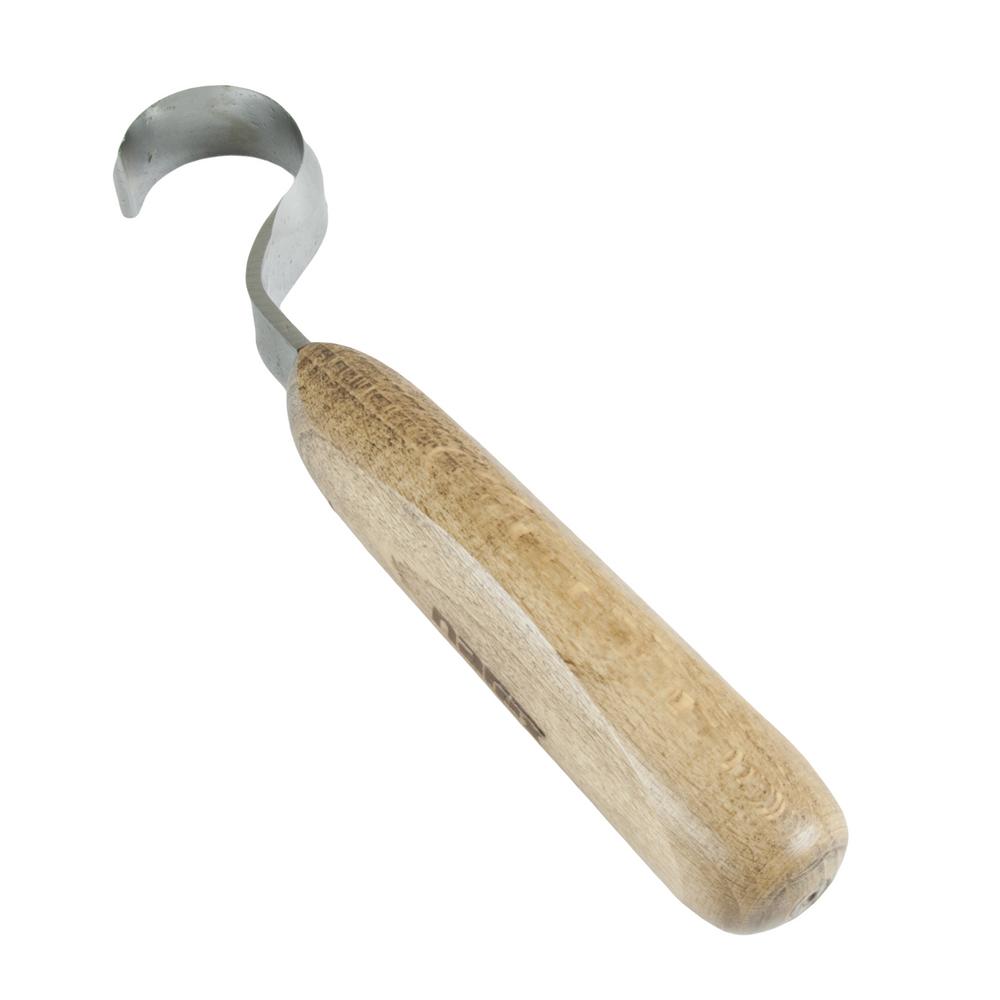
The Narex hook knife, also known as a gouge or spoon knife, is a specialist tool designed for carving concave shapes in wood. This tool is essential for traditional spoon carving, making kuksa cups and hollowing out small bowls. Narex’s long history as a maker of quality steel tools in the Czech Republic shows in the finish and choice of materials of this knife.
The blade of the knife is made of high-quality manganese vanadium (Mn-V) tool steel. This choice of material, combined with precise heat treatment, achieves an exceptionally high hardness of 60–62 HRc. In practice, this means that the knife comes very sharp and keeps its cutting edge considerably longer than ordinary carbon steel knives, even when working hardwoods.
The ergonomically shaped handle is made of stained beech, giving a comfortable, secure grip even for long periods of work. Note: This product is made in both right-handed and left-handed versions. Make sure you choose the handedness that suits the way you work.
Intended use:
This gouge is designed for precise, controlled wood removal from curved inner surfaces.
- Spoon carving: Ideal for shaping and finishing the bowl of a spoon.
- Kuksas and cups: Excellent for hollowing out the inside of traditional wooden cups (kuksa).
- Bowls and dishes: Used for deepening small wooden bowls and dishes.
- Green and dry wood: Thanks to its high hardness, the knife works excellently for carving both soft green wood and harder dry wood.
Package contents:
- 1 pcs Narex hook knife / gouge
Features:
- Top-class blade material: Alloyed Mn-V (manganese vanadium) tool steel.
- Extreme hardness: Hardened to 60–62 HRc for the best possible edge retention.
- Ready-to-use sharpness: The blade is ground and finished at the factory to razor sharpness.
- Ergonomic handle: The shaped, stained beech handle guarantees a good feel for the work.
- Made in the Czech Republic: Traditional Narex Bystřice quality.
Technical specifications:
- Blade material: Mn-V tool steel
- Hardness: 60–62 HRc
- Handle material: Stained beech (beech wood)
- Type: Gouge / spoon knife (spoon carving knife)
- Handedness: Available right-handed and left-handed (check your selection)
Instructions for use and maintenance:
Because the blade hardness is very high (60–62 HRc), the blade is very durable but also more susceptible to breaking if misused. Never use the knife for twisting or prying. To maintain sharpness, regular stropping (on a leather strop with honing compound) during use is recommended first and foremost. This keeps the edge razor sharp for a long time without any real need for sharpening. If sharpening is needed, use fine diamond or ceramic stones that can work hard steel. The blade is not stainless steel; clean and dry it after use and protect it with a thin layer of oil (e.g. camellia oil) to prevent rust.
Warnings:
The tool is very sharp and intended only for woodcarving. With a gouge, you often work with pulling strokes towards your body. Always use controlled, short cuts and pay particular attention to safety at work. Make sure your free hand is not in the path of the blade. Wearing a cut-resistant glove on the hand holding the workpiece is recommended. Keep out of the reach of children, preferably in a blade guard.
Frequently asked questions (FAQ):
How do I choose the right handedness?
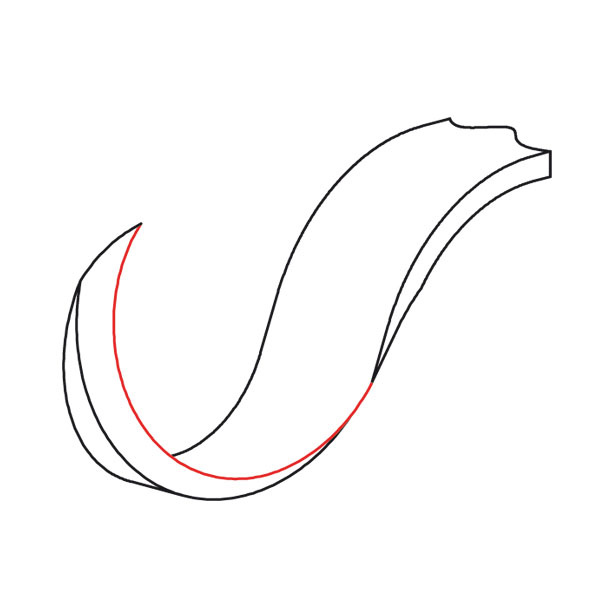
A right-handed knife is sharpened so that it cuts best when a right-handed person pulls the knife towards themselves while hollowing out the bowl of a spoon. For left-handed users, the left-handed model is recommended for the same work. Many experienced carvers use both models to allow more versatile grips.
Is steel this hard difficult to sharpen?
60–62 HRc steel needs high-quality sharpening tools (such as diamond or ceramic). The most important thing, however, is to maintain sharpness by stropping regularly before the edge goes significantly blunt, so that real sharpening is rarely needed.
Is this suitable for a beginner?
Yes, a high-quality, sharp tool is safer and easier to use for a beginner too, because it needs less force to cut wood. The high sharpness does, however, call for great care.
Recycling instructions:
The product is made mainly of steel and wood. At the end of its life, the metal part can be recycled through metal collection and the wooden handle as energy waste.