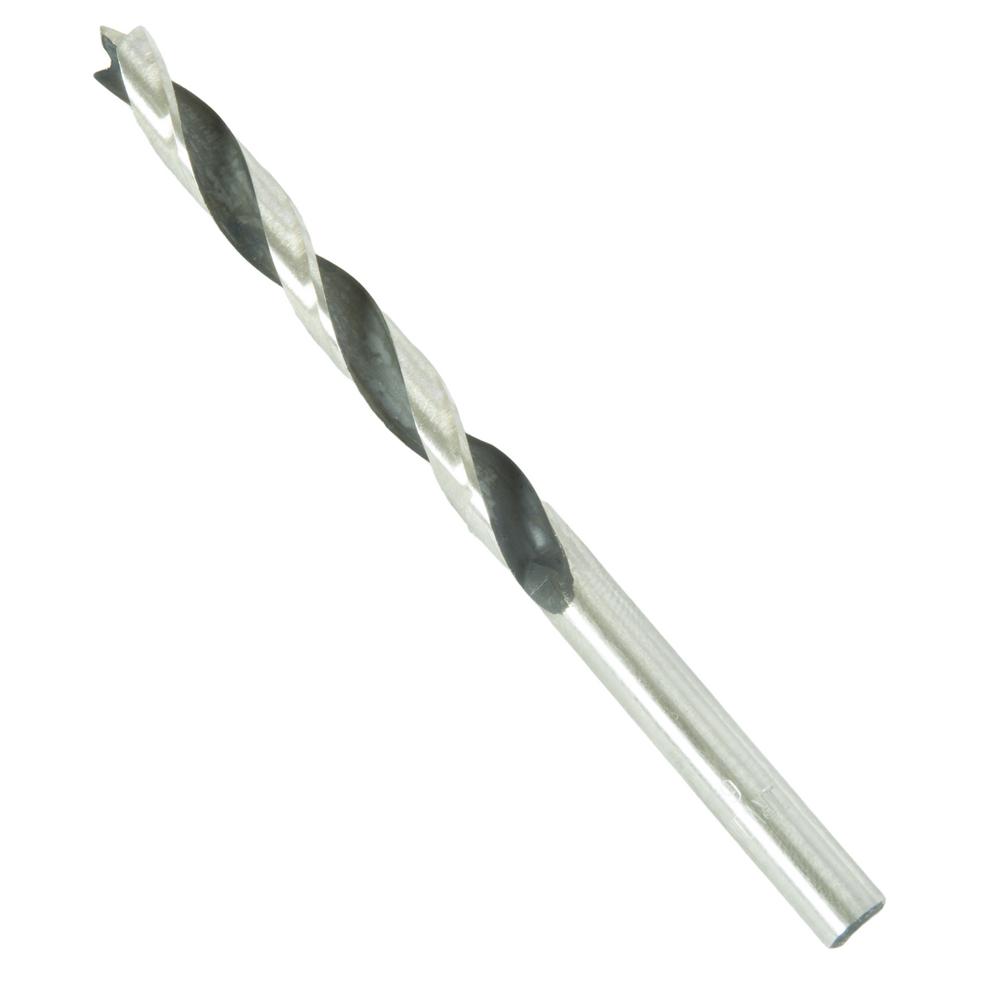
Description
Procat frame screw drill bit is a stepped drill bit for pre-drilling holes for the adjusting screws of door and window frames, known as frame screws. The bit drills two holes of different diameters in one operation: a narrow 5 mm clearance hole through the frame and a wider counterbore around it, into which the head of the frame screw sinks.
The range has two counterbore diameters: 13 / 5 mm and 14 / 5 mm. The counterbore diameter is chosen to suit the head or clamping sleeve of the frame screw used, so the screw sits straight in the frame and the clamping force is spread evenly over the bottom of the hole. The clearance hole diameter is 5 mm on both models.
The bit has a removable pilot bit, which is released with a hex key. The pilot bit can be replaced or sharpened separately, so the whole drill does not need replacing when the tip wears. The design also keeps the two diameters centred on the same axis, so the counterbore is formed precisely around the clearance hole.
The bit comes with a storage case, where the bit and the removed pilot bit are kept together. The Procat frame screw drill bit is intended for drilling wooden frames with a drill that has an ordinary chuck, without hammer action.
Intended use and suitability:
The bit is intended for pre-drilling holes for frame screws in wooden door and window frames. The stepped geometry makes the clearance hole and the counterbore at the same time, so the frame does not need to be drilled twice.
- Door frame installation: the frame screw hole is drilled through the frame up to the wall frame; the counterbore leaves room for the screw head and for adjustment.
- Window frame installation: the same drilling for the adjusting screws used to straighten the frame in the opening before final fixing.
- Readjusting frames: an extra hole is drilled in an existing frame when the frame has sagged or twisted.
- Interior door frames and trims: thinner wooden structures where the counterbore depth is kept small to prevent splitting.
Package contents:
- 1 frame screw drill bit (13 / 5 mm or 14 / 5 mm depending on the selected model)
- Removable pilot bit, fitted
- Storage case
Features:
- Stepped dual diameter: clearance hole and counterbore in the same drilling, centres on the same axis.
- Removable pilot bit: a tip released with a hex key that can be replaced or sharpened separately.
- Two counterbore sizes: 13 mm and 14 mm, 5 mm clearance hole on both.
- Guiding tip: the narrow pilot bit centres the drilling before the counterbore cutter makes contact.
- Storage case: keeps the bit and the removed tip together.
Technical specifications:
- Models: 13 / 5 mm and 14 / 5 mm.
- Counterbore diameter: 13 mm or 14 mm.
- Clearance hole diameter: 5 mm.
- Pilot bit: removable, hex socket fixing.
- Material worked: wood.
- Machine: drill or cordless drill, no hammer action.
- Storage: case.
Procat frame screw drill bit instructions for use:
1. Choosing the size: Choose the counterbore diameter to suit the head or clamping sleeve of the frame screw: 13 mm or 14 mm. The clearance hole is 5 mm on both.
2. Fitting: Fit the bit in the drill chuck and check that the pilot bit is tightened in place with the hex key. Drill without hammer action.
3. Drilling: Mark the position of the hole and drill at right angles to the frame surface. Drill deep enough for the narrow pilot bit to go right through the frame. The counterbore must stay well inside the frame so that the frame does not split when the screw is tightened.
4. Adjusting the depth: When using shorter adjusting screws, the counterbore can be drilled deeper until the screw head sinks to the bottom of the hole.
5. Screwing: Place the adjusting screw in the counterbore and tighten it to the tension you want while watching the straightness of the frame.
Maintenance: Clean chips from the flutes of the bit after use. The pilot bit can be removed for sharpening or replacement. Store the bit dry in its case.
Warnings:
- Sharp bit: handle it and store it in the case, and wear safety glasses when drilling.
- Do not use hammer drilling: the hammer action damages the pilot bit fixing and breaks the edge of the counterbore.
- Check the tightness of the pilot bit before every use; a loose tip comes off during drilling.
- Do not drill the counterbore through the frame: too deep a counterbore leaves too thin a layer of wood and the frame splits when tightened.
- Before drilling, make sure there are no electrical cables or pipes behind the frame.
- Keep out of the reach of children.
Frequently asked questions (FAQ):
What is a frame screw drill bit used for? For pre-drilling holes for the adjusting screws (frame screws) of door and window frames. The bit makes a 5 mm clearance hole and a 13 or 14 mm counterbore at the same time.
Which size should I choose, 13 or 14 mm? The counterbore diameter is chosen to suit the diameter of the frame screw head or clamping sleeve; the hole should be just as wide as the head so that the clamping force is spread over the bottom of the hole.
How deep should the counterbore be drilled? The narrow pilot bit is drilled through the frame, but the counterbore is left well inside the frame. With short adjusting screws, the counterbore can be drilled deeper.
Can the pilot bit be replaced? Yes. The pilot bit is released with a hex key, so it can be sharpened or replaced without renewing the whole bit.
Can the bit be used with a hammer drill? No. The bit is intended for drilling wood without hammer action.
Why does the frame split when the screw is tightened? The most common reason is too deep a counterbore, which leaves too thin a layer of wood under the screw head.
Recycling instructions:
Take the discarded bit and pilot bit to metal collection. Sort the storage case and packaging into plastic or cardboard collection according to their material. Cover the sharp tip before disposal.