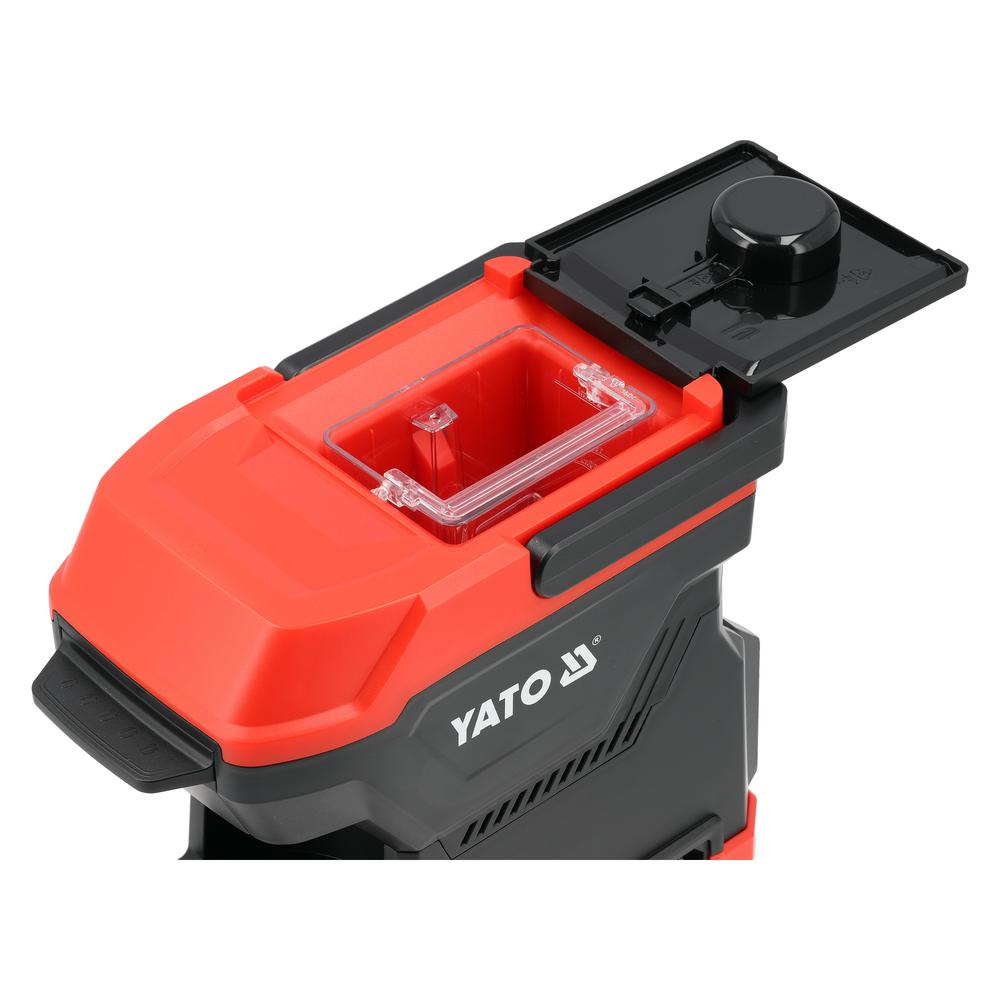

Description
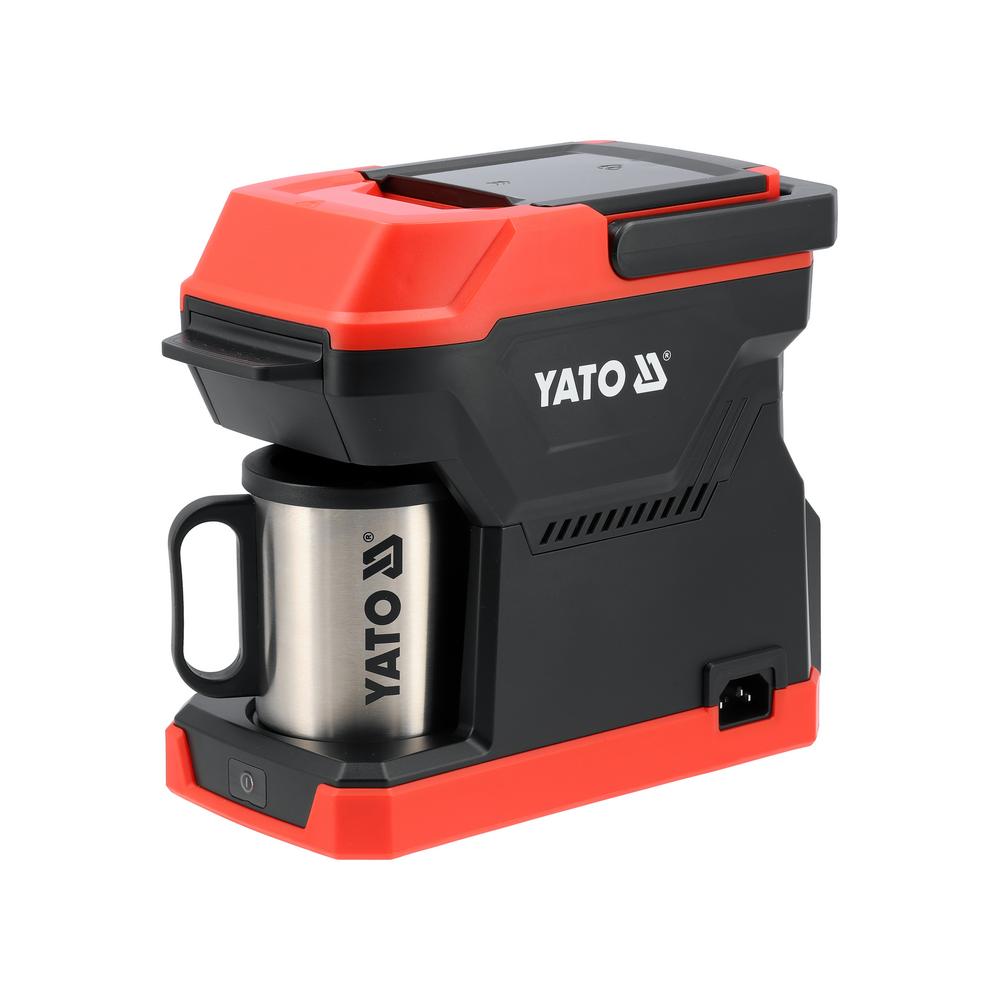
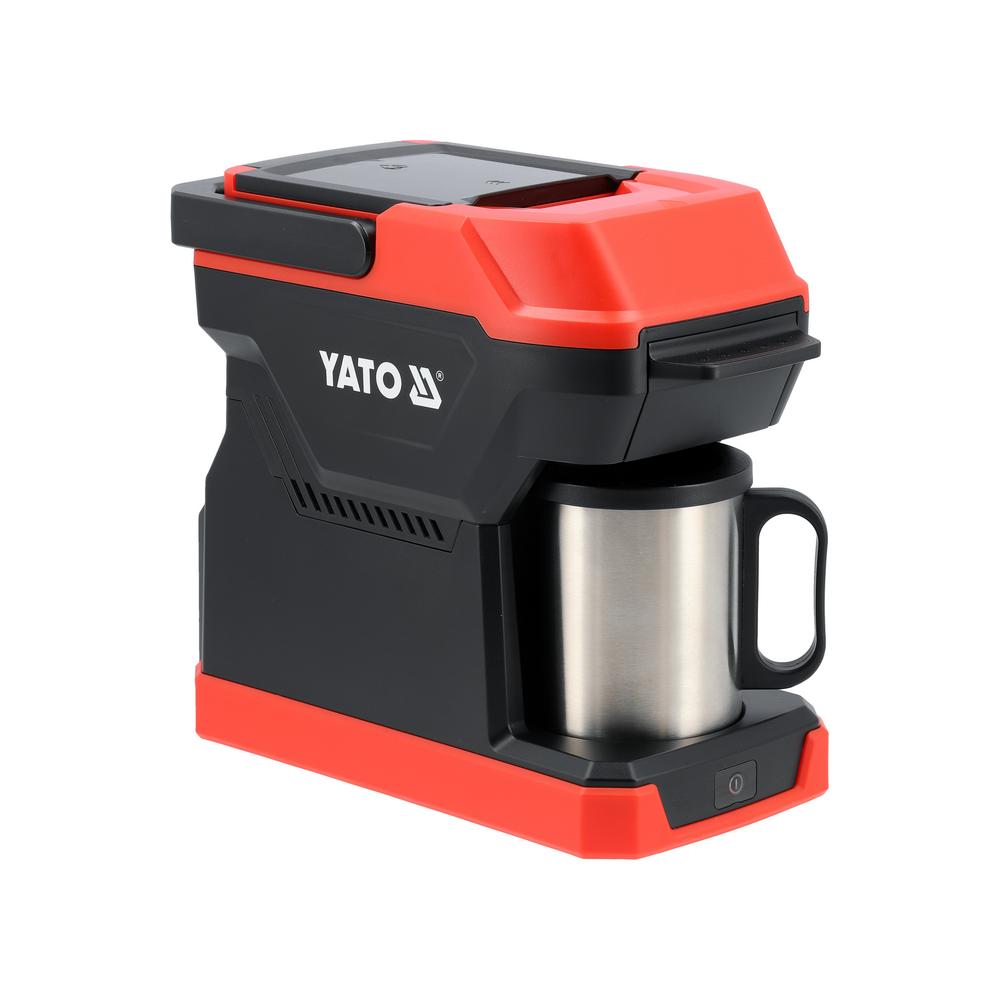
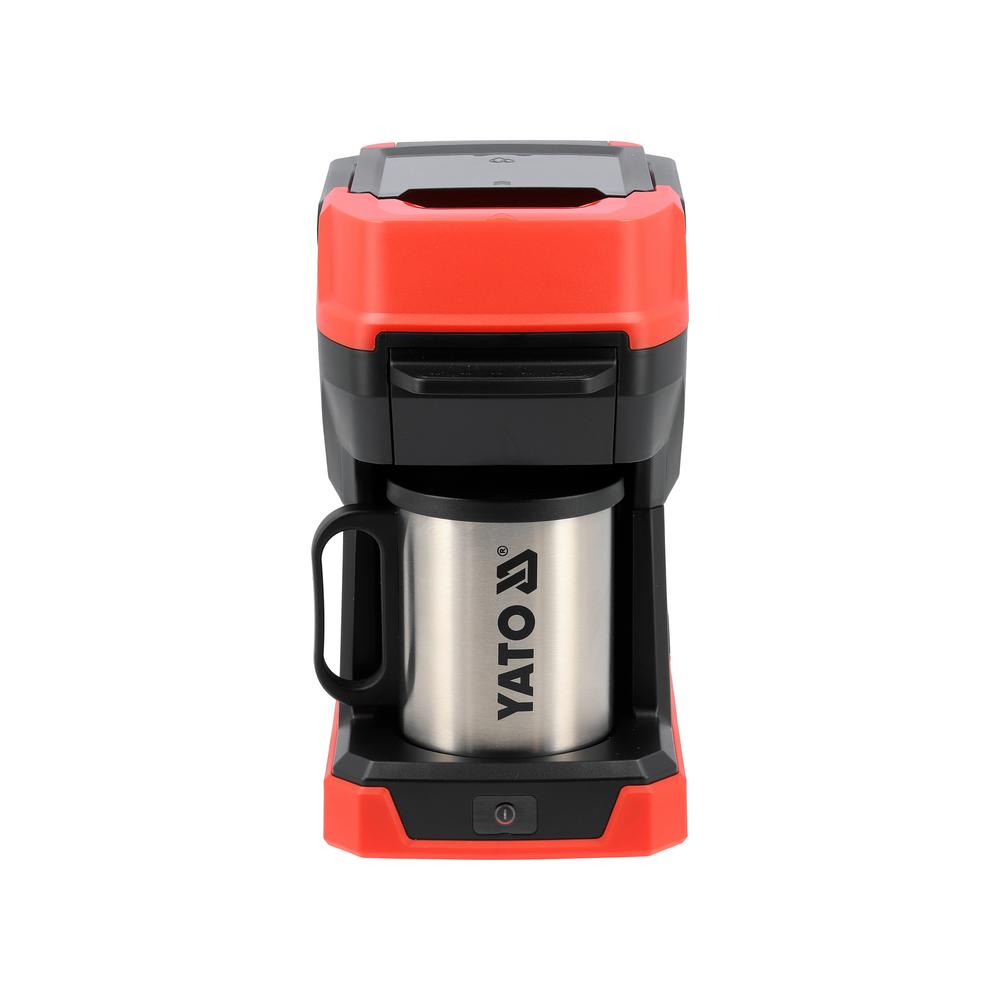
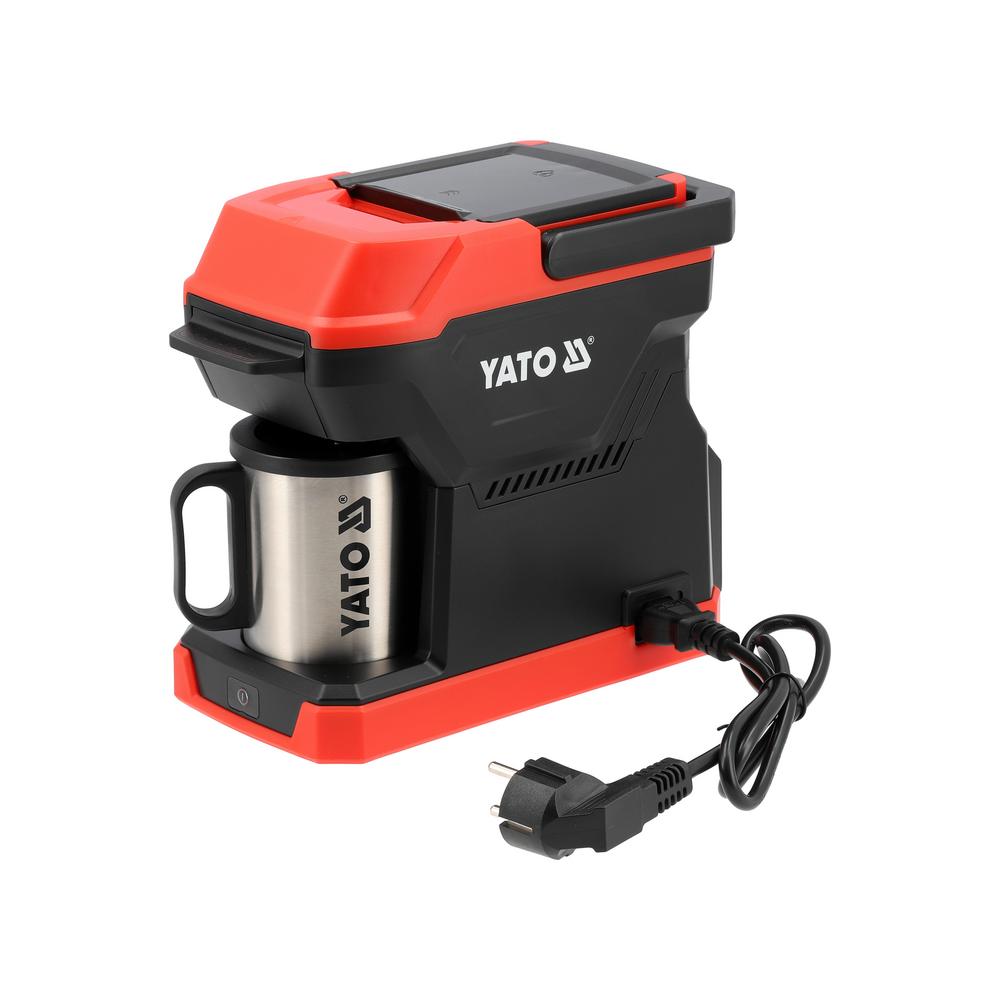
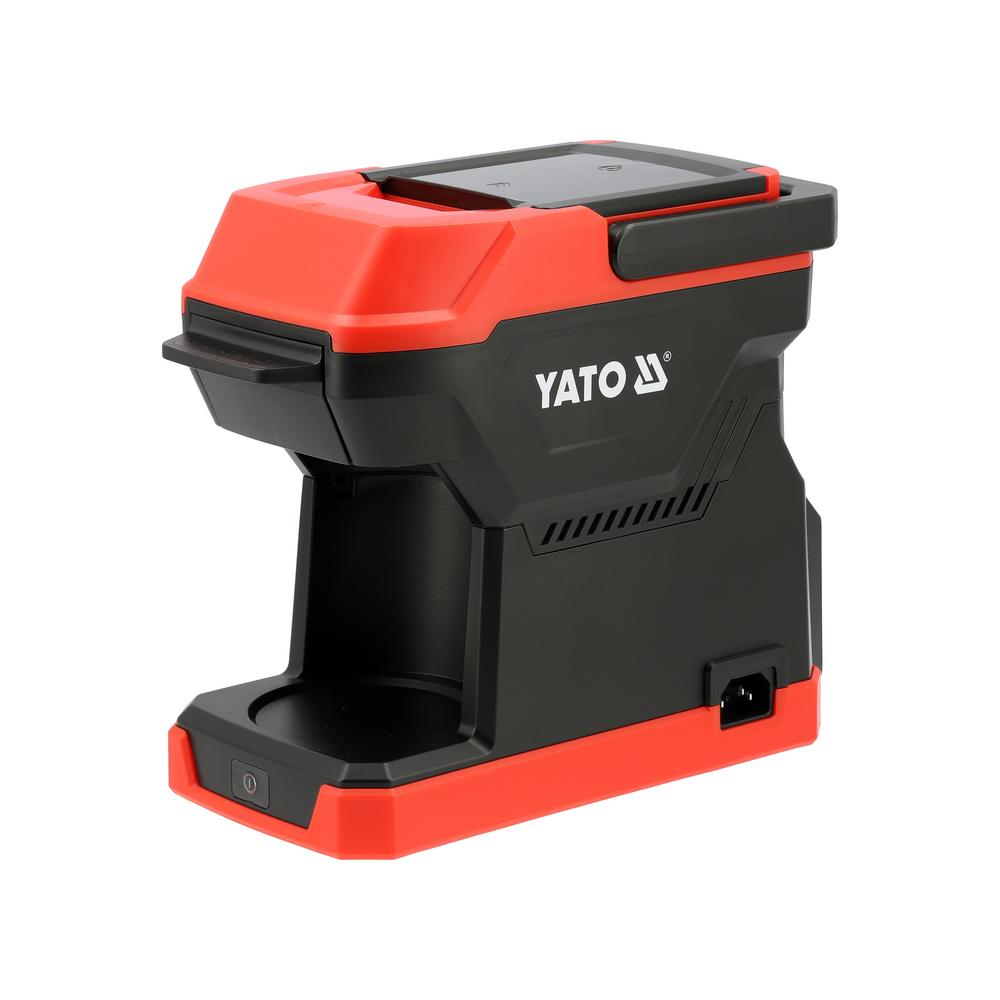
The Yato cordless coffee maker 18V, body only is a portable drip coffee maker that brews one mug of filter coffee from ground coffee or a 60 mm coffee pad. It runs on a Yato 18V battery or on mains power at 220–240 V, 50/60 Hz, so coffee can also be made where there is no socket. The body-only model is supplied without battery and charger.
The coffee maker has a water tank capacity of 240 ml and a rated power of 220 W. The recommended amount of water is about 160 ml for ground coffee and about 120 ml for a coffee pad. Brewing a full tank takes about 3–5 minutes on mains power and about 6–8 minutes on battery. The time also depends on the starting temperature of the water and the conditions of use.
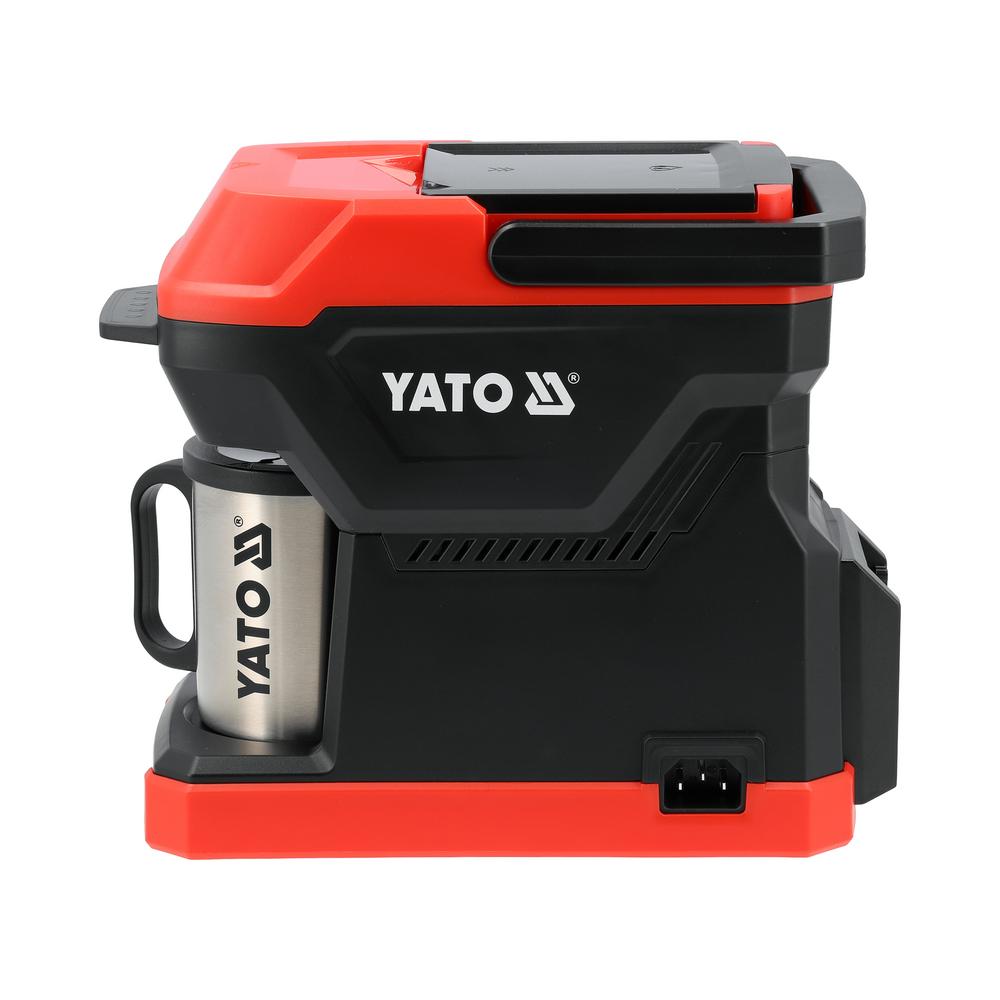
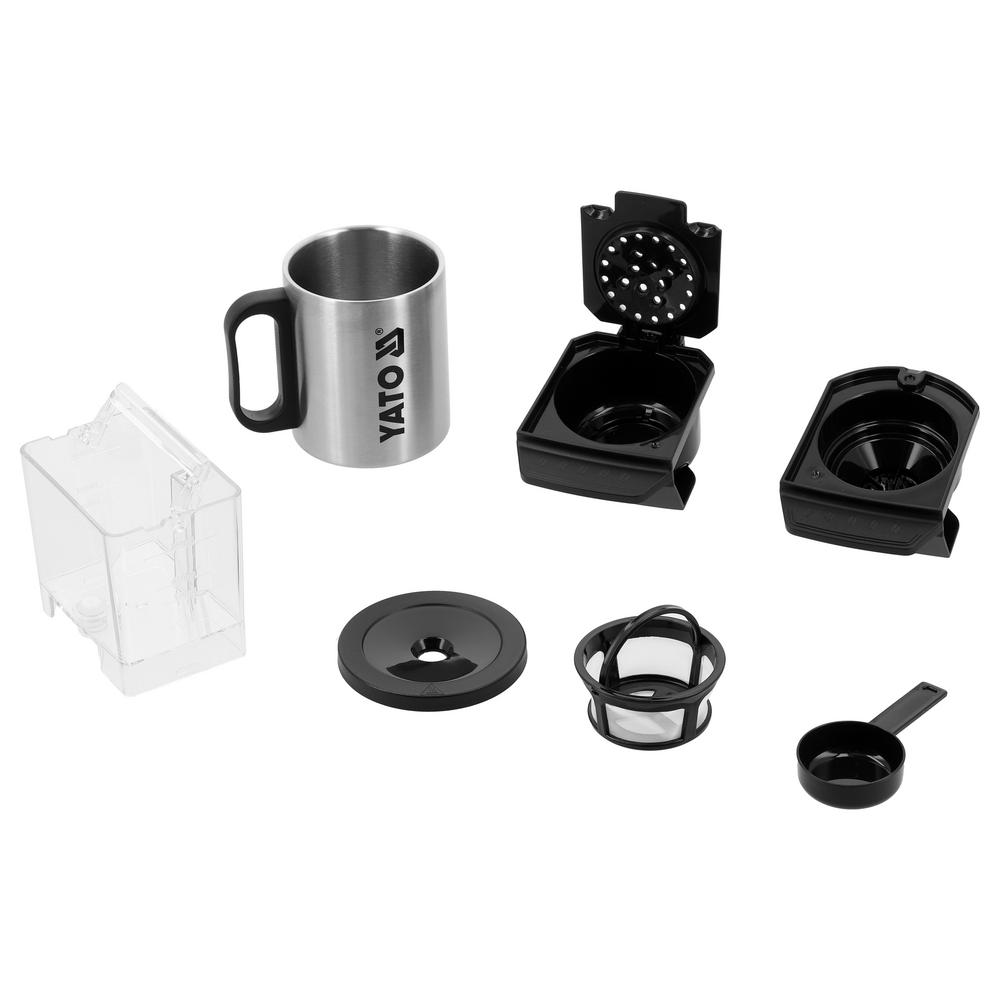
The coffee runs straight into the included 240 ml mug made of SUS 304 stainless steel. There is a separate filter box with a mesh filter for ground coffee and a separate box for the coffee pad. When brewing is finished, the coffee maker switches off automatically. Brewing can also be stopped by pressing the power switch again.
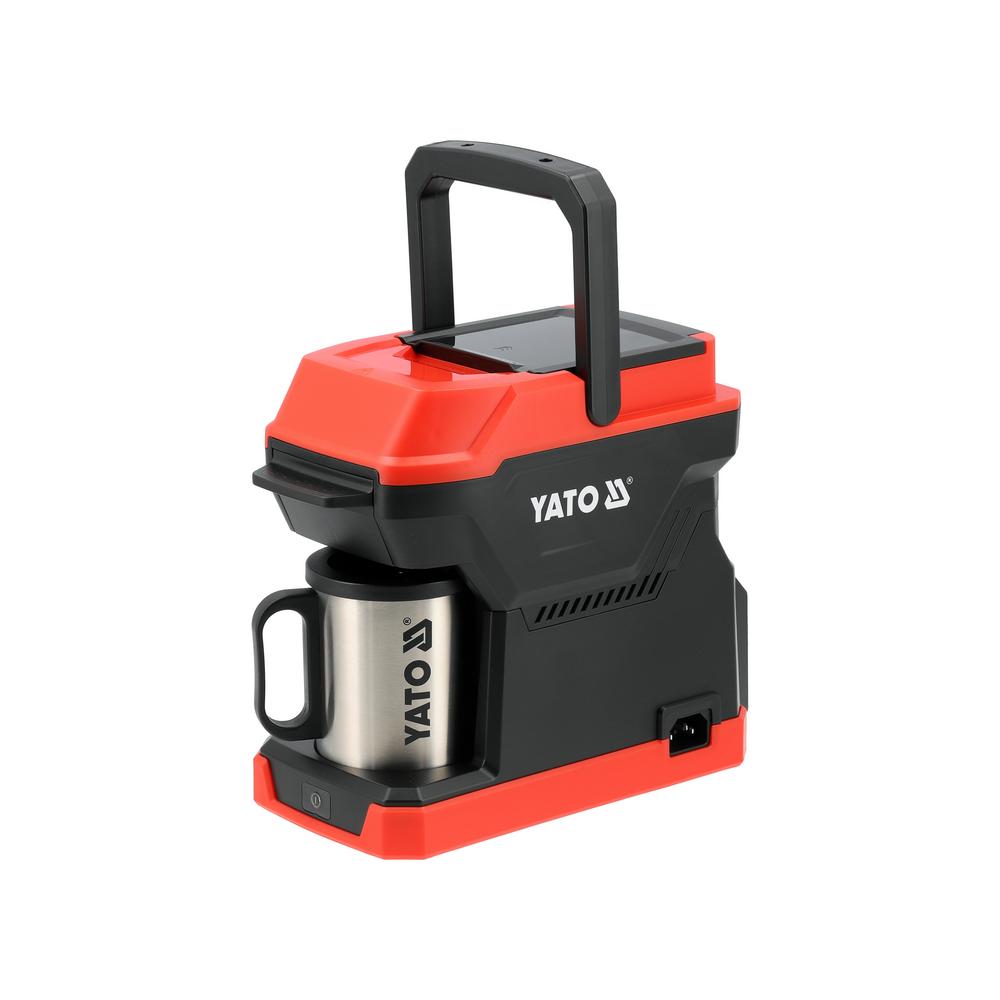
On battery, the number of brews depends on the battery capacity. With 160 ml servings, a 4Ah battery is enough for about 3.4 brews (about 550 ml of water), a 6Ah battery for about 5.9 brews (about 950 ml) and a 9Ah battery for about 8.1 brews (about 1,300 ml). The body has a battery charge level display and a carry handle. The coffee maker measures 266 x 132 x 220 mm.
Uses and suitability:
Battery and mains operation make the coffee maker suitable for making coffee where there is no fixed coffee maker or socket.
- Construction sites and workshops: Coffee is made in the break room, site container, garage or repair workshop. On battery, the coffee maker also works when there is no socket or the socket is in use.
- Cottage, garden and motorhome: On mains power, the coffee maker works like an ordinary single-cup coffee maker. Without a power connection, it is used with an 18V battery.
- Outdoor work and working in the field: Thanks to the carry handle, the coffee maker can be taken from storage to the work or break area. One filling makes one 120–240 ml serving.
- Yato 18V battery system: The coffee maker uses the same batteries as other Yato 18V tools, for example the Yato site radio 18V / 230V, body only and the Yato cordless fan 18V / 240V 230 mm, body only. A suitable extra battery is the Yato 18V Li-Ion battery.
Package contents:
- Yato cordless coffee maker 18V/230V 240 ml (body only)
- Mug, stainless steel SUS 304, 240 ml
- Coffee measuring scoop
- Filter box and filter for ground coffee
- Coffee pad box (60 mm)
- Power cord
Battery and charger are not included.
Features:
- Two power sources: Yato 18V Li-Ion battery or mains power 220–240 V, 50/60 Hz.
- Two types of coffee: ground coffee in the filter (1–2 scoops) or one 60 mm coffee pad.
- Separate coffee boxes: a filter box for ground coffee and a separate box for the coffee pad.
- Automatic shut-off: the coffee maker switches off when brewing is finished; brewing can be stopped with the power switch.
- Battery charge level display: shows the battery status in battery operation.
- Stainless steel mug: the 240 ml mug is made of SUS 304 steel. The product markings include the food contact symbol.
- Carry handle: the coffee maker can be carried with one hand from storage to where it is used.
- Insulation class II: the electrical insulation for mains operation is double.
Technical specifications:
- Battery voltage: 18 V DC
- Mains voltage: 220–240 V AC
- Mains frequency: 50/60 Hz
- Rated power: 220 W
- Battery type: Li-Ion, Yato 18V
- Battery and charger: not included
- Compatible batteries: YT-828461 (2Ah), YT-828462 (3Ah), YT-828463 (4Ah), YT-828464 (6Ah), YT-828465 (9Ah)
- Compatible chargers: YT-828498, YT-828499, YT-828500, YT-828501, YT-828502, YT-828503, YT-828504
- Water tank: 240 ml
- Recommended amount of water: 160 ml for ground coffee, 120 ml for a coffee pad
- Coffee pad diameter: 60 mm
- Brewing time: about 3–5 min on mains power, about 6–8 min on battery (240 ml)
- Brews per battery charge (160 ml): 4Ah about 3.4; 6Ah about 5.9; 9Ah about 8.1
- Automatic shut-off: yes
- Battery charge level display: yes
- Carry handle: yes
- Insulation class: II
- Mug: stainless steel SUS 304, 240 ml
- Dimensions ready for use: 266 x 132 x 220 mm
User instructions for the Yato cordless coffee maker 18V, body only:
Before first use: Remove the packaging materials and check that the appliance is not damaged. Wash the water tank, coffee boxes, filter, mug and measuring scoop in warm water with a mild detergent. Rinse the parts and let them dry. Then rinse the coffee maker’s internal water system: pour 240 ml of cold water into the tank without coffee, start the coffee maker and pour away the water that runs into the mug. Repeat the rinse at least twice. Do the same rinse after long storage.
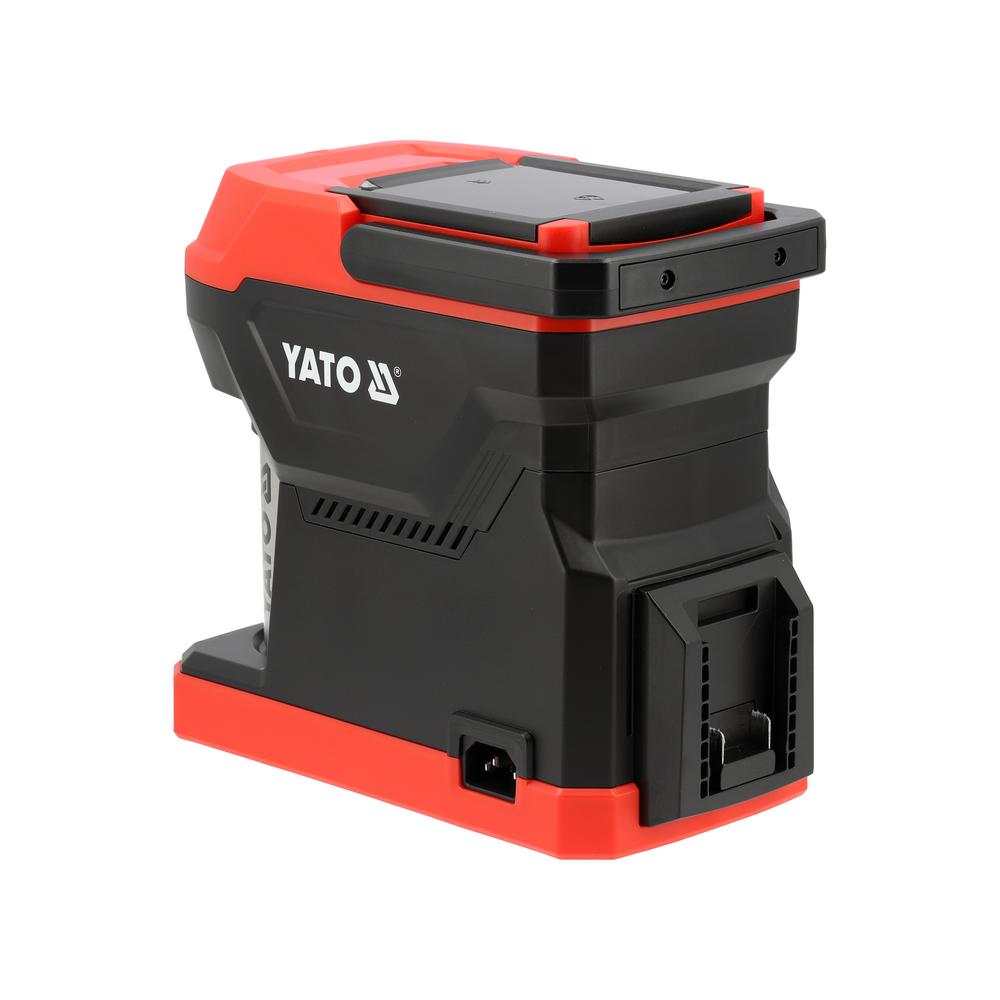
Connecting the power: For mains operation, connect the power cord to the coffee maker’s power socket and the plug to a 220–240 V socket. The cord must not touch hot surfaces. For battery operation, slide a charged Yato 18V battery into the battery slot until the latch locks. The battery is removed by pressing the latch.
Making coffee: Place the coffee maker on a flat, stable and heat-resistant surface. Remove the water tank and fill it with cold water: about 160 ml for ground coffee, about 120 ml for a coffee pad, max. 240 ml. Put one or two scoops of ground coffee in the filter, or place one intact 60 mm coffee pad flat in the pad box. Attach the box to the coffee maker, place the mug directly under the spout and press the power switch.
After brewing: The coffee maker switches off automatically. Lift the mug away carefully, as the coffee and the parts near the spout are hot. Wait at least 5 minutes before removing the coffee box or refilling the tank. Empty the filter or remove the used coffee pad before the next use.
Descaling: Use a descaler intended for coffee makers according to its instructions, or mix 240 ml of water and 5 g of citric acid. Run the solution through the coffee maker without coffee, with the empty box in place. Place a container that withstands hot water and holds all of the solution under the spout. Then rinse the coffee maker at least three times with 240 ml of clean water until there is no longer any smell of descaler.
Cleaning and storage: Disconnect the coffee maker from the mains, remove the battery and let the parts cool. Wash the filter, boxes, water tank and mug in warm water with a mild detergent. Do not wipe the inside of the tank with a cloth, as fibres can be left behind. Wipe the body with a soft, damp cloth. Store the coffee maker dry and protected from moisture and heat. Store the battery separately from the coffee maker at 0–30 °C. For long-term storage, charge the battery to about 70%.
Warnings:
- Risk of burns: Hot water, coffee and the parts near the spout can cause burns. Do not open the water tank lid, remove the coffee box or move the coffee maker during brewing.
- Cooling time: After brewing, wait at least 5 minutes before removing the coffee box or filling the tank. Hot drops of coffee may still drip from the box.
- Only cold, clean water: Do not use milk, drinks or other liquids. Do not exceed the maximum of 240 ml, as excess water runs out of the overflow opening. Do not leave water in the tank for more than 24 hours.
- Risk of electric shock: Do not immerse the coffee maker, power cord, plug, battery or charger in water or any other liquid. Do not use the coffee maker if the cord, plug, power socket, battery slot or battery is damaged.
- Placement: Use the coffee maker on a hard, flat and stable surface. Do not place it on a hot surface or near a hob, oven or other heat source. Do not put objects on top of the coffee maker during use.
- Children: Children aged over 8 may use the appliance under supervision or after instruction. Cleaning is not done without supervision. Keep the appliance and cord out of the reach of children under 8. Children must not play with the appliance.
- Batteries: Use only Yato 18V Li-Ion batteries. The battery slot or battery must not be modified. A damaged battery must not be used or transported.
- Servicing: Do not take the coffee maker apart. If the appliance behaves abnormally or the electrical parts get wet, stop using it and take it for servicing.
Frequently asked questions (FAQ):
Is the Yato cordless coffee maker 18V, body only an espresso machine?
No. The Yato cordless coffee maker 18V/230V 240 ml, body only is a drip coffee maker: hot water runs through the ground coffee or 60 mm coffee pad into the mug in about 3–5 minutes on mains power or 6–8 minutes on battery.
Does the Yato cordless coffee maker 18V/230V work on mains power without a battery?
Yes. The coffee maker is connected with the power cord to a 220–240 V, 50/60 Hz socket. In battery operation, it uses Yato 18V Li-Ion batteries.
What kind of coffee does the Yato cordless coffee maker 18V/230V use?
Ground filter coffee (1–2 scoops in the mesh filter with about 160 ml of water) or one 60 mm coffee pad with about 120 ml of water.
How many mugs does the Yato cordless coffee maker 18V/230V make on one battery charge?
With 160 ml servings, about 3.4 brews on a 4Ah battery, about 5.9 brews on a 6Ah battery and about 8.1 brews on a 9Ah battery.
Are a battery and charger included with the Yato cordless coffee maker 18V/230V 240 ml, body only?
No. The body-only model takes Yato 18V batteries YT-828461–YT-828465 (2–9Ah). The version supplied with battery and charger is the Yato cordless coffee maker 18V/230V 240 ml + 4Ah battery and charger.
Recycling instructions:
The Yato cordless coffee maker 18V, body only is electrical and electronic equipment (WEEE). Take the coffee maker at the end of its life to a WEEE collection point, not to mixed waste. Take Li-Ion batteries to battery collection; protect the battery terminals with tape before returning them. The cardboard packaging goes to cardboard recycling and plastic packaging parts to plastic recycling. The stainless steel mug can be recycled with metal.
Li-Ion batteries are dangerous goods in transport. When batteries are sent through a carrier, the regulations for the transport of dangerous goods must be followed. Damaged batteries must not be transported.