Description
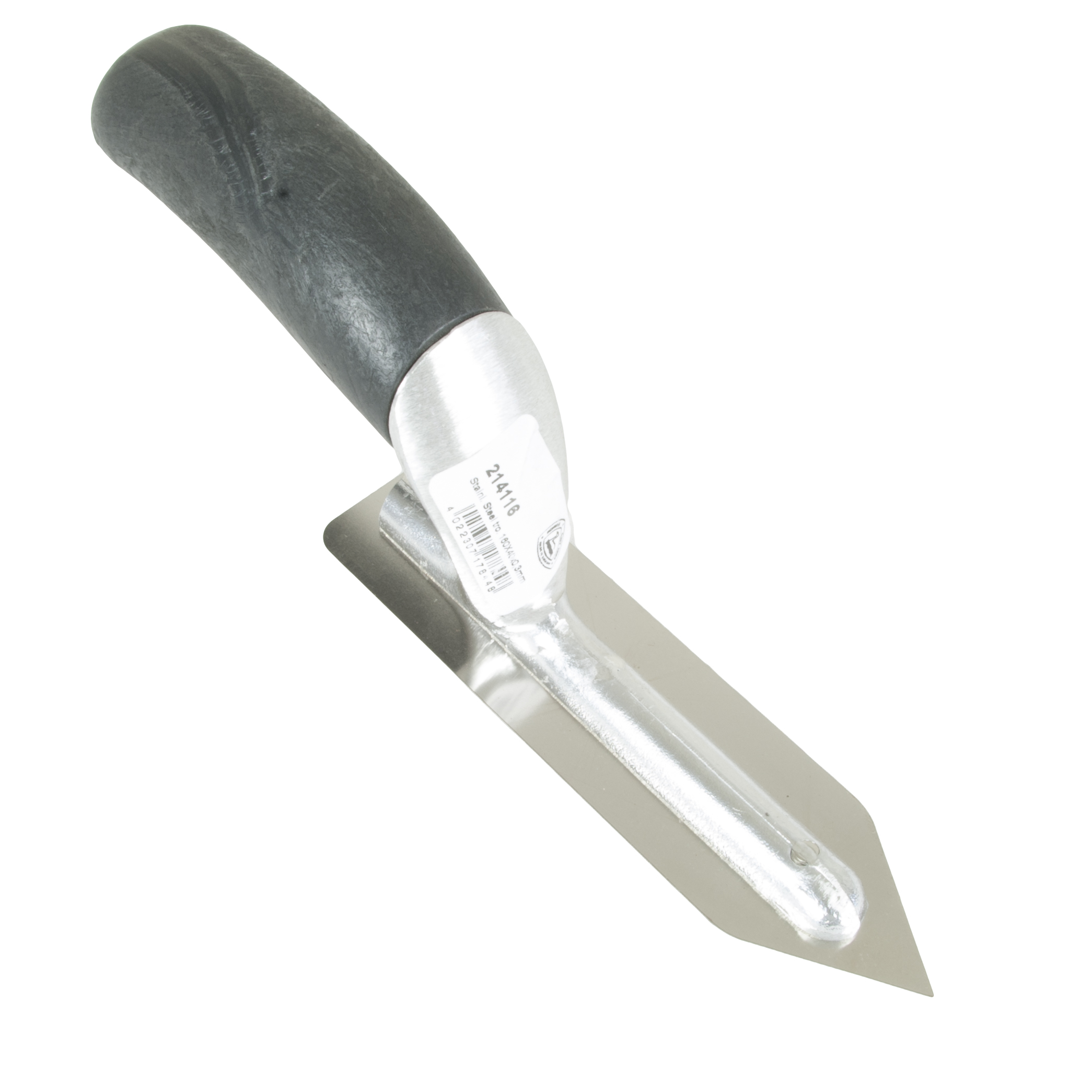
The Schwan edging trowel 280 x 115 mm, outside corner/bent down is a steel trowel for shaping and finishing the outer edge of a concrete surface. One long side of the 280 x 115 mm blade is bent downwards, so the trowel rounds the edge while the flat part of the blade floats the surface smooth.
The bent side acts as a guide. When the trowel is drawn along the edge of the pour, the bend runs outside the edge and keeps the trowel in a straight line. At the same time, the curve of the bend presses the edge of the fresh concrete into a rounded shape, so the edge becomes dense and no sharp arrises are left. A rounded edge does not chip as easily as a sharp arris, because the load is spread over the curve instead of a single edge line.
The designation outside corner means that the trowel is intended for an edge worked from outside the pour, that is, the outer edge of a slab, step or plinth, unlike inside corner trowels, which are used to work the inside of corners. The 280 mm blade length gives the edge a long bearing surface that evens out waves in one stroke, and the 115 mm width keeps the blade steady on the concrete surface.
The trowel is a hand tool and is used while the concrete is still workable, after floating and before final hardening. The tool needs no electricity, and using it does not damage the fresh surface when the timing is right.
Intended use and suitability:
An edging trowel is used to round the outer edge of a concrete pour and to finish the edge surface in fresh concrete.
- Slabs and terraces: the outer edge of the slab is rounded after the formwork is removed or next to the formwork, so the edge withstands impacts and freezing.
- Stairs and steps: the front edge of the step is rounded, which reduces chipping and wear.
- Plinths and bases: the top edge of the pour is finished even and rounded.
- Walkways and kerbs: levelling long straight edges, where the 280 mm blade evens out waves in one stroke.
- Repair pours: the edge of a patch pour is joined neatly to the old surface.
Package contents:
- 1 pcs edging trowel 280 x 115 mm, outside corner, bent down
Features:
- Side bent downwards: rounds the edge and also acts as a guide that keeps the trowel in a straight line.
- Blade 280 x 115 mm: the long bearing surface evens out waves in one stroke and the wide blade stays steady on the concrete surface.
- Outside corner model: intended for the outer edge of a pour, not the inside of a corner.
- Smooth steel blade: leaves a dense, even surface in fresh concrete.
- Hand-operated: no electricity; the work is done while the concrete is workable.
Technical specifications:
- Blade dimensions: 280 x 115 mm.
- Blade material: steel.
- Handle material: wood.
- Edge shape: one long side bent down.
- Model: outside corner.
- Application: fresh concrete and cement render.
Schwan edging trowel 280 x 115 mm, outside corner/bent down instructions for use:
Timing: Wait until the water sheen on the concrete surface has gone and the concrete bears the weight of the trowel without leaving dents in the surface. An edge made too early flows shut, and one made too late no longer takes shape.
Opening the edge: Release the edge from the formwork with the tip of the trowel or a steel trowel before rounding, so that the bent side can get between the formwork and the concrete.
Rounding: Place the trowel on the edge so that the bent side runs outside the edge. Draw the trowel along the edge with an even movement and keep the blade slightly tilted so that the leading edge does not dig a groove into the surface.
Finishing: Run along the edge a second time in the opposite direction and smooth out the mark left by the trowel with a float. Repeat if the surface is still uneven.
Cleaning: Wash the trowel with water immediately after work, before the concrete hardens. Remove hardened concrete carefully without denting the blade.
Maintenance and storage: Dry the trowel after washing and store it in a dry place. Protect the bent side from knocks: a bent guide produces an uneven edge.
Warnings:
- Fresh concrete and cement mortar are strongly alkaline and corrode the skin and eyes. Wear protective gloves and safety glasses.
- The edges of the blade are thin and can cut. Handle the trowel by the flat surface of the blade.
- Do not use the trowel as a lever, chisel or hammer, because the blade bends and the bent guide loses its shape.
- Edging work on your knees strains the knees and back; wear knee pads and change your working position.
- Keep out of the reach of children and pets.
Frequently asked questions (FAQ):
What does “bent down” mean on an edging trowel? One long side of the blade is bent downwards. The bend runs outside the edge of the pour and rounds the edge while the flat part of the blade floats the surface.
What is the difference between an outside corner trowel and an inside corner trowel? An outside corner trowel shapes the outer edge of a pour, for example the edge of a slab or step. An inside corner trowel is used to work the inside of a corner where two surfaces meet.
When is the edge rounded? When the water sheen on the concrete surface has gone and the concrete bears the weight of the trowel without dents. Work done too early flows shut, and work done too late no longer takes shape.
Why is it worth rounding a concrete edge? A rounded edge withstands impacts and freezing better than a sharp arris, because the load is spread over the curve instead of a single edge line.
Can the trowel be used on hardened concrete? Not for shaping. Rounding the edge of hardened concrete needs a rubbing stone or a diamond tool.
Is one stroke enough? Usually the edge is run twice in opposite directions and the surface is finally smoothed with a float.
Recycling instructions:
Sort an edging trowel that is no longer in use into metal collection. Remove the wooden handle if possible and sort it into wood waste; if the handle cannot be removed, take the tool to metal collection in one piece. Packaging cardboard goes to cardboard collection. Do not pour concrete wash water down the drain; let it settle and take the sludge to construction waste.